
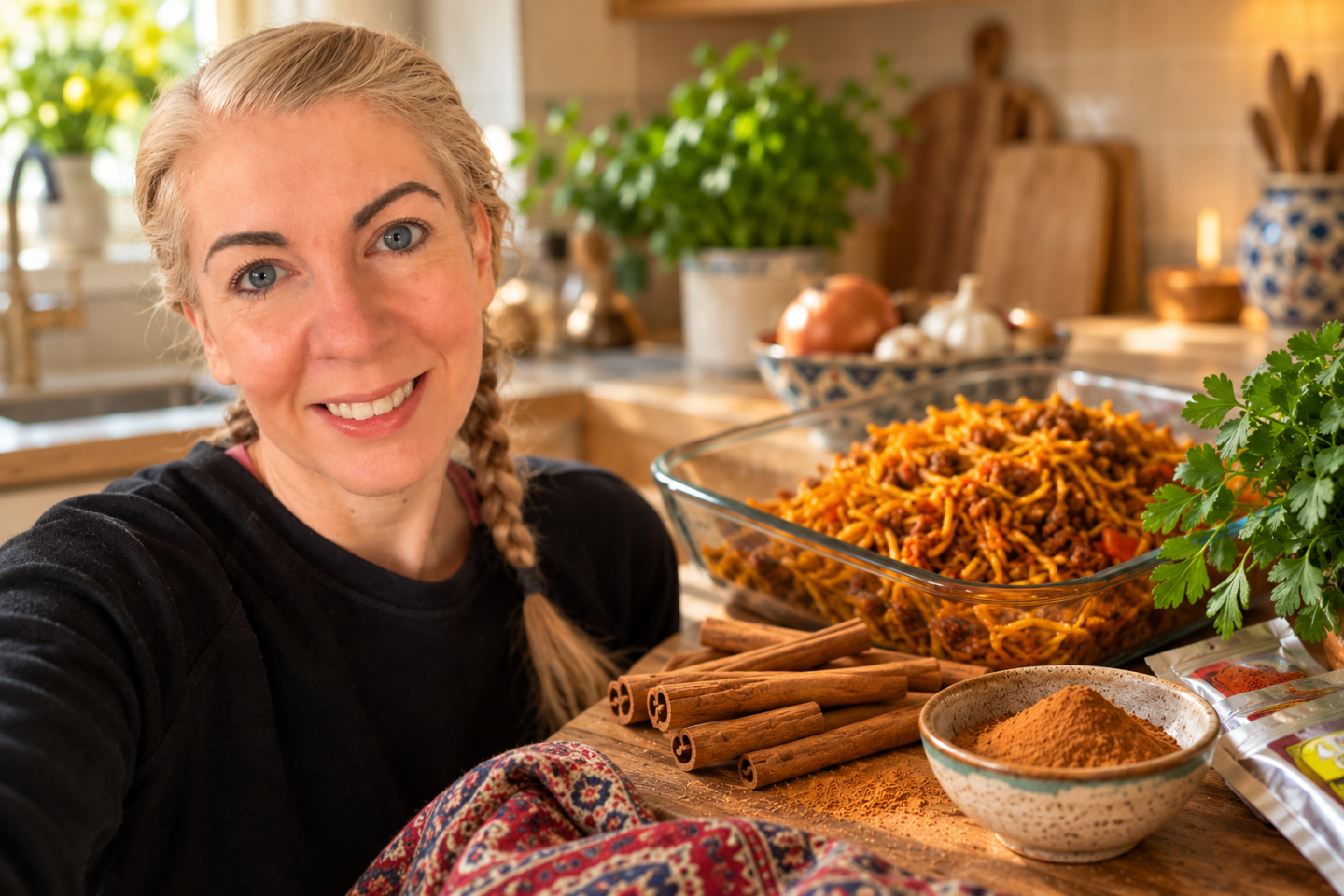
A persistent facial rash led us to examine an ingredient we used almost without thinking. We never established the cause, but comparing cassia and Ceylon changed what we buy for our Persian kitchen.
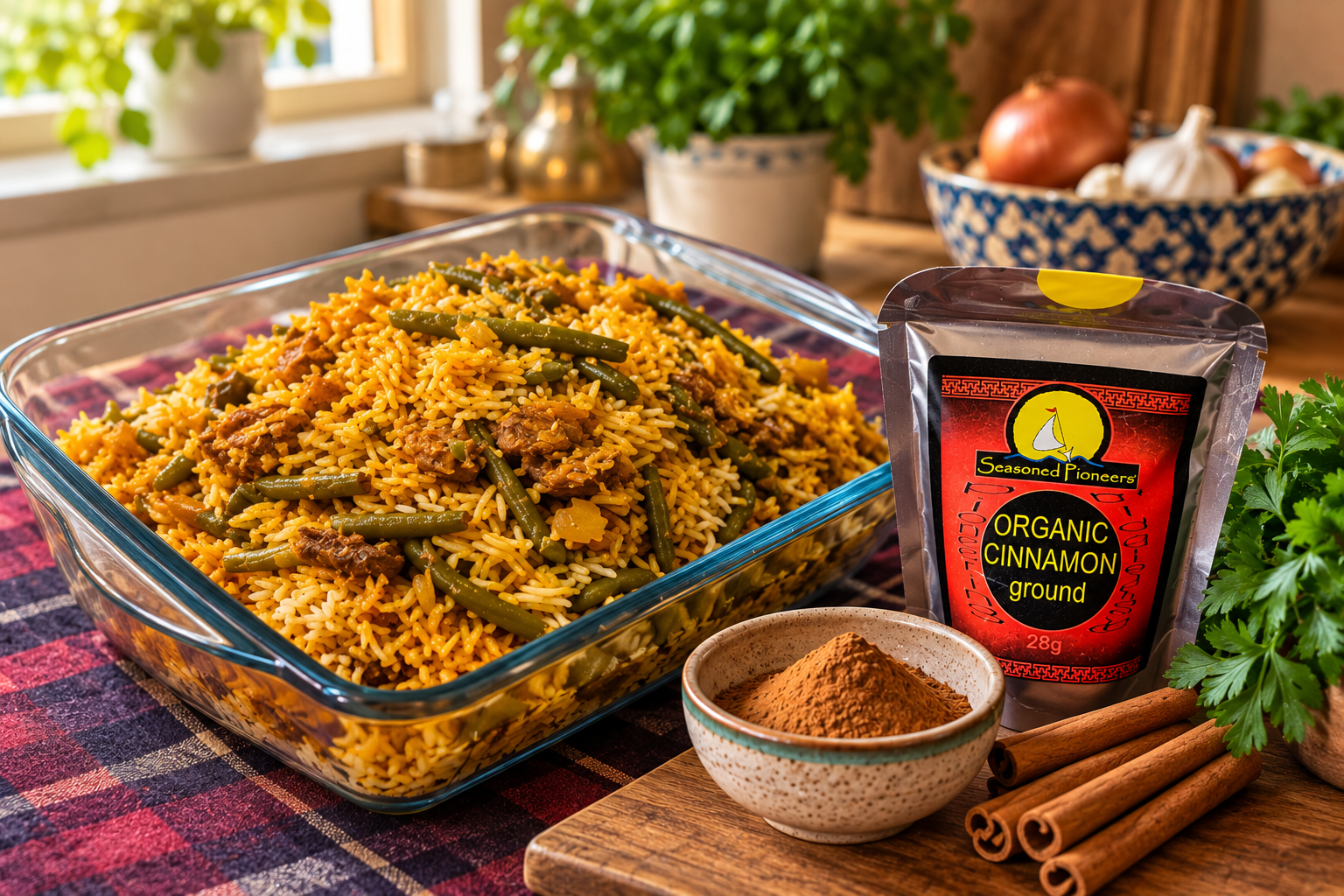
Editorial disclosure: We bought Seasoned Pioneers’ Ceylon cinnamon ourselves. We received no payment, free products or other incentives from the brand. The links are not affiliate links.
During lockdown, H developed a persistent facial rash. Allergy tests did not identify a cause, so we found ourselves considering everything from skincare products to the ingredients in our meals. Eventually, our attention reached the spice cupboard.
In our Persian kitchen, cinnamon is as ordinary as salt and pepper. While much of Britain associates it with Christmas, mulled wine and overpriced lattes, we add it to rice, tea and macaroni. My husband grew up in Iran, and he has firm views about how his food ought to taste.
We use cinnamon in lubia polo, the Persian dish of rice, green beans and meat, and occasionally in zereshk polo. Sometimes we add it to the rice water or sprinkle it over steamed chelow. The choice depends on the dish, who is cooking and how much H decides to interfere with my efforts.
Food helps us keep Persian traditions alive in our British home, from everyday dinners to our Nowruz celebrations in Newcastle. Yet I had never given much thought to the type of cinnamon inside the jar. It smelled familiar and did its job.
What changed after we bought Ceylon cinnamon
We discovered that cinnamon comes in different varieties and decided to try Ceylon instead of the cassia we had been using. We bought it from Seasoned Pioneers, partly out of curiosity and partly to see whether a change in our cooking made a difference.
H’s skin improved after the switch, and the rash eventually settled. We do not know whether cassia caused it. His allergy tests had not established a diagnosis, and skin conditions can improve for many reasons. Our experience does not establish that switching cinnamon treats a rash.
Ceylon usually contains much less coumarin than cassia. That difference concerns exposure to a natural plant compound. It does not explain H’s rash or make Ceylon a treatment for cinnamon allergy.
Cassia vs Ceylon cinnamon
Cassia is a name used for several related types of cinnamon. It generally has thick, hard bark and a strong flavour. Ceylon cinnamon, Cinnamomum verum, grows mainly in Sri Lanka and forms delicate, papery layers. Once the bark is ground, appearance alone is an unreliable guide, so the label becomes useful.
For us, Ceylon tastes lighter and sweeter. In lubia polo, it adds warmth without overwhelming the rice, tomato and green beans. Some cooks prefer cassia’s stronger flavour in baking, but Ceylon suits the way we cook.
Coumarin, blood sugar and weight-loss claims
Cassia generally contains more coumarin, a natural compound that can damage the liver in susceptible people at sufficient exposure. The German Federal Institute for Risk Assessment gives a tolerable daily intake for coumarin of 0.1 milligrams per kilogram of body weight per day. This concerns long-term intake, so an occasional cinnamon bun is not the issue.
Its guidance on coumarin in cinnamon recommends low-coumarin Ceylon for people who frequently use large amounts. This is a reason to consider the variety and quantity, without treating every sprinkle as a health calculation.
Cinnamon also attracts claims about blood sugar and weight loss. The US National Center for Complementary and Integrative Health says the evidence does not clearly support cinnamon for a health condition. Its review of cinnamon research and safety explains that studies use different preparations and do not always identify the type examined. Benefits for diabetes and weight loss remain uncertain.
Cinnamon cannot replace prescribed diabetes treatment. Both cassia and Ceylon can cause allergic reactions, and a persistent or recurring rash needs medical advice. Anyone considering cinnamon supplements while taking medicine needs to discuss them with a healthcare professional.
I enjoy cinnamon over coffee or porridge because it adds flavour without extra sugar. That is enough for me. We have not assessed Seasoned Pioneers’ product for medical or weight-loss effects, and research on cinnamon generally cannot establish benefits for this particular product.
Why we keep buying Seasoned Pioneers
We first bought the brand’s cinnamon while looking for an alternative to cassia. We continue buying it because we like the flavour. Seasoned Pioneers sells individual herbs and spices alongside blends from different food traditions, which suits a household trying to recreate dishes H remembers from Iran.
The resealable pouches are useful in a cupboard where spices get used at different rates. I can close each packet after cooking, which beats folding over the top and hoping for the best. Anyone who has found paprika at the bottom of a kitchen drawer will understand.
It is not necessarily the cheapest way to stock a spice cupboard, and a specialist range is not essential for every cook. For us, the flavour and useful packaging justify returning to it. You can explore the current range at Seasoned Pioneers.
That interest in seasoning extends to our sosis bandari, a spicy Persian sausage dish. Straightforward ingredients can produce a meal H recognises, without every dinner becoming a hunt for something missing from the cupboard.
A change we kept for the flavour
We started looking at cinnamon because we wanted answers about H’s skin. We cannot claim it provided them. What we found was a variety we enjoy using, and a reason to pay more attention to an ingredient we once bought without a second thought.
I still love the smell of spices when H cooks. For him, those flavours connect him to Iran. For me, they are part of our family life, somewhere between a cup of Yorkshire tea and a plate of lubia polo.
Have you ever changed an ingredient you had used for years after taking a closer look at its label?
More from our British-Persian kitchen
A spicy Persian sausage dish for evenings when dinner needs to be straightforward.
Food, family and a barbecue in the rain during our Nowruz celebrations.
Occasional stories, experiments, discoveries and questions from Saffron & Cyrus.
Discover more from Saffron & Cyrus
Subscribe to get the latest posts sent to your email.


Saffron & Cyrus is an independent women’s editorial publication with a recognisable voice, real-life perspective, a defined midlife audience and a commercial model built around useful, relevant partnerships.
