
There are moments in life when you remember exactly where you were, what you were doing and how the world looked before everything changed. Losing my mum was one of them. She died at 65, the day before I was due to start a new job. I had been preparing for a fresh chapter in my career, thinking about first impressions, new colleagues and the usual anxieties that come with being the new person in the office. Instead, I found myself facing a future in which my mum would no longer be there.
Sixty-five. I still struggle with that number. It seems such a small allocation of years for someone who had already given so many of them to other people. There were conversations we hadn’t finished, questions I hadn’t thought to ask and family moments I had assumed would continue. You don’t appreciate the luxury of being able to pick up the phone and speak to your mum until that disappears.
At the time, I had a young child, a family to look after and a career that was supposed to be moving forward. I was also a woman approaching midlife, although I hadn’t quite appreciated how much that stage of life would eventually demand of me. Motherhood had arrived later than it does for some women, and I was still learning how to balance being a mum with the rest of my identity. Losing my own mum added to an already complicated picture.
The flowers arrived, followed by sympathy cards and kind messages. People said how sorry they were, and I thanked them because that seemed to be what was expected. I cried, sometimes unexpectedly. I could sit in a room full of people and feel completely removed from whatever conversation was taking place. Then I would go home, look at something ordinary and find myself in tears.
What surprised me most was how quickly everyday life expected me to rejoin it. The washing still needed doing, meals still had to appear and work emails continued to arrive. For everyone else, it was another Tuesday. For me, it was another day without Mum.
I thought work would keep me together. Looking back, I can see how much I was avoiding.
I took one day off for my mum’s funeral and then returned to the office. Even writing that sentence now makes me uncomfortable. One day to say goodbye to the woman who had been part of my entire life, followed by a return to meetings, deadlines and appearing competent.
I convinced myself that work was helping. There was something reassuring about having tasks to complete and people expecting things from me. A deadline needed attention, an email needed answering and a meeting had a beginning and an end. Grief offered none of those conveniences. It had no agenda, no measurable progress and no respect for my working hours.
So I worked. I made myself useful, stayed occupied and tried to keep my mind away from everything I couldn’t change. From the outside, I probably looked reasonably functional. I could hold a conversation, complete an assignment and make the appropriate noises when someone asked how I was doing. Inside, however, I was struggling to understand what had happened to the person I had been before Mum died.
Looking back, I wish I had given myself more time. I wish I had spent longer with my family, allowed myself to be upset and stopped treating grief as something that could be managed between appointments. But hindsight is an irritatingly well-informed companion. At the time, keeping busy felt safer than stopping.
There is also something about being a woman with responsibilities that makes stopping feel almost indulgent. Someone needs feeding or someone needs collecting. You become so accustomed to meeting other people’s needs that your own emotional wellbeing slips further down the list.
I wasn’t good at admitting that I needed help, either. I could write hundreds of words about almost anything, yet explaining how I felt became strangely difficult. This editorial platform, once somewhere I could happily spend hours arranging my thoughts, went quiet. I lost the desire to write, and for someone who had always loved words, that frightened me almost as much as the silence itself.
The moment that exposed just how fragile I had become happened at a social gathering. Someone handed me a copy of a Dummies Guide to Creative Writing. Under different circumstances, I might have laughed, raised an eyebrow or made a suitably sarcastic remark about the quality of my prose. I have never been short of an opinion when it comes to writing.
Instead, I cried. Not a discreet little tear that could be passed off as something in my eye. I shook, became overwhelmed and felt utterly humiliated by my own reaction. It was as though someone had pressed on a bruise I hadn’t realised was still there.
I don’t know whether the person who handed me the book understood how it might be received. Perhaps it was intended as a joke or even a helpful suggestion. But grief had stripped away much of the confidence I once took for granted, and what might previously have been an insignificant exchange felt like confirmation that I wasn’t good at anything anymore.
That is one of the less discussed aspects of grief. It can affect far more than your relationship with the person you have lost. It can alter how you interpret other people’s behaviour and how much confidence you have.
I had always been sensitive to criticism, although years of working in communications had taught me to develop a reasonably convincing professional exterior. Suddenly, that exterior wasn’t doing its job. A remark could stay with me for days. Small disappointments felt huge, and I began questioning abilities I had previously taken for granted. I wanted to be the woman who could laugh things off, get on with her work and enjoy her family. Instead, I was exhausted by the effort of pretending that everything was fine.
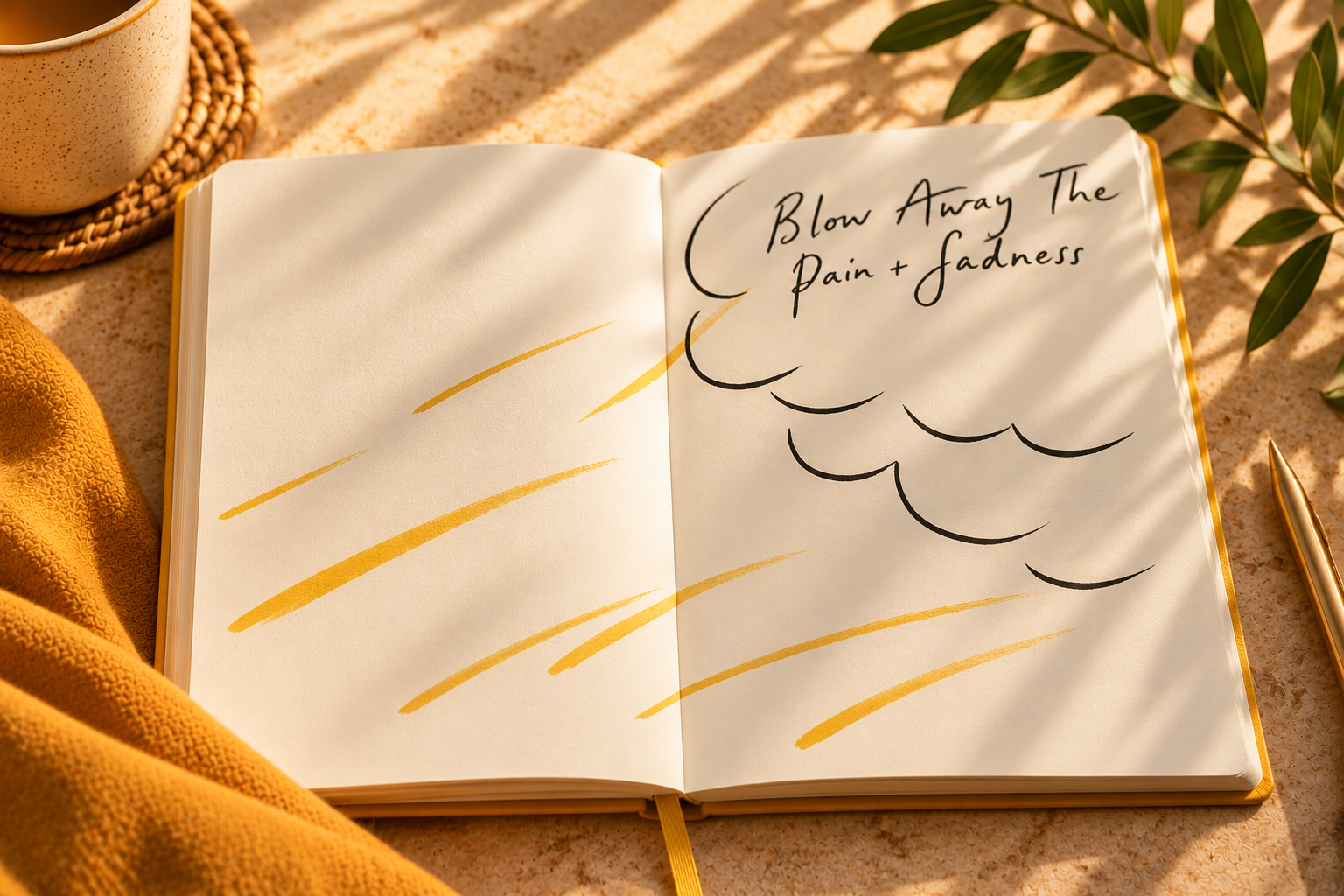
It was another book, rather unexpectedly, that helped me begin looking at things differently.
I AM YOUR FRIEND by Billy Bacall came into my life at a time when I was struggling to find much enthusiasm for anything. Billy had created the book during an extraordinarily difficult period of her own life, following the death of her husband and while dealing with cancer. She turned to drawing, writing and creativity as ways of expressing what she was experiencing.
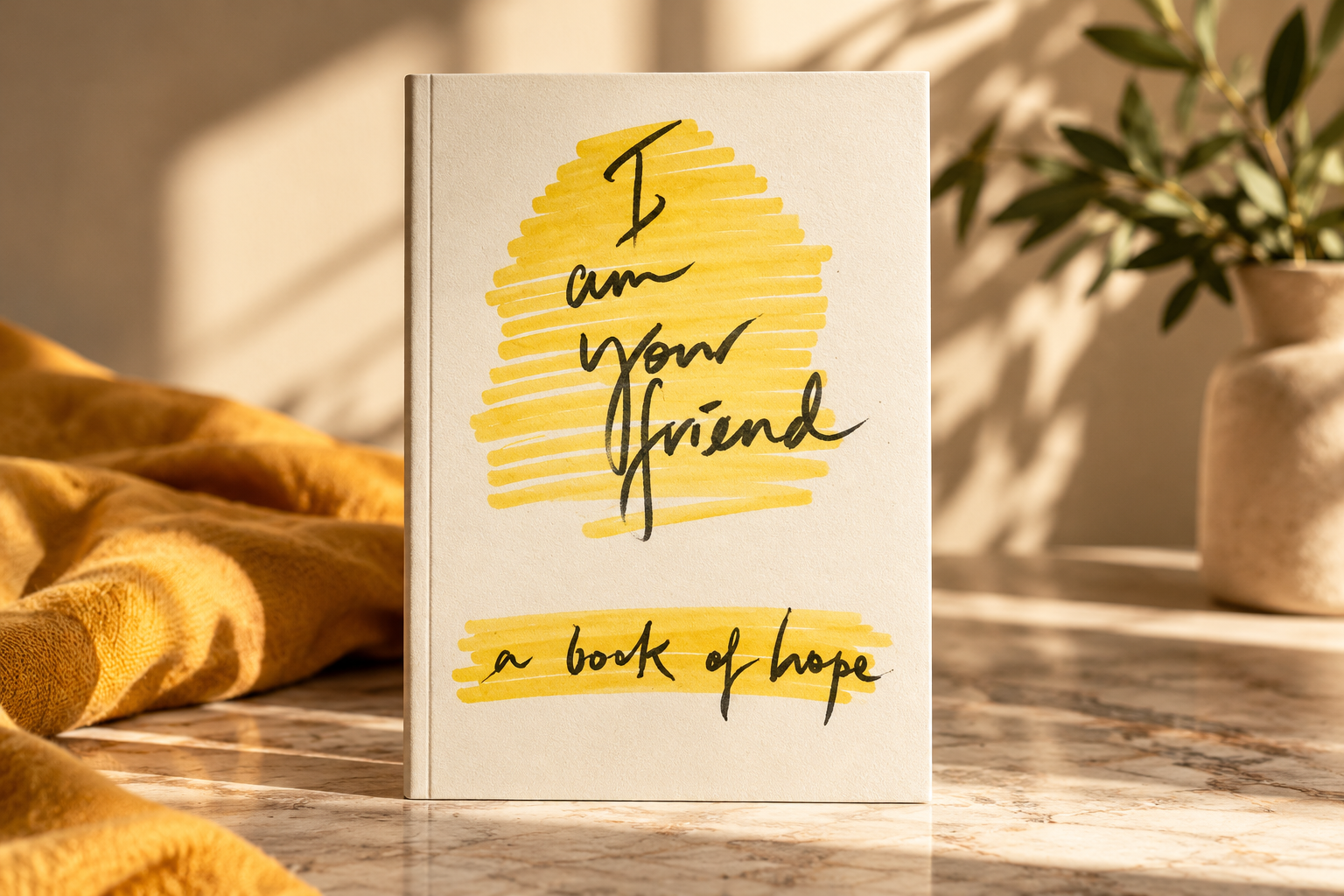
I was struck by the fact that someone facing such enormous personal challenges had managed to create something that could offer comfort to another person. There was no suggestion that a few cheerful words could make bereavement disappear. Instead, the illustrations and messages encouraged me to reconsider how I was treating myself.
Part of the proceeds from the book supported Future Dreams, a breast cancer charity, which gave the project another dimension. But what stayed with me was the personal story behind it. Here was a woman who had experienced profound difficulty and found a way to use creativity without pretending that everything had suddenly become great.
I recognised something of myself in that approach. Writing had always been where I went to make sense of things, yet I had abandoned it at precisely the moment I might have needed it most. I had been waiting to feel better before returning to my editorial platform, as though happiness and inspiration were prerequisites for putting words on a page.
I began to wonder whether writing could help me understand what I was feeling, rather than just record the happier moments once they returned. I didn’t need to produce anything impressive. I didn’t even need anyone else to read it. I just needed to start putting my thoughts somewhere other than inside my own head.
The book didn’t cure my grief. Mum was still gone, and there were still days when I missed her terribly. But it helped me recognise that I could begin making room for other experiences alongside that sadness.
There is something unsettling about losing a parent as you approach midlife. You begin to notice the passage of time in ways that didn’t seem important when you were younger. Birthdays become less about the number of candles and more about the people who are no longer there to see you blow them out.
Having become a mother at 40, I found myself experiencing two very different sides of family life at once. I was watching my son grow, celebrating his milestones and enjoying the little discoveries that come with childhood, while also coming to terms with the loss of the woman who had witnessed all of mine.
Sometimes the contrast was difficult to comprehend. I could be laughing at something my son had said and suddenly remember that Mum would never hear it. I could look at a photograph of him and wish she were there to see how much he had changed. Those moments were often harder than the occasions when I expected to feel sad.
As the years passed, midlife brought its own collection of complications. There were changes in my body, questions about my health and the occasional realisation that I was no longer quite as resilient as I had imagined. Perimenopause added unpredictable moods, interrupted sleep and the frustrating business of trying to remember why I had walked into a room.
It isn’t always easy to distinguish ordinary exhaustion from the emotional weight of everything else. I don’t think women should be expected to identify which part of their lives is responsible for every difficult feeling, but sometimes several things are happening at once, and the sensible response is to acknowledge that life has become a lot.
I also began thinking differently about happiness. For years, I had treated it as something I would achieve once the important things were sorted. Once work was going well, once family life was settled, once I had stopped worrying about whatever happened to be worrying me that week.
Losing Mum made me realise how unreliable that was. There would always be something else to deal with, and I didn’t want to spend the rest of my life postponing enjoyment until everything was under control.
I have always enjoyed exercise, but after losing Mum, I began to appreciate how much it could do for my state of mind.
My particular favourite was Les Mills’ Body Combat, a fitness class involving punches, kicks and enough movement to make you question why you’re doing it around the halfway point. Add Scooter to the soundtrack and I could almost convince myself I was much more intimidating than any middle-aged woman in Sweaty Betty gym leggings.
There was something wonderfully satisfying about it. For an hour, I could concentrate on the instructor, the music and just about remember which direction I was supposed to kick. My thoughts, normally racing between work, family and everything I hadn’t managed to do, had to make room for something else.
I could throw a right hook with all the frustration I had been carrying around, follow it with a kick and leave the class feeling physically exhausted but mentally lighter. I was beginning to feel like myself again.
I wouldn’t describe exercise as a replacement for proper emotional support, and wouldn’t suggest that everyone experiencing grief needs to take up martial arts-inspired aerobics. But movement gave me something I had been missing: time that belonged to me.
At the gym, nobody needed me to explain why I was feeling sad. I could turn up, follow the music and concentrate on getting through the next combination without punching in the wrong direction.
There were days when I arrived feeling dreadful and left in a noticeably better mood. I began to understand that exercise wasn’t only about fitness or weight. It was also about having somewhere to put my frustration. And an imaginary opponent was obviously better than anyone who irritated me in real life.
Body Combat couldn’t change what had happened, but it gave me 45 minutes when I could stop thinking about it.
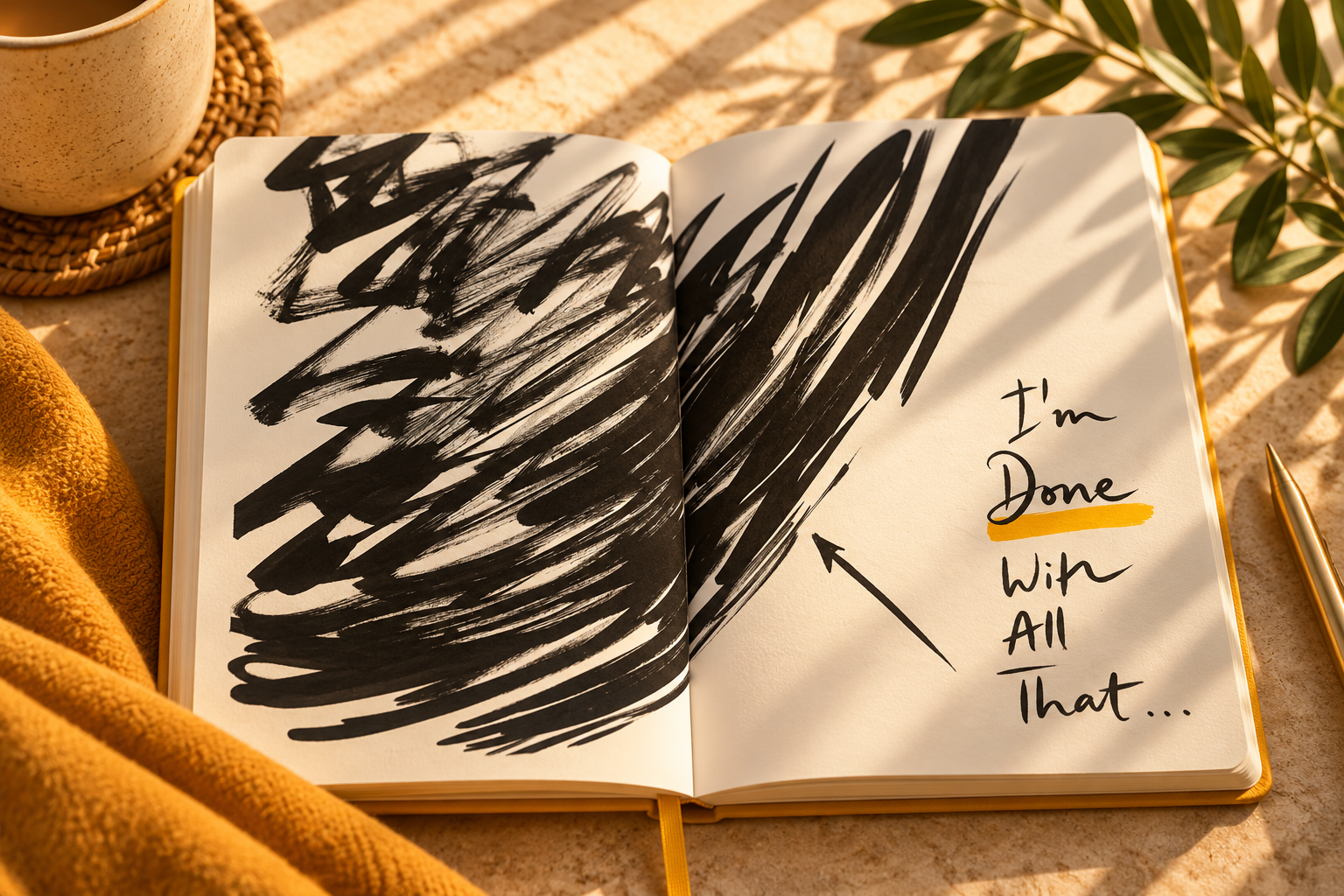
One of the difficulties was the guilt that sometimes accompanied feeling happy again. I could be enjoying a family outing, laughing with friends or having a good day at the gym when a thought about Mum would suddenly interrupt everything. For a while, I almost felt that being happy meant I wasn’t missing her enough. It sounds unreasonable when written down.
Eventually, I began to accept that enjoying my life didn’t diminish the importance of hers. I could miss Mum and still laugh at something. I could wish she were here while making plans for the future. I could remember her with sadness without allowing that sadness to dictate every part of my day.
My son had a great deal to do with that change. He wanted to play, explore, ask questions and know what was for tea. There were times when his enthusiasm for something brought me back into the present more effectively than hours spent analysing my feelings.
I also began appreciating a decent coffee, a good book, a walk, an evening without too many demands and just sitting down to write when the house was peaceful. None of these things solved anything, but they made difficult periods more manageable.
That is one of the lessons midlife has taught me. Enjoyment doesn’t have to be earned through productivity, and rest doesn’t take justification. I am still learning both of those things.
I would love to claim that I developed an approach to coping with grief, complete with a beautifully maintained journal. In reality, I tried different things, abandoned some of them and gradually discovered what made the harder days a little easier.
None of these things worked every time. Some days were simply difficult, regardless of how much I read, wrote or exercised. I also know that grief can become overwhelming and that professional support may be necessary. There is no prize for struggling through it alone. What helped me was learning to pay attention to my own needs rather than assuming that keeping everyone else happy would somehow take care of mine.
When I began writing again, I wasn’t sure what I wanted to say. I knew I missed writing, but I also worried that I had lost some of the confidence and enthusiasm that once came naturally.
The first few attempts weren’t impressive. I questioned my ideas, rearranged sentences and occasionally wondered why I was bothering. Then I remembered that writing had never been exclusively about producing something for other people. It was something I enjoyed long before I started worrying about whether anyone would read it.
Gradually, the words returned. I began writing about the things that interested me, from family experiences and Persian culture to fitness, women’s health and midlife. I found that I had more to say than I had realised, about the gap between how women are expected to manage their lives and what happens behind closed doors.
There is a great deal of pressure to appear capable as we get older. We are supposed to understand our bodies, manage our emotions, maintain relationships, raise children, work hard and somehow find time to look reasonably presentable while doing it all.
I have never quite mastered that particular combination. My house is lived in, my thoughts are occasionally all over the place and I still have days when I question decisions that seemed perfectly sensible the previous afternoon. But I no longer think those things make my experiences less worth sharing. If anything, they are often the most interesting parts.
Writing about grief has been difficult because there is no conclusion. I can’t tell you that losing Mum made me stronger or that everything happened for a reason. I don’t believe that her death needed to teach me a lesson, and I would much rather have had more time with her than any wisdom I might have acquired afterwards.
What I can say is that writing has helped me make sense of how her absence continues to affect me. It has allowed me to acknowledge the sadness without making it the only thing I write about.
And hopefully someone reading this will recognise a little of their own experience, because there is comfort in discovering that another person has struggled with feelings you thought were yours alone.
I sometimes wonder what Mum would make of the woman I am now. She missed so much of the life I have built, especially the years of watching my son grow and the changes that have come with getting older. There are things I would love to tell her, questions I would ask and moments when I still find myself wishing I could hear her voice. That hasn’t disappeared with time, and I don’t expect it to.
But I have stopped waiting for grief to finish before allowing myself to enjoy what is in front of me. I go to the gym, write articles, spend time with my family and occasionally get far too enthusiastic about a Body Combat soundtrack. I still overthink things, still have difficult days and find myself unexpectedly upset by memories that catch me off guard.
The difference is that I no longer interpret every difficult day as evidence that I am failing to cope. I also know now that returning to work almost immediately after Mum’s funeral wasn’t proof of resilience. It was the way I managed at the time, with the emotional resources I had available. I can wish I had done things differently without spending the rest of my life criticising myself for it.
Grief has changed how I see time, family and the importance of doing things that make me happy. It has also reminded me how much of our lives we spend worrying about matters that eventually turn out to be rather insignificant. I still care about my work, and want to do it well. But I don’t want deadlines, other people’s expectations or my own tendency to overthink everything to take up all the space in my life. There is a little boy growing up, a family to enjoy, music to dance to and a great many things I still want to write about.
Mum isn’t here to share those experiences, and I will always wish that she were. But I think I owe it to both of us to enjoy them. As for the pen being mightier than the sword, I remain a firm believer. Although after a difficult week, a well-aimed imaginary punch in Body Combat comes a very close second.
Did reading, writing, exercise or something completely unexpected help you find your way back? I’d love to hear your experiences, especially the things that helped when well-meaning advice wasn’t enough.
Explore more personal essays
Read more from Saffron & Cyrus
Occasional stories, experiments, discoveries and questions from Saffron & Cyrus.
Discover more from Saffron & Cyrus
Subscribe to get the latest posts sent to your email.


Saffron & Cyrus is an independent women’s editorial publication with a recognisable voice, real-life perspective, a defined midlife audience and a commercial model built around useful, relevant partnerships.

Sounds like your dedicated to this and its making you tougher as well which is a double bonus
I do Les Mills workouts regularly at my gym, usually body combat on Saturdays. I prefer body pump to challenge myself.
I love such posts a lot. Such workout challenges surely work great in favor of your body.
Stick to the challenge at the end the result of this is in your own favor.
Good going girl. Sometimes work outs are the best way to combat stress and give a mental clarity. And working on your body is awesome.
I’ll look into it. Though I try to work out when time allows it, I find it very boring. I have yet to find a work out that will keep me entertained while doing it, it might help me stay motivated for longer.
Well done! I would like to try this “brain is releasing only happiness making endorphins” workout 🙂
I’m excited to see the out come. 🙂
What an amazing challenge! Good luck!
Starting a day with a workout gives to inner and outer strength. thanks for sharing !!
Great going! Your dedication is awesome. Keep at it!
It’s so difficult to keep up with the challenges. You are doing great 🙂
I lost my dad early this year and I couldn’t keep up with anything or anyone. I shot myself out and stayed in for many months thinking about a million different ways I could have saved him or made his passing less painful. I tried getting into a workout routine which is usually my go-to activity to bring myself out of any slump, I couldn’t keep up with a 30-day challenge.
But I am getting better and starting to come out now.
I’m not sure how I would fare with a 100-day challenge as I’m rarely consistent with anything.
Author
Grace, I’m so sorry to hear this. It’s very hard. Everyone is different and exercise helps but doesn’t heal. You just have to do what’s best for you. Take care x
I’ve started my fitness journey recently, and have added some light workout – I feel inspired after reading your post.
Routine is so important and even better when adding exercise to reduce stress.
I shall change to this routine. This sounds like a great challenge tio be healthy and strong
It’s really hard to lose a loved one. The emotions after all is done I think is the most hard to deal with. Glad that you found a great outlet for it all. Stay strong love.