
How many times a week should I exercise?
I’ve exercised 28 times in one month and gone 10 days without setting foot in the gym. At 50, I wanted to know what a “good” fitness routine actually looks like, and whether women should all be doing the same thing.
How many times a week should I exercise?
Three? Four? Five if I’m serious? Seven if I’ve apparently abandoned family life and the need to wash my hair? “How many times a week should I exercise?” sounds like a question that ought to have a reassuringly precise answer. I wanted one.
I’m 50. I want to protect my heart, bones, muscles and mobility. I want to stay strong and I also love the gym, Zumba, spin and combat-style exercise, so I’m hardly looking for permission to avoid moving. My problem is almost the opposite.
When exercise gets hold of me, it can really get hold of me. Then something else captures my attention and, seemingly overnight, the gym disappears from my life. So what does good actually look like?
I used to think midlife fitness was about showing up
When I first wrote about fitness in midlife, I confidently declared: Midlife fitness is about showing up. I still think there is truth in that. At 49, fitness had stopped being about chasing a flat stomach. I wanted energy, strength and the confidence that my body could still do things. I was also knee-deep in my 50 in 50 Challenge, collecting 50 wellness wins in the year I turned 50.
I wanted to find out what my body could do and perhaps revise a few assumptions I had carried around about what counted as “sporty”. But I’m less certain about the showing-up mantra now, because what happens when showing up becomes three or four classes in one day? And what happens when I don’t show up for 10 days? Does one make me committed and the other inconsistent?
The month I exercised 28 times
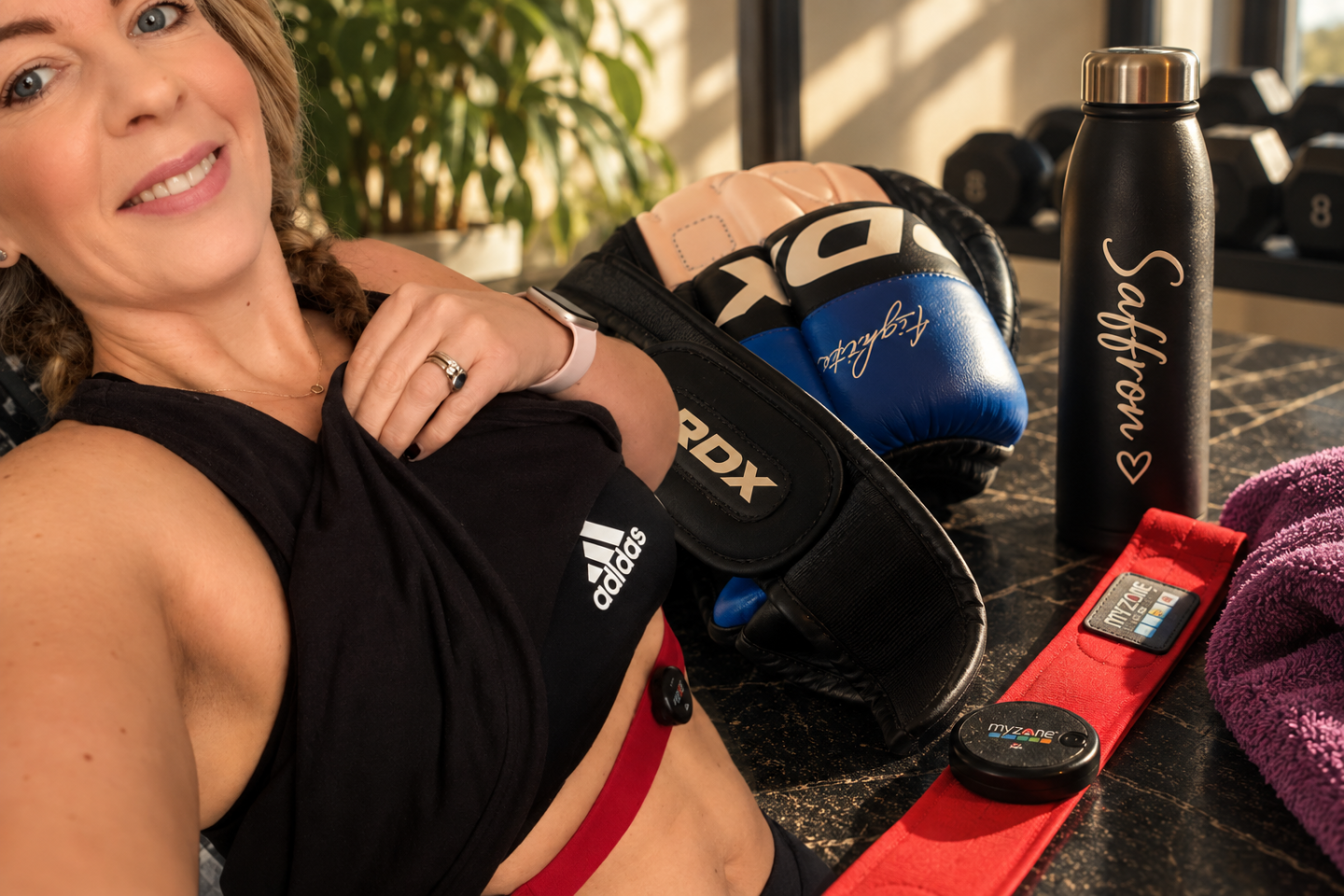
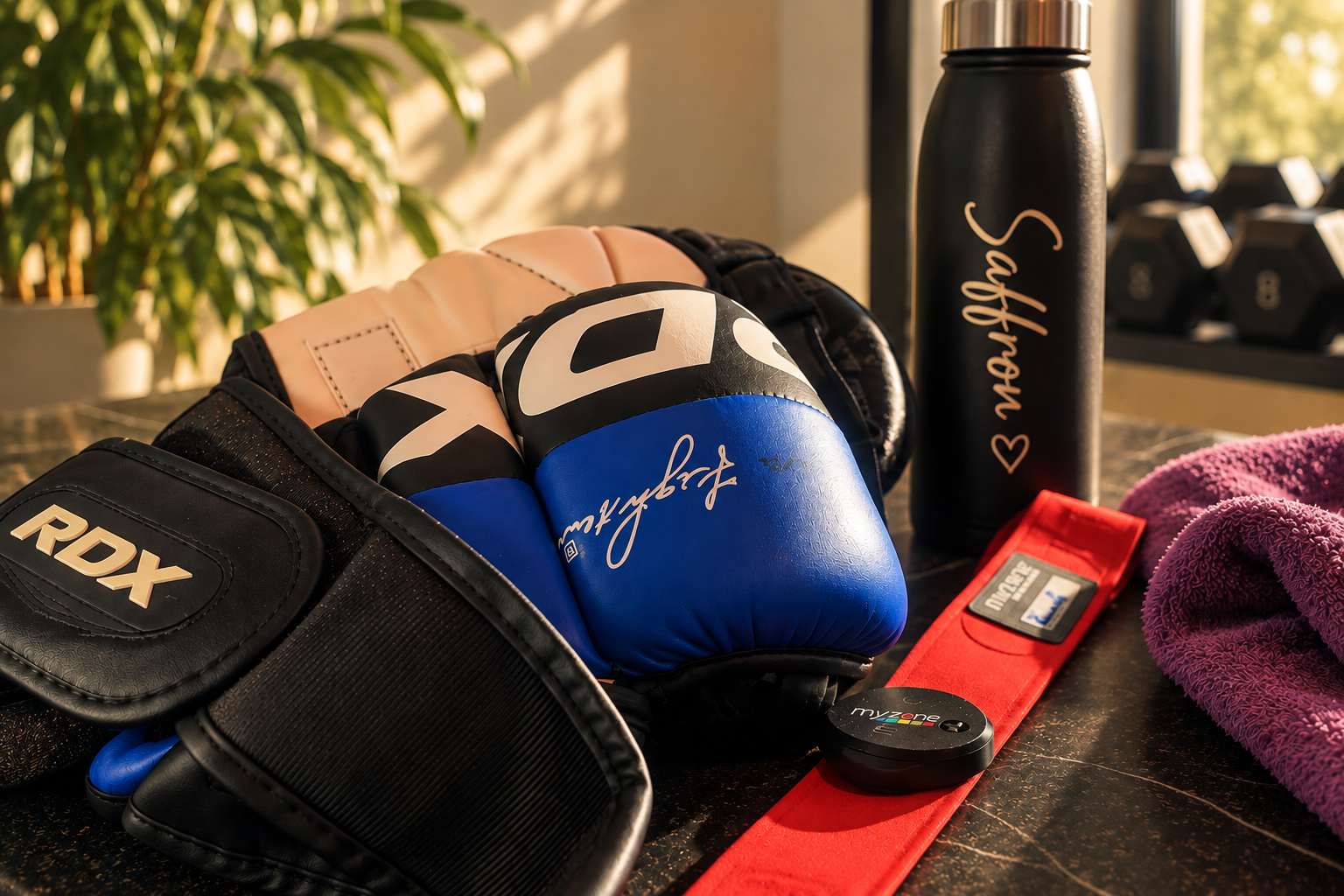
May provides Exhibit A. Someone suggested an Myzone MEP challenge. This was apparently all the encouragement I required. I wanted to win. Sport had never been the thing I thought I was good at. I wasn’t the sporty girl at school. Winning something physical at 50 therefore mattered far more to me than a monthly leaderboard probably should have. So I trained. And trained. Some days I booked three or four classes because I wanted to keep those MEPs climbing.
By the end of May, I had accumulated 10,661 MEPs, burned 30,344 calories and completed 28 gym sessions. I spent 26 hours and 57 minutes exercising. And I won. I was ridiculously pleased with myself. So I’m reluctant to look back and turn May into a cautionary tale about Doing Too Much. I loved it. I was competitive, motivated and I wanted to go back.
Was I exercising a lot? Obviously. But was that automatically bad? That is much harder to answer.
Then I can forget the gym exists
Sometimes writing takes over. I become completely absorbed in something and the gym quietly slides down the list. Then I suddenly surface and think:
The guilt starts and I worry I’ve lost fitness. I feel restless and I miss the instructors and, because I hate feeling as though I’ve let people down, missing a class can acquire rather more emotional significance than one absent woman in Sweaty Betty leggings probably warrants. Then comes:
Right. I’m back.
Which can rapidly become booking everything in sight. That swing between all the exercise and where did the last 10 days go? is what made me question whether a good fitness routine can really be reduced to a number.
What does the textbook say?
There is a number, of course.
For adults aged 19 to 64, the NHS recommends at least 150 minutes of moderate activity or 75 minutes of vigorous activity a week, plus strengthening the major muscle groups on at least two days.
That’s useful, sensible and it’s evidence-based. But those guidelines give us the ingredients.
They tell me strength matters, cardiovascular fitness matters, as does movement. They do not tell me whether I should book Blaze tomorrow morning.
Is four times a week too much at 50?
I’ve been told before that I was overdoing exercise “at my age”. Usually, the evidence was simply the number of classes I attended. I felt judged, so I ignored it. My experience didn’t fit the warning because three years ago, I was doing Body Pump four times a week and I felt at my fittest.
I was stronger, walked better and I slept better. I wouldn’t miss a session. I’ve also had injuries. I slipped a disc during Body Pump, and my Achilles tendinitis later had me coming downstairs one careful step at a time before eventually earning an ultrasound scan. I can’t claim frequent exercise caused either problem. But both made me pay more attention to how my body was responding.
Some weeks I’ve exercised five or six days, slept well, recovered and genuinely wanted to go again. Other times, one more class clearly wasn’t what I needed.
The number alone doesn’t tell me which situation I’m in.
“Listen to your body” isn’t quite enough
This advice sounds wonderfully simple. Listen to your body.
Which version?
The one before Zumba saying, Absolutely not, we’re tired? Or the one walking out an hour later thinking, Thank goodness I went? I’ve gone into classes feeling flat and come out completely different. On other days, I get an unmistakable internal urge:
I need to move.
So I don’t think “exercise according to how you feel” quite solves it either.
Feelings are information but they aren’t infallible instructions. I’m learning the difference between I don’t fancy starting and I genuinely need recovery.
Do women over 40 need different rules?
Women have historically been under-represented in exercise research, so better research into female physiology is welcome. But in correcting that imbalance, we seem to have acquired another set of instructions.
Lift heavy.
Do sprint intervals.
Ease up on cardio.
Train according to your hormones.
Change your workout according to your menstrual cycle.
I welcome better research into women’s bodies.
What I’m less convinced by is the idea that the answer to inadequate one-size-fits-all advice is different one-size-fits-all advice.
Perhaps the message isn’t: Women over 40, do less cardio.
It’s: Women, don’t forget strength.
That makes far more sense to me.
My hormones haven’t read the training plan
Cycle-syncing is a good example.
The idea is appealing: adapt exercise according to different phases of the menstrual cycle. I do notice changes in energy, strength and how much I want to exercise. The trouble is, they don’t always arrive when they’re supposed to. There are days when my period might suggest taking things gently and I feel perfectly capable of Blaze or strength training.
Then there are days when I supposedly ought to be firing on all hormonal cylinders and I would rather not. Perimenopause hasn’t made my body more interested in obeying a colour-coded calendar.
Being cycle-aware feels more useful to me than being cycle-obedient. Notice patterns, pay attention to symptoms and adapt when your own experience gives you a reason to.
“Woman over 40” is not a workout programme
H and I live in the same house, have access to the same gym and lead broadly the same family life. We still don’t want to exercise in the same way. He prefers early mornings and different forms of training. Give me a class, loud music and other people. Training history matters, sleep matters and injuries matter. Hormonal symptoms can matter. Goals do too. And most of all enjoyment matters.
What does a good fitness week look like?
I thought the answer would be a number. I don’t think it is. A good week, for me, increasingly looks like this:
I feel strong.
I’m recovering.
I’m sleeping reasonably well.
Nothing is persistently hurting.
Exercise is adding energy or pleasure rather than guilt.
And I want to come back.
Some weeks that may mean three sessions and on other weeks, five or six. Apparently, under competitive conditions, it can mean 28 gym visits in a month. But May cannot become the benchmark that makes every quieter week inadequate. And if writing swallows me whole and I realise I haven’t exercised for 10 days? I don’t need to compensate. I can just return. One session, then another.
My verdict
I started with a very simple question:
How many times a week should I exercise?
I thought the answer would be a number. It isn’t. Science gives me useful guardrails, but it can’t tell me exactly what Tuesday should look like. For that, I also need to ask: How did I sleep? What have I already done? Am I recovering? Does anything hurt? Do I need to move? And am I booking another class because I genuinely want it, or because I’ve temporarily become a woman possessed?
Sometimes the answer will be three workouts, sometimes five and at other times it will be considerably more or less. I’m learning not to make any of those numbers my identity.
A good fitness routine makes me stronger, supports my health, leaves room for the rest of my life and, when I wander off from it, gives me somewhere worth returning to. At 50, that is what good looks like to me.
What does a good exercise week look like for you? Has that changed as you’ve got older?
This site uses Akismet to reduce spam. Learn how your comment data is processed.
Discover more from Saffron & Cyrus
Subscribe to get the latest posts sent to your email.


Saffron & Cyrus is an independent women’s editorial publication with a recognisable voice, real-life perspective, a defined midlife audience and a commercial model built around useful, relevant partnerships.

Leave a Reply