
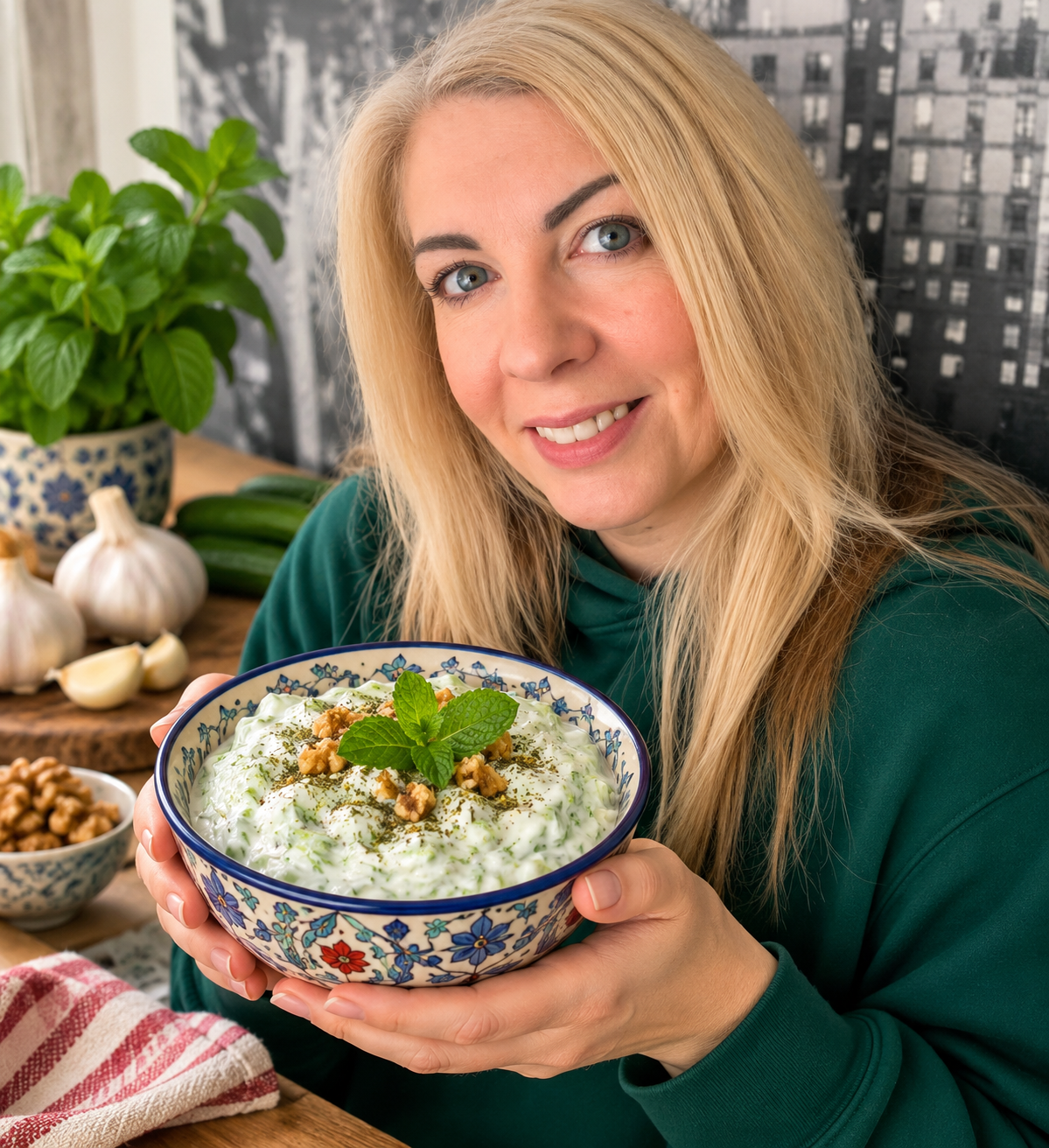
Newcastle’s damp winters make me think about joint pain and the garlic we use in our British-Persian kitchen. I look at the research, the food traditions and my rather generous approach to mast o khiar.
There are days in Newcastle when the cold seems to get into my bones. I don’t mean the crisp weather that makes me want to pull on a woolly jumper and go for a walk. I mean the damp, miserable weather that leaves me stiff and makes the prospect of leaving the house unappealing.
At 51, I know a thing or two about aches and pains. I love my gym classes, especially combat-style workouts, but my body doesn’t always recover as quickly as it once did. I’m also more interested in whether the food I eat makes any difference to how I feel.
In our British-Persian household, we get through quite a lot of garlic. My husband is Persian, and it appears in plenty of our family meals. What I hadn’t appreciated until I explored Iranian food traditions was its reputation for helping with ailments associated with cold weather.
What Newcastle and Rasht have in common
When people think of Iran, they often picture deserts, dry landscapes and scorching summers. Rasht, the capital of Gilan province near the Caspian Sea, offers a different picture, with rain and green countryside. The damp gives me a point of comparison with Newcastle, although the two places don’t share the same climate.
Gilan is known for rice, herbs, aubergines, fish and garlic. Encyclopaedia Iranica’s account of Gilan cooking describes garlic as a regular ingredient and explains the region’s fondness for herbs and pickles.
In traditional Persian medicine, garlic is classed as a warming food, as documented in research into Iranian food classifications. “Warming” belongs to that traditional system. It isn’t evidence that garlic raises body temperature or treats winter joint pain.
Can garlic help arthritis and inflammation?
A 2020 trial involving 70 women with active rheumatoid arthritis compared garlic supplements with a placebo over eight weeks. Researchers reported improvements in pain, fatigue and certain inflammatory markers in the garlic group. The trial was small and short, so its findings need to be tested in larger, longer studies.
A 2025 review of garlic extract in rheumatic diseases found four articles involving 176 patients, with follow-up lasting four to 12 weeks. The authors reported promising results but called for larger studies. These findings concern specific preparations and diagnosed conditions, and they don’t establish a benefit for ordinary post-workout aches.
What the research doesn’t show
These studies don’t establish that garlic in ordinary meals treats arthritis or prevents joint damage. I wouldn’t replace prescribed treatment with garlic bread, however generously seasoned.
As for the weather, Arthritis UK’s cold-weather guidance describes research linking increased pain with higher humidity, lower atmospheric pressure and stronger winds. The link concerns pain, rather than evidence that cold causes arthritis.
NCCIH’s guidance on garlic supplements and safety reports small potential benefits from supplements for cholesterol and blood pressure in certain groups. It also warns that garlic supplements can increase bleeding risk, particularly alongside anticoagulants or aspirin. Speak to a pharmacist or clinician before taking them, especially if you use medicines or have surgery planned.
Garlic in Gilan’s cooking
One of Gilan’s best-known dishes is mirza ghasemi, a smoky mixture of aubergine, tomatoes, eggs and garlic. Then there’s torshi seer, Persian pickled garlic, which develops a darker colour and mellow flavour as it ages. Both show how an ingredient we often use for seasoning can become the main attraction.
Another regional speciality is dalar, a salty herb mixture served with cucumber and other foods. It’s also known as green salt, and it’s a reminder of how much Iranian cuisine varies between regions.
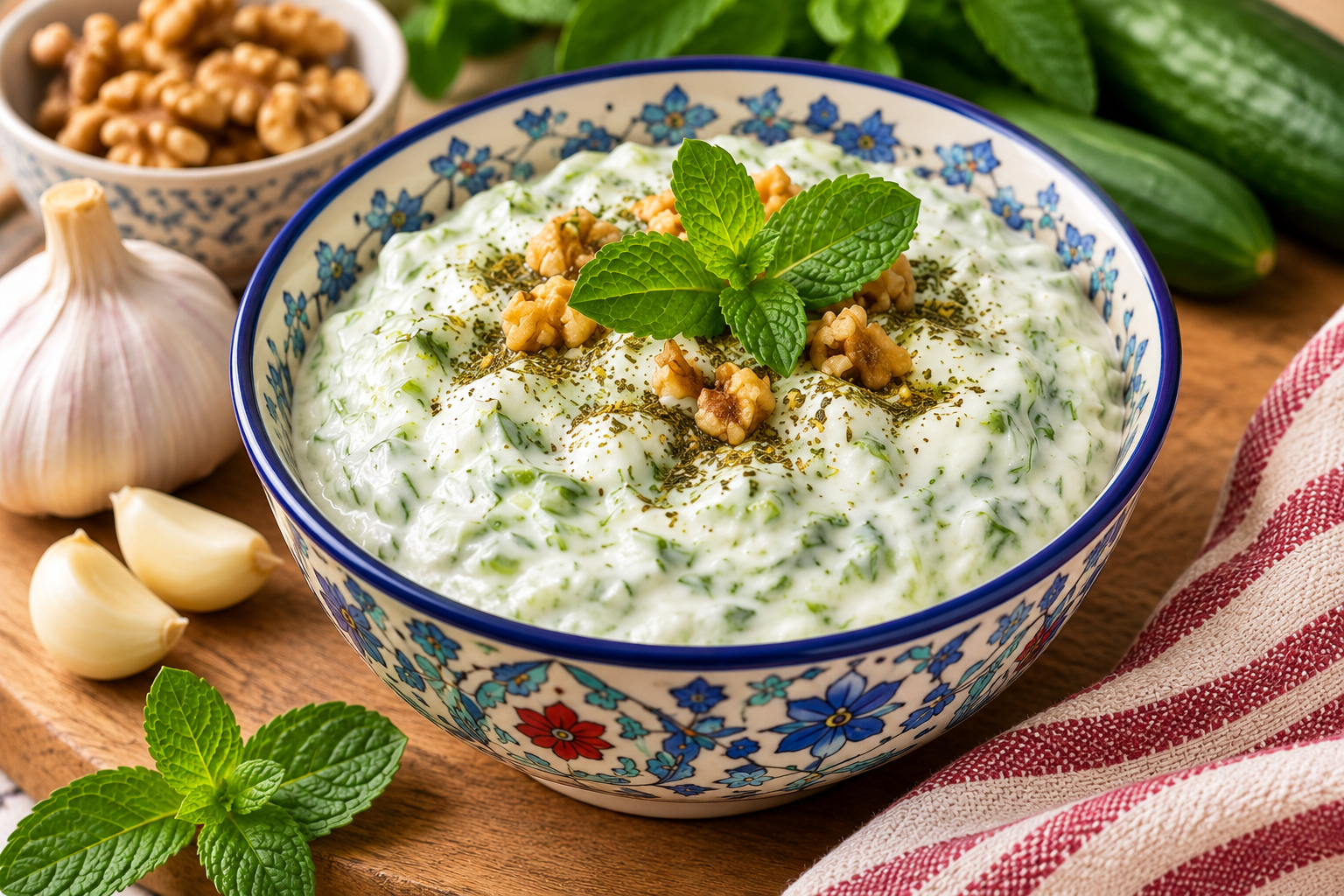
In our house, one of the simplest favourites is mast o khiar, a yoghurt and cucumber dip often compared with Greek tzatziki. Persian versions differ between families, with additions such as walnuts, raisins or fresh herbs. I prefer mine with plenty of garlic and sabzi namak, green salt, although I suspect my husband might draw the line at the whole bulb I once thought was perfectly OK.
My Persian-inspired mast o khiar recipe
Preparation: 15 minutes, plus about 30 minutes chilling. Serves 6–8 as a side.
This is the version I make at home. I sometimes use more garlic, but I’d suggest starting with a few cloves unless you love it like me.
- 950g thick Greek yoghurt
- 2 cucumbers, finely grated
- 1 tablespoon dried mint
- 2–4 garlic cloves, crushed
- Salt and black pepper, to taste
- Chopped walnuts, optional
- Squeeze as much water as possible from the grated cucumber.
- Stir the cucumber into the yoghurt.
- Add the garlic, dried mint and seasoning.
- Mix thoroughly and add walnuts if you use them.
- Refrigerate for about 30 minutes to let the flavours develop.
Serve chilled alongside grilled meat, rice or homemade Persian kotlet. It also goes well with lubia polo, Persian rice with green beans. Nooshe joon! Enjoy your food.
Garlic makes dinner better
During my week without added sugar, I started to think more carefully about my eating habits. These days, I’m less interested in strict food rules and more concerned with making nutritious meals.
I don’t expect garlic to cure my aches or improve my performance in the gym. What Persian cooking has taught me is to appreciate ingredients that have been part of family kitchens for generations, without expecting them to perform miracles.
Does your family have a traditional winter food remedy?
I’d love to know what you grew up eating for aches or colds, and whether you still swear by it.
More from our British-Persian kitchen
Another yoghurt-based dish, with beetroot and a family lunch behind it.
From my Newcastle childhood to the patties made in H’s family kitchen.
Occasional stories, experiments, discoveries and questions from Saffron & Cyrus.
Discover more from Saffron & Cyrus
Subscribe to get the latest posts sent to your email.

Saffron & Cyrus is an independent women’s editorial publication with a recognisable voice, real-life perspective, a defined midlife audience and a commercial model built around useful, relevant partnerships.
