
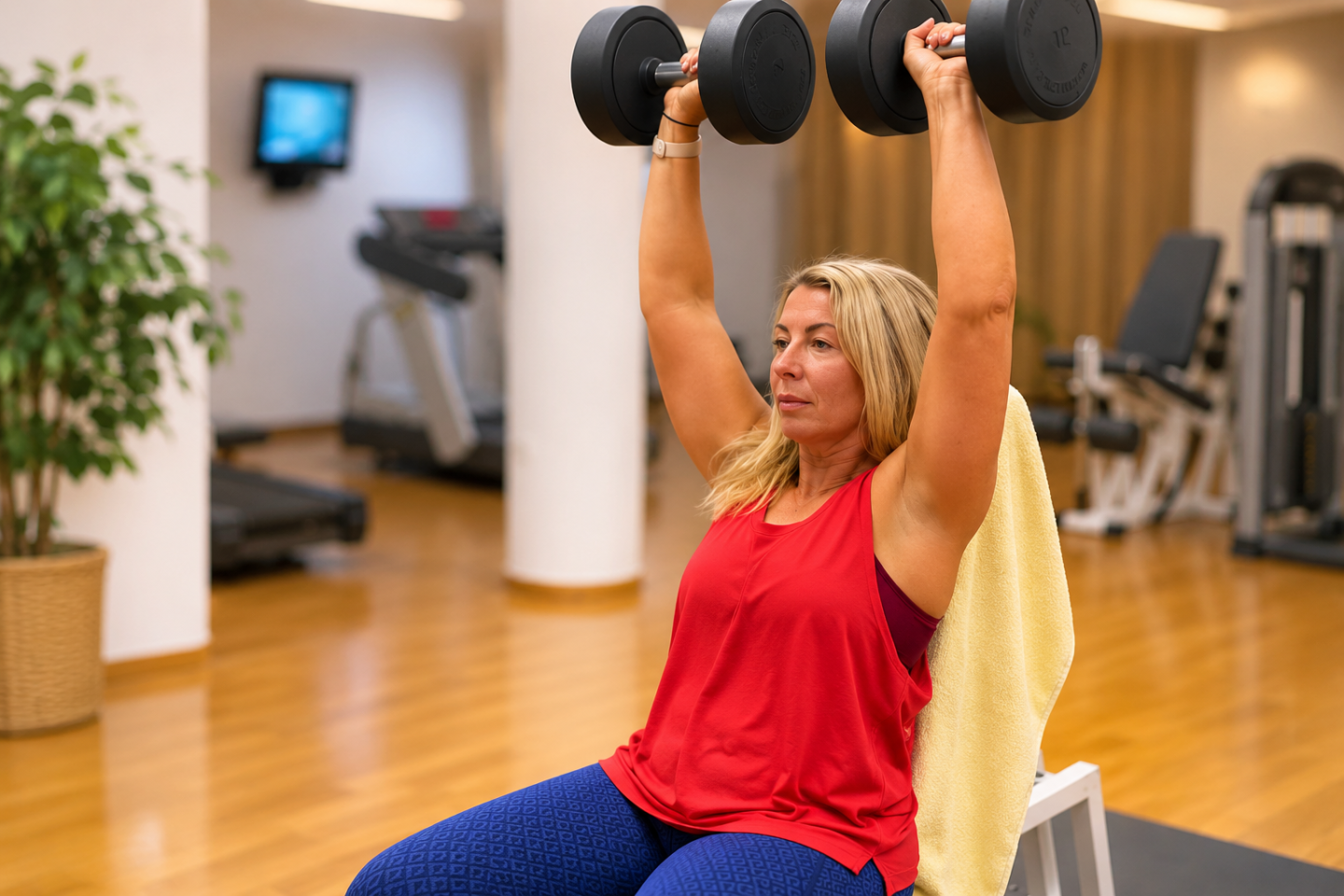
I’m 51 and already lift weights, so can The Ageless Blueprint teach me anything new?
Gifted review access: I received The Ageless Blueprint digital bundle as a gift and was not paid to write about it. This article covers my first impressions. I haven’t completed the 30-day experiment, and no positive review has been promised.
Do I need another fitness programme?
I spend a fair amount of time in the gym. I lift weights, love Zumba and have a weakness for combat-style classes that leave me looking as though I’ve been dragged through a hedge backwards. I’ve already written about realistic fitness routines in your 40s and 50s, so I’m hardly starting from scratch.
At 51, perimenopause has made things more complicated. Some days I feel strong enough to tackle anything, but a poor night’s sleep makes lifting weights a lot harder. I’m also paying more attention to protein and recovery.
So when The Ageless Blueprint team offered me complimentary access to its fitness bundle for women over 40, I agreed to take a look. I’m interested in anything that might improve my training, but an attractive cover doesn’t tell me whether the advice is sound.
What’s inside The Ageless Blueprint?
The bundle covers strength training, mobility, nutrition and recovery. Its main guide advertises 65 exercises, with home and gym alternatives, alongside three 12-week programmes for different experience levels. There’s also an eight-minute warm-up, progress trackers and equipment advice.
The material I’ve examined is clearly presented. A short questionnaire helps readers decide where to start, while the exercise instructions explain positioning and technique. The book recommends three weekly strength sessions lasting 35 to 50 minutes. On paper, that seems manageable for women balancing work and family.
It also suggests the system can replace a personal trainer, which I’m less convinced about. A book can’t watch somebody lift a weight, correct their technique or recognise when an exercise needs changing. Having recently completed my Level 2 Gym Instructor qualification, I appreciate how much there is to learn about safe exercise instruction.
Does the strength-training advice stack up?
The book emphasises maintaining muscle after 40, which makes sense. Strength and physical function become increasingly important as we age. The NHS recommends muscle-strengthening activity at least twice a week, so three sessions seems a reasonable schedule to try. The NICE menopause recommendations also recognise the importance of maintaining muscle mass and strength through physical activity.
The guide explains progressive overload, which means gradually increasing the challenge through weights, repetitions or sets. I already use this approach, although I don’t increase the weight every week. Sometimes maintaining good technique is enough of a challenge after a dreadful night’s sleep. I’ve written about exercise recovery and working out with sore muscles, because deciding when to rest can be difficult when you’re keen to train.
Eight minutes to protect your joints?
The warm-up includes ten movements, from arm circles to leg swings. I appreciate the emphasis on preparation, although the suggestion that a short routine can protect your joints needs some care. Warming up helps prepare the body for exercise, but it can’t guarantee that you won’t get injured. I’ll compare the routine with what I already do before my gym sessions.
Can the meal plan survive a family food shop?
The 14-day meal plan features eggs, Greek yoghurt, chicken, salmon, quinoa and vegetables. I’ve been paying more attention to protein myself, including trying Linwoods Fibre Boost and Protein Boost in my usual yoghurt and berries.
One recommendation caught my attention. The book suggests a plate containing 50% protein, 25% carbohydrates and 25% vegetables, without clearly explaining whether those percentages refer to weight, volume or something else. That’s quite a lot of protein on a plate. The Eatwell Guide takes a broader view of food groups across a day or week, and I would want a clearer explanation before following the book’s proportions.
The shopping list also lacks quantities. With salmon, prawns, steak and avocados included, I suspect the cost could mount up. It’s something I’ll check during the experiment rather than assume the plan is affordable.
After my seven-day sugar experiment and 16:8 fasting, I’m interested in how different eating plans fit around exercise. We eat plenty of Persian food at home, too. H isn’t likely to abandon his cooking because I’ve acquired another fitness guide, and I wouldn’t want him to.
What about The Ageless Back Fix?
The bundle also includes a back pain guide offering a three-minute assessment, 16 corrective exercises and a 14-day programme. Having experienced back pain since having Cyrus at 40, I was interested in this part of the package.
I’m wary of a quick questionnaire claiming to identify the cause of pain. Back problems can have several causes, and the NHS guidance on back pain explains when medical assessment may be needed. I’ll examine the exercises, but I won’t use the guide to diagnose my own back problems or treat its recommendations as individual medical advice.
What I like, and what I’m questioning
The exercise instructions are accessible, and I like having home and gym options. The structured programmes could help women who want more direction than they get from choosing a few exercises at random. The progress trackers are useful, too, although whether I keep using them is another question.
I’m less persuaded by the suggestion that the guide could replace a personal trainer. Some claims about metabolism, hormones and injury prevention also need more careful wording. Exercise has well-established benefits, but a digital programme can’t promise the same outcome for every woman.
I’m also interested in whether the meal plan works with the food we already eat and whether the training schedule leaves enough room for recovery. Those are the parts I’ll be paying attention to during the trial.
So, is The Ageless Blueprint worth buying?
I haven’t reached a verdict. I’ve read enough to see where the programme could be useful, but I want to put it through a normal month before recommending that anyone spends money on it.
I’m planning to test the relevant parts for 30 days, keeping a record of my strength sessions, recovery, energy and food costs. I’ll carry on attending my usual classes because I enjoy them, and I’m not giving up Zumba to follow a PDF.
My 50 in 50 challenge was partly about making more time for my health, and I’m still keen to improve my fitness. Having completed my gym instructor qualification, I’m interested in comparing the programme’s exercise guidance with what I’ve learned.
A month won’t establish whether a 12-week programme delivers everything it promises. It should give me a better idea of how practical the advice is, what I learn from it and whether I’d recommend paying for the bundle.
For now, I’m reserving judgement. I’ve got a gym membership, a full-time job and a family who still expect dinner. If this programme can fit into that arrangement and improve how I train, I’ll be impressed.
This article reflects my personal experience and isn’t medical advice. If you have persistent pain, an injury or health concerns that could affect exercise, speak to an appropriate healthcare professional before starting a new programme.
More from Saffron & Cyrus
Stories, experiments and questions from Saffron & Cyrus.
NB: No spam. Just stories and the odd big question. You can unsubscribe whenever you like.
Discover more from Saffron & Cyrus
Subscribe to get the latest posts sent to your email.


Saffron & Cyrus is an independent women’s editorial publication with a recognisable voice, real-life perspective, a defined midlife audience and a commercial model built around useful, relevant partnerships.

What a brilliant read – your blog is insightful & empowering. The way you broke down your personal experience with honesty & clarity is refreshing. I really liked the tips you shared they are practical & thoughtful clearly drawn from real understanding. I especially appreciated the focus on self-care & mindset, which often gets overlooked. Thank you for shedding light on such an important topic xx
Author
Thank you so much Shirley for these kind words. Menopause and perimenopause are such important topics and we all need to keep on the radar xx
My heart was actually beating faster as I read though this because it was so relatable that I felt I was also being heard.
I cannot tell you how wonderful it is to read about nutrition being in the form of the actual nutrition, rather than pushing a meat agenda too.
Honestly Aranda, I love you for your honesty and openness.
Author
Thank you so much Clare, and totally agree on the nutrition front too x