
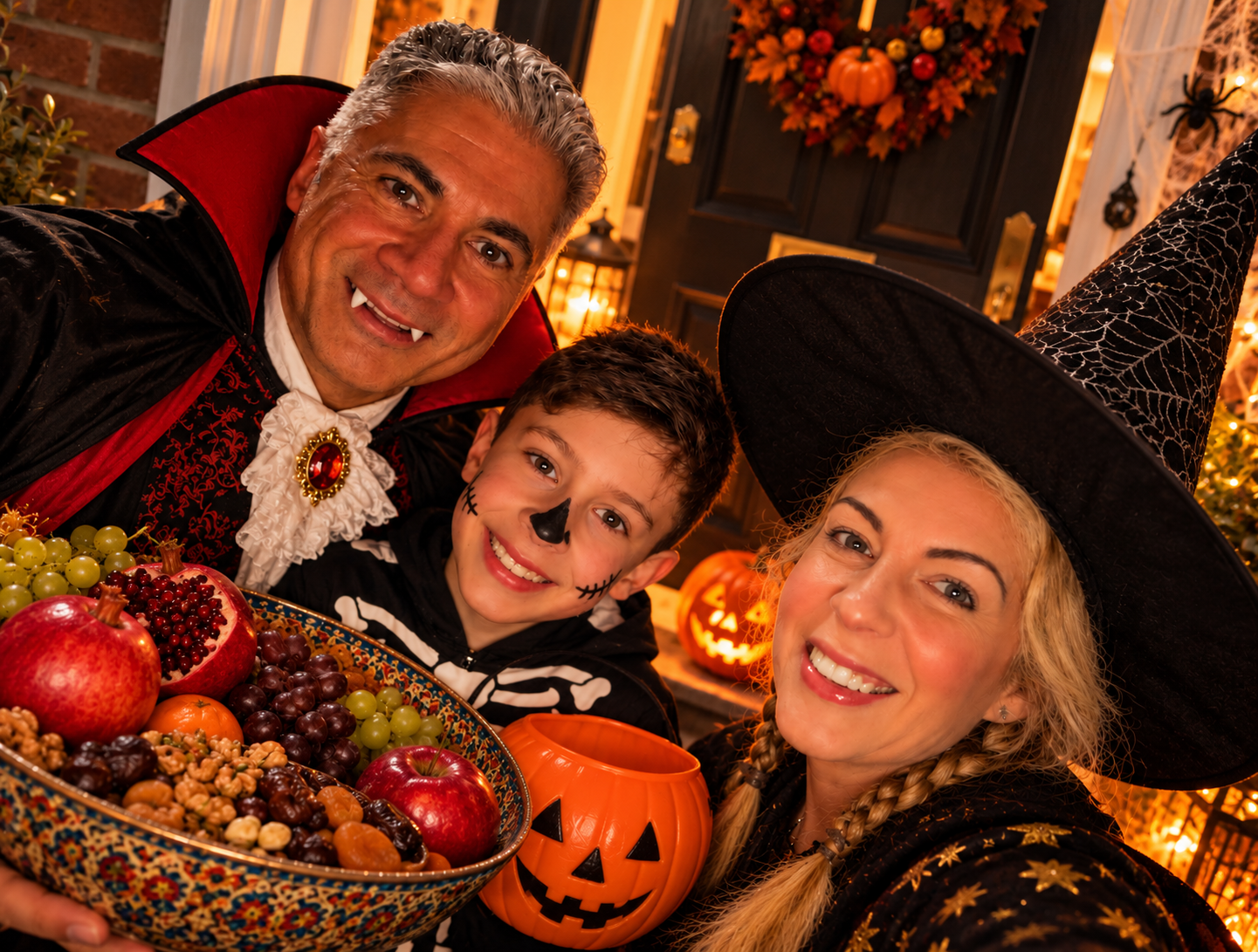
The Halloween when Persian hospitality left British trick-or-treaters baffled by a fruit bowl
I heard how a Persian family in the North East offered fruit instead of sweets on Halloween. Their young visitors apparently weren’t sure whether they’d been tricked or treated.

Nobody expects a fruit bowl on Halloween
Halloween in Britain is pretty straightforward. Children dress as witches, skeletons and creatures of the night, knock on doors and expect sweets. Adults admire the costumes, hand over chocolate and shut the door before the next group arrives. Some households don’t even bother with that. They switch off the lights, close the curtains and pretend nobody’s home, despite the TV flickering in the living room.
But one Persian family living in the North East of England had a different understanding of the occasion. Rather than buying a multipack of Haribo, they prepared an impressive selection of fruit and traditional Persian snacks. When the trick-or-treaters arrived, the family opened their door and invited the children to help themselves. The youngsters were apparently horrified. They’d come expecting chocolate and found themselves confronted with something containing vitamins.
When I heard the story, I laughed because I understood exactly how it happened. Having married into a Persian family, I know that offering visitors food is practically compulsory. These people had children coming to their door, so naturally they’d prepared refreshments. The fact that their guests were dressed as vampires and intended to leave within 30 seconds was no reason to lower their standards.
A perfectly generous gesture, although not quite what a small vampire had in mind.

In a Persian household, nobody leaves hungry
With my Persian family, a quick cup of tea rarely remains quick. Before you’ve removed your coat, somebody is making chai, arranging fruit and bringing out plates of nuts and pastries. Mention that you can’t stay long and there’s every possibility somebody will start preparing dinner. Since marrying H, I’ve become accustomed to this generosity, although the quantities still surprise me. In Britain, we offer visitors tea and biscuits. If they decline, we believe them. We might even be relieved because it saves opening another packet.
Persian hospitality, or mehmoonnavaazi, goes beyond feeding people. There’s also taarof, the etiquette surrounding politeness and accepting offers. Somebody offers you something, you decline out of courtesy, and they offer again. I’m British. When I say no, thank you, I expect that to be the end of the conversation. Now imagine a small skeleton politely refusing Persian snacks, only to find the host pushing the fruit bowl towards them and encouraging them to reconsider. I don’t know whether taarof featured in this Halloween encounter, but the possibilities are entertaining.
From Shab-e Yalda to Halloween
During Shab-e Yalda, the longest night of the year, Persian families traditionally gather around tables laden with pomegranates, watermelon, nuts and dried fruit. Nowruz, the Persian New Year, brings another round of entertaining in our family, with tea, sweets, pastries and ajil, a mixture of nuts and dried fruit. I’ve witnessed the preparation involved. There’s shopping, washing fruit, arranging dishes and lengthy discussions about whether there’s enough food. There always is. Usually enough for several additional families who haven’t been invited.
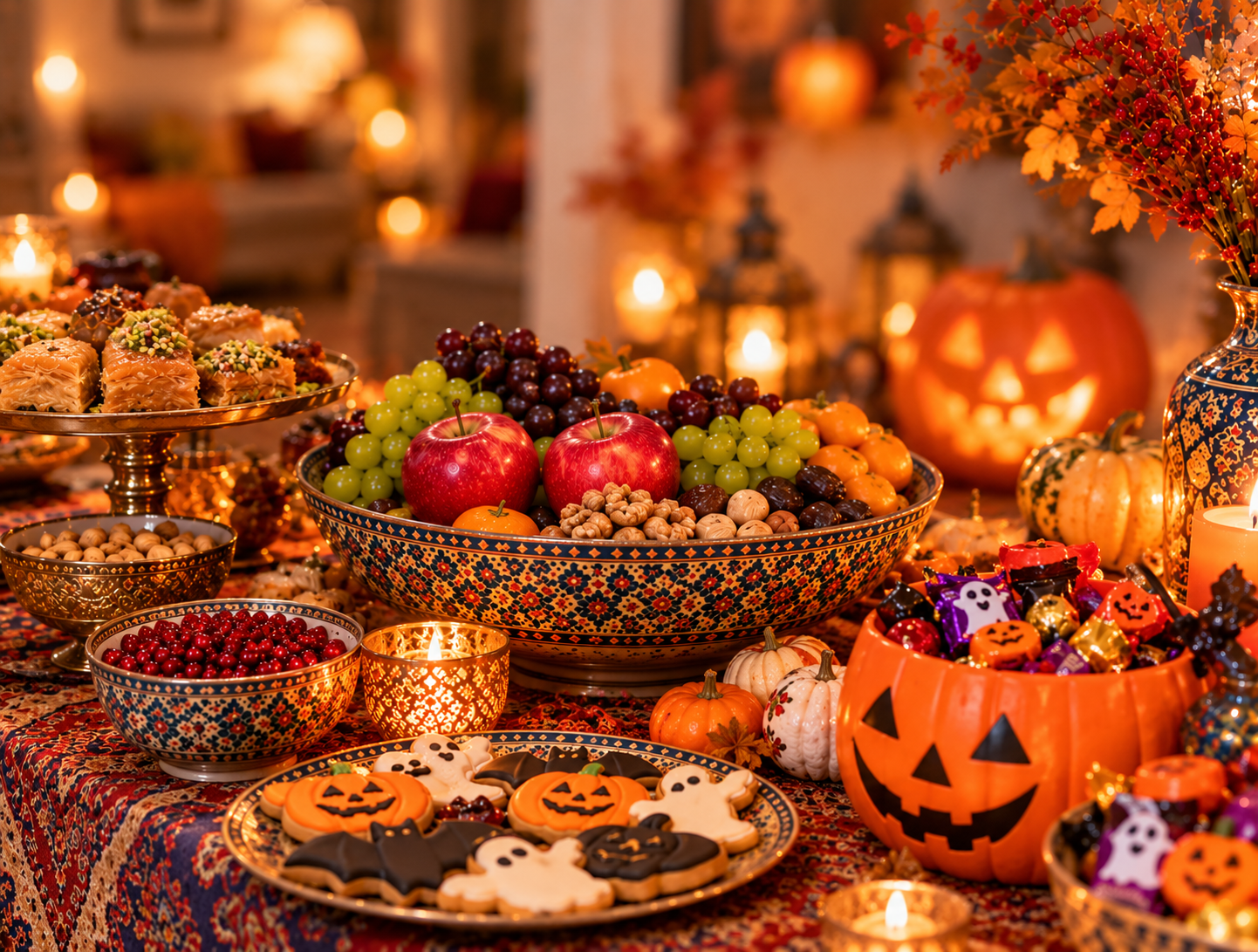
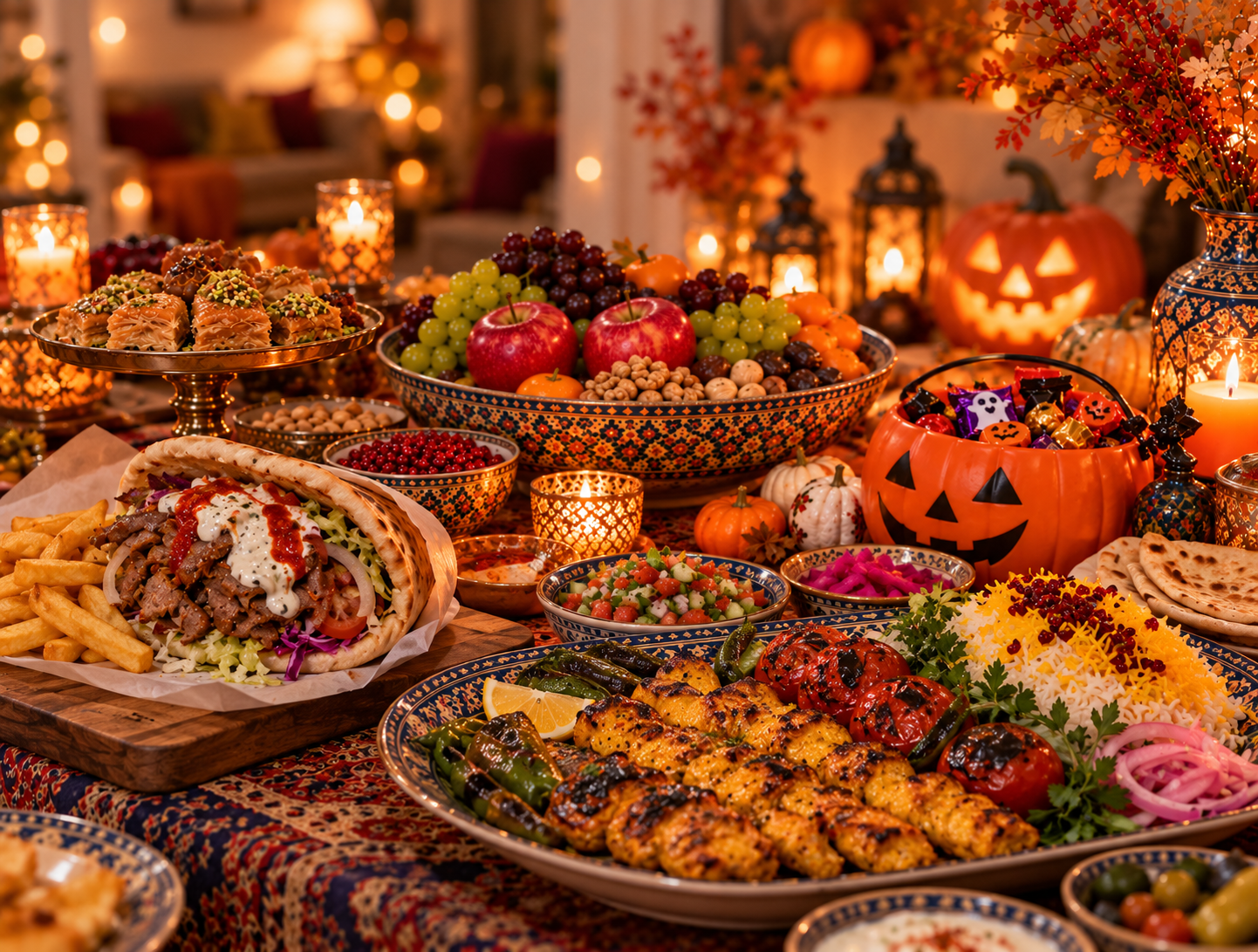
H grew up with these traditions. I grew up believing that putting the kettle on and finding an unopened packet of Rich Tea constituted perfectly respectable hospitality. We do share some common ground, especially kebabs, although H would most likely object to comparing a beautifully grilled Persian kebab with something a Geordie might buy after a night out in Newcastle. Maybe the Halloween family missed an opportunity. A few freshly grilled kebabs might have impressed their visitors, although parents might have questioned why their children were returning home with skewers sticking out of their plastic pumpkins.
When apples were Halloween entertainment
What makes the fruit bowl amusing is that Halloween wasn’t always dominated by chocolate. When I was growing up, bobbing for apples was totally acceptable entertainment. We plunged our faces into buckets of cold water, attempting to catch floating apples with our teeth while everybody else waited their turn. Half-bitten apples bobbed alongside untouched ones, and the next child happily submerged their face in the same communal soup. Yet somehow, a beautifully prepared Persian fruit bowl was considered more frightening.
What Cyrus makes of two cultures
One pleasure of raising Cyrus in a British-Persian household is watching him enjoy traditions from both sides of his family. He knows about Nowruz and Persian food, but also enjoys Halloween and Christmas. Colouring eggs for Easter and Persian New Year is another way those traditions meet in our home. Given his enthusiasm for fruit, I suspect he’d have welcomed that Halloween offering. He loves pomegranates, watermelon and pineapple, although I can picture him accepting the fruit before asking whether there was any Haribo. He’s British and Persian, after all. Why shouldn’t he enjoy both?
Would I offer Persian snacks to trick-or-treaters?
I’d probably end up producing chocolate buttons to avoid disappointing the children. There’s also the practical matter of allergies and parents preferring individually wrapped treats. Still, this wasn’t an attempt to reform anyone’s diet. They were just offering food in the way they understood best.

I wonder whether those children remember that Halloween. They may have forgotten most of the chocolate they collected, but I suspect the house offering Persian snacks remains memorable. After all, there’s only so much cultural education you can reasonably expect a vampire to absorb before bedtime.
Would you welcome Persian snacks on Halloween, or should trick-or-treating remain strictly a chocolate-and-sweets affair?
More from Saffron & Cyrus
The Nowruz goldfish that lived for seven years
How to grow sabzeh for Persian New Year
Occasional stories, experiments, discoveries and questions from Saffron & Cyrus.
Discover more from Saffron & Cyrus
Subscribe to get the latest posts sent to your email.

Saffron & Cyrus is an independent women’s editorial publication with a recognisable voice, real-life perspective, a defined midlife audience and a commercial model built around useful, relevant partnerships.
