
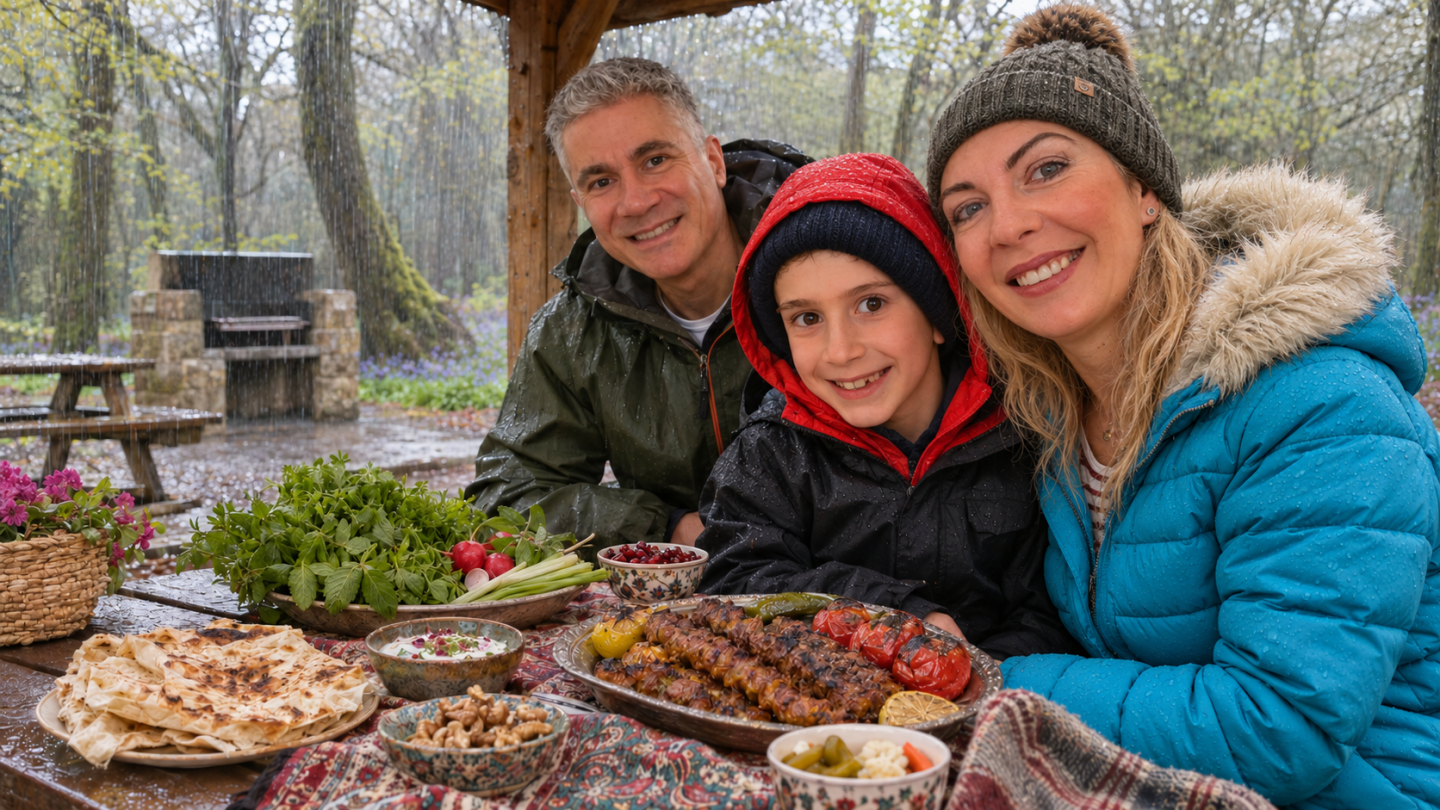
Persian New Year in Newcastle, with a barbecue in the pouring rain
From coatless Geordie nights out to floating lentils in a Northumberland stream, celebrating Nowruz and Sizdah Bedar with my Persian family has been quite an education.
“I’m telling you, they’re Persian,” I said to H, pointing towards a family barbecuing in the pouring rain at Plessey Woods in Northumberland. We hadn’t spoken to them, but I was convinced. Who else would be standing over a barbecue when it was absolutely chucking it down? As it turned out, I was right. They were Persian and just as determined as us to enjoy Sizdah Bedar.
We’d even barbecued in the snow before, so a soggy afternoon in the woods wasn’t going to put us off. Being a Geordie, I’m hardly in a position to criticise. I’ve seen enough bare legs on Newcastle’s Bigg Market in February to know that dressing sensibly isn’t always a priority.
Come to think of it, our Persian family and the Geordies I know have quite a lot in common, especially our love of a kebab. H cooks his over charcoal, while I’m familiar with the version picked up on the way home from a night on the Toon.
Why Nowruz celebrations last nearly two weeks
Nowruz marks the arrival of spring and the Persian New Year, a connection explored in Encyclopaedia Iranica’s history of the festival. In our British-Persian family here in Newcastle, it involves considerably more than staying up too late on 31 December and regretting it on 1 January.
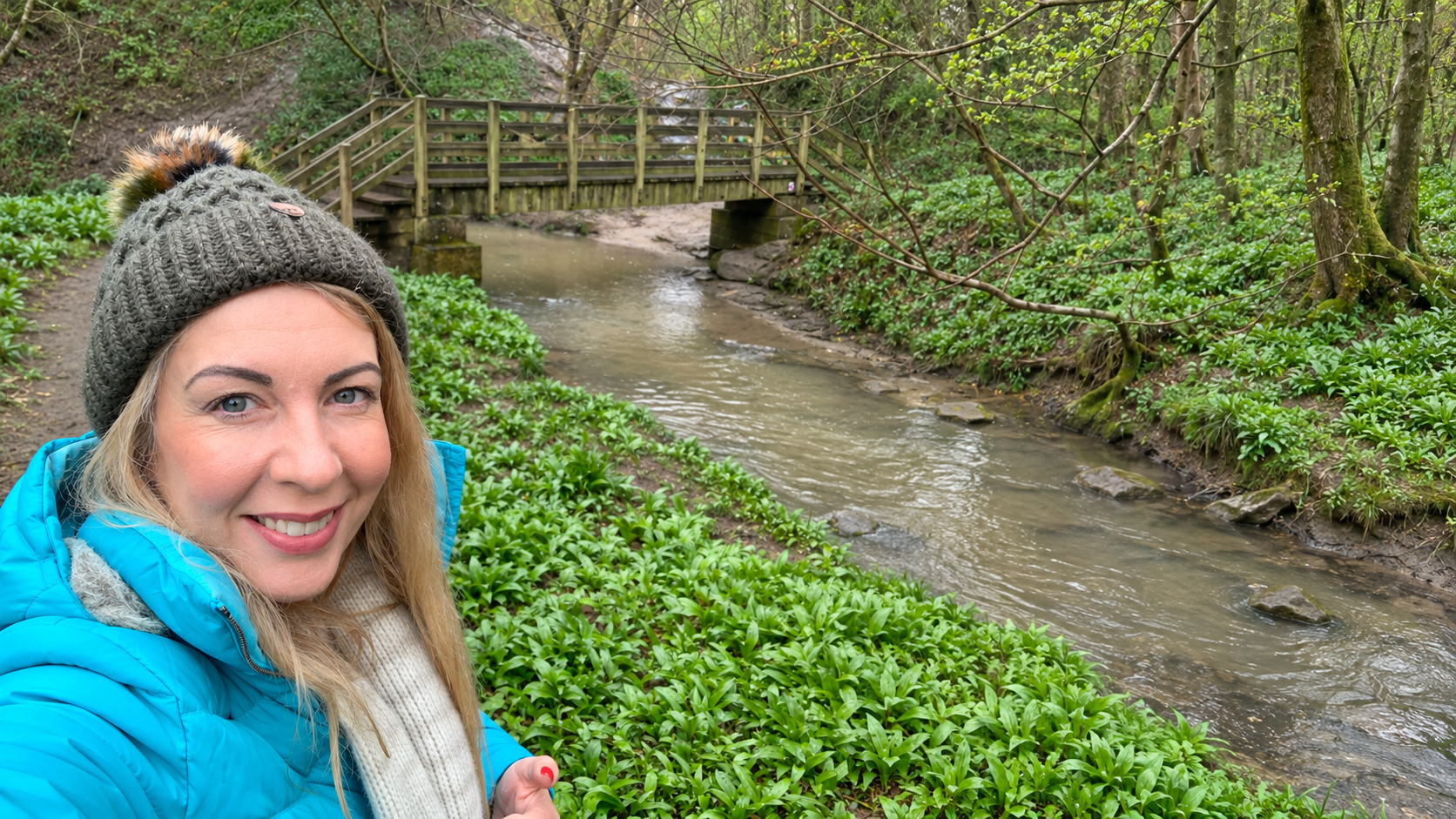
Sizdah Bedar falls on the 13th day of the new year, when families traditionally spend time outdoors to mark the end of the festivities. Encyclopaedia Iranica places it on 13 Farvardin in the Iranian calendar. For us, that meant a picnic and a barbecue, with the Northumberland weather doing little to discourage either family.
The children who tried to rescue our sabzeh
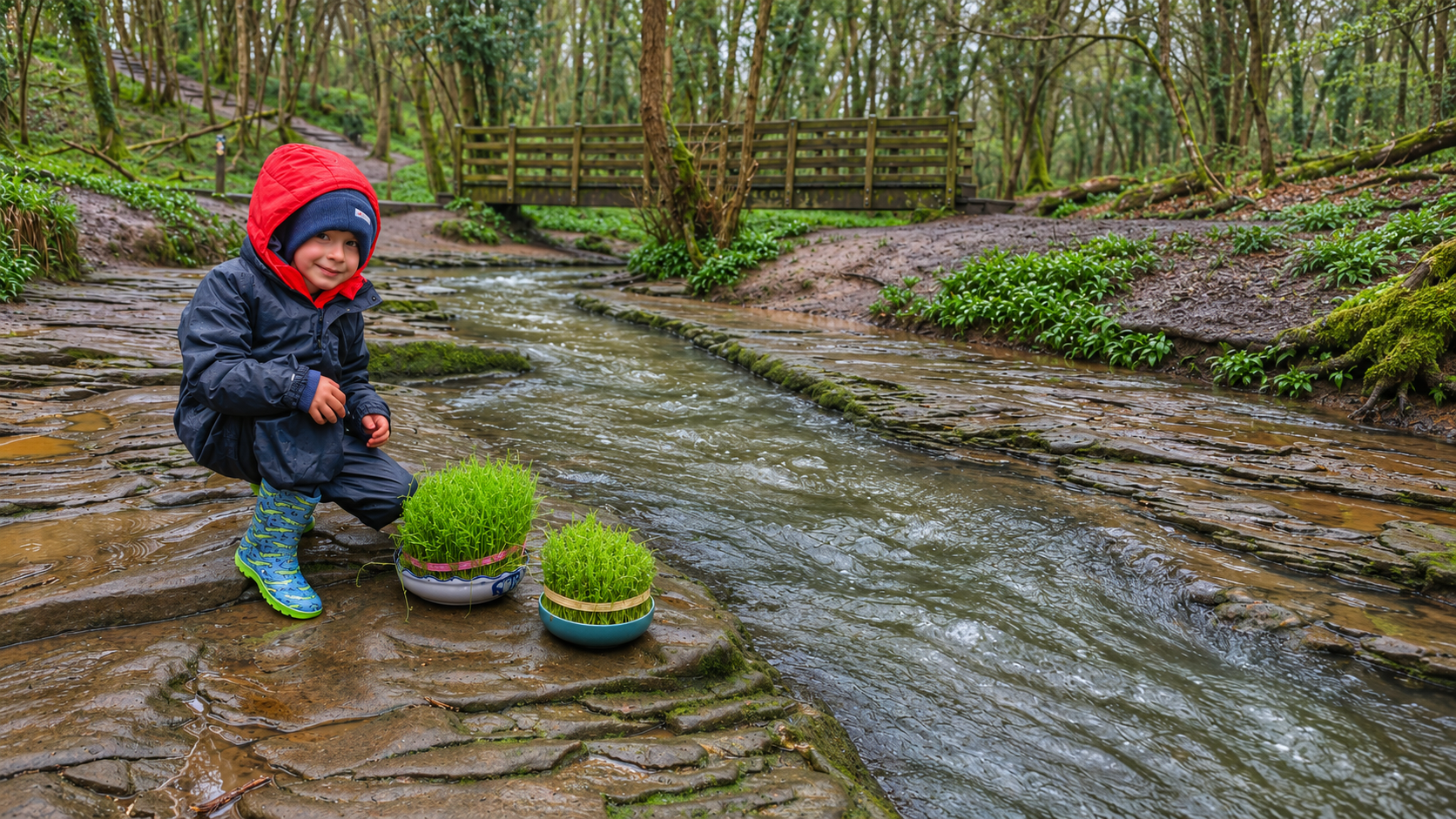
Our next job was to say goodbye to the sabzeh, the green shoots grown from seeds such as lentils or wheat for the haft sin table. These symbolise renewal and growth. We’d spent days nurturing ours, only to send the little green tuft floating downstream, following a custom some families observe at Sizdah Bedar.
A group of British children nearby were fascinated. They couldn’t understand why we’d deliberately put what looked like a perfectly healthy clump of greenery into the water, and naturally, they decided to rescue it. One boy managed to lift it out, but after I gave him a stern look, he promptly put it back.
There I was, a British woman standing in a Northumberland wood, giving another British child the evil eye for interfering with a Persian tuft of lentils. A few years earlier, I’d probably have been the one fishing it out myself.
The irony is that I’m not that good at growing sabzeh in the first place. Every year I soak the seeds, find a suitable dish and fuss over them as though I’m conducting a scientific experiment. Sometimes they grow beautifully, but other years I’ve produced something resembling the grass cuttings at the bottom of the garden bin.
Our friends have even offered to grow me a backup batch. I think they’ve decided the future of our haft sin table is too important to leave entirely in my British hands. Cyrus enjoys watching the seeds sprout, although he’s less concerned about whether the finished result resembles a miniature lawn. I’ve written more about growing sabzeh with children for anyone joining us in this annual exercise.
Welcoming spring in Newcastle with the heating on
At one Nowruz celebration at our friends’ new house, we ended up discussing the customs their families had followed for generations. Some remembered opening every window to welcome the New Year. A lovely idea in Tehran, maybe, but in Newcastle in March? I’d be walking around in my slippers wondering why we were paying to heat the house.
Somebody mentioned boiling milk at midnight, although nobody seemed entirely sure why. Another friend recalled lighting a candle and letting it burn down naturally to ward off bad luck. I was more concerned about the house catching fire. What amused me was how everyone remembered different versions. Even the Persians around the table couldn’t always agree on why their families did certain things.
We’re hardly in a position to criticise. The British drag trees into their living rooms every December and spend the following weeks picking pine needles out of the carpet.
Our hosts had prepared sosis bandari, lamb, chicken and fresh sangak bread, but there was the usual delay before anyone could eat. Somebody wanted a picture of the entire table, another person decided the bread needed moving, and just as you were about to help yourself, another phone appeared.
I’m equally guilty, taking photographs for this platform while secretly wishing everyone would hurry up before dinner gets cold. Cyrus and his friend had a better system, demolishing the profiteroles while the adults were occupied.
Later, H recited all seven traditional items of the haft sin table perfectly and everybody clapped. I sat there grinning like a proud mum whose child had passed his GCSEs, despite my husband being a grown man who grew up celebrating Nowruz.
What I want Cyrus to remember
Having Cyrus has made these celebrations more important to me. He’s growing up British and Persian, with Christmas alongside Nowruz. We decorate eggs and prepare the haft sin table together, although some traditions interest him more when food is involved.
Our two cultures have already produced some entertaining misunderstandings. I’ve also written about the Persian family whose Halloween fruit bowl baffled British trick-or-treaters. I don’t expect Cyrus to remember what every item on the haft sin table represents. I didn’t understand everything when I first started celebrating Nowruz, and I’m still asking questions.
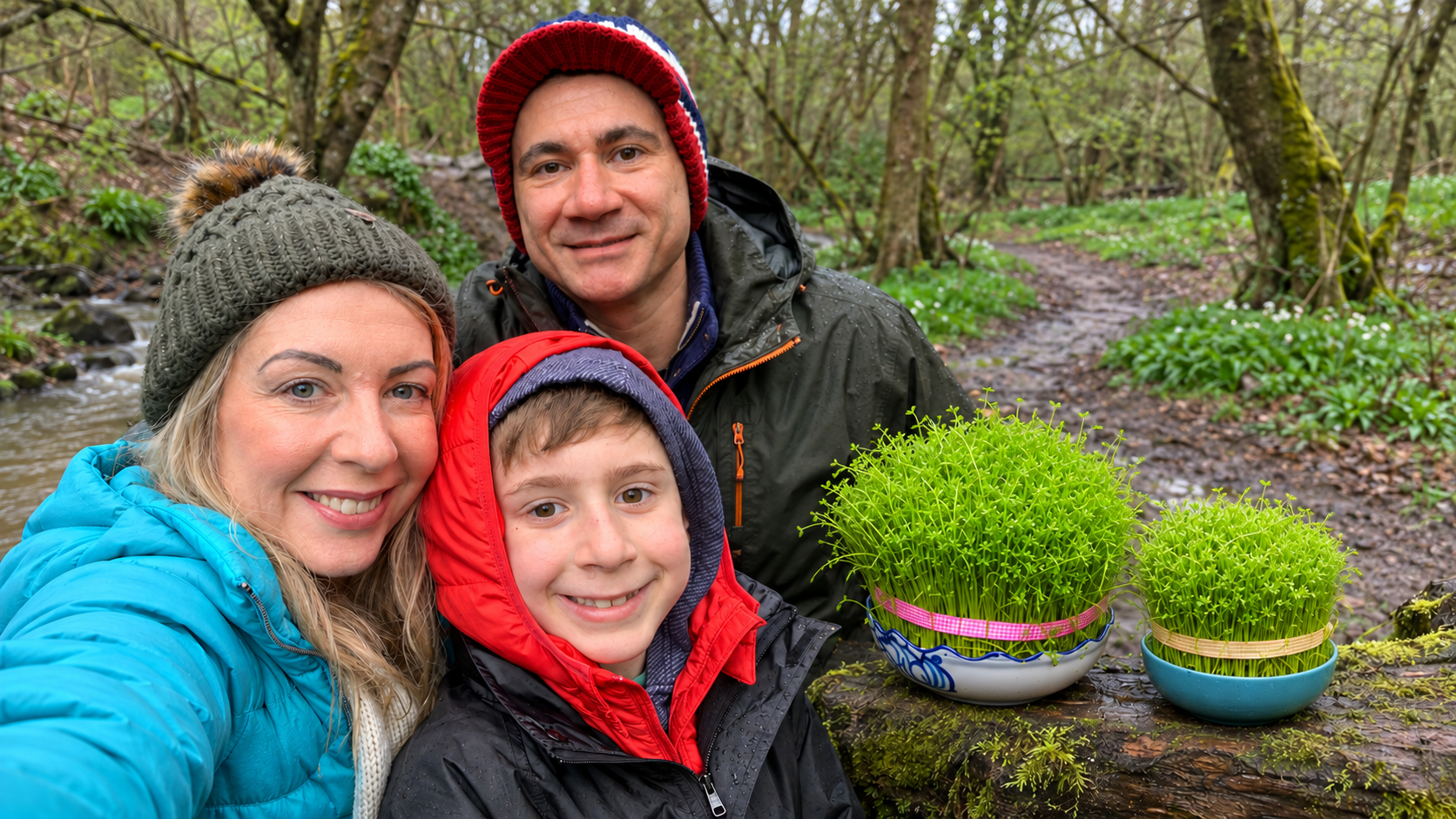
I hope he’ll remember the evenings with our friends and the family get-togethers that go on long past a sensible British bedtime. One day, hopefully, he’ll tell his own children about the time his mum stood beside a Northumberland stream, glaring at a little boy for rescuing a clump of lentils.
More from our Persian family life
Another haft sin tradition that became a much bigger family commitment than expected.
How I first encountered the tradition, with H and an eight-month-old Cyrus.
More stories from a British wife in a Persian family, from Tehran to Tyneside.
Discover more from Saffron & Cyrus
Subscribe to get the latest posts sent to your email.

Saffron & Cyrus is an independent women’s editorial publication with a recognisable voice, real-life perspective, a defined midlife audience and a commercial model built around useful, relevant partnerships.
