
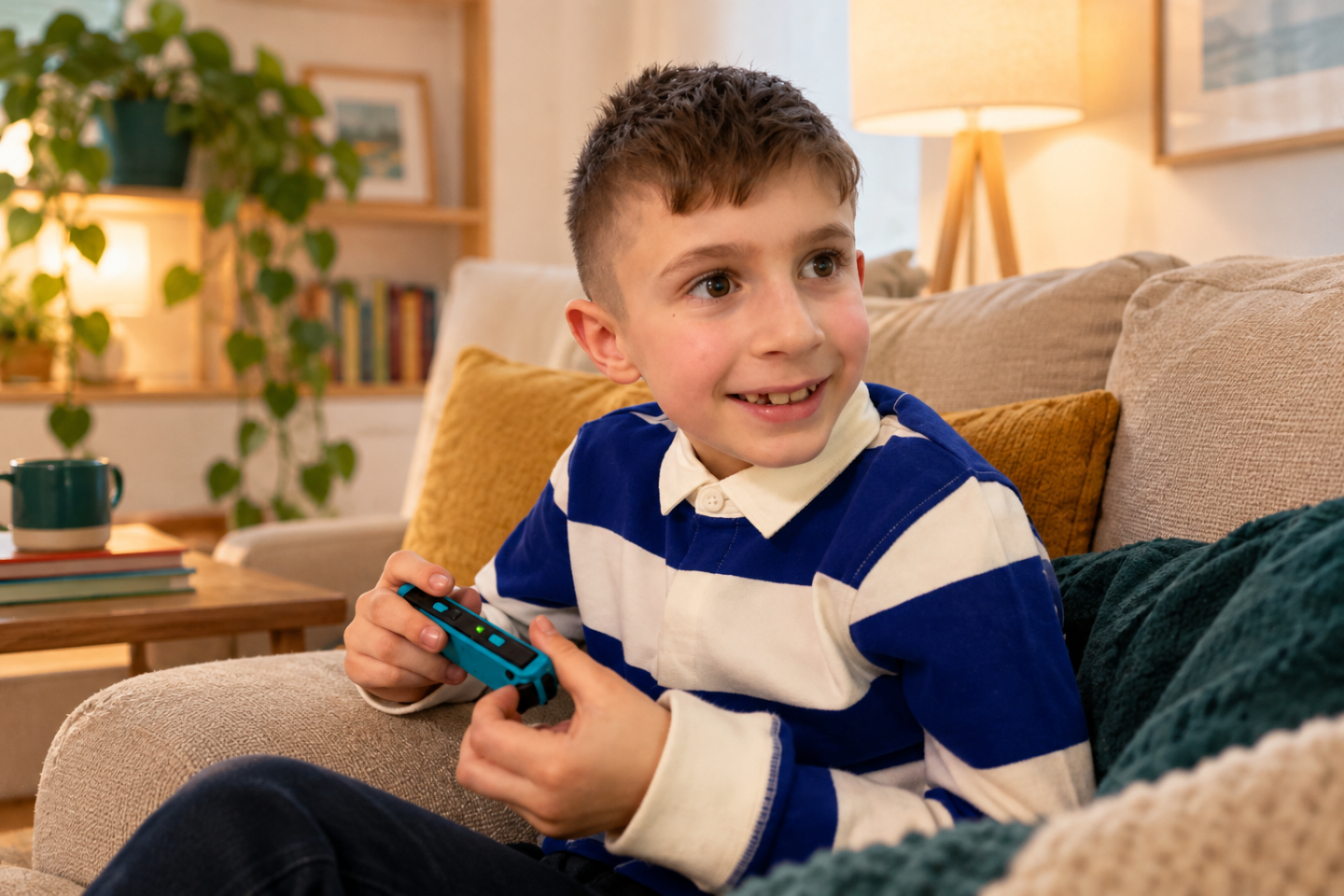
There is a silence in our house that usually means Cyrus is gaming. I can call his name three times, raise my voice on the fourth and eventually discover that something terribly important is happening on his screen. Yet the moment I announce that his time is up, my previously unresponsive child develops excellent hearing. Apparently, another five minutes is essential to whatever he’s doing.
Like many parents, H and I have spent a lot of time managing our son’s screen habits. We’ve introduced parental controls, restricted gaming and tried to ensure technology doesn’t take over his childhood. It sounds terribly organised until you’re standing in the living room negotiating with a child who insists that switching off now would be catastrophic to what he’s doing in the game. But recent research has made me wonder whether we’re concentrating on the wrong things.
Parents and children don’t always see technology in the same way, and new research suggests that difference matters.
Research from Internet Matters, reported this week, paints an interesting picture of the growing divide between parents and children. Its annual children’s wellbeing study found that 57% of parents believed screen use negatively affected their children’s sleep, while 63% thought it harmed their health. Children, however, were more positive, with almost two-thirds saying being online made them happy and three-quarters considering technology important to their independence.
That doesn’t mean the risks aren’t real. The research also found that children were encountering harmful experiences online, which makes conversations about privacy, friendships and appropriate content essential. But it does suggest that parents and children aren’t necessarily looking at technology in the same way. While we’re worrying about the number of minutes spent gaming, our children, under our supervision, may be enjoying school friendships, learning new skills or just having fun with their friends.
Growing up, I remember the ZX Spectrum, its clunky loading noises and games that tested your patience before they’d even started. Nobody seemed interested in measuring our exposure by the minute. We played because it was fun, and eventually something else caught our attention. Today, parents have screen-time reports, monitoring software and enough conflicting advice to make any decision feel like a safeguarding exercise.
There are legitimate health concerns of course. Spending long periods looking at screens can contribute to eye strain, while late-night gaming can interfere with sleep. Too much sedentary time can also leave less room for physical activity. As someone who loves the gym, I want Cyrus to like being active, but I don’t want exercise to become a punishment for playing games. Besides, on a wet Newcastle afternoon, gaming is a perfectly OK way to spend some time.
There’s something rather inconvenient about adults lecturing children on their screen habits. A 2022 NortonLifeLock survey found that 89% of UK respondents believed most children were addicted to screens, while 88% thought parents relied too heavily on devices to keep them occupied. Those figures reflect people’s perceptions rather than clinical diagnoses, but the contradiction is familiar.
I’ve appreciated the peace when Cyrus is happily gaming. Sometimes there’s dinner to prepare, work to finish or a few minutes when I’d rather not answer another question about whatever game has captured his imagination. Then there’s my own phone. Between work, messages, banking, photographs and whatever I’ve suddenly decided needs Googling, it’s rarely far away. H is much the same, which makes our household rules look convenient. Adults can stare at screens because they’re doing something important, while children are apparently wasting their lives because they’re enjoying themselves. Unfortunately, adults get to decide what counts as important.
One distinction that often gets lost is the difference between gaming and social media. Playing games with friends can involve cooperation and problem-solving. Social platforms introduce other considerations, including public profiles, advertising and comparisons with other people’s lives. Having grown up before social media, I’m conscious of how easily children can compare themselves with others. School friendships were complicated enough without being able to see who’d been invited somewhere, what everyone else was doing afterwards and whether you’d been deliberately left out.
I want Cyrus to enjoy what technology offers while understanding why privacy matters, why age restrictions exist and why he shouldn’t share personal information with strangers. I also want him to feel comfortable telling us if something online upsets him, rather than worrying that he’ll immediately lose access to his favourite game. Those conversations seem far more useful than assuming parental controls can deal with every potential problem.
None of this means abandoning boundaries. Expecting Cyrus to announce that he’s enjoyed precisely enough gaming for one day would be an exceptionally optimistic parenting strategy. Having a routine helps ensure there’s time for schoolwork, swimming, family outings and sleep. Parental controls also save H and me from constantly intervening, although technology has yet to invent a setting that eliminates the words “It’s not fair.”
What matters more to me now is whether Cyrus is sleeping properly, enjoying school, spending time with friends and still interested in activities beyond gaming. Sometimes he complains when a game ends, but children object to stopping plenty of enjoyable things. I’ve never worried about his relationship with swimming because he doesn’t want to get out of the pool. If other parts of his life begin to suffer, that’s a reason to reconsider our approach.
Cyrus is growing up in a digital world that looks very different from the one I knew. Trying to recreate my childhood for him would be ridiculous. My parents could have insisted I abandon the ZX Spectrum because they’d managed perfectly well without one, but that wouldn’t have taught me much about using technology responsibly.
Eventually, he’ll have to make his own decisions about what he watches, who he speaks to and when he’s spent enough time online. I’d rather help him develop that judgement than rely entirely on restrictions. I still want him outside, swimming, playing tennis, discovering places and enduring a family outing without asking when we’re going home. But I also accept that gaming is something he likes doing, and enjoyment isn’t automatically a problem needing intervention.
It’s about helping children enjoy technology without allowing it to dictate everything else, even if that means allowing another five minutes to finish whatever terribly important thing is happening on the screen.
Do you set strict screen-time limits, or are you more concerned about what your children are doing online? And how good are we, as parents, at following our own rules?
When did knowing everything become part of being a good parent?
Explore pregnancy, family and motherhood
Occasional stories, experiments, discoveries and questions from Saffron & Cyrus.
Discover more from Saffron & Cyrus
Subscribe to get the latest posts sent to your email.


Saffron & Cyrus is an independent women’s editorial publication with a recognisable voice, real-life perspective, a defined midlife audience and a commercial model built around useful, relevant partnerships.
