
My first intermittent fasting experiment lasted seven days. What stayed with me was how hungry I felt at my desk, yet how easily I forgot about food at the gym. I started wondering what my appetite was responding to.
Ad, gifted product: This article includes Linwoods milled flaxseed, which was provided free of charge. The account reflects our own experience and opinions.
My stomach seems to recognise office hours
January 2024 arrived and, like countless other people, I decided to sort out my eating habits. Christmas was over, the chocolates were disappearing and intermittent fasting seemed a good place to start. I’d read about its potential benefits and convinced myself that skipping breakfast wouldn’t be difficult. Seven days later, I was back eating breakfast, wondering why something that sounded so easy had been such a battle.
During the working week, I could barely get through the morning without thinking about food. Yet at weekends, when I was busy with back-to-back gym classes, I sometimes forgot about eating until 3pm. My stomach seemed to recognise office hours but had no interest in my exercise timetable.
I started keeping a food and mood diary, recording what I ate, when I felt hungry and what was happening around me. At work, food often provided a welcome interruption between emails and deadlines. At the gym, I was occupied with the music, the instructor and trying to remember which direction everyone was moving.
Forgetting about lunch during exercise didn’t mean I needed less food. My body still needed fuel after several demanding classes, even when I wasn’t thinking about my next meal.
Is intermittent fasting worth it?
Intermittent fasting sets periods for eating and fasting. With a 16:8 routine, food is eaten within an eight-hour window, followed by a 16-hour fast. That describes a timetable, but it doesn’t tell us whether the food we eat is balanced or sufficient.
A 2025 review in The BMJ, covering 99 randomised trials and 6,582 adults, found broadly similar benefits from intermittent fasting and continuous calorie restriction. Alternate-day fasting produced a small additional weight-loss benefit, but fasting was not consistently superior.
A Cochrane review published in February 2026 also found that intermittent fasting may make little or no difference to weight loss compared with traditional dietary advice in adults with overweight or obesity. Its evidence covered studies lasting up to 12 months, and confidence in many findings was low or very low.
Some people find the routine convenient, but my first attempt involved spending much of the morning thinking about breakfast. A seven-day personal experiment can’t establish whether a diet works in general, although it can reveal how much of your working day you spend wishing you could eat.
The advice we encounter online also needs scrutiny. A 2025 study of TikTok nutrition content assessed 250 posts and found that 55% of applicable posts failed its evidence-based information criterion. That was a sample, not a verdict on every nutrition video. Checking where a health claim comes from is a concern I’ve also explored in my article about asking AI for health advice.
What I put in the bowl
I started paying more attention to what was on my plate, including eggs, fish and yoghurt alongside vegetables, beans and wholegrains. The NHS advice on fibre recommends getting it from a variety of foods. Olive oil, nuts and oily fish also have a place in a balanced diet, without every meal needing an expensive supplement or a complicated plan.
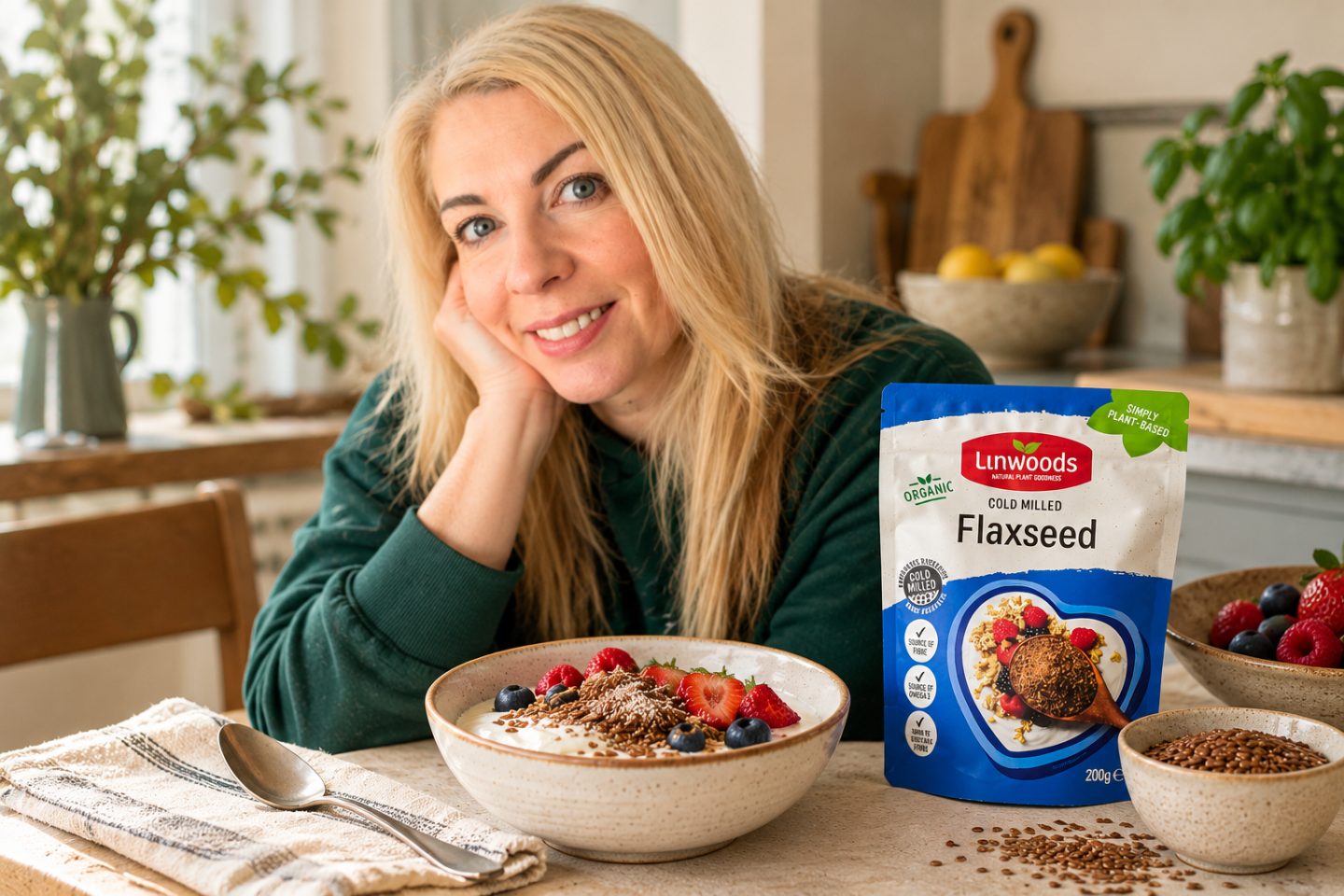
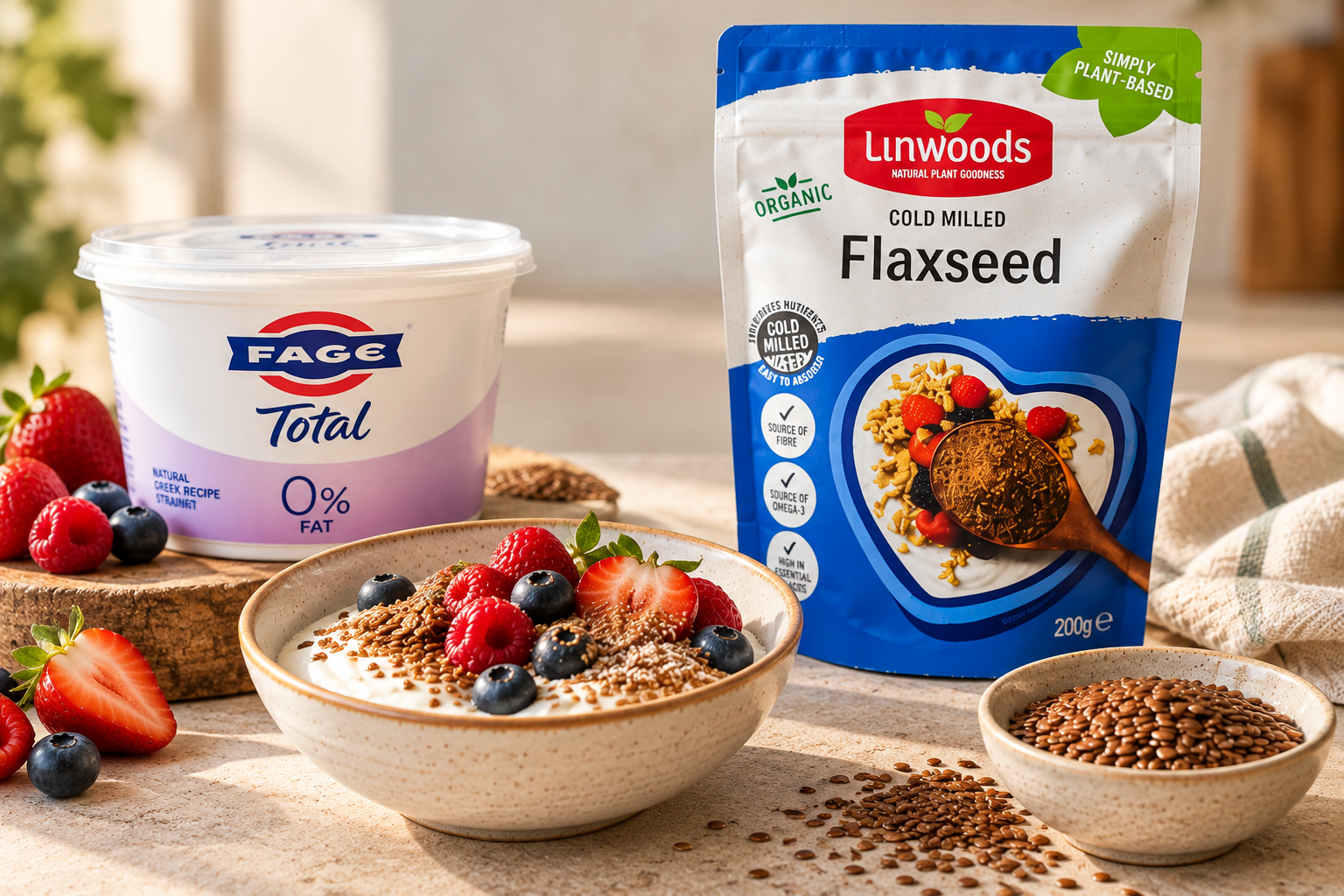
One product we’ve enjoyed is Linwoods milled flaxseed, which we received as a gift. We stir it into yoghurt with fresh berries, usually as a light lunch or something to eat after the gym. It’s quick to prepare and fits into food we already like eating.
We’ve found that bowl satisfying, although I can’t separate the effect of the flaxseed from the yoghurt, berries, portion size or the rest of the day’s food. Nor does our experience prove that this product controls appetite. How much I need after exercise depends on the session and what else I’ve eaten.
H and I sometimes use a 16:8 routine now, when it fits around our day. My first attempt was less successful because I spent the working morning preoccupied with the meal I’d decided to skip.
Why does the biscuit tin beckon at 3pm?
After a busy morning, I start wondering whether there’s chocolate in the kitchen. It doesn’t even matter if it’s 100% dark chocolate, so long as it’s chocolate. The pattern is familiar from my seven-day experiment with added sugar, when I began questioning how much of my eating followed the working day.
My diary helped me notice the pattern, but it couldn’t diagnose why I wanted a snack. Wanting something sweet and needing food can overlap, and I don’t want to turn either into another reason to criticise myself.
I’m still interested in eating well and understanding my appetite, but I’m less interested in turning every meal into a test of discipline. If breakfast makes the working day easier, I’m happy to eat it.
Before trying fasting: NHS-hosted intermittent fasting guidance advises against it during pregnancy or breastfeeding and for people with a history of eating disorders. It also warns people with diabetes against delaying or skipping meals. If you take medication, speak to your healthcare team before changing your eating pattern.
Does your appetite change depending on whether you’re working, exercising or relaxing?
More from Saffron & Cyrus
A look at fitting movement around a working day.
What a week of adding the gifted products to breakfast could tell me.
Occasional stories, experiments, discoveries and questions from Saffron & Cyrus.
Discover more from Saffron & Cyrus
Subscribe to get the latest posts sent to your email.


Saffron & Cyrus is an independent women’s editorial publication with a recognisable voice, real-life perspective, a defined midlife audience and a commercial model built around useful, relevant partnerships.
