
There’s something strange about pregnancy. the moment you announce you’re expecting, people ask whether you’re excited and whether you’ve bought the pram. Then come the birth stories, often delivered with the enthusiasm of someone describing a really gruesome episode of Casualty. Nobody seems concerned about whether you want to hear them.
When I was pregnant with Cyrus at 40, preparing for motherhood involved more than choosing baby clothes and finding somewhere to put the cot. There was childbirth, an event I knew was coming but couldn’t possibly rehearse. As I explored in my account of pregnancy over 40 and the scrutiny surrounding my weight, everyone seemed to have an opinion about my body. The emotional side of preparing to give birth was definitely more complicated.
Birth anxiety isn’t necessarily about pain. Women may worry about losing control, medical interventions or whether their baby will be safe. Severe fear of childbirth, sometimes called tokophobia, can also become overwhelming and deserves proper support.
Absolutely. Wanting a baby doesn’t mean you have to look forward to every aspect of childbirth.
Psychologist and birth coach Dr Tuesday Watts-Overall explains that deliberately suppressing fear can sometimes make anxious thoughts more intrusive. In advice published in January 2024, she encouraged expectant mothers to understand what frightens them rather than pretending everything is fine.
Her approach is practical. You can desperately want a baby and still feel frightened about giving birth. Pregnancy isn’t a contractual agreement to remain cheerful for nine months, whatever your hormones or imagination happen to be doing.
Dr Watts-Overall recommends acknowledging fear rather than immediately dismissing it. Writing down concerns or discussing them with your partner or midwife can help identify what’s troubling you. Perhaps you’re worried about pain, an emergency caesarean or losing control. Understanding the concern gives you somewhere to begin, rather than allowing several worries to merge into one enormous problem.
Some fears develop from personal experiences, while others come from stories we’ve heard or watched. Dr Watts-Overall suggests considering how childbirth was discussed when you were growing up and whether particular accounts have influenced your expectations. Birth stories tend to be memorable, especially the dramatic ones, but somebody else’s difficult labour isn’t a prediction of your own.
Antenatal classes can explain labour, pain relief and medical interventions, while your midwife can discuss options relevant to your pregnancy. The NHS guide to labour and birth is another useful starting point. There’s a difference between being informed and frightening yourself online at two in the morning after reading about an exceptionally rare complication.
Dr Watts-Overall encourages women to consider where they’d prefer to give birth, who they’d like supporting them and how they want to feel. A birth plan can communicate those preferences, although circumstances may change. I rather like the distinction between planning and controlling. Having a baby is an excellent demonstration that another person may have entirely different arrangements in mind.
Fear can affect breathing, muscle tension and heart rate. Dr Watts-Overall recommends recognising those physical responses and practising techniques that help restore calm. Breathing exercises, relaxation and grounding techniques may help, although they cannot guarantee a particular birth experience. Women experiencing severe or persistent anxiety should speak to their midwife or GP about additional support.
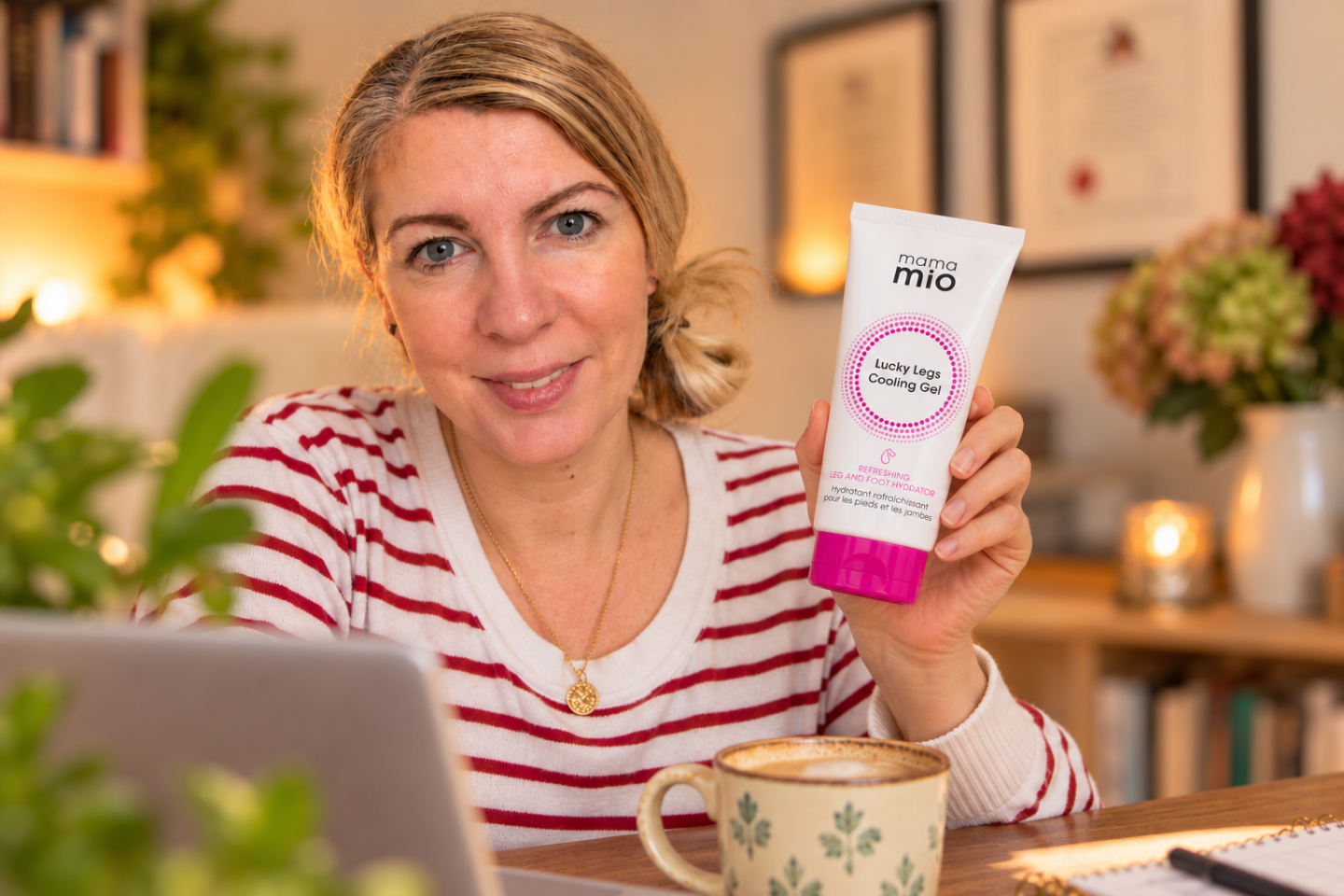
Disclosure: We received Mama Mio Lucky Legs Cooling Gel, Megamama Body Lotion and Tummy Rub Butter free of charge for review. All opinions are our own. The other products and gift sets mentioned are included for information and have not been personally reviewed.
Of course, the emotional side of pregnancy is only part of the experience. Your body changes, your clothes become tighter and getting comfortable in bed can be really tricky. I remember how much attention was paid to my changing shape, something I later wrote about in my experience of the six-week postnatal check.
Stretch marks are extremely common during pregnancy too as the bump grows. Genetics, hormones and changes in the skin all play a part. Despite what beauty advertising might suggest, there is limited evidence that creams prevent stretch marks, although moisturising can help dry skin feel more comfortable.
Mama Mio offers pregnancy skincare containing ingredients such as coconut oil, shea butter and vitamin E. Its Lucky Legs Cooling Gel is designed to refresh tired-feeling legs, while Megamama Body Lotion provides everyday moisturising. Tummy Rub Butter offers richer hydration for dry skin around the growing bump.
These are cosmetic products rather than medical treatments. Cooling gel won’t treat pregnancy-related swelling, and no body butter can promise a stretch-mark-free stomach. After all, growing a human being is quite enough work without treating a few lines across your skin as failing.
Mama Mio also developed trimester skincare boxes, including a fourth trimester set containing products for mums and babies after birth. The boxes were advertised at £25 each in the original promotional material, with claimed contents valued at between £65 and £114. These are historical promotional figures, not verified current prices, and the contents and availability may have changed.
It’s the fourth trimester idea that interests me most. When I became a new mum at 40, I discovered that having a baby doesn’t mean your body suddenly return to the way it was. There’s recovery, feeding, interrupted sleep and the responsibility of caring for someone dependent on you. I’ve written about those early days in my reflections on motherhood after 40.
We spend months researching prams, comparing cots and washing tiny clothes, yet the woman’s physical and emotional wellbeing can become an afterthought. As I discovered when we moved house with a newborn, life doesn’t necessarily become more accommodating because you’ve given birth.
Dr Watts-Overall’s advice reminds us that preparing for childbirth means more than packing a hospital bag. It means understanding our fears, knowing our options and having people who listen when we’re worried.
Join the conversation: Did you experience birth anxiety, and what genuinely helped you prepare? Or did you receive advice that would have been better left unsaid?
Heavy with humour: obesity in pregnancy
Birth: how I lost confidence after my six-week check
Occasional stories, experiments, discoveries and questions from Saffron & Cyrus.
Discover more from Saffron & Cyrus
Subscribe to get the latest posts sent to your email.


Saffron & Cyrus is an independent women’s editorial publication with a recognisable voice, real-life perspective, a defined midlife audience and a commercial model built around useful, relevant partnerships.
