
I gave up alcohol before trying for a baby at 40 and could have saved £4,086.
After a miscarriage, I gave up Champagne and red wine at 39 because I was frightened of taking any chances with another pregnancy. What followed was an experiment in health and money, ending with a bottle of Mumm Champagne that meant more than any I’d enjoyed before.
A £4,086 reason to rethink my drinking
Four thousand and eighty-six pounds. That’s what I might have spent on Champagne and red wine between October 2014 and January 2017 if I’d continued drinking at my previous rate. When I worked it out, I nearly fell off my chair.
I enjoyed a £30 bottle of Champagne each month and, for this calculation, I’ve allowed for two £14 bottles of red wine a week. Over 27 months, that’s £810 on Champagne and approximately £3,276 on wine. It’s potential spending rather than money I’ve banked, as pregnancy would probably have changed my habits anyway.
But the money wasn’t why I stopped drinking in October 2014. I was frightened of another miscarriage.
Could giving up alcohol help me feel more prepared for another pregnancy?
After losing one pregnancy, I wanted to do whatever I reasonably could to look after myself.
The miscarriage that changed my thinking
After losing a pregnancy, I read everything I could about miscarriage, fertility and what might affect my chances of having a healthy baby. I began questioning things I’d done before the miscarriage, including drinking alcohol. The NHS information on miscarriage explains that pregnancy loss can have several causes, and often no clear explanation is found.
Nobody had told me that alcohol was responsible, and I had no evidence that it had contributed to my loss. But the worry was difficult to shake. I knew that miscarriages happen for many reasons, often beyond anyone’s control.
At nearly 40, I was conscious of time passing. I couldn’t bear the thought of becoming pregnant again and worrying about what I’d drunk before discovering I was expecting. Giving up alcohol couldn’t guarantee another pregnancy or prevent another miscarriage, but it was a precaution I felt comfortable taking. I also spent time learning more about getting pregnant naturally after 40, when fertility and age suddenly felt rather more personal than they once had.
Giving up alcohol wasn’t about blaming myself for the miscarriage. It was about making a decision that helped me feel more comfortable preparing for another pregnancy.
Four weeks without Champagne or red wine, then a longer commitment.
What I discovered in the first month
During the first week, I noticed how much British social life revolves around alcohol. Birthdays, dinners, celebrations and Friday evenings all seemed to involve a drink. Declining one could invite more questions than accepting it, especially when you’re a woman approaching 40.
By week two, I was thinking about confidence. Alcohol made me more talkative and less inhibited, but was that genuine confidence or the effect of a couple of glasses of wine? I’d sometimes relied on drinking to feel more comfortable socially, and I wasn’t entirely happy about that.
Week three reminded me what I didn’t miss: the hangovers. I could wake with dreadful headaches that stopped me going to the gym. My doctor had once suggested flat Coca-Cola, but that hadn’t helped either. Drinking something I didn’t want to recover from something else I’d drunk seemed silly. Exercise was becoming an increasingly important part of my life, and I was reluctant to lose a morning’s training to the previous evening’s wine.
By week four, I was getting used to being sociable without alcohol. I hadn’t suddenly become confident, but I was beginning to realise that I didn’t need Champagne to enjoy myself. What began as a month-long experiment became a decision to continue while trying for a baby and throughout pregnancy. It was one of several changes I made to my habits, much as I would later explore in my sugar-free week and intermittent fasting experiment.
Persian hospitality and a different approach
Being married to H also made me think differently about drinking. Some of the older women in his Persian family have beautiful, youthful-looking skin, and I’ve often wondered whether their habits, including avoiding alcohol, play a part. Of course, genetics and plenty of other factors help too.
What I enjoy about gatherings with H’s family is the emphasis on tea, fruit and food. There’s often a little glass of tea, pomegranates, watermelon and enough food to feed several additional families. In our experience, nobody needs a bottle of wine to keep the conversation going. It’s one of the cultural differences I enjoy exploring through our British-Persian family stories on Saffron & Cyrus.
What the money could have bought
According to research published by Aviva in April 2014, first-time parents spent an average of £1,619.25 preparing for their baby’s arrival. My estimated £4,086 could have covered that amount twice, with £847.50 remaining.
That’s two lots of prams, cots, clothes and nursery essentials. Not that I was planning twins. One baby at 40 was quite enough excitement.
Finally, something worth celebrating
In October 2015, I became pregnant with Cyrus. He arrived in July 2016, after a traumatic birth. After the earlier miscarriage, the anxiety of trying again and everything we’d experienced, holding him was extraordinary.
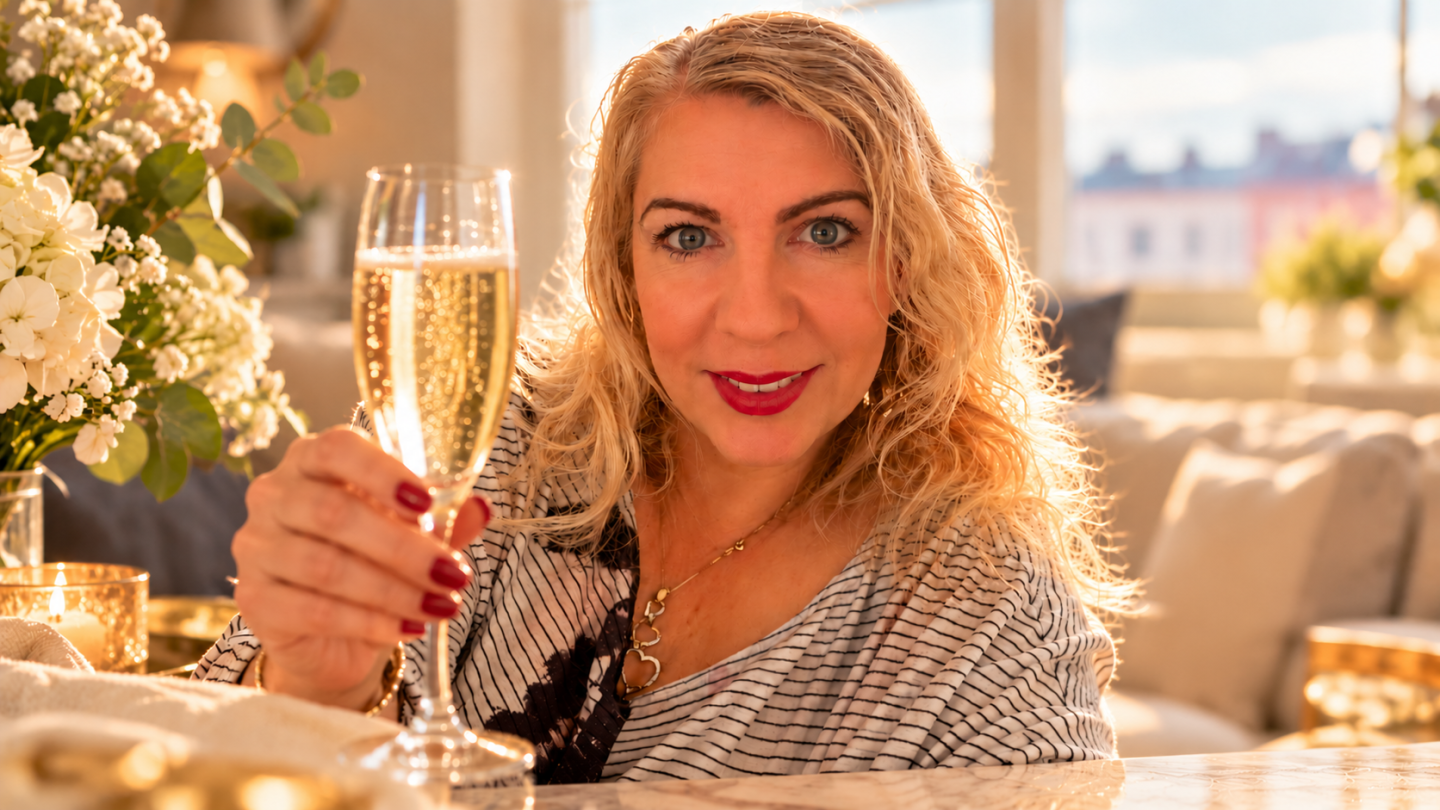
Motherhood brought its own exhaustion. With a six-month-old baby, I definitely didn’t need a hangover making the sleepless nights any worse. But my experiment didn’t end with a lifelong promise never to drink again. H bought me a bottle of Mumm Champagne, and I eventually broke my alcohol fast.
It wasn’t because I’d missed drinking or wanted to return to my old habits. After everything we’d been through, it felt like a celebration of Cyrus and the difficult journey that had brought us to him. I’d once enjoyed Champagne because it made the occasion feel special. But this time, the occasion was already special enough.
When H and I finally raised our glasses, it wasn’t to mark the end of my abstinence. It was to celebrate our little boy.
Have you ever given something up and discovered that, when you returned to it, your relationship with it had completely changed?
The £4,086 represents estimated potential alcohol expenditure over 27 months, from October 2014 to January 2017. It assumes one £30 bottle of Champagne per month (£810) and two £14 bottles of red wine per week (£3,276), using 52 weeks per year. It is not a verified personal saving.
The £1,619.25 first-baby preparation cost comes from Aviva research published on 22 April 2014, based on a survey of 2,000 recent parents. Individual spending varies.
This article describes my personal experience. It does not suggest that alcohol caused my miscarriage or that giving up drinking enabled me to conceive. NHS guidance recommends avoiding alcohol when planning pregnancy and throughout pregnancy.
For further information on pregnancy loss and its possible causes, see the Royal College of Obstetricians and Gynaecologists’ guidance on early miscarriage.
More from Saffron & Cyrus
Pregnancy, risk and the labels women carry
My sugar-free week and 16:8 intermittent fasting experiment
Come along for the ride.
Occasional stories, experiments, discoveries and questions from Saffron & Cyrus.
Discover more from Saffron & Cyrus
Subscribe to get the latest posts sent to your email.

Saffron & Cyrus is an independent women’s editorial publication with a recognisable voice, real-life perspective, a defined midlife audience and a commercial model built around useful, relevant partnerships.
