
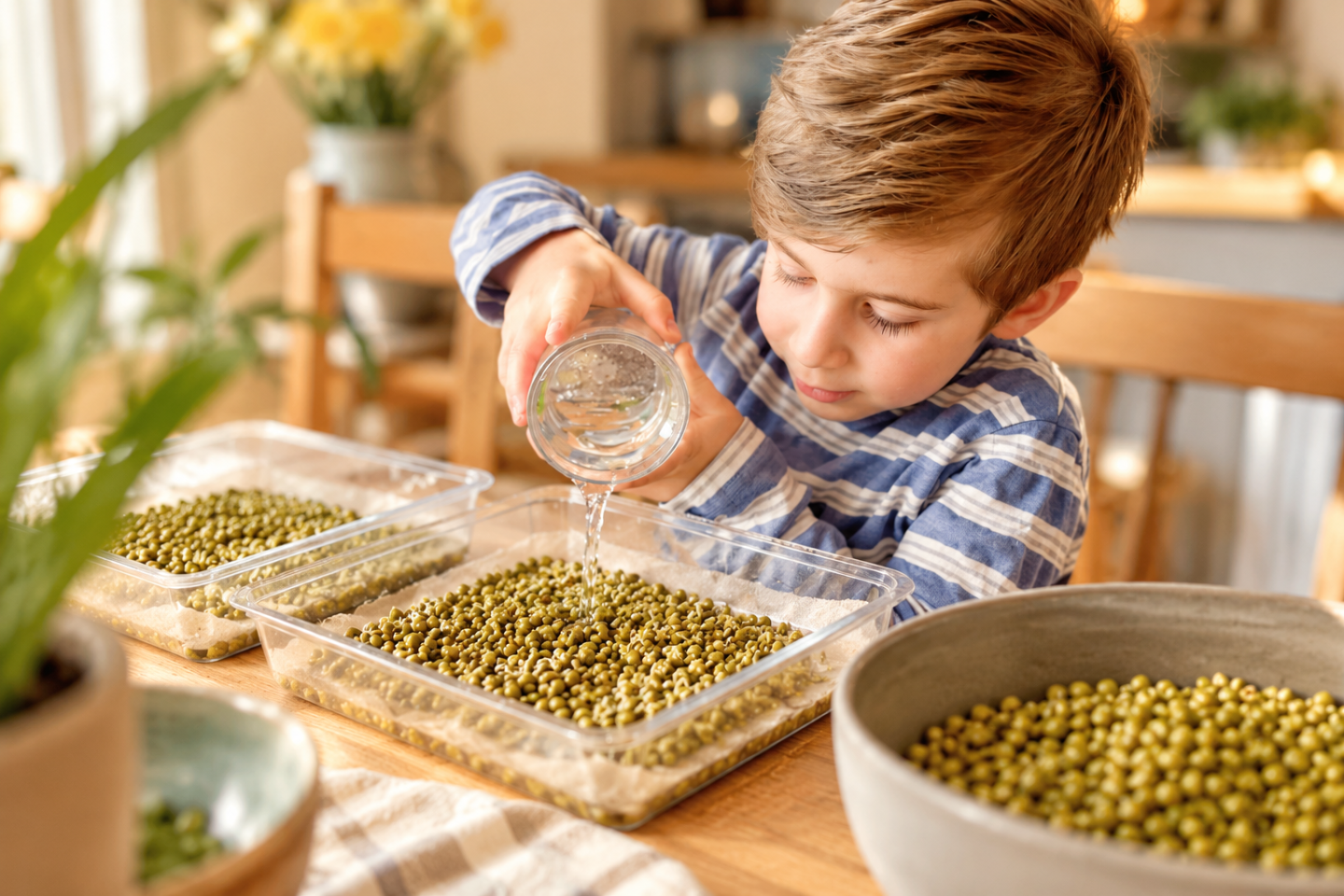
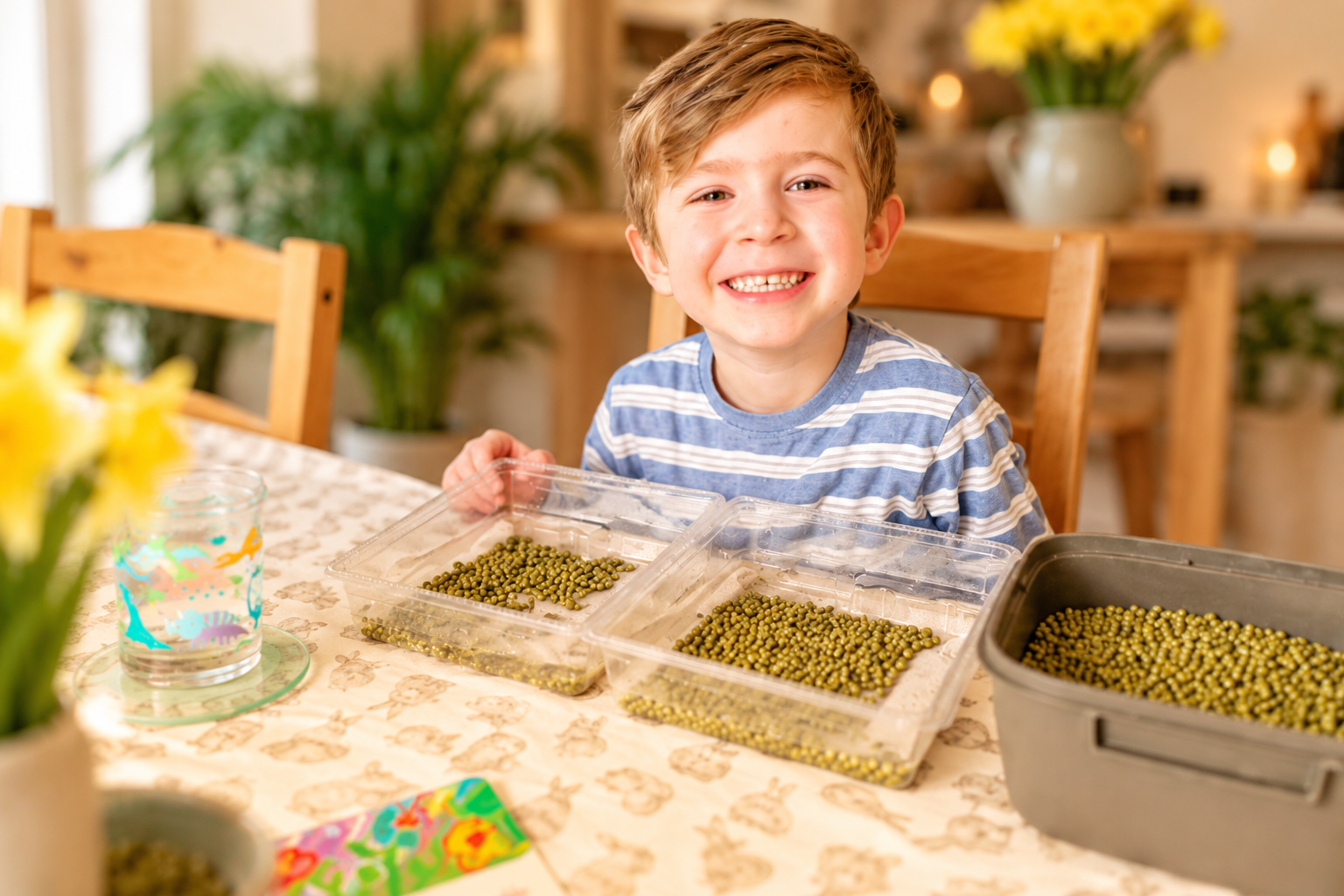
Every March, our kitchen acquires a bowl of mung beans or lentils, several sheets of damp kitchen paper and a small boy named Cyrus, who wants to know why nothing has happened yet. It’s our annual attempt at growing sabzeh for Nowruz, the Persian New Year, and despite having done it so many times before, I still find myself checking how they are getting on every time I make a coffee.
My husband grew up in Iran, where Nowruz is one of the most important celebrations of the year. I grew up in Britain, where the arrival of spring meant daffodils. Picking daffodils from a neighbour’s garden was also considered a perfectly reasonable form of childhood entertainment, although I suspect the neighbours had a different opinion. Before we married, I knew very little about Persian New Year. These days, the preparations are as familiar to me as getting the Christmas decorations out, although thankfully they don’t involve untangling several metres of fairy lights.
Having Cyrus has made us more conscious of keeping these traditions going. He’s growing up with two cultures, and while I don’t expect him to appreciate several thousand years of Persian history just yet, he does enjoy getting involved. Growing sabzeh is appealing because it involves water, mess and the opportunity to inspect something repeatedly throughout the day. Three things that seem to come naturally to children.
The first time we tried growing it together, I had visions of a beautiful, thick covering of green shoots, just like the photographs I’d seen of Persian Haft Sin tables. What I hadn’t accounted for was Cyrus’s belief that the beans needed watering every time he walked past them. By the end of the first day, I was beginning to wonder whether we’d planted mung beans or making soup with them.
Nowruz means ‘new day’ in Persian and marks the beginning of spring and the Persian New Year. Celebrated for more than 3,000 years, it falls around March 20 or 21, depending on the spring equinox. Families prepare special meals, visit family and friends, clean their homes and get together to welcome the new year.
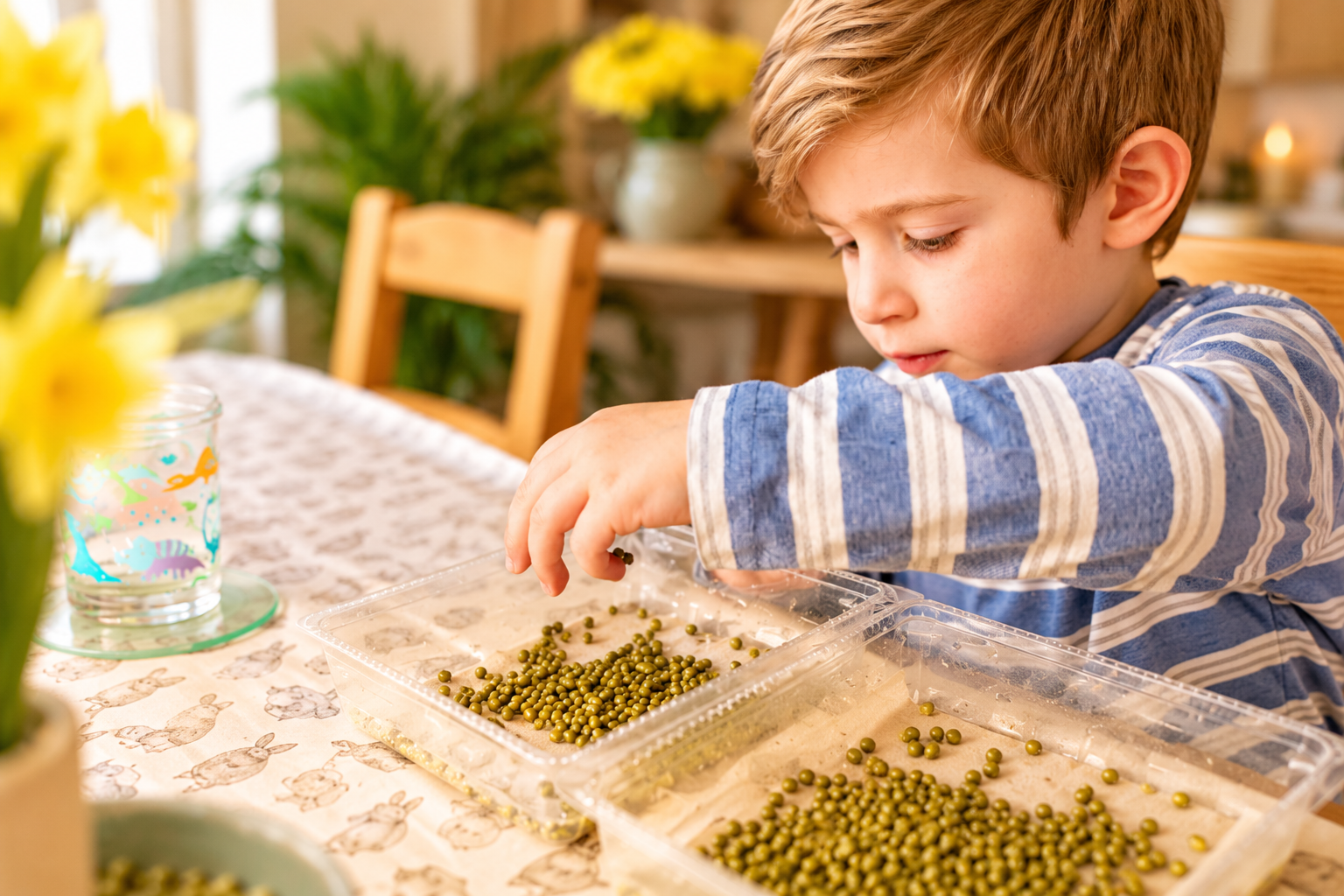
One of the most recognisable traditions is the Haft Sin table, which contains seven symbolic items whose Persian names begin with the letter ‘S’. Each has its own meaning, associated with health, love, renewal or good fortune. Sabzeh, the green shoots grown from seeds or pulses, represents rebirth and the arrival of spring.
My husband remembers these celebrations from his childhood in Iran. For him, the Haft Sin table is something he grew up seeing every year, whereas I came to it as an adult, learning the significance of each item and occasionally struggling with the pronunciation. I’ve always liked how much thought goes into the display, especially the idea that a little dish of green shoots can represent the beginning of another year.
In our house, growing sabzeh has become something Cyrus and I do together. It doesn’t cost much, and we usually have everything we need in the kitchen. The only real challenge is remembering to start early enough and making sure the beans survive our combined efforts.
We usually begin around two weeks before Nowruz, which gives the lentils enough time to germinate and develop into a decent covering of green shoots. Some families use wheat or mung beans, but we’ve stuck with lentils because they’re easy to find and grow fairly quickly.
First, we rinse the lentils thoroughly and place them in a bowl of clean water. We leave them to soak overnight, usually for around 12 to 24 hours, until they’ve absorbed some of the water and started to swell. Cyrus likes helping with this part, particularly pouring the water into the bowl, although I tend to supervise unless I fancy spending the next ten minutes drying the worktop.
Once the beans have soaked, we drain them and spread them across a shallow dish or container. I try to keep them in a fairly even layer rather than piling them too deeply. We then cover them loosely with damp kitchen paper or a clean cloth and leave them somewhere warm. The paper needs to stay moist, but the lentils shouldn’t be sitting in water, otherwise they can start to spoil.
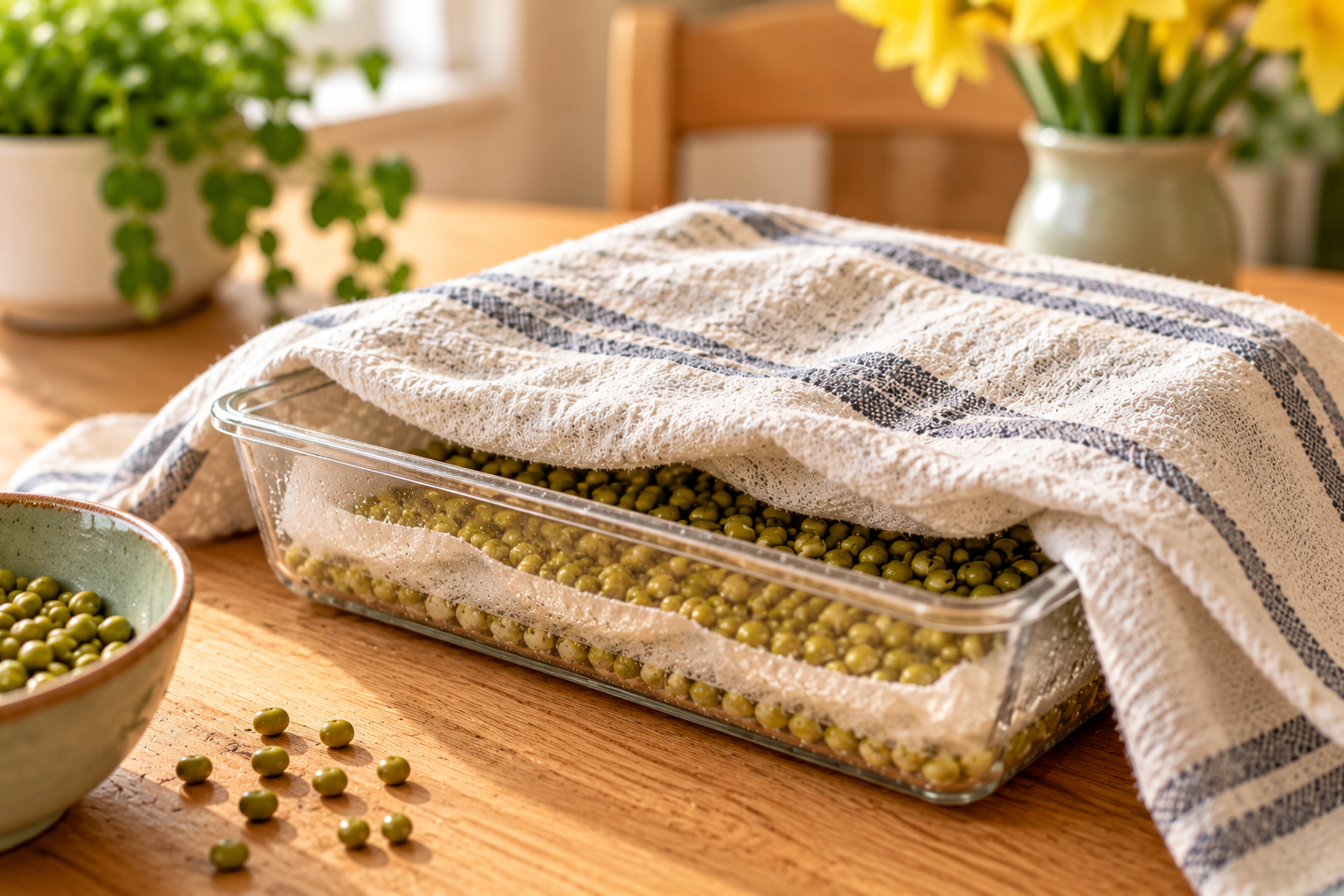
This is where Cyrus takes the responsibility seriously, checking the lentils whenever he remembers and making sure the paper hasn’t dried out. Unfortunately, his interpretation of a little water can be rather generous. I occasionally have to intervene before everything starts resembling a paddling pool.
After a day or two, we usually begin to see tiny white roots appearing, although they can take longer if the kitchen is cold. We continue keeping the paper damp, checking the lentils daily and removing any that look spoiled. Once the shoots begin to grow, we remove the covering and move the dish somewhere bright, away from strong direct sunlight.
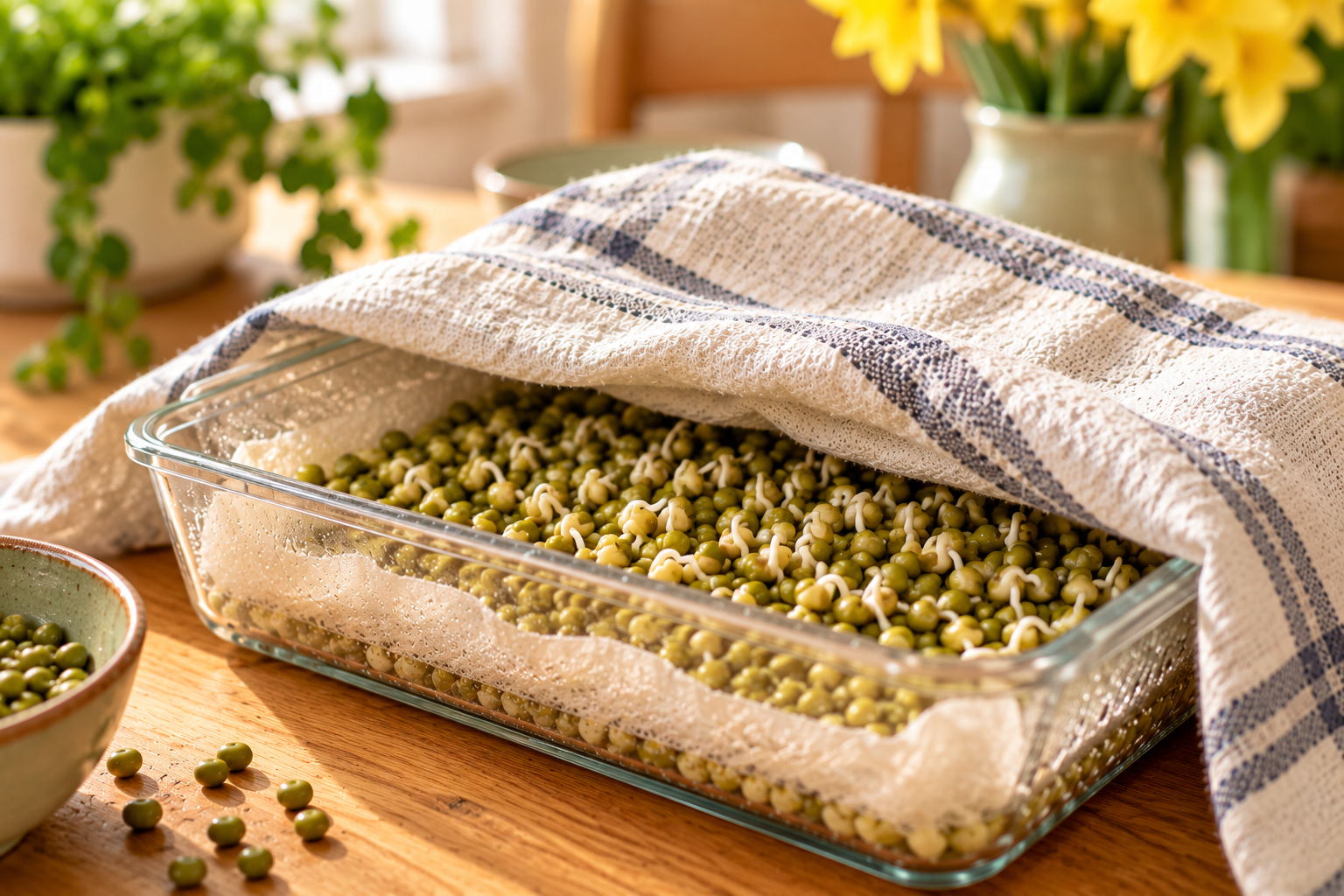
From there, it’s mostly a matter of keeping them moist without waterlogging them. If there’s excess water collecting in the dish, I drain it away. Within another week or so, assuming everything has gone to plan, we have a little patch of green that looks remarkably like a miniature lawn.
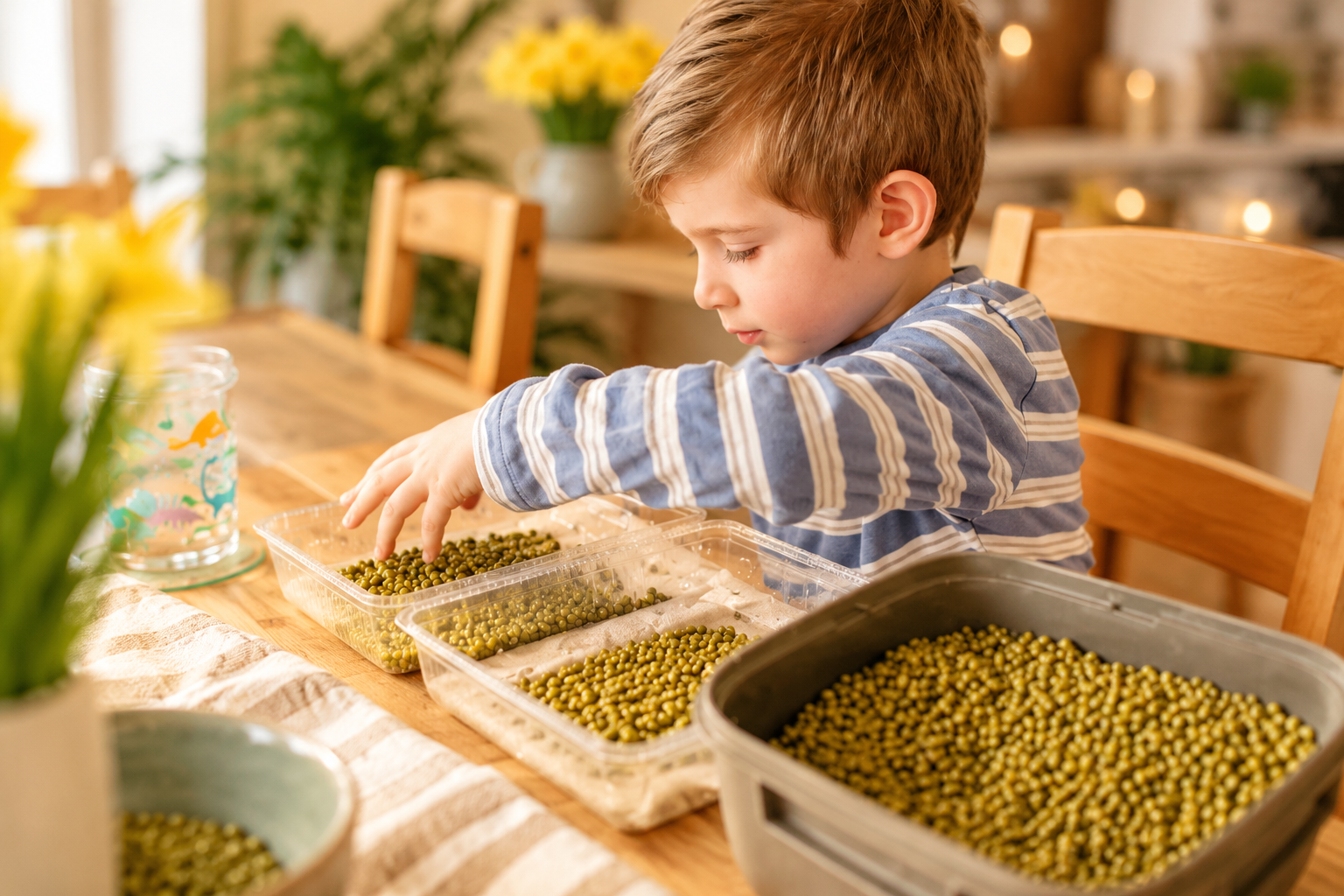
The first few days aren’t exciting to look at. We have a bowl of damp beans or lentils, and Cyrus wants to know when they’re going to grow. I explain that they need time, which is not an especially satisfactory answer when you’re a child expecting something to happen immediately.
Then the first little white roots appear, followed by the green shoots, and suddenly everything becomes interesting. Cyrus enjoys checking how much they’ve grown, and I find myself doing the same thing. It’s surprising how invested you can become in a bowl of lentils when you’ve spent several days wondering whether they’re going to do anything.
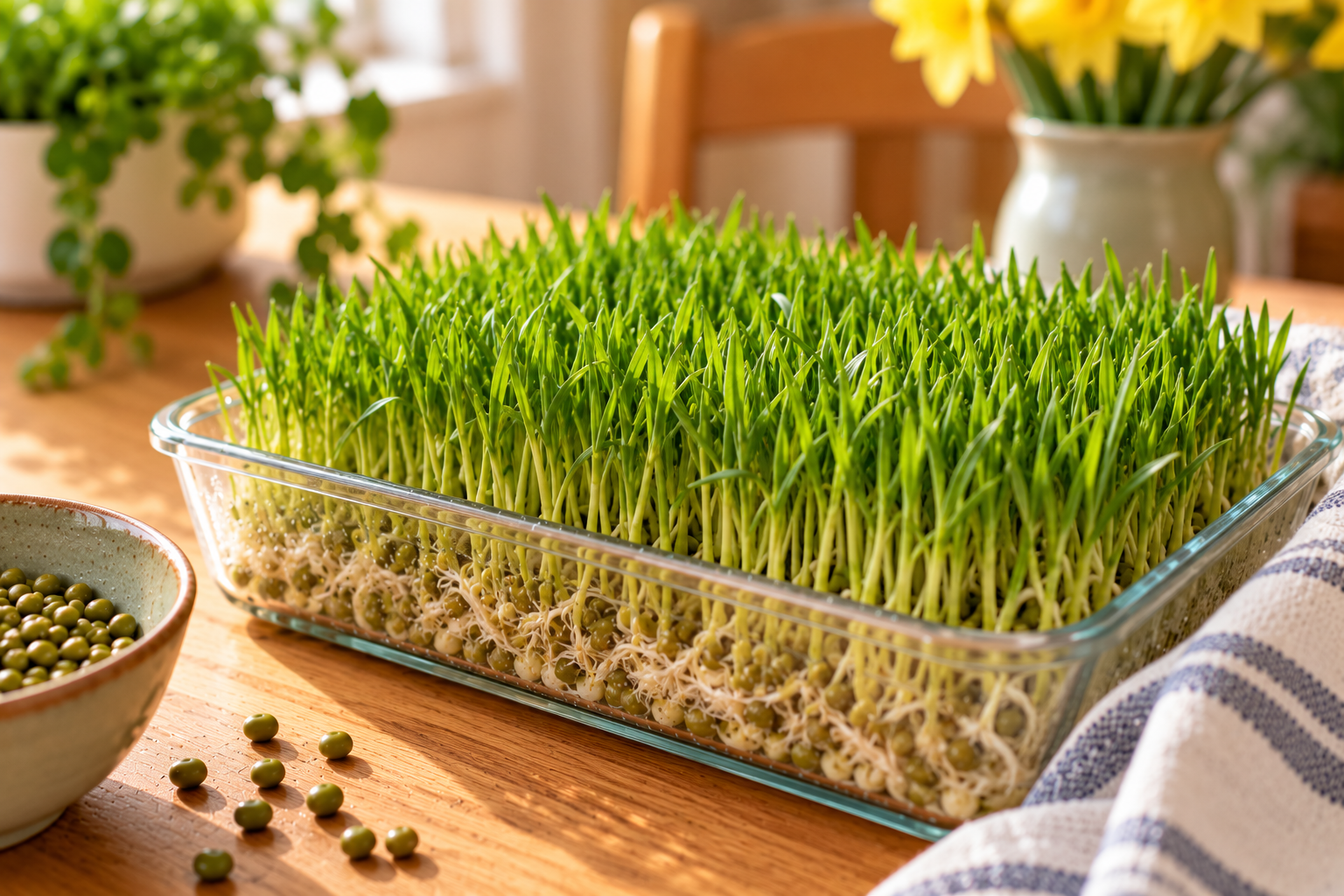
We talk about why plants need water and light, and I explain that the roots grow before the shoots. Of course, he’s more concerned about whether he can water them again. I don’t insist on turning the activity into a science lesson, although it’s a useful way for him to see how plants develop without having to sit through one of my explanations.
There’s also something rather nice about doing an activity that doesn’t involve buying another toy or finding space for yet more craft supplies. We spend enough time surrounded by plastic building blocks and half-finished projects. A bowl of mung beans or lentils is inexpensive, and once the shoots appear, Cyrus has something to show for his efforts.
By the second week, the shoots have usually grown taller, the roots have become tangled together and the dish has developed into a thick patch of greenery. Cyrus is pleased with this stage because he can show his dad what we’ve grown and explain how he’s been looking after it.
I occasionally have to remind him that I’ve played a small part too when it comes to preventing the beans from being drowned. But I’m happy to let him take most of the credit. He’s the one who has spent the previous fortnight inspecting them.
Not every year goes according to plan. Sometimes the shoots grow unevenly, and occasionally the beans don’t germinate as well as we’d hoped. One side of the dish can look wonderfully green while the other appears to have lost interest all together. I’ve learned not to worry too much about it. The sabzeh doesn’t need to look perfect, and nobody is going to inspect our Haft Sin table with a ruler.
Once the shoots are ready, we place the dish among the other items on the table. It’s a small contribution to the celebration, but Cyrus likes knowing he helped grow something that has an important place in our Persian New Year preparations.
One of the things I’ve enjoyed about being married to someone from another culture is discovering traditions I didn’t grow up with. My husband has memories of celebrating Nowruz in Iran, and I like hearing him talk about the food, family gatherings and customs that were part of his childhood.
For Cyrus, these things are just part of growing up. He celebrates Christmas, enjoys British traditions and also takes part in Persian New Year. We eat food from both cultures, listen to Persian music and try to make sure he knows something about where his dad comes from.
I don’t expect him to understand every detail. When I was little, I wasn’t contemplating the historical significance of Christmas. I was far more interested in the presents and whether there would be enough Yorkshire puds on the table to go around.
What matters to me is that Cyrus grows up familiar with his Persian heritage rather than feeling it’s something separate from his everyday life. We don’t recreate every tradition exactly as it would be celebrated in Iran, but we do what works for our family. Sometimes that means preparing Persian food together, and sometimes it means growing mung beans on a kitchen windowsill in Newcastle.
The sabzeh eventually takes its place on our Haft Sin table alongside the other traditional items. These include seeb (apple), associated with beauty and health, seer (garlic), representing health and protection, and serkeh (vinegar), which symbolises patience and the passage of time.
We also enjoy preparing Persian dishes and involving Cyrus in arranging the table. My husband talks about the celebrations he remembers from Iran, and we explain why the different items are included. It’s a good opportunity for Cyrus to ask questions, although he is usually more interested in helping with the decorations than listening to a lengthy explanation.
Another tradition we enjoy is Sizdah Bedar, which takes place on the thirteenth day of the Persian New Year. Families traditionally spend the day outdoors, often enjoying picnics and time together. Sabzeh is traditionally returned to nature as part of the celebration, although it should be disposed of responsibly rather than left somewhere it could cause litter or harm wildlife.
I like how much of Persian New Year revolves around family, food and spending time together. We don’t need to organise anything fancy for Cyrus to enjoy it. He gets to help with the preparations, eat some of his favourite foods and take part in something that has been celebrated by generations of his father’s family.
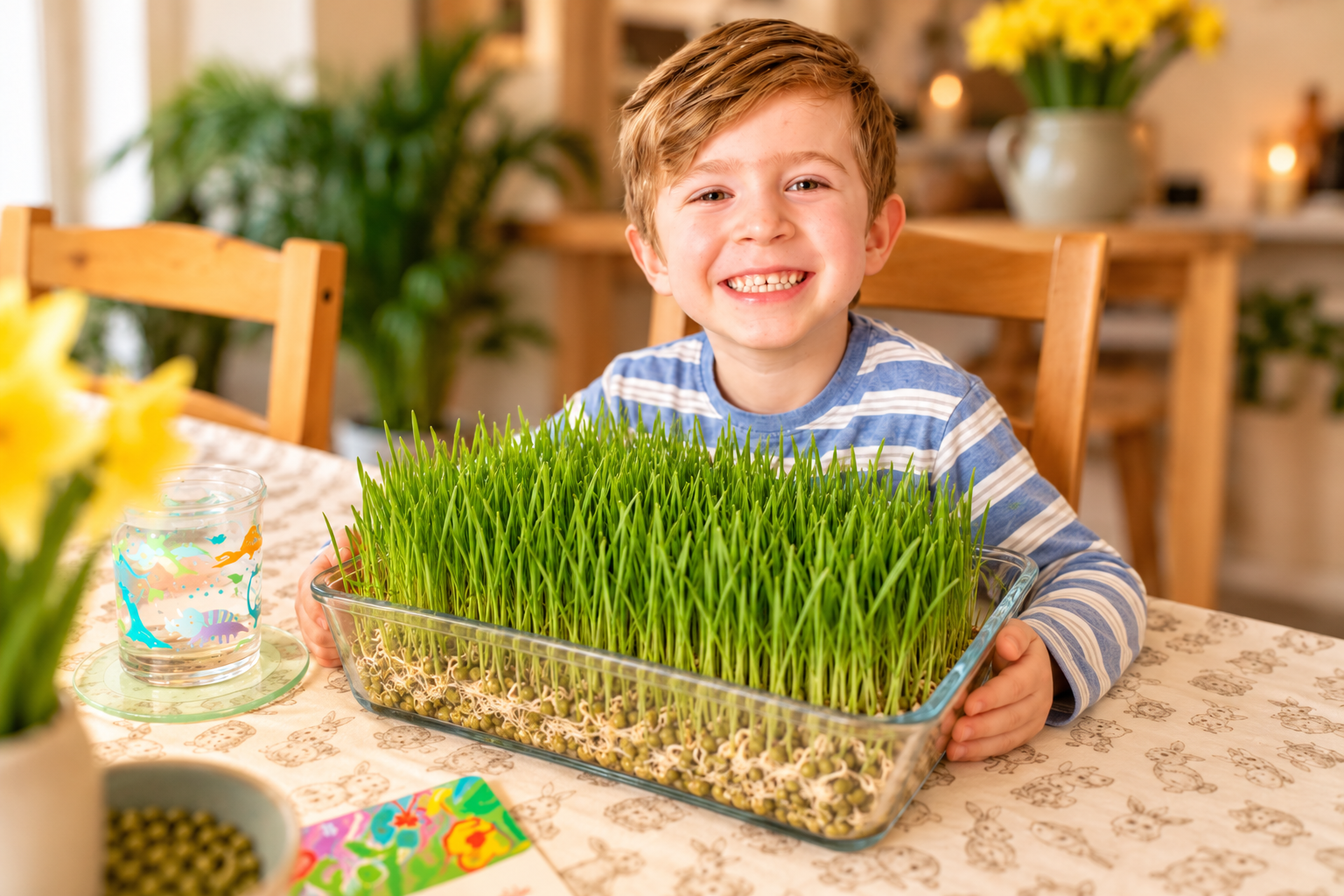
When Nowruz arrives, our sabzeh takes its place on the Haft Sin table, and I’m always pleased that we’ve managed to grow it. After nearly two weeks of checking, watering and occasionally wondering whether it will survive, it’s satisfying to see the finished result.
Cyrus is proud of his contribution when his dad admires the shoots. I enjoy watching the two of them together because this is a tradition my husband remembers from his childhood in Iran, and now our son is experiencing it in Britain.
I don’t know whether Cyrus will carry on growing sabzeh when he’s older. Hopefully he’ll remember it fondly, or he’ll recall it as that weird thing his mum insisted on doing every March. Either way, I hope Persian New Year will always feel like part of his own childhood, rather than something he only knows through stories about his dad’s.
For now, we’ll keep growing our mung beans and lentils, wiping up the occasional puddle and checking whether the shoots have grown another centimetre. And if they turn out a little uneven, I doubt anyone will mind. We’ve never been much good at producing perfectly symmetrical greenery anyway.
Explore more Persian culture and family stories
More from Saffron & Cyrus
Occasional stories, experiments, discoveries and questions from Saffron & Cyrus.
Discover more from Saffron & Cyrus
Subscribe to get the latest posts sent to your email.

Saffron & Cyrus is an independent women’s editorial publication with a recognisable voice, real-life perspective, a defined midlife audience and a commercial model built around useful, relevant partnerships.
