
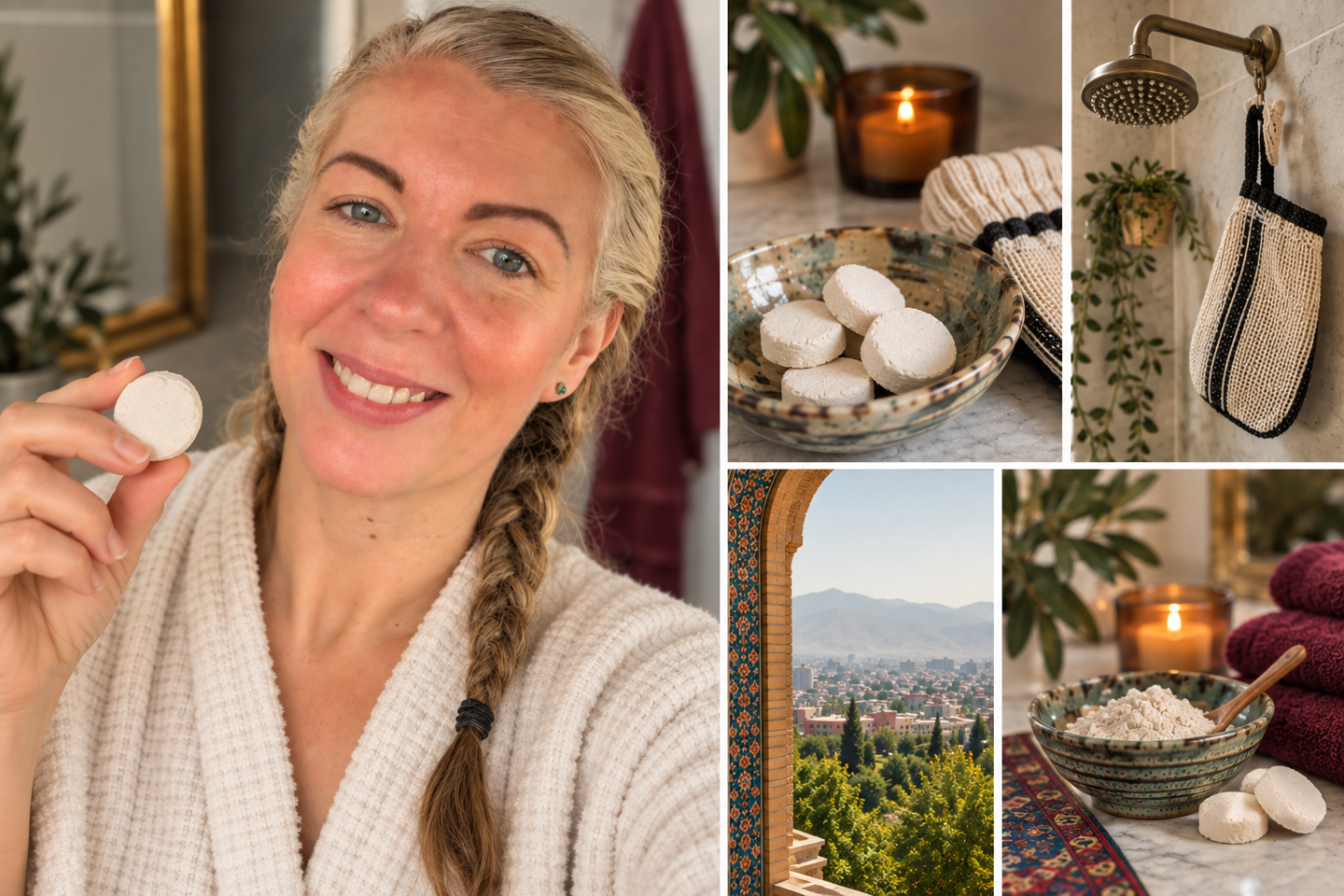
I tried a traditional Persian beauty ritual, then accidentally exfoliated my face with washing powder
Sefidab is chalky, gloriously old-school and one of my favourite discoveries from Iran. Unfortunately, it also looks rather like something you’d put in the washing machine.
How a little white block found its way into my bathroom
If you’d told me a few years ago that I’d be bringing blocks of powdered minerals and animal fat back from Iran in my suitcase, I’d have wondered whether you’d mistaken me for someone with a rather unusual hobby. Yet here I am, a woman who has spent more money than she cares to admit on skincare, getting excited about a crumbly white block that looks just like a piece of chalk.
It’s called sefidab, also known as rooshoor, and it’s a traditional Iranian exfoliator used with a rough washing mitt called a kiseh. I discovered it while visiting H’s family in Iran, and it has since become one of those little rituals I associate with Persian life.
At the time, I was a new mum over 40, juggling work, motherhood and the discovery that having a baby doesn’t automatically make you younger. Some mornings, I looked as though I’d spent the night wrestling Cyrus rather than sleeping beside him.
I’ve always been curious about beauty treatments, especially those that promise smoother skin without taking out a second mortgage. So when I came across sefidab, I was intrigued. Here was something Persian women had used for generations, long before bathroom shelves became crowded with serums, acids and creams promising to reverse the passage of time.
And it cost considerably less than a facial.
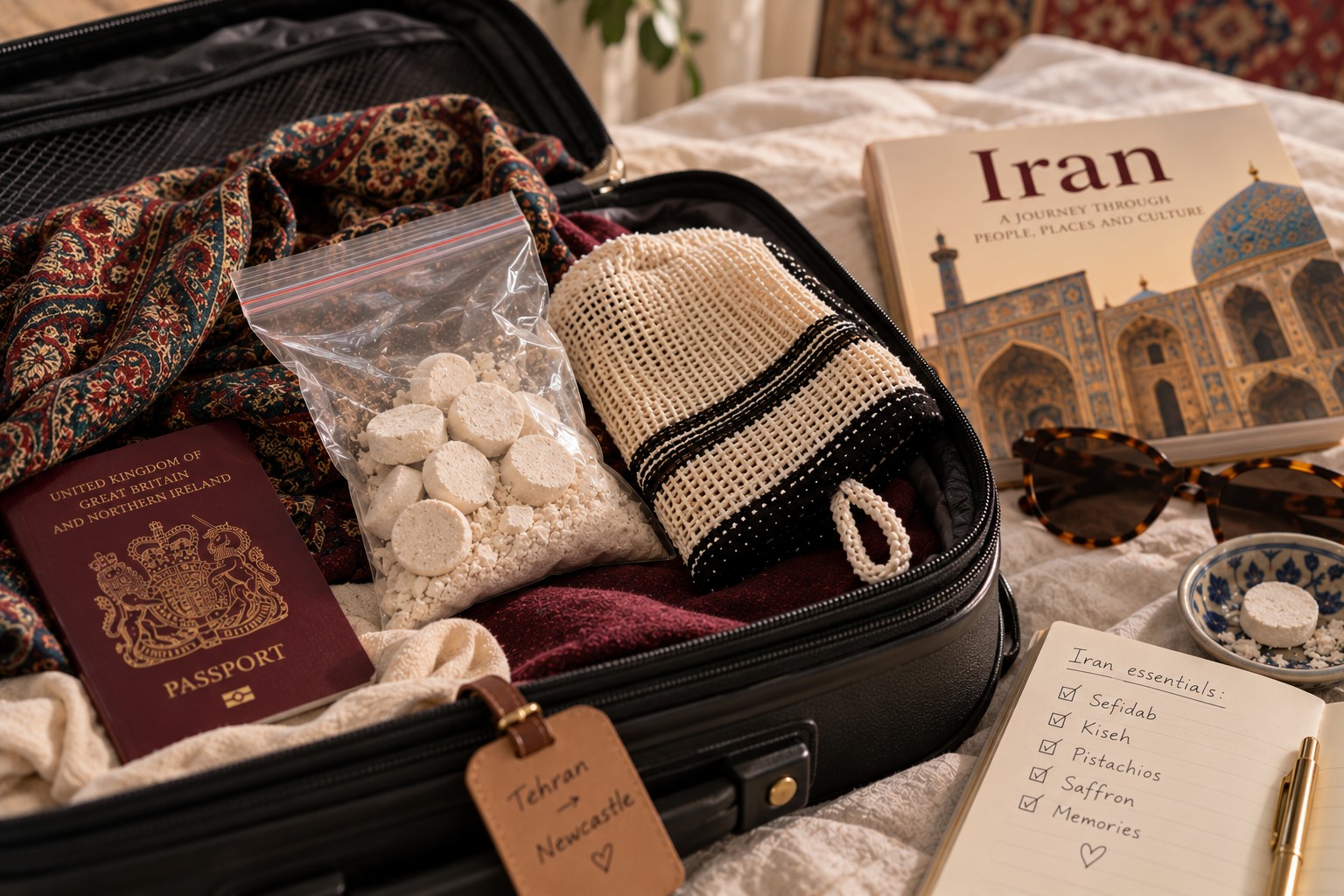
I wanted to know whether a little white block and a traditional washing mitt deserved a permanent place in my bathroom.
What exactly is sefidab?
Sefidab is a traditional Iranian exfoliating product, usually sold as a small white or pale grey block. Traditional formulations can contain mineral powders combined with animal-derived fats, although ingredients vary between makers. It’s worth checking what you’re buying, particularly if you avoid animal products or have sensitive skin.
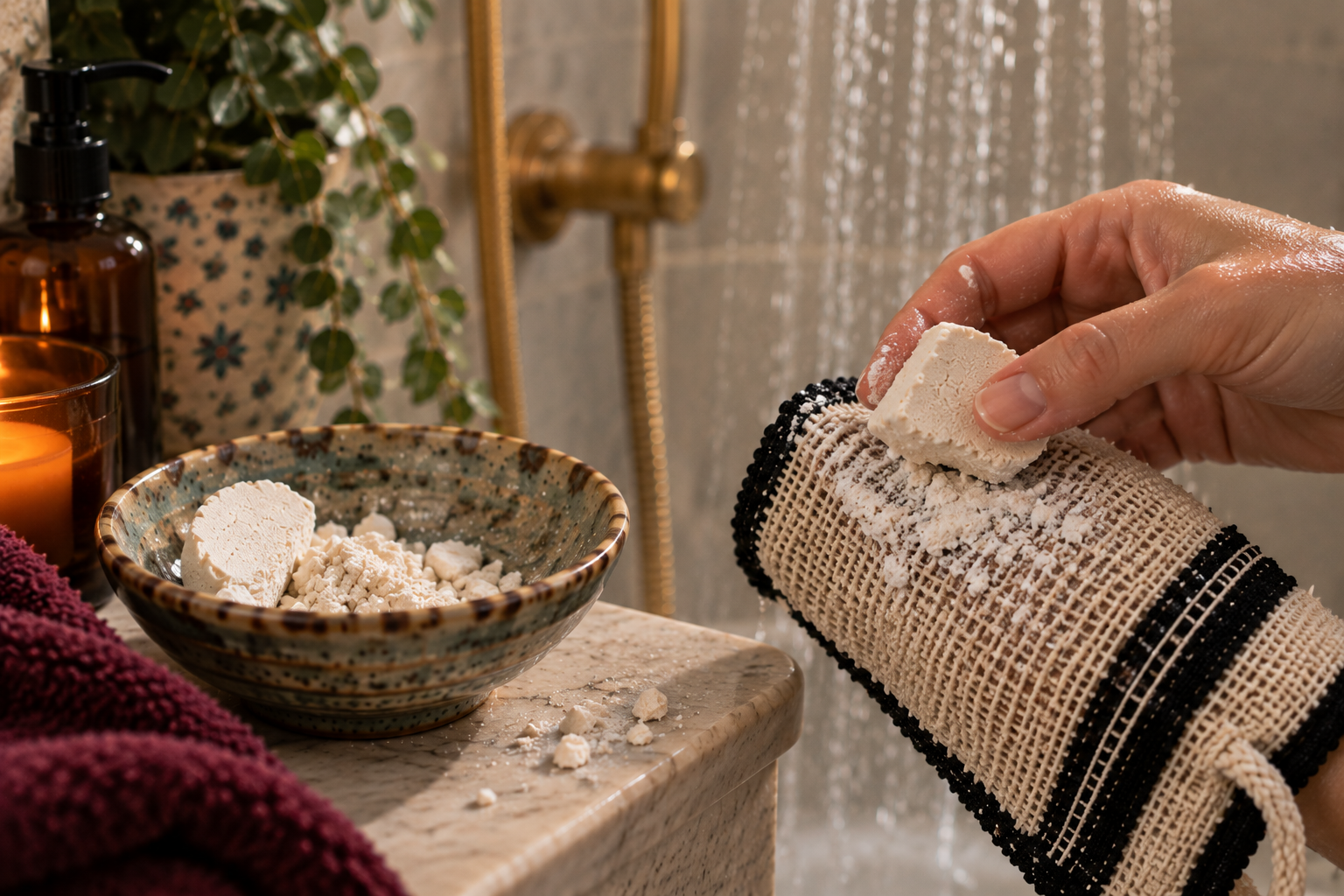
It’s commonly used with a kiseh, the textured mitt associated with Persian bathing traditions. The combination helps remove loose surface skin cells through physical exfoliation, rather than relying on the acids and enzymes found in many modern skincare products.
There’s something appealing about its simplicity. Persian bathing traditions have been around for centuries, and although I wouldn’t pretend every old beauty practice is automatically good for us, I enjoy discovering how women cared for themselves before skincare became so complicated.
I also like the fact that sefidab doesn’t come with an instruction booklet telling me I need another six products to make it work.
Putting sefidab to the test
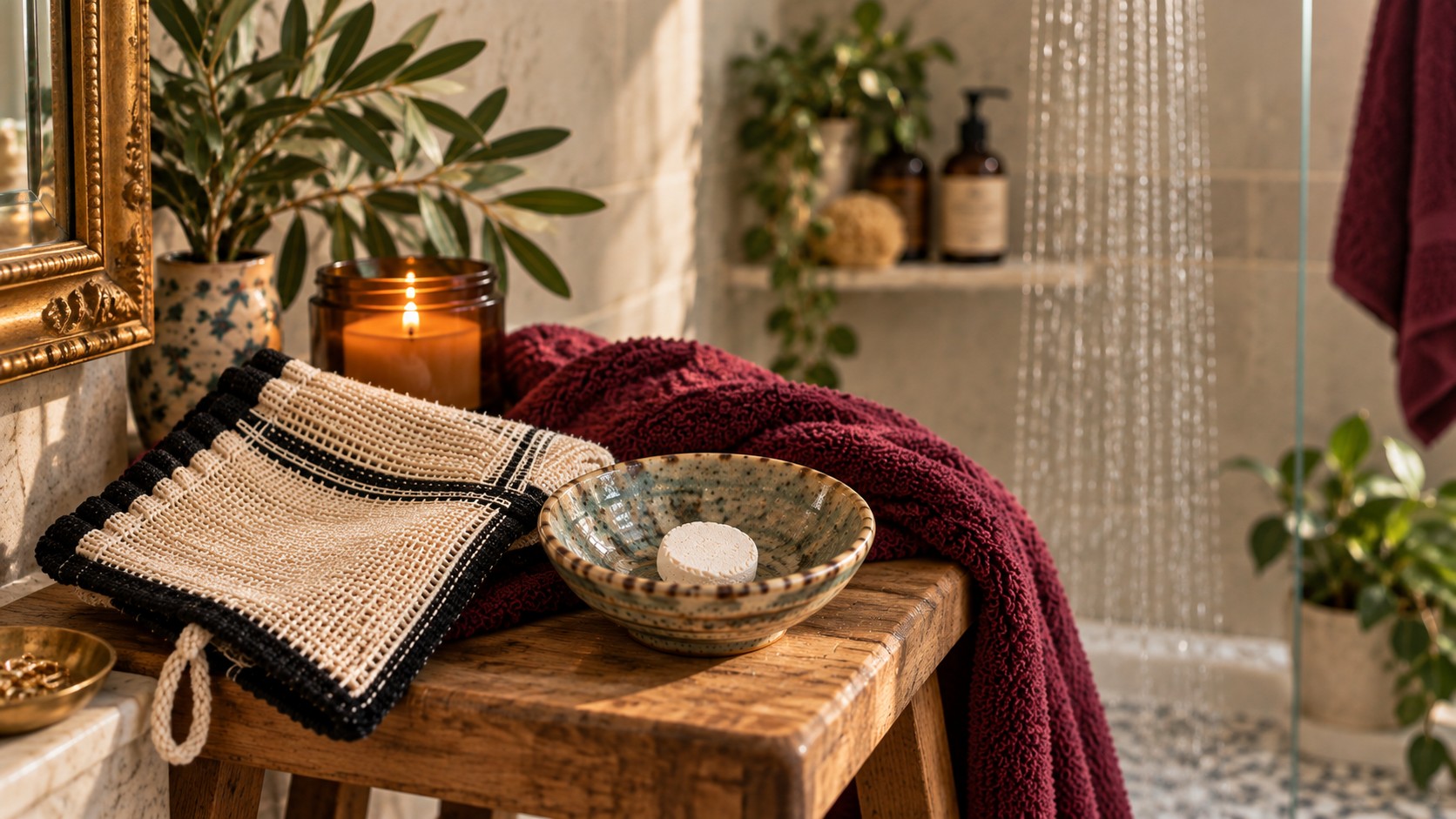
My usual routine starts in the shower. I wet the sefidab and rub it against the kiseh until some of the chalky material transfers onto the mitt. I then use gentle circular movements across my body, paying attention to the rougher areas.
It’s a strange sensation if you’re accustomed to creamy body scrubs. There’s no luxurious foam or expensive fragrance filling the bathroom. The texture is gritty, and you can definitely feel the exfoliation taking place.
The first time I used it, I was surprised by how smooth my skin felt afterwards. My elbows and knees, which have never been touched by expensive body lotions, seemed softer to the touch. I wouldn’t claim that it removes toxins or performs miracles. Exfoliation removes dead cells from the surface of the skin, not toxins from the body. But as a straightforward body treatment, I enjoyed the result.
More importantly, it gave me a few minutes in the shower when nobody was asking where their socks were or whether I’d remembered to buy my goat milk. At that stage of motherhood, such moments were like the idea of a luxury holiday.
A beauty treatment that doesn’t take a bank loan
Part of sefidab’s appeal is its price. Traditional blocks are inexpensive in Iran, compared with the cost of salon exfoliation treatments or premium body scrubs in Britain. I can’t give you an exact price because mine usually arrives courtesy of family. Whenever someone travels from Iran, there’s a good chance a few blocks will find their way into a suitcase.
There’s something lovely about that. Rather than arriving in glossy packaging with a marketing campaign behind it, my skincare comes wrapped up among the ordinary bits and pieces people bring back from visiting relatives. Admittedly, explaining the contents of my luggage could raise a few eyebrows.
Where sefidab works best for me
On my body, sefidab has earned its place. I like using it on rougher areas where the skin tends to feel dry or uneven. Afterwards, I rinse thoroughly and apply moisturiser. It’s a physical exfoliator, so I don’t believe in scrubbing until my skin turns red. I’ve learnt that enthusiasm and skincare don’t always mix when you’re dealing with something abrasive.
There is a temptation to assume that if a little exfoliation makes your skin feel smooth, a vigorous scrub must make it even smoother. Unfortunately, skin doesn’t work like a kitchen worktop. Too much friction can damage the skin barrier, causing irritation, dryness and sensitivity. These days, I’m far more interested in keeping my skin comfortable than trying to scrub away every sign that I’ve lived for half a century.
The face, however, is another matter
I’ll admit that I’ve also experimented with sefidab on my face. In the past, I applied coconut oil first, thinking it would provide some protection before gently working the product across my forehead, cheeks and chin.
It felt invigorating, although that should have been my first clue that I was being rather ambitious. Looking back, I wouldn’t recommend copying that particular part of my routine. Facial skin can be more vulnerable to irritation, and coconut oil doesn’t reliably prevent the tiny abrasions caused by rough exfoliation. A traditional product isn’t necessarily a gentle one.
These days, I’d rather keep sefidab for suitable areas of the body and use a gentler product designed specifically for facial skin. I’ve reached an age where I no longer feel the need to declare war on every line, pore or patch of uneven texture. My face has accompanied me through pregnancy, sleepless nights, work deadlines and more than a few questionable beauty experiments.
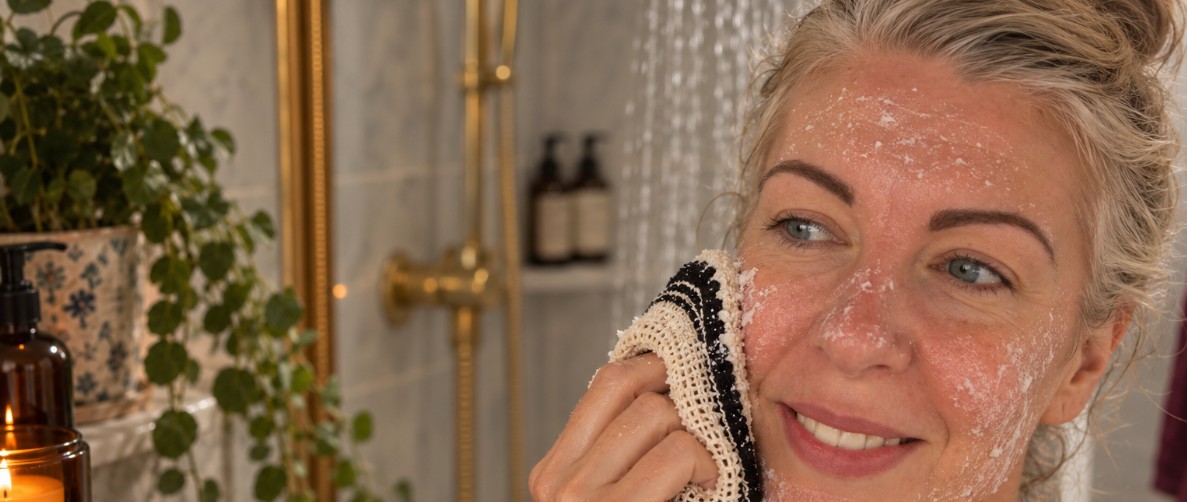
The day I exfoliated my face with washing powder
Now, this is where my enthusiasm for Persian beauty traditions got me into trouble. During a stay in Rasht, in northern Iran, we were visiting H’s khalleh, his aunt. I was getting ready in the bathroom when I spotted a little pile of crushed white powder beside the sink. It looked exactly like sefidab.
Now, if you’ve spent time with a Persian family, you’ll know that hospitality is taken very seriously. Guests are fed, fussed over and generally made to feel as though their every need has been anticipated before they’ve even thought of it themselves. So naturally, I assumed H’s aunt had gone to the trouble of crushing some sefidab for me.
How thoughtful, I remember thinking. No wrestling with the crumbly block today. Without asking anyone, I picked up the powder and started using it. The smell was a little strange. Not unpleasant exactly, just different. The texture was harsher than I remembered, too, but instead of stopping to investigate, I decided it must be another variety. Perhaps even a superior one. I carried on exfoliating, rather pleased with myself for embracing another little piece of Persian domestic life.
It was only later, when H explained what I’d been using, that my enthusiasm came to an abrupt halt.
It was washing powder.
Actual laundry detergent. The sort intended for dirty clothes, not a woman’s forehead. I can laugh about it now, although I imagine H and his family found the whole thing rather entertaining at the time. Thankfully, I didn’t suffer any lasting skin problems, but it could have been a much nastier experience. Laundry detergent can irritate or chemically injure skin, particularly delicate facial skin.
If you ever make a similar mistake, rinse the affected area thoroughly with running water and seek medical advice, especially if there’s persistent burning, redness or eye exposure. As for me, I learnt a valuable lesson about making assumptions in other people’s bathrooms. Just because something is white, powdery and sitting beside a sink doesn’t mean it’s part of an elaborate beauty ritual. Sometimes it’s there because somebody wants to wash their clothes.
Why I keep coming back to this
You might reasonably wonder why, after the washing-powder incident, I’m still so attached to sefidab. Partly because I like the way it makes my skin feel when I use it carefully on my body. But there’s more to it than that.
I associate it with visits to Iran, with H’s family and with the small domestic customs you discover when you spend time in another country. The things that rarely make it into travel brochures but tell you far more about how people actually live.
There’s something comforting about the ordinary nature of it. No expensive packaging, no celebrity demonstrating the correct technique under perfect lighting and no suggestion that I should be ashamed of looking my age. Just a little white block and a washing mitt.
I’ve also become increasingly sceptical of the beauty industry’s determination to convince women that ageing is a problem requiring constant intervention. At 40, I was concerned about looking tired after having a baby. Now, in midlife, I have rather more pressing things to think about than whether my skin looks sufficiently youthful in photographs.
That doesn’t mean I’ve abandoned skincare. Far from it. I still enjoy trying products and treatments, and I’m perfectly capable of being persuaded by a promising-looking moisturiser. But I don’t want every beauty ritual to become another job.
Sefidab reminds me that looking after yourself can be an ordinary pleasure rather than a project with measurable results.
My sefidab arrives in suitcases from Iran, tucked between clothes and gifts, brought over by people who know I like it. It reminds me of family visits, unfamiliar bathrooms, conversations over tea and the peculiar collection of customs that become part of your life when you marry into another culture.
It’s probably one of the least glamorous things in my bathroom, but I like that about it. In a world where skincare increasingly comes with elaborate routines and instructions, there’s something refreshing about a product that has been part of everyday Persian bathing traditions for generations.
Of course, tradition isn’t proof of safety or effectiveness. I still want to know what’s in a product before I use it, and I’d encourage anyone else to do the same, especially if it’s been left in a mysterious pile beside the bathroom sink.
What I’ve learnt from using sefidab
After years of experimenting with this traditional Persian exfoliator, I’ve developed rules of my own.
Most importantly, don’t confuse a traditional beauty ritual with a competition to see how much skin you can remove in one shower.
Would I keep using sefidab?
Yes, although with a little more caution than when I first discovered it. For me, sefidab works best as an occasional body exfoliator. I like the texture, the simplicity and the way my skin feels afterwards. I also enjoy the connection it gives me to Persian family life.
Would I recommend it to everyone? No. People with sensitive skin, eczema, damaged skin barriers or allergies may find it too harsh, and I’d be particularly cautious about using it on the face.
Nor would I claim that it’s better than modern skincare. There are plenty of well-formulated exfoliating products that offer more predictable ingredients and gentler results. But I don’t think everything in my bathroom needs to be modern, expensive or scientifically engineered to earn its place. Sometimes I simply enjoy using something familiar.
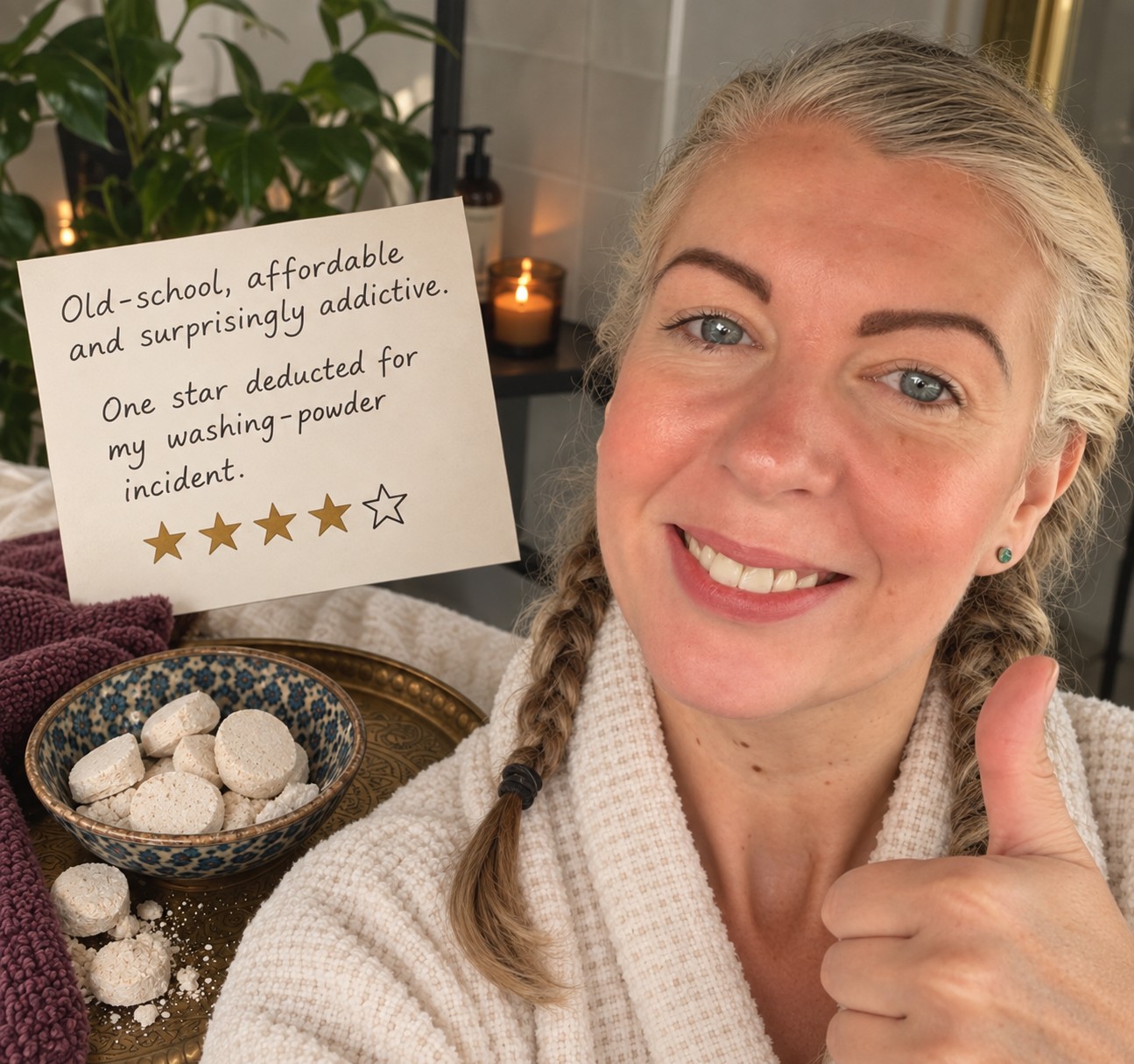
Old-school, affordable and surprisingly satisfying. Four stars for the body exfoliation and the lovely connection to Persian family traditions. The missing star? Technically, the washing-powder incident wasn’t sefidab’s fault, but my judgement deserves a little scrutiny.
Would I spend my money on it again?
Yes, although I’d much rather someone brought it back from Iran for me. There’s something nice about receiving a small, inexpensive gift that carries a little piece of another country with it.
And if anyone is planning to send me some, there’s just one request. Please leave it in its original packaging. I’ve had quite enough adventures with unidentified white powders.
Join the conversation
Is there a beauty ritual from your family or culture that you’ve carried into adult life, even if other people find it a little unusual? Perhaps it’s something your mother or grandmother used, or a product you always bring home from travelling.
I’d love to hear about it, particularly the old-fashioned remedies and beauty habits that have survived despite everything the modern skincare industry has thrown at us.
Occasional stories, experiments, discoveries and questions from Saffron & Cyrus.
Discover more from Saffron & Cyrus
Subscribe to get the latest posts sent to your email.

Saffron & Cyrus is an independent women’s editorial publication with a recognisable voice, real-life perspective, a defined midlife audience and a commercial model built around useful, relevant partnerships.
