
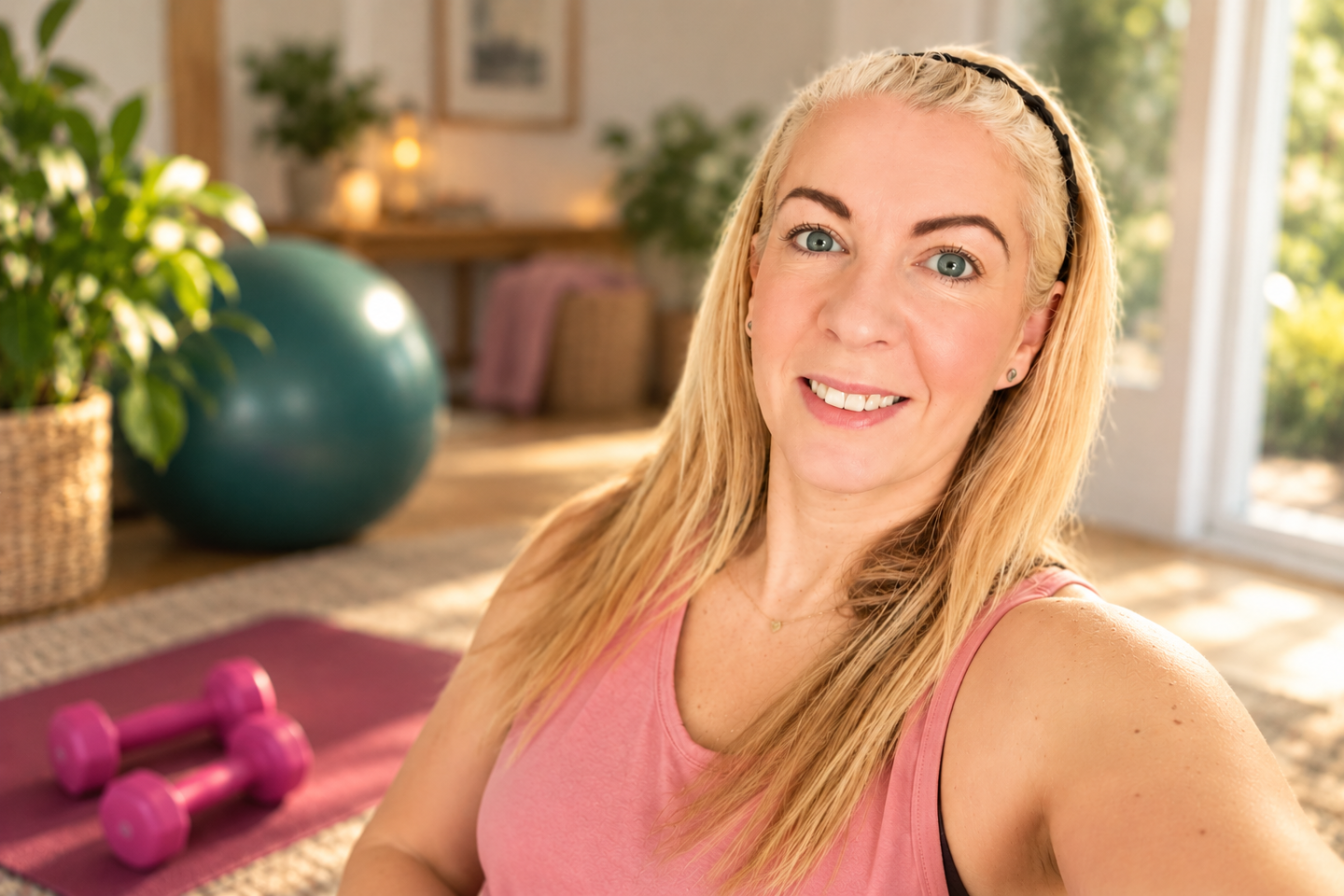
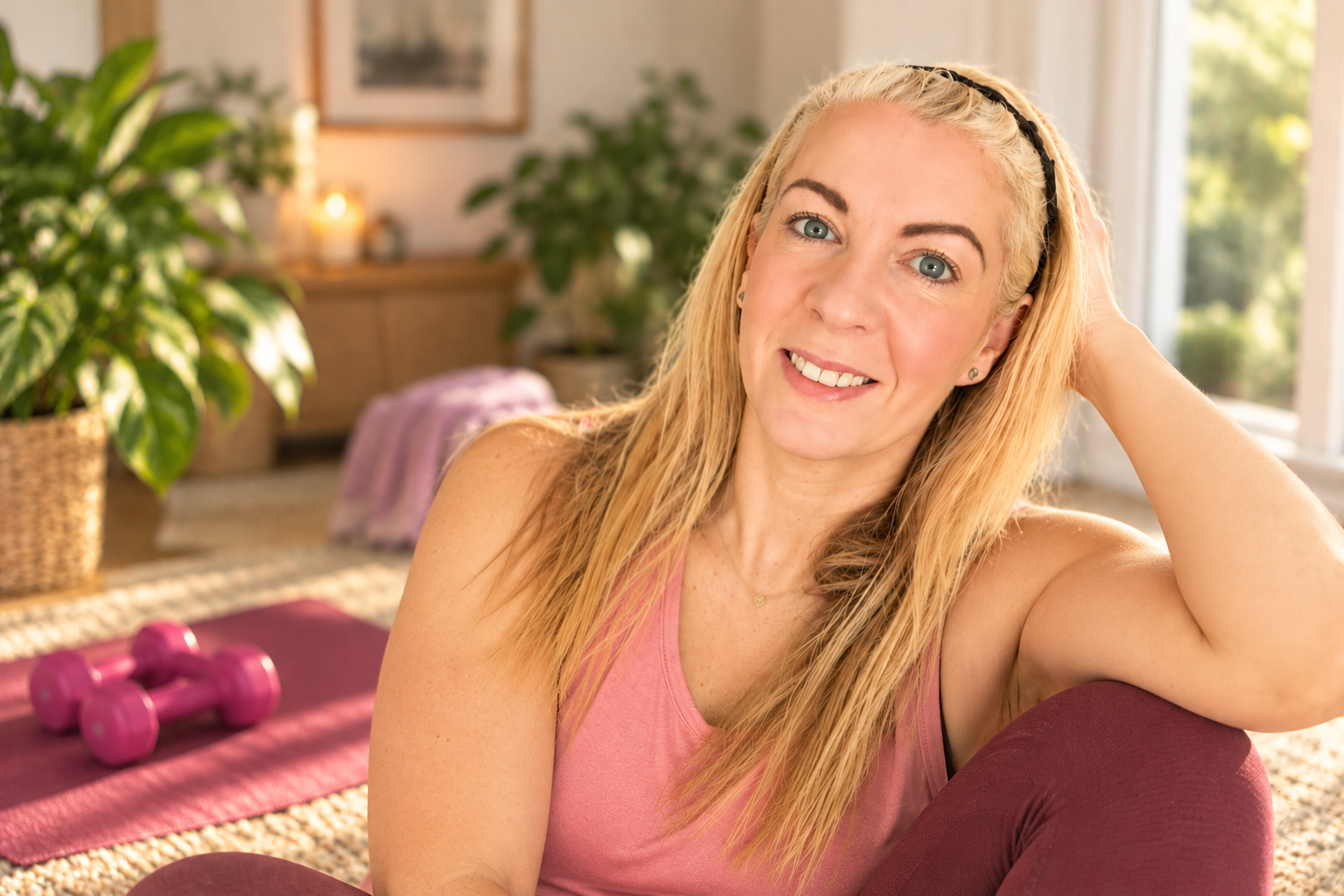
Can five minutes really count as exercise?
I can spend 45 minutes throwing punches in Body Combat, happily lose myself in a Zumba class and still find time for a few weights. But ask me to exercise after a dreadful night’s sleep, when perimenopause has left me feeling as though somebody has unplugged my batteries, and it’s a different story. I love the gym, but even I have days when the thought of putting on my trainers feels ‘meh’.
With World Menopause Day taking place this Sunday, 18 October, there’s lots of advice about how women should exercise through midlife. Lift weights, protect your bones, improve your cardiovascular health and make time for recovery. All sensible, except that some mornings I’d quite like to make it through my first coffee, breakfast and getting Cyrus ready for school without forgetting why I walked into the kitchen. Finding an uninterrupted hour isn’t always easy.
So, when experts at Tonic suggested that five-minute workouts might make exercise more manageable during menopause, it sparked my interest. Could something so short actually be worthwhile, or would I spend most of the time wondering when the proper workout was supposed to begin? I’m used to exercise involving a gym bag, a change of clothes and a big amount of effort. Five minutes of marching around the kitchen isn’t exactly my idea of a workout, but I was willing to give it a go.
The idea behind my latest Saffron Experiment was to explore six short routines designed for situations many women will recognise, from broken sleep and afternoon fatigue to spending too long sitting at a desk. Nothing complicated or expensive and, appealingly, no expectation that every session should leave me looking as though I’ve just completed an obstacle course. I wanted to find out whether a few minutes of movement could offer something useful on days when a full workout feels unrealistic.
No gym bag, no complicated programme or pressure to achieve a personal best. Just a few minutes of movement that fit around the day you’re having.
Why exercise during menopause is important
Menopause brings more than hot flushes and irregular periods. Changes in hormone levels can affect sleep, mood and energy, while ageing and the menopause transition can influence muscle mass, bone health and also body composition. For women who have always enjoyed exercise, these changes can be frustrating. You might still want to train, but find yourself recovering more slowly or struggling to summon the enthusiasm after another broken night’s sleep.
For women who have never enjoyed exercise, being told to start a fitness programme during an already demanding period of life is hardly encouraging. It’s difficult enough finding time for yourself without being made to feel that you’re falling behind because you haven’t mastered deadlifts or signed up for Pilates. Social media doesn’t help, especially when everyone appears to be transforming their health in six weeks while maintaining immaculate kitchens and suspiciously peaceful family lives.
The NHS recommends regular physical activity during perimenopause and menopause, including weight-bearing exercise to support bone health. Strength training is also important for maintaining muscle and physical function as we get older. But there’s a difference between understanding the benefits of exercise and finding a routine that works when you’re tired, stressed or juggling responsibilities.
Jordan Chadwick, managing director at Tonic, believes women need more flexibility in how they approach movement during menopause. “Perimenopause and menopause affect people differently. Someone managing disrupted sleep may need a gentler option than somebody who feels ready to focus on strength, so the routine should respond to the person rather than a fixed idea of what exercise ought to look like.”
It’s a sensible point. Menopause isn’t a competitive sport, although you could be forgiven for thinking otherwise when scrolling through some fitness advice. The woman who can manage an early morning gym session, a demanding job and a spotless kitchen deserves applause, but so does the woman who manages a short walk after a difficult day. Both are making an effort, even if their exercise routines look different.
What does the research say about exercise and menopause?
Before getting carried away with the idea that five minutes could transform my fitness, I wanted to look at the evidence. A 2024 systematic review and meta-analysis published in the journal Menopause examined the effects of mind-body exercise on women during perimenopause and after menopause. Researchers Hong Xu, Jian Liu, Peishan Li and Yujie Liang analysed 11 randomised controlled trials involving 1,005 participants, comparing exercise interventions with control groups.
The research examined approaches including yoga, Pilates, tai chi, qigong, baduanjin and mindfulness-based stress reduction. These activities combine physical movement, controlled breathing, concentration or relaxation in different ways. The researchers wanted to establish whether such interventions could improve bone mineral density, sleep quality, anxiety, depressive mood and fatigue, all of which can be relevant to women’s health during and after menopause.
The pooled analysis found statistically significant improvements in all five outcomes. Bone mineral density improved compared with control groups, with a standardised mean difference of 0.41. The researchers also reported better sleep quality, with a standardised mean difference of -0.48, alongside reductions in anxiety symptoms (-0.80), depressive mood (-0.80) and fatigue (-0.67). The negative values for these symptom measures reflect improvement on the scales used in the included studies, rather than a percentage reduction.
Those findings are encouraging, especially for women who want alternatives to high-intensity exercise. However, the results need to be understood in context. There was substantial variation between studies for sleep quality, anxiety and depressive mood, which means the size of the reported benefits was not consistent across trials. The findings support the potential value of mind-body exercise, but they don’t guarantee that every woman will experience the same improvements.
The researchers also examined structured mind-body exercise interventions, not the five-minute micro workouts featured in this experiment. We therefore can’t use the review to claim that five minutes of marching, stretching or dancing will produce the same effects on bone density, sleep or menopausal symptoms.
What the study does offer is evidence that some forms of structured exercise may support several aspects of health during and after menopause. For me, the question is more practical. If five minutes of movement makes exercise feel manageable on a difficult day, is that a reasonable place to begin?
The important distinction: The 2024 research examined structured mind-body exercise programmes. It did not investigate the six five-minute workouts in this experiment, and its findings should not be presented as proof that micro workouts deliver the same health benefits.
The six-workout Saffron Experiment
Experiment one: Five minutes after a terrible night’s sleep
The first routine is designed for mornings when sleep has been awful, something many women in perimenopause will recognise. It involves five minutes of gentle marching, shoulder rolls, heel raises and side steps. Nothing demanding or resembling the energetic Body Combat classes I usually enjoy. The idea is just to get the body moving when energy is already in short supply.
After five minutes, I feel a little less stiff and more awake, although I wouldn’t go so far as to say I’m suddenly bursting with energy. My shoulders feel looser, and there’s something reassuring about having moved without exhausting myself. I still want another coffee, naturally, but the morning feels a bit more manageable. What surprises me most is how little preparation the routine takes compared with getting ready for the gym.
Jordan explains: “After a poor night’s sleep, the aim does not need to be setting a personal best. Gentle movement can provide an achievable beginning while allowing somebody to respond to how they actually feel.”
It’s a modest beginning, but I guess that’s the point. When sleep has been poor, exercise doesn’t always need to be about pushing harder. It can just be about moving comfortably and recognising that a gentle start is reasonable. I wouldn’t trade a good night’s sleep for five minutes of marching, and there will always be mornings when rest is the better option, but I can appreciate not turning a difficult start into an endurance test.
Experiment two: The five-minute energy ladder
The second routine is intended for those moments when energy begins to disappear during a busy working day. It starts with comfortable marching before introducing side steps, arm movements and a slightly quicker final minute if energy allows. There’s no complicated choreography to remember and no expectation that the pace must become increasingly demanding.
By the end of the five minutes, I feel warmer and a little more alert, although I’m not suddenly ready to run a marathon. The gradual increase in movement is manageable, and I like being able to decide whether to pick up the pace rather than following an instructor who has already moved on. It’s the sort of exercise I could squeeze in between meetings, although I’d close the office door first.
What appeals to me is the absence of a target. There’s no personal best to chase, no calorie count to obsess over and no reason to feel disappointed if the session remains gentle. I’m used to tracking my efforts in the gym, and I enjoy seeing my fitness improve, but there’s something nice about moving without turning this into a competition with myself.
Experiment three: Strength training without the gym
The third routine involves controlled sit-to-stands from a stable chair, press-ups against a sturdy kitchen worktop and supported calf raises, with short breaks between movements. Strength training is already something I enjoy, so this is the routine that feels right, even if the equipment is different from what I’m used to.
This one feels more like exercise to me. I can feel my legs working during the sit-to-stands, while the worktop press-ups give me a gentle challenge for my upper body. I’m not going to pretend that five minutes at the kitchen counter gives me the same satisfaction as a proper weights session, but I can see how these movements might help someone build confidence before progressing to demanding resistance exercises.
“Strength activity matters during and after menopause, but beginning does not require an intimidating gym programme,” says Jordan. “Simple supported movements can help somebody learn the technique and build confidence before progressing.”
As someone who enjoys lifting weights, I’m all for encouraging women to build strength. But I also know that walking into a gym for the first time can feel intimidating, especially if you’re already uncomfortable with changes in your body. Starting at home may give someone the confidence to take the next step. These exercises won’t replace a progressive strength programme, but they introduce useful movements without equipment.
Experiment four: A five-minute desk reset
The fourth routine involves standing up and moving through gentle shoulder circles, supported hip movements, ankle rolls and controlled reaches. It’s designed to interrupt long periods of sitting rather than provide a demanding workout, which makes it good for anyone who spends much of the working day in front of a screen.
This is probably the easiest routine to incorporate into my working day. After five minutes, my shoulders feel less tense and my back is grateful for the change of position. I also notice how much time I can spend sitting without realising it. The movements themselves aren’t especially exciting, but stepping away from the keyboard feels worthwhile.
I suspect many women will recognise that pattern. It’s easy to become absorbed in emails and deadlines without noticing how long you’ve been sitting. A short mobility break won’t replace cardiovascular exercise or strength training, but it can interrupt prolonged periods of inactivity. It also gives me an excuse to stop staring at a screen, which is not a bad thing.
Experiment five: Walking away from stress
The fifth routine is simple. Walk for five minutes at a comfortable pace, indoors or outside, and allow your breathing to settle naturally. There’s no need to monitor your speed or count your steps. I find this one welcome when my head feels full.
Five minutes isn’t long enough to resolve whatever is worrying me, but a change of scenery gives me something else to concentrate on. I feel a little calmer afterwards, although the benefit is less about physical exertion and more about giving myself permission to step away.
“When stress is already high, exercise should not become another source of pressure,” Jordan says. “A short, comfortable walk can create a change of scene and a clear pause without demanding a complicated routine.”
There are days when the last thing I want is another instruction about how to improve my wellbeing. Meditate, breathe, exercise, drink more water, get outside and sleep better. All good suggestions, until they become another set of demands competing for attention. A short walk feels like a more forgiving proposition when I’m already overwhelmed. It doesn’t solve everything, but at least I can return to whatever I was doing with a slightly clearer head.
Experiment six: One song and no choreography
The final routine is easily my favourite idea because it involves music. Choose a song you love, turn it up and move until it finishes. You can dance, march, throw a few punches into the air or just step from side to side. It doesn’t matter whether you have rhythm or whether your movements resemble an actual fitness routine.
This is the one that makes me smile. Persian music has a way of getting people moving in our house, and after a few minutes of dancing, I feel noticeably more cheerful. I’m not concentrating on repetitions or wondering whether I’m working hard enough. I’m enjoying the music and moving my body and at times, getting carried away with the arm movements. It feels less like a workout and more like something I’d happily do anyway.
As someone who loves Zumba and combat-style exercise, I know how much difference a good song can make to my mood. A few minutes of dancing in the kitchen can make movement enjoyable rather than something to endure. I’d rather dance to a favourite track than spend five minutes feeling guilty about not going to the gym.
My verdict: Five minutes won’t replace the gym, but there’s room for both
Can five-minute workouts really make a difference?
The appeal of micro workouts is that they make exercise easier to fit into ordinary life. You don’t need to travel anywhere, book a class or find an uninterrupted hour. You can move between meetings, while dinner cooks or before collecting the children from school. For women dealing with fluctuating energy levels, that flexibility may help them stay active when longer sessions feel unrealistic.
However, we should be careful about treating five-minute workouts as a miracle solution. The NHS recommends that adults aim for at least 150 minutes of moderate-intensity activity or 75 minutes of vigorous-intensity activity each week, alongside muscle-strengthening activities on at least two days. Short bursts of exercise can contribute towards those targets when the intensity is appropriate, but gentle mobility work shouldn’t automatically be counted as equivalent to a more demanding session.
For me, the interesting question is whether these short routines can sit alongside the exercise I already enjoy, rather than replacing it. I’m not looking for an excuse to abandon the gym, but I do like having alternatives when life gets in the way. A few minutes of movement won’t deliver the same benefits as a structured programme, but it may help keep up a habit when circumstances make longer sessions difficult.
It’s also worth remembering that menopause affects women differently. Some will feel comfortable continuing with demanding exercise, while others may need to adapt their routines because of fatigue, pain, poor sleep or other symptoms. Persistent exhaustion and troublesome menopausal symptoms deserve medical attention, rather than an assumption that more exercise will put everything right.
What I learned from the six workouts
The biggest surprise for me isn’t how physically demanding the exercises are, because most aren’t. It’s how manageable they feel. I don’t need to organise the rest of my day around them. Some leave me feeling a little more alert, others help me loosen up after sitting for too long, and dancing to a favourite song is easily the most enjoyable of the lot. None replaces a proper workout, but each has something to offer in the right circumstances.
I’ll still choose Body Combat over marching around the kitchen when I’ve got the energy. I like lifting weights, I love Zumba and I’m not about to abandon the gym because somebody has discovered that exercise can last five minutes. I enjoy working hard, and there’s nothing wrong with wanting to challenge yourself, whatever stage of life you’re at.
But I’ve been a little too quick to dismiss the little things. A few minutes away from my desk, a short walk or one Persian song played too loudly might not count as a serious workout, but that doesn’t make the time worthless. It can be enough to feel a little less stiff, a little calmer and pleased that I’ve made time to move.
Perimenopause has already taught me that my body doesn’t always cooperate. I’m beginning to think my exercise routine doesn’t need to be quite so stubborn.
As we mark World Menopause Day this Sunday, perhaps we should spend less time telling women how much more they ought to be doing and more time recognising what they’re already managing. Exercise matters, but so do sleep, recovery, medical support and the freedom to make choices that suit our own circumstances.
And if a favourite Persian song gets me moving when I can’t face the gym, I can think of worse ways to spend five minutes.
What about you? Would five minutes of movement make exercise easier during menopause, or would you rather save your energy for a proper workout?
Xu H, Liu J, Li P, Liang Y (2024). Effects of mind-body exercise on perimenopausal and postmenopausal women: a systematic review and meta-analysis. Menopause.
Read the study on PubMed.
NHS: Physical activity guidelines for adults aged 19 to 64
Editorial disclosure: This Saffron Experiment is based on workout suggestions and expert commentary supplied by Tonic. The research discussed examines structured mind-body exercise, not five-minute micro workouts specifically. This article is for general information and does not replace medical advice.
More from Saffron & Cyrus
READ NEXT >>
ANOTHER STORY >>
Occasional stories, experiments, discoveries and questions from Saffron & Cyrus.
NB: No spam. Just stories, discoveries and the occasional big question. You can unsubscribe whenever you like.
Discover more from Saffron & Cyrus
Subscribe to get the latest posts sent to your email.


Saffron & Cyrus is an independent women’s editorial publication with a recognisable voice, real-life perspective, a defined midlife audience and a commercial model built around useful, relevant partnerships.
