
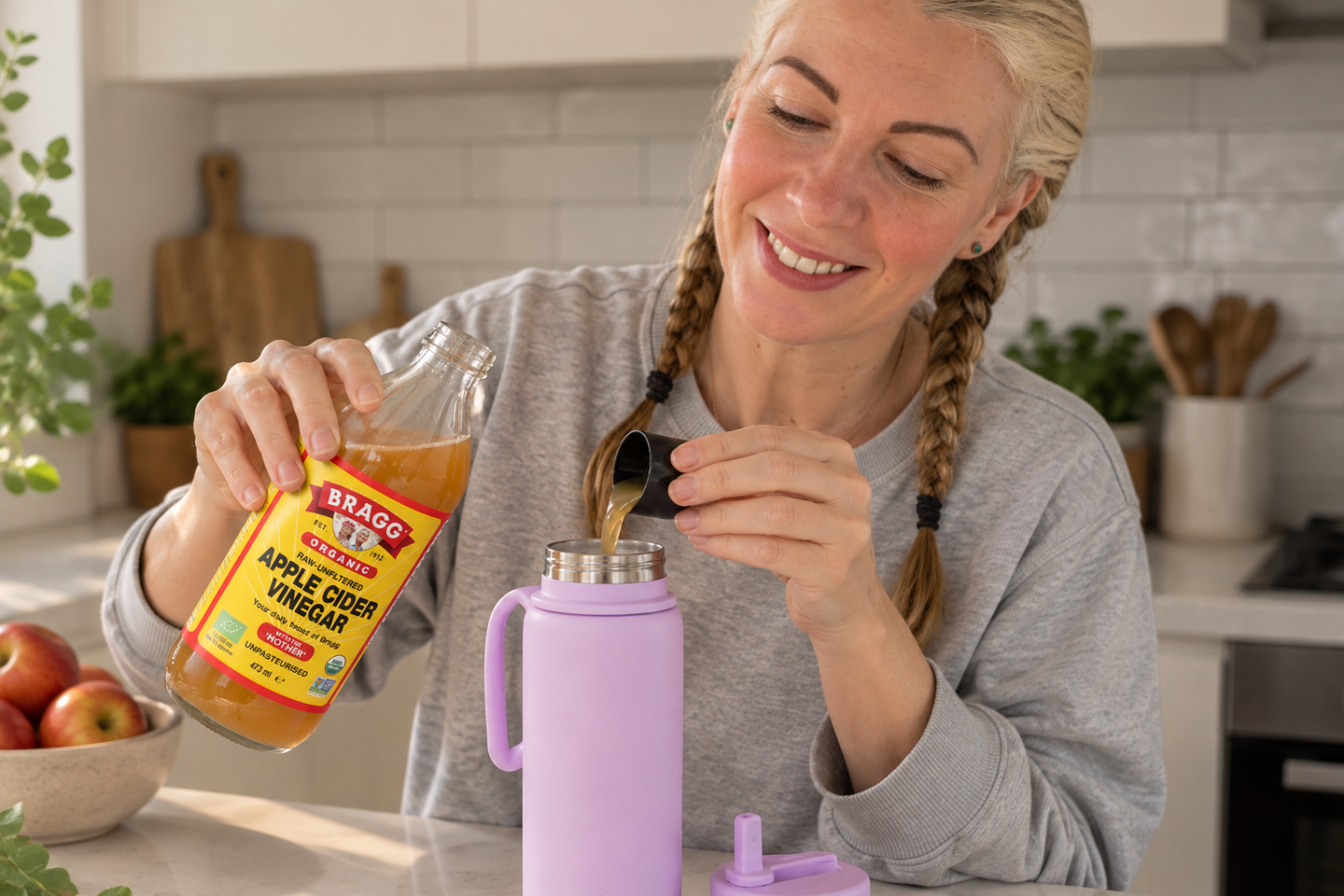
You will find people crediting apple cider vinegar with everything from weight loss and blood sugar control to gut health, skin and immunity. That is an impressive workload for a bottle of fermented vinegar.
I started wondering about it because I was already doing what women are often encouraged to do when their bodies start changing: looking for something that might help. Perimenopause had made my body feel unfamiliar, and when something feels unfamiliar, doing something can feel better than doing nothing at all.
Apple cider vinegar is where my sceptical side gets louder though. I enjoy it and have been known to add a dash of it to my gym water bottle. But I am wary of the claims that have grown around it online.
The sensible approach is to keep the claim smaller. It can be part of a diet if you enjoy it, but it is not a proven treatment for perimenopause. Nor should it be presented as a guaranteed route to leanness, muscle development, clearer skin or a healthier gut.
Because acidic drinks can damage tooth enamel and may cause irritation or interact with some medicines, more is not necessarily better. I would rather say, “This is something I enjoy,” than turn my personal ritual into a medical promise.
When my mum was going through menopause, I saw irritability, sadness and a loss of motivation. I did not understand what I was looking at. I blamed myself as a hot-headed teenager and I certainly did not know how to help her because she kept perimenopause hidden. It was not something you talked about and that is the uncomfortable bit about it in hindsight.
Perimenopause has made me question how we talk about women’s health, what we expect women to simply put up with, and how quickly a complicated stage of life gets reduced to a list of symptoms.
I became a mum over 40, so I was already learning that midlife does not arrive with an instruction manual. Then my body started changing again, periods became less predictable and energy could disappear without much warning. Sleep, mood, concentration and confidence could feel as though they belonged to several different people. Some days I felt completely myself. Other days I wondered what had happened to my brain.
For years, menopause was treated as something women endured quietly. The conversation has changed, and thank goodness for that. But I sometimes wonder whether we have replaced silence with another problem: an enormous marketplace of fixes.
I understand the appeal because I have tried most of the rituals in the search for the fountain of youth. My own approach has become less about finding one miracle answer and more about building a routine that makes sense for me.
I like starting the morning with water and lemon and I try to eat proper meals rather than treating coffee as a food group. I enjoy bone broth at lunchtime and sometimes I have wheatgrass juice in the afternoon. In the gym, I may drink water with a little apple cider vinegar.
These things have become small markers in my day. Not every wellbeing habit needs to be a medical breakthrough. Sometimes a ritual works because it just makes you feel as though you’re doing something.
Lemon water is not a menopause treatment, wheatgrass is not a cure for fatigue and apple cider vinegar is not a substitute for medical care.
If perimenopause is affecting your life, there are proper healthcare options. You do not have to spend years white-knuckling your way through symptoms because someone tells you this is just what happens when you get older.
Symptoms can include changes to periods, hot flushes, night sweats, sleep problems, mood changes, memory and concentration difficulties, weight changes, vaginal symptoms, headaches, palpitations and joint or muscle pain. What matters is not how many symptoms you can tick off, but how they affect your life.
For some women, lifestyle changes such as regular exercise, a balanced diet, good sleep routines and strength training can help. For women who need more support, HRT is an established treatment for menopause symptoms and can be used during perimenopause. The right approach depends on your circumstances and should be discussed with a healthcare professional.
Exercise has become one of my anchors, partly because I genuinely enjoy it and partly because it gives me something my hormones need.
I like the gym. I like Zumba. I like combat-style classes. I like leaving sweaty, slightly red-faced and pleased that I turned up.
But I have also had to learn that more is not automatically better. Midlife fitness is not about punishing the body into submission. Strength, mobility, cardiovascular fitness and recovery all matter. So does rest.
The biggest change in my thinking is that I no longer believe I need to fix every uncomfortable sensation.
Sometimes I need better information. Sometimes I need a GP appointment. Sometimes I need sleep. Sometimes I need to move. Sometimes I need to admit that I am tired and stop behaving as though exhaustion is a moral failure.
And sometimes I need a cup of coffee and ten quiet minutes before anyone asks me another question.
Perimenopause has made me more interested in the gap between what women experience and what society expects them to carry quietly. That gap is where the real story lives.
I want women to be able to talk about perimenopause without embarrassment, but I also want us to become better consumers of the information surrounding it.
Question the miracle cure. Question the influencer with a cupboard full of supplements. Question the headline promising that one ingredient will change everything.
But question the opposite assumption too: that feeling dreadful is simply something you must tolerate.
There is a middle ground between panic and dismissal. It looks rather like curiosity.
Listen to your body. Learn what is happening. Ask questions. Seek proper medical advice when you need it. Keep the rituals that make your day feel more manageable, but do not make them carry a burden they were never designed to carry.
My perimenopause story is still being written.
So is yours.
Perhaps that is the part we should talk about more. Not how to emerge from midlife perfectly fixed, but how to understand what is happening while we are still living through it.
A few things worth remembering:
- Perimenopause affects everyone differently.
- Symptoms can affect sleep, mood, concentration, work and relationships.
- Exercise, strength training, good nutrition and rest all have a role in midlife wellbeing.
- Wellness rituals can support a routine, but they should not be confused with medical treatment.
- If symptoms are affecting your life, speak to a healthcare professional about your options.
What did you wish someone had explained to you before perimenopause arrived? Was there a moment when you realised your experience was more complicated than the usual headlines suggested?
Discover more from Saffron & Cyrus
Subscribe to get the latest posts sent to your email.

Saffron & Cyrus is an independent women’s editorial publication with a recognisable voice, real-life perspective, a defined midlife audience and a commercial model built around useful, relevant partnerships.
