
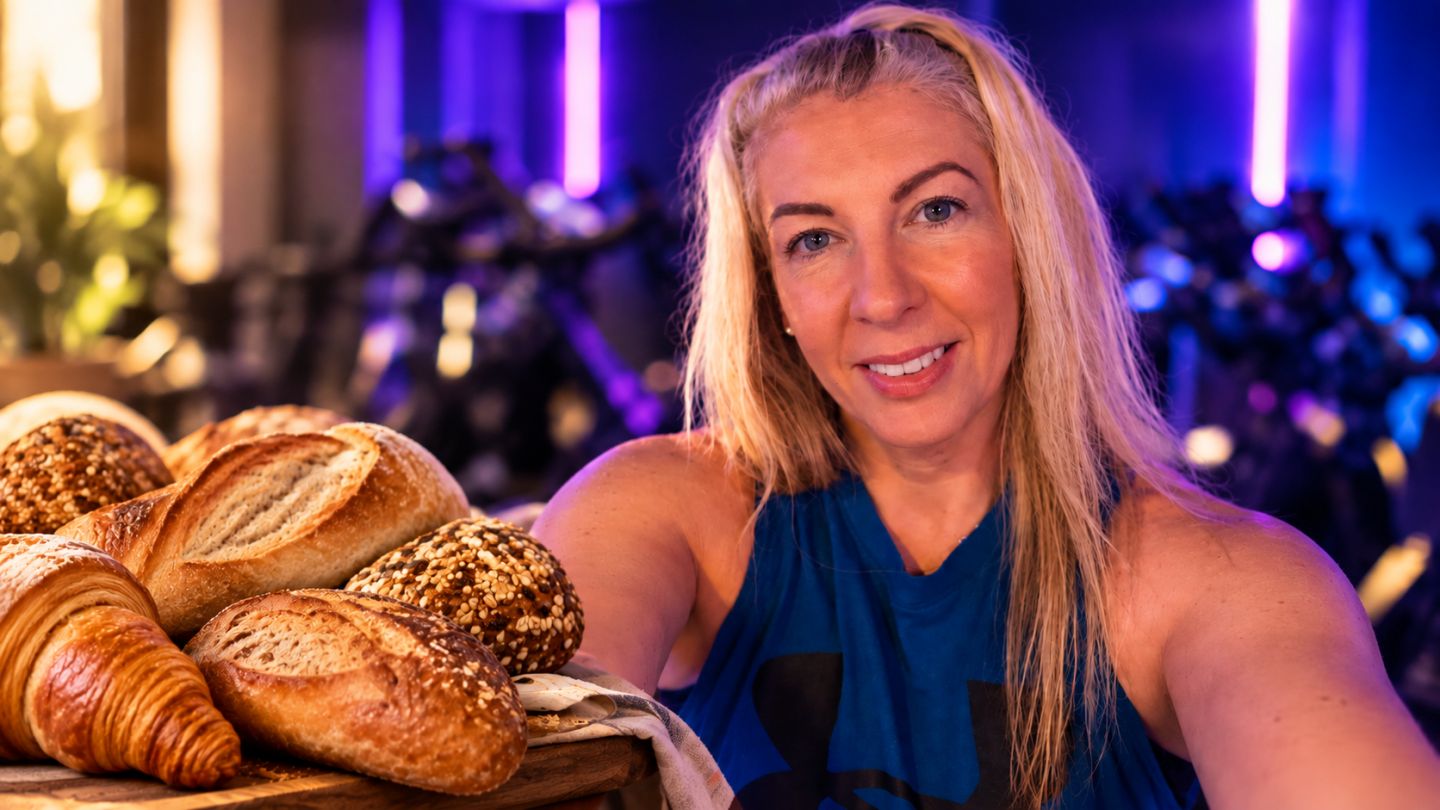
I love bread almost as much as I love the gym, but uncomfortable evenings in my jeans prompted a change. A week into my planned fortnight without bread, I felt less bloated. That left me with a question about what had helped.
I’ve never met a baguette I didn’t like. Ciabatta, croissants, crusty rolls, preferably warm and covered in butter, I’ll happily eat the lot. My supermarket shopping usually starts in the bakery section, and living in Newcastle, where there’s a Greggs around practically every corner, hardly helps.
My stomach has become less enthusiastic about this arrangement. Alongside the brain fog and low-energy days I associate with perimenopause, I often finish the day feeling uncomfortable in my jeans. I’ve written about the cost of feeling constantly tired in midlife, but this time I wondered whether something I ate every day contributed to the discomfort.
I decided to leave bread off the menu for two weeks. I wanted to feel more comfortable, without expecting a dramatic change in my weight. This account covers the first week, not a completed fortnight or a medical test.
Breakfast without buttered toast
The first morning was dreadful. No buttered toast with my coffee, no sandwich for lunch and no stopping at Greggs because something in the window caught my eye. Breakfast took imagination, which isn’t my strongest quality when I’m half asleep and trying to get everyone organised.
By the third day, my mood was dreadful too, my motivation had disappeared and I spent a lot of time thinking about crusty rolls. Even the gym, somewhere I normally enjoy spending time, felt like an enormous effort. Telling myself that bread was sugar in disguise helped me resist it, although that was an unfair description of a food that can fit into a balanced diet.
Without sandwiches, I had to put more thought into meals. Sweet potato slices made a decent base for savoury toppings, although anyone claiming they’re just like toast hasn’t enjoyed a proper buttered doorstep. Lettuce wraps with avocado, hummus and vegetables worked for lunch, while yoghurt with chia seeds became an easy breakfast.
Between work, being a mum and exercise, I have enough to organise without making lunch another project. As I found during my earlier account of giving up alcohol, changing an established habit reveals how much I do without thinking about it.
After several days, my stomach seemed less swollen in the evening and concentrating felt easier, although the brain fog hadn’t disappeared. I also felt more inclined to exercise, something I’d missed when feeling sluggish. I’ve explored five-minute menopause workouts for days when energy is scarce, but I wanted to enjoy my usual sessions again.
I can’t tell whether eating less bread caused those changes. My meals changed too, and I might just have had a better few days. Feeling more alert doesn’t establish a benefit for brain health, a distinction that also runs through my look at research into HRT and dementia risk.
Does bloating after bread mean gluten is the problem?
Bread contains more than gluten, and removing bread doesn’t necessarily remove all gluten from a diet. Wheat also contains fructans, carbohydrates that gut bacteria ferment and which can cause digestive symptoms in susceptible people.
A 2018 trial published in Gastroenterology studied 59 people with self-reported gluten sensitivity after coeliac disease had been excluded. Participants tried gluten, fructans and a placebo in separate periods. Fructans produced higher overall digestive symptom scores than gluten, while gluten and placebo did not differ. It was a small study in a selected group, not evidence that fructans explain everyone’s symptoms or my own.
Wholegrains also have a place in the discussion. A 2016 BMJ review of prospective studies linked higher wholegrain intake with lower cardiovascular disease risk and mortality. These associations don’t prove cause and effect or tell us how one person tolerates a particular loaf, but they give no reason to dismiss wholegrain bread as unhealthy.
Persistent bloating needs a conversation with your GP
The NHS advises seeing a GP if you feel bloated regularly or dietary changes haven’t helped. Bloating can have several causes, so don’t automatically put new or persistent symptoms down to perimenopause or bread.
If coeliac disease is suspected, the NHS says to keep eating gluten during testing because avoiding it can affect the results. Speak to your GP before starting a gluten-free diet. People diagnosed with coeliac disease need a strict gluten-free diet.
Will I give up bread for good?
By the end of the first week, I felt pleased that I’d resisted the bakery section and more comfortable in my clothes. Whether that would continue through the fortnight remained to be seen, but I’d already noticed how often I reached for bread because it was convenient.
I don’t plan to ban it permanently. Perimenopause brings enough complications without making food another source of anxiety, and I refuse to feel guilty about enjoying a croissant. I want to understand what agrees with my body, and a week without toast hasn’t given me a diagnosis.
Have you changed what you eat because of bloating, and what helped you work out the cause?
More from Saffron & Cyrus
A closer look at midlife nutrition, breakfast habits and increasing fibre without adding to digestive discomfort.
Another personal test, with a closer look at what the evidence can support.
Occasional stories, experiments, discoveries and questions from Saffron & Cyrus.
Discover more from Saffron & Cyrus
Subscribe to get the latest posts sent to your email.


Saffron & Cyrus is an independent women’s editorial publication with a recognisable voice, real-life perspective, a defined midlife audience and a commercial model built around useful, relevant partnerships.
