

JARR Kombucha review: fermented tea, perimenopause and a sceptical husband.
I first discovered JARR Kombucha during lockdown, when a new drink was almost as exciting as leaving the house. But perimenopause has made me wonder about whether fermented tea offers anything beyond an interesting taste.
Fermented tea wasn’t on my lockdown shopping list
There are things you expect to do during a global pandemic, such as worry about your family, become intimately acquainted with tinned goods and the contents of your freezer and develop an entirely irrational interest in collecting toilet roll. Discovering fermented tea wasn’t high on my list.
Yet there I was, during the first COVID-19 lockdown, standing in our kitchen with a bottle of JARR Kombucha, wondering whether I was about to discover something wonderful or drink what amounted to expensive apple cider vinegar.
Life had become strange. H was at home, Cyrus needed entertaining and the days were beginning to resemble one another. Our conversations revolved around what we were having for dinner, whether we needed more milk and whose turn it was to entertain Cyrus.
I’d also developed a close relationship with chocolate biscuits. My lockdown snack hamper of joy, initially assembled as a little treat, had become something of an emotional support system. I wasn’t entirely proud of it, but there are only so many news bulletins a woman can watch before reaching for a digestive.
When the opportunity came to review JARR Kombucha, I was quite interested. I’d heard people discussing fermented tea, usually in the same breath as gut health, probiotics and various promises about feeling wonderful. But I’d never felt compelled to investigate it. I like trying new things, especially when food is involved, although I draw the line at pretending something tastes delicious just because somebody says it’s good for me.
H was another potential participant in my experiment. Growing up in Iran, he’s accustomed to food with plenty of flavour, and our kitchen is rarely short of herbs, spices or something simmering away on the hob. But there is quite a difference between enjoying Persian cooking and being presented with a glass of fizzy fermented tea. I was interested to see whether JARR could win us over.
JARR passed my original taste test, but years later, perimenopause has made me more interested in the evidence behind the gut-health claims.
What is kombucha, and why is everyone talking about it?
Kombucha is a fermented drink made from sweetened tea and a culture of bacteria and yeast, commonly known as a SCOBY. During fermentation, the microorganisms consume some of the sugar and produce organic acids, which give the drink its characteristic tang. The finished result is usually lightly sparkling, with a flavour that can range from fruity to distinctly vinegary.
Its history is often traced back to ancient China, with some accounts suggesting kombucha was consumed during the Qin Dynasty around 220 BC. That precise date is difficult to verify, although fermentation itself has been used for centuries across different cultures.
People have been fermenting food and drink long before anyone thought to market it as part of a wellness routine. Yoghurt, kimchi, sauerkraut and kefir all rely on microorganisms to transform ingredients, preserve food or develop flavour. H likes all of these things!
In our household, Persian food is a regular feature, so we’re hardly strangers to traditional ingredients and methods of preparation. Fermented tea, however, was a new experience for me. I was intrigued by the idea that something made from ordinary tea could develop such a different taste.
I was also interested in whether kombucha deserved its reputation as a healthier alternative to conventional soft drinks. I have become increasingly wary of products that arrive accompanied by sweeping promises about digestion, immunity and general wellbeing as you know. If something tastes good, that’s a perfectly reasonable selling point, and it doesn’t need to claim responsibility for every bodily function.
The story behind JARR Kombucha
JARR caught my attention partly because of the enthusiasm behind the brand. Its founder, Adam Vanni, was keen to introduce people to the science and history of fermentation, rather than just encourage them to swap their usual soft drink for something fashionable.
In June 2020, JARR was involved in the Online Fermentation Fest, a virtual event exploring fermented food and drink. The festival was advertised for Saturday, 20 June, when much of the world was still adjusting to COVID-19 restrictions and online gatherings had become a substitute for almost everything.
Vanni was scheduled to speak at 11.30am through JARR’s Instagram Live, discussing kombucha’s history, fermentation science and potential health benefits. The advertised programme also included Sandor Katz, known for his writing on fermentation, and David Zilber, co-author of The Noma Guide to Fermentation.
It was an interesting idea for an online event. While the rest of us were attempting to keep children occupied and wondering whether we could justify another supermarket delivery, there were people spending an entire day discussing bacteria, yeast and fermented vegetables.
Before trying JARR, I wouldn’t have considered that entertaining. Afterwards, I could understand the appeal. Fermentation is a fascinating process, especially when you start thinking about the number of foods that depend on it.
Vanni described kombucha as more than an ordinary soft drink, pointing to the complexity of flavours produced during fermentation. I could see what he meant once I began tasting the range. There was something different about the acidity and the way the fruit flavours developed, although whether that difference would appeal to everyone was another question.
The event was originally promoted through
Wondergut’s Online Fermentation Fest
and
JARR’s Instagram account.

My first taste of JARR Kombucha
I started with JARR Original, reasoning that if I was going to try fermented tea, I might as well discover what it tasted like before moving on to the fruitier varieties.
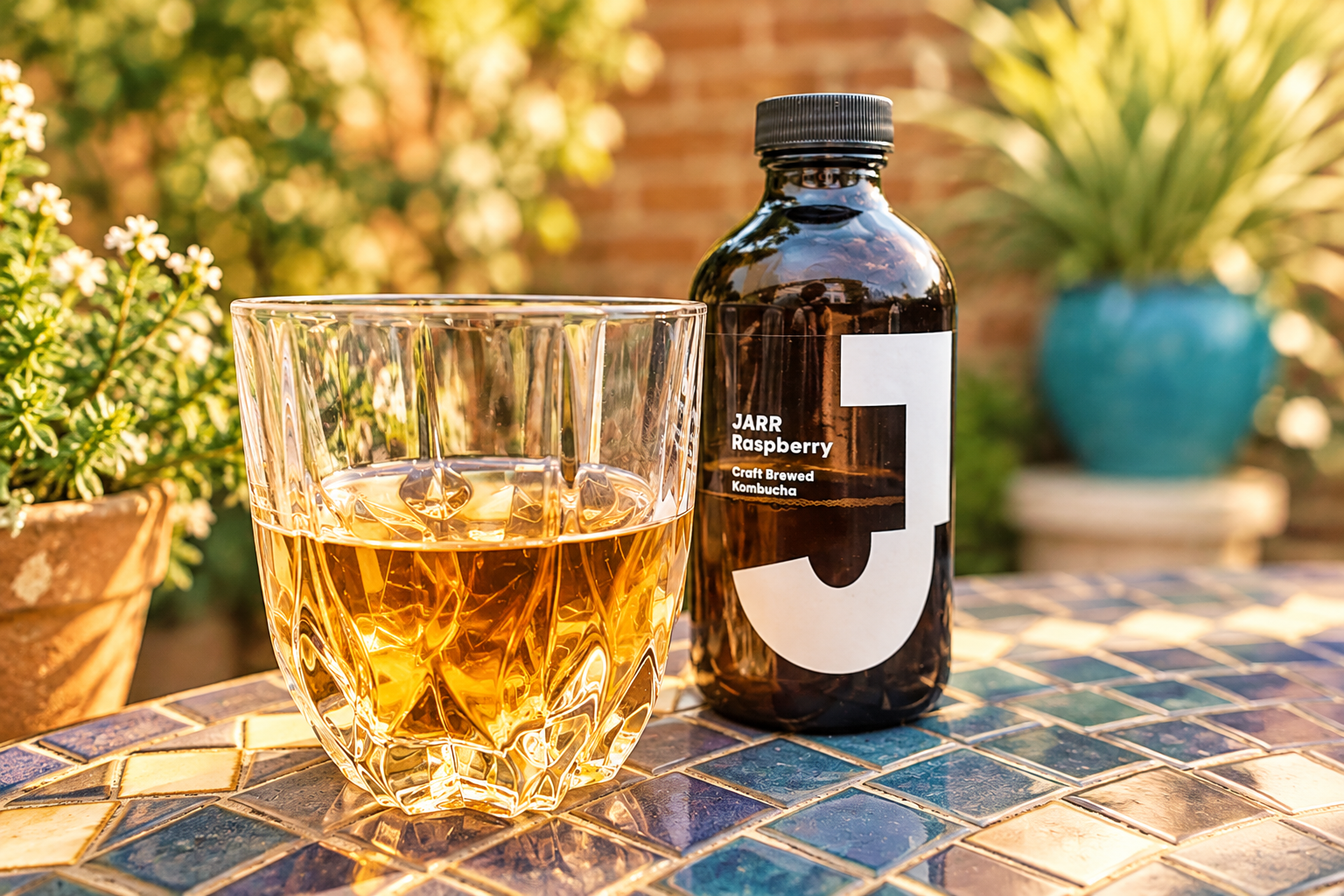
I poured it into a glass and watched the bubbles rise. It looked rather appealing, although the first sip caught me off guard. There was an unmistakable tang, almost like a very mild vinegar, followed by a lighter flavour that reminded me it had started life as tea. It wasn’t unpleasant, but it certainly wasn’t lemonade.
I took another sip, partly because I was curious and because I wasn’t going to be defeated by a bottle of fermented tea. By the third, I was beginning to appreciate it. Once I stopped expecting the sweetness of a conventional soft drink, the flavour became rather enjoyable. The trick, I discovered, was to stop comparing it with drinks I already knew. Kombucha has a character of its own, and the fermentation gives it a taste that is difficult to describe until you’ve tried it.
I also found that I preferred it properly chilled. There was something satisfying about pouring it into a glass and sitting down with a drink that felt a little different from the endless cups of coffee and tea punctuating our lockdown days.
I’m not suggesting opening a bottle of kombucha transformed an ordinary afternoon into a sophisticated social occasion. I was still sitting in my own kitchen, probably surrounded by the usual evidence of family life. But it was a pleasant change.
Four flavours, four very different impressions
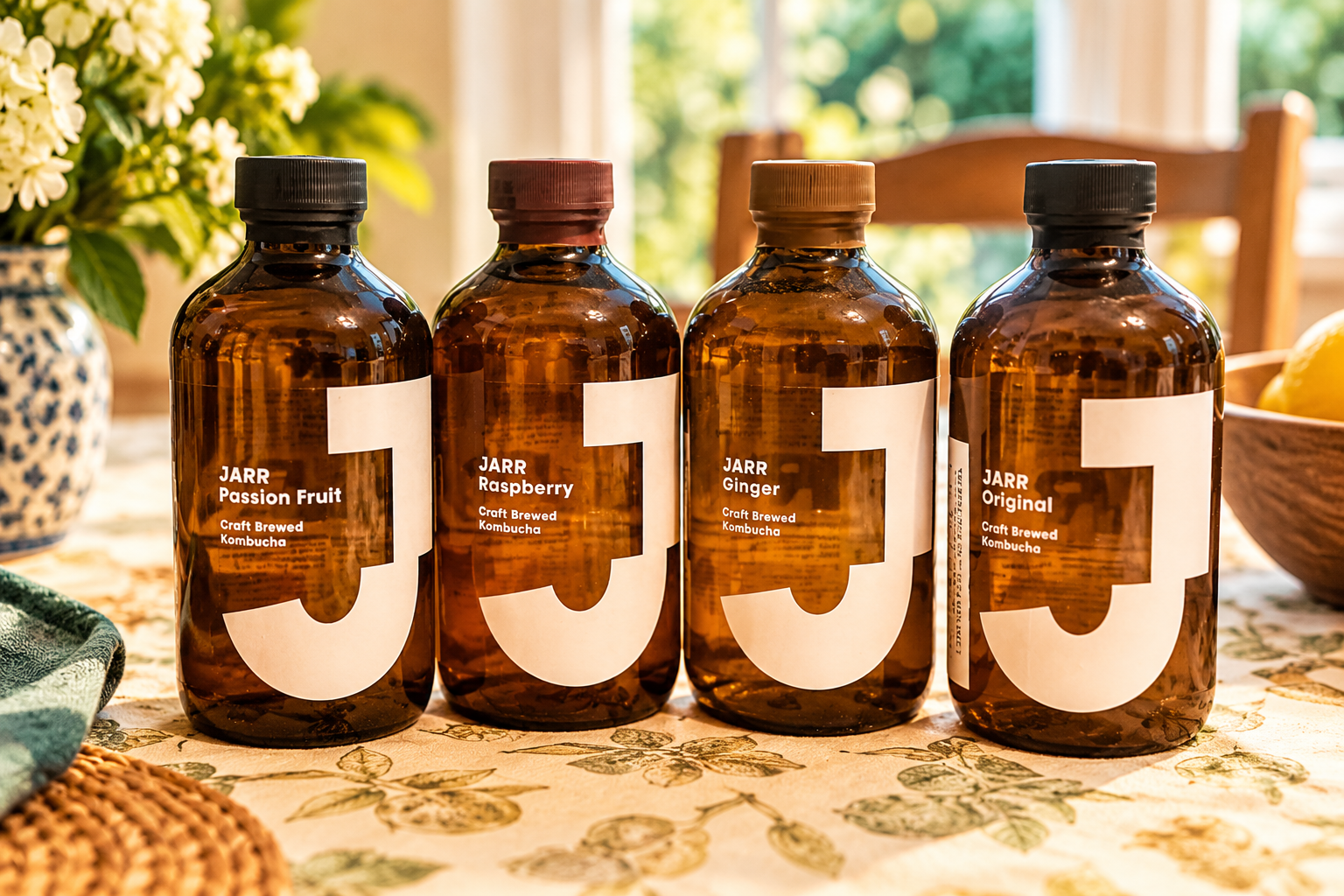
JARR sent Original, Ginger, Passion Fruit and Raspberry, which gave me a chance to explore how the different ingredients worked with the fermented tea.
JARR Original was the most unusual of the four, at least to my taste buds. It had a clean, tart character, with the fermentation taking centre stage rather than hiding behind fruit. I enjoyed it more with each sip, although I could understand why someone expecting a conventional soft drink might find it rather challenging.
JARR Ginger appealed to me because ginger is something we use regularly at home. I enjoy its warmth in food, and it worked surprisingly well in a cold drink. The slight heat complemented the acidity of the kombucha, giving it a stronger character without making it overwhelmingly sweet. Of the four, it was the one I could most easily imagine drinking alongside a savoury meal.
JARR Passion Fruit offered a more familiar introduction. The fruitiness softened the sharper edges of the fermented tea, making it refreshing and easier to approach. I could imagine enjoying it on a warm afternoon in the garden, assuming the North East weather decided to cooperate.
JARR Raspberry was another enjoyable option. The fruit flavour was familiar, but the fermentation prevented it from tasting like an ordinary raspberry soft drink. It had enough sharpness to remind me that I was drinking kombucha rather than something from the children’s drinks aisle.
What I appreciated was that the four varieties genuinely offered different experiences. Original was the most distinctive, Ginger had a little more bite, while Passion Fruit and Raspberry provided fruitier alternatives.
I wouldn’t necessarily recommend starting with Original if you’re accustomed to sweet drinks. One of the fruit flavours might be a gentler introduction, although there’s nothing wrong with deciding kombucha simply isn’t for you.
And what did H make of fermented tea?
Naturally, I wanted H involved in my little tasting experiment. Being married to someone who writes about almost everything does have its disadvantages. One minute you’re enjoying a quiet afternoon, the next you’re being asked to assess a drink and explain precisely what you think of it. I thought kombucha might appeal to him, although fermented tea is rather different from the drinks he grew up with.
I can imagine his reaction to Original being more cautious than mine. H tends to be practical about these things, and I suspect the first question would be whether the drink was supposed to taste quite so sharp. I could also picture him taking another sip before deciding whether it was something he genuinely enjoyed.

Ginger seemed the most likely contender for his approval. We use ginger in cooking, he said its warmth worked well with the tartness of the tea. I suspected he’d appreciate that combination more than Original. The fruit flavours offered a more approachable alternative. Passion Fruit and Raspberry were easier to recognise, and I could imagine H being more receptive to those than the plain fermented tea.
What I like about having him involved in my reviews is that we often approach products differently. I can become interested in the ingredients, history and science, while H tends to bring the conversation back to whether something is worth buying. It’s a useful balance, particularly when I’m reviewing a product that has arrived as a gift.
For me, JARR was an enjoyable discovery. I suspect H would regard it as an interesting experiment rather than a permanent addition to the fridge. And that’s fair enough. Marriage doesn’t require us to agree on everything, especially when fermented tea is involved.
My tasting verdict: Original was an acquired taste, Ginger had a welcome warmth, while Passion Fruit and Raspberry were easier to approach. The best flavour ultimately comes down to whether you enjoy the sharpness that makes kombucha different.
The unexpected heartburn observation
One of the more interesting things I noticed while trying JARR was that my heartburn seemed to settle. I’d been experiencing that familiar burning discomfort, and around the time I started drinking kombucha, the symptoms appeared to improve. At the time, I was delighted. Anyone who has experienced persistent heartburn will understand how unpleasant it can be when you’re trying to get on with everyday life.
However, I can’t say that JARR was responsible. My eating habits were changing during lockdown, I was experimenting with different foods and my daily routine was unlike anything I’d experienced before. Kombucha isn’t a recognised treatment for heartburn or acid reflux. In fact, because it is acidic and carbonated, it can make symptoms worse for some people. My experience was an observation, not evidence that fermented tea can relieve digestive discomfort.
It’s perfectly reasonable to share what happened to you, but quite another thing to suggest everyone else should expect the same result. If heartburn is frequent or persistent, it deserves proper medical attention rather than another experimental addition to the fridge.
Kombucha and perimenopause: could fermented tea make a difference?
I’m now in perimenopause, and I’ve become much more curious about the relationship between food, digestion, hormones and feeling reasonably human. I’m also interested in the connection between gut health and women’s wellbeing.
There is growing research into how the gut microbiome interacts with different systems in the body, including hormones and metabolism. Some researchers are investigating whether changes in oestrogen during the menopause transition may influence the composition of gut bacteria.
That doesn’t mean drinking kombucha will balance our hormones or relieve menopause symptoms. There is currently no convincing clinical evidence that kombucha treats hot flushes, brain fog, fatigue or other symptoms associated with perimenopause.
Still, I can understand why women are curious. My original experience with JARR made me wonder whether fermented tea might be worth revisiting, not as a treatment for perimenopause, but as part of a broader interest in digestive comfort and food variety.
If I were to put it to the test again, I’d be interested in whether I noticed any difference in bloating, digestion or how comfortable I felt after meals. I’d also pay attention to whether the acidity aggravated my heartburn, because a product that suits one person can be entirely unsuitable for another.
I wouldn’t expect kombucha to fix my sleep, improve my memory or give me the energy of a woman half my age. After all, if it could guarantee that I’d remember why I walked upstairs, I’d probably be ordering it by the case.
But I am interested in exploring whether fermented drinks deserve a place in my diet, provided the evidence and my own experience justify it.

What does the science say about kombucha and gut health?
The science behind kombucha is interesting, although considerably less conclusive than some wellness marketing suggests.
Our digestive systems contain trillions of microorganisms, collectively known as the gut microbiome. These organisms help with digestion and interact with our immune and metabolic systems. Researchers are also studying the relationship between gut bacteria and the hormonal changes associated with menopause.
A 2025 randomised controlled trial involving 60 participants investigated a fibre-enriched kombucha drink over six weeks. Researchers reported changes in certain gut bacteria and some metabolic markers. However, this was a specially formulated kombucha, not JARR, and the study didn’t establish benefits for perimenopause symptoms.
Another study published in The Journal of Nutrition in 2025 investigated black tea kombucha consumption over eight weeks in adults with and without obesity. It found changes in the composition of gut bacteria, although the study design couldn’t establish that those changes translated into meaningful improvements in symptoms or long-term health.
Both studies are interesting, but neither provides evidence that kombucha can treat hormonal symptoms or replace established menopause treatments. It’s also worth remembering that not every fermented food or drink contains the same microorganisms. The composition of kombucha can vary according to the ingredients, fermentation process and how the finished product is stored.
I think there’s a tendency to assume that anything fermented must automatically be good for us. The reality is more complicated. A product can be interesting, enjoyable and part of a varied diet without needing to make grand promises about digestion, immunity or general wellbeing.
For women experiencing perimenopause, the NHS recommends a balanced diet, regular exercise, sufficient rest and appropriate medical support. Those recommendations may be less exciting than discovering a supposedly miraculous drink, but they have a considerably stronger evidence base.
JARR’s original promotional material also stated that its four flavours contained less than 0.5% alcohol by volume. Small amounts of alcohol can develop naturally during fermentation, so anyone avoiding alcohol entirely should check the label. Kombucha can also contain caffeine, which is worth considering if you’re sensitive to it or experiencing disturbed sleep.
Would I spend my own money on JARR Kombucha?
The question I always come back to with a gifted product is whether I’d buy it myself. It’s easy to enjoy something when it arrives without an accompanying bill, but that doesn’t necessarily mean it deserves a permanent place on the shopping list.
JARR passed the taste test for me. I liked the gentle fizz, the unusual flavour and the choice of varieties. It was refreshing without tasting like an ordinary sweet soft drink, and it offered something different from the drinks I usually kept at home.
Would I drink it every day? Probably not. I’m rather attached to my morning coffee, and I have no intention of abandoning it for fermented tea, however fashionable the latter becomes. But I could see myself buying a few bottles when I fancied something different.
At the time of the original review, JARR Kombucha was available in Original, Ginger, Passion Fruit and Raspberry, with prices starting at £2.29. Retailers listed included Selfridges, Harrods, Whole Foods Market and Planet Organic, alongside jarrkombucha.com.
As this review reflects my experience during lockdown, prices, flavours and stockists may have changed since publication.
A pleasant surprise, with no miracles
Looking back, JARR Kombucha was one of the more unexpected discoveries of lockdown. It arrived at a time when our lives had become smaller, our routines were disrupted and even the simplest change felt welcome.
I didn’t emerge from the experience with a miraculous new digestive system or an overwhelming desire to ferment everything in the kitchen. I discovered a drink I enjoyed, learned something about how it was made and found that fermented tea was far more interesting than I’d expected.
The Original took some getting used to, while the fruit flavours made the range more approachable. Ginger was particularly appealing because of its warmth and stronger character, although I enjoyed having all four varieties to compare.
I’m less interested in products that promise to transform my health and more interested in understanding what genuinely makes a difference. Perimenopause has a way of encouraging that sort of scrutiny, when every other advertisement seems determined to sell women a solution to something.
Kombucha may have a place in a varied diet, and research into fermented foods is worth following. But it isn’t a proven menopause treatment, and I wouldn’t recommend it on that basis.
Would I try JARR again? Yes, because I enjoyed it. I’d be curious to see whether my taste buds still agree with the verdict I reached during lockdown, and whether I noticed anything different about my digestion. Any new experiment would need to be judged on what actually happened, rather than what I hoped might happen.
JARR Kombucha: the facts
Product: JARR Kombucha
Type: Fermented tea drink
Flavours reviewed: Original, Ginger, Passion Fruit and Raspberry
Alcohol content stated in original promotional material: Less than 0.5% ABV
Price at the time of review: From £2.29
Retailers originally listed: Selfridges, Harrods, Whole Foods Market and Planet Organic
Website: jarrkombucha.com
Founder: Adam Vanni
Historical event: Online Fermentation Fest, 20 June 2020
My verdict: An unusual, refreshing alternative to conventional soft drinks. Original is an acquired taste, but the fruit flavours offer a more approachable introduction.
Further reading
Disclosure: JARR Kombucha was gifted as part of a press collaboration for a lockdown review. All opinions and personal tasting experiences are my own. The perimenopause discussion is an editorial reflection, not a new product trial or a claim that JARR has been tested for menopause symptoms.
Health note: This article reflects personal experience and general research, not medical advice. Kombucha is not a proven treatment for heartburn, digestive conditions or perimenopause symptoms. It may aggravate acid reflux in some people.
Join the conversation
Have you tried kombucha, and did you notice anything beyond its unusual taste? If you’re navigating perimenopause, have you become more interested in fermented foods and gut health, or are you as sceptical as I am about the promises attached to wellness products? I’d love to hear your experiences.
Occasional stories, experiments, discoveries and questions from Saffron & Cyrus.
Discover more from Saffron & Cyrus
Subscribe to get the latest posts sent to your email.


Saffron & Cyrus is an independent women’s editorial publication with a recognisable voice, real-life perspective, a defined midlife audience and a commercial model built around useful, relevant partnerships.

Great post, Aranda. I can see why you liked my post on ritual. You were on the same track long before I wrote what I did. You’ve given me some ideas to help my own well-being.