
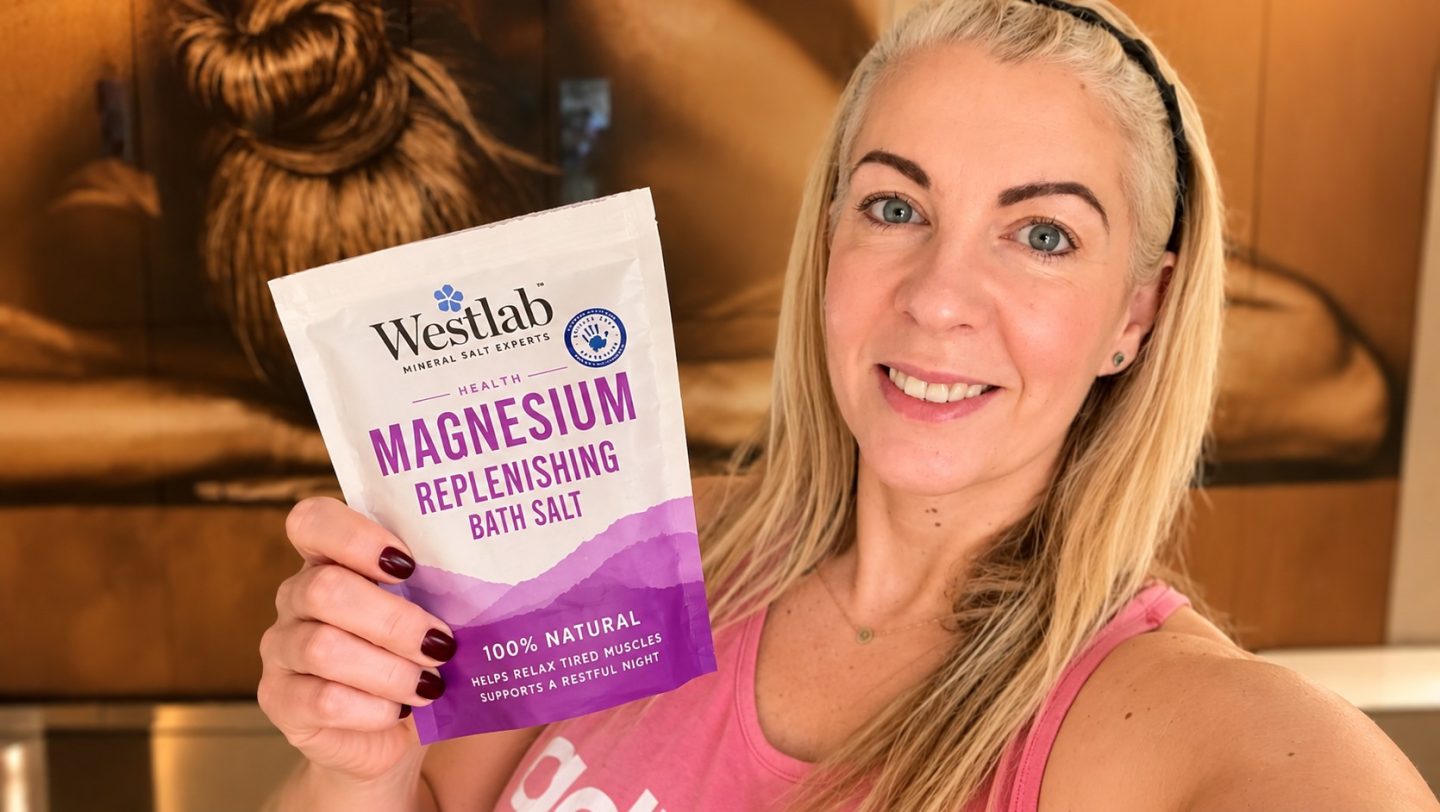
There is a side effect of perimenopause that nobody seems to put on the official symptom lists: everybody starts recommending things to you. If you mention that you’re not sleeping well, somebody knows a supplement. When you complain that your muscles ache, there’s a powder you should be taking. Hot flushes? Try this. Night sweats? Try that. Feeling tired? Have you considered magnesium?
There is always a spray, capsule, cream, tea, gadget or alarming-looking instrument that has apparently changed somebody else’s life. In fact, my bathroom cabinet has started to resemble the stockroom of a small branch of Boots.
Some recommendations are sensible, but others come from women who are so enthusiastic about whatever they’ve discovered that I find myself ordering it before I’ve had time to ask the question: does any of this stuff work?
Which, really, is how The Saffron Experiment came about. I’m 50, perimenopausal and still spending a huge amount of my week punching, kicking, spinning, squatting or lifting weights. I’m not planning to stop, but I am more interested in what might make this stage of life feel better, whether that’s recovering from exercise, or taking the edge off aching muscles.
The latest recommendation arrived after I’d been complaining about my legs following a run of Body Pump classes. “You need magnesium salts in your bath,” a friend told me. She used them after harder workouts, especially when her muscles were aching, and liked them as part of her evening wind-down before bed.
Magnesium again, it seems to follow me around in midlife. Magnesium for sleep, magnesium for muscles, magnesium for relaxation. Supplements, sprays, lotions, flakes and now, apparently, something I could chuck into the bath. So I thought I’d try it.
Was the magnesium doing something? Or were women like me spending money on another wellness product when what we really needed was a hot bath and 20 minutes when nobody wanted anything from us?
I wasn’t expecting miracles. If you’ve spent an hour throwing punches and kicks around a Body Combat studio and then lower yourself into a warm bath for 20 minutes, surely there’s a reasonable chance you’re going to feel better afterwards regardless of what’s dissolved in the water.
But that was exactly why I wanted to put these to the test. Perimenopause has changed the way I think about exercise, although not in the way I might once have expected. I don’t want to do less. If anything, staying active and strong feels more important to me now. What has changed is my interest in recovery.
At 50, I train often enough to recognise two distinct physical states. There is I’ve been to the gym, and then there is my legs are on fire. Occasionally I’ll get carried away during a cardio session and wake up the morning after discovering muscles that felt like they didn’t exist before.
Then there are the nights when I don’t get much sleep, the ones where I’m physically exhausted but my brain appears to have mistaken bedtime for an excellent opportunity to revisit everything that has happened since approximately 1985. That’s why I understand the appeal of all these recommendations. I wasn’t looking for a cure for perimenopause, and wasn’t expecting a bag of bath salts to transform my health, I just wanted to know whether they might make one small part of it better.
I bought Westlab Magnesium Replenishing Bath Salts and decided they would come out after the workouts when I felt I’d really earned a bath. I didn’t want to rearrange my life so I could claim I’d conducted an experiment. The real test was whether the salts would find a place in the life I already had.
Body Pump days became good candidates, along with harder weights sessions and those cardio workouts where everything feels great at the time but experience tells me my legs will ache the next day.
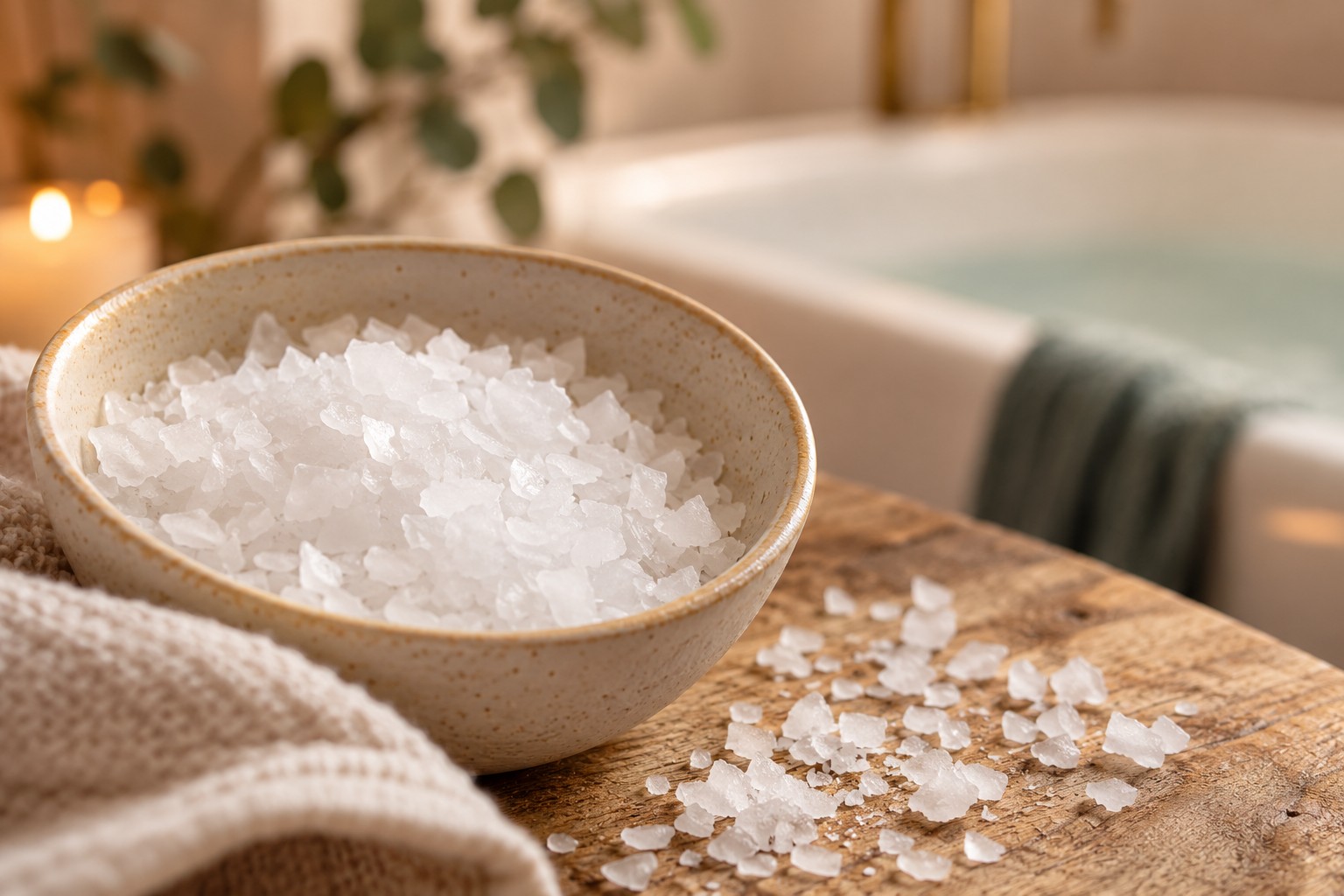
I ran a warm bath and tipped in a generous handful or two. There was no measuring jug, just me, a bag of white-coloured crystals and the bath. I climbed in for around 20 minutes and did absolutely nothing, which may have been the most effective part of the entire experiment and also my day.
If you’re imagining magnesium bath salts transforming your bathroom into some sort of luxury spa, lower your expectations. There is no beautiful fragrance floating through the room, no shimmering pink water, rose petals or expensive bath-oil moment where you suddenly feel somebody should be handing you cucumber water while you recline in a white robe.
They’re just white crystals. You scatter them into the water, they dissolve and then disappear. If I left some sitting in a bowl, Cyrus would probably assume we were growing crystals for a school science experiment. But there was still the question of what those minerals were doing.
The first thing I noticed was that my legs just felt good afterwards. After a hard Body Pump class they can feel heavy and tight later in the day, but after one of these baths they often felt generally more comfortable and I also came out feeling noticeably calmer and just properly wound down. My legs stopped reminding me about the final squat track and the part of my brain that can remain bizarrely alert long after the rest of me is exhausted finally seemed to get the message that we were finished for the day.
On some evenings, I thought I slept better too. I’d get into bed feeling properly ready for sleep rather than physically exhausted. That’s when the salts shifted from thing I’m testing to thing I’d consistently reach for from the shelves of Tesco.
I wasn’t using them every evening or after every trip to the gym. They were just something I used once or twice a week, usually after a harder session or when my body felt tired. There was, however, an obvious problem with my findings because feeling better after a magnesium bath doesn’t prove that it was the magnesium making me feel better.
Magnesium itself isn’t wellness nonsense. It is an essential mineral involved in many normal functions in the body. The question for this experiment is more specific: does sitting in magnesium bath salts deliver a meaningful amount of magnesium through intact skin?
This is where the evidence becomes much less impressive than the enthusiasm surrounding topical magnesium. A 2017 review of the scientific literature concluded that promoting transdermal magnesium as an effective method of magnesium supplementation wasn’t supported by the evidence available at the time.
More recent research adds another interesting piece to the picture, although it needs to be interpreted carefully. A 2026 laboratory study investigated magnesium movement across pig skin using a saturated solution of magnesium sulfate monohydrate. This wasn’t a trial involving people sitting in baths, and it wasn’t a study of the Westlab product I was using.
Across intact skin, magnesium permeation was minimal and, after 24 hours, there was no statistically significant difference between the magnesium-treated and control samples. When researchers deliberately disrupted the skin’s outer barrier using tape stripping, permeation increased substantially.
That doesn’t prove no magnesium could ever cross human skin under any circumstances. What it does do is give me good reason not to assume that sitting in a magnesium bath is an efficient way of replenishing the body’s magnesium levels. So I can tell you that I enjoyed my baths and that my legs often felt better afterwards. What I can’t tell you is that I absorbed a meaningful amount of magnesium through my skin, or that magnesium absorption caused those effects.
I’d been so busy investigating what I’d put into the bath that I’d overlooked the bath itself.
Warm bathing has been studied in relation to sleep. A 2019 systematic review and meta-analysis examined research into warm baths and showers before bedtime. Seventeen studies met the researchers’ inclusion criteria, with 13 providing comparable quantitative data for meta-analysis.
The researchers found that water-based warming at around 40 to 42.5°C was associated with better self-rated sleep quality and sleep efficiency. When a warm bath or shower was taken one to two hours before bedtime, exposures as short as 10 minutes were associated with falling asleep more quickly.
There are important caveats. The evidence base was limited and the researchers themselves said more work was needed, so this certainly doesn’t prove that my bath made me sleep better. It also tells us nothing about whether adding magnesium salts makes a bath more effective.
But it does provide another plausible explanation for what I was experiencing. I’d exercised, run a warm bath, immersed tired muscles in it and stopped looking at everything else for around 20 minutes. Then I’d emerged feeling relaxed and, on some evenings, felt that I slept well. I’d been giving magnesium some of the credit, but I needed to give the bath rather more of it.
There was another variable I hadn’t accounted for: me stopping. I’m not very good at it. I can sit down to watch TV and notice something that needs putting away. I’ll go upstairs to find one thing and emerge 20 minutes later having reorganised a drawer. Even relaxation can somehow acquire admin.
A bath removes many of my options. Once I’m in, I’m in. Nobody can expect me to empty the dishwasher while submerged in water, and I can’t suddenly start tidying a cupboard. There are limits to the amount of multitasking available to a woman sitting in a bath. For 20 minutes, everybody else can just get on with it.
Somewhere during this experiment I realised I’d been concentrating on the wrong sort of recovery. We talk endlessly about physical recovery from exercise: protein, hydration, stretching, sleep and rest days. Then perimenopause adds another layer of things we’re told we should be taking, monitoring, fixing or optimising.
There’s something for the flushes, something for sleep, something for the aches and something for our skin. Something to swallow in the morning and something else to spray on ourselves at night.
But there is something restorative about deliberately stopping too. I’d created a small slot in the evening when there was nothing else I could usefully do. So maybe the magnesium was helping in some way my experiment couldn’t detect.
There isn’t much about the salts themselves that irritates me. They’re white, they dissolve and there’s no overpowering perfume. But you can get through them quickly. A couple of handfuls doesn’t look extravagant until you’ve repeated the process several times and realise that the bag is beginning to feel quite light.
There is also an obvious question hanging over the whole experiment. If much of what I’m enjoying comes from the warm bath itself, do I need magnesium salts in it at all? Opening the bag, scooping out the crystals and scattering them into the water has become the point at which an ordinary bath turns into my after-the-gym bath. Training is over and recovery has started.
It depends what you’re asking them to do. If the question is whether I can prove that magnesium from these salts crossed my skin and meaningfully increased my body’s magnesium levels, the answer is no. I can’t, and the scientific evidence doesn’t justify making that leap either.
If I thought I had an actual magnesium deficiency, I certainly wouldn’t use a bag of bath salts to diagnose or treat it. But if the question is whether Westlab Magnesium Replenishing Bath Salts have improved my post-workout routine, that’s much easier.
Yes. My legs often feel more comfortable afterwards, I feel calmer and, on some evenings, I feel that I sleep better. Once or twice a week, particularly after Body Pump or a harder training session, I actively want that bath.
The important thing is knowing the difference between what I experienced and what caused it. The first I can tell you. The second remains much less certain.
Westlab Magnesium Replenishing Bath Salts get four saffron stars out of five. They’re easy to use, uncomplicated and have become part of a post-workout routine I enjoy. I feel good after using them and, most tellingly for any Saffron Experiment, I’ve continued reaching for the bag in the supermarket when I no longer need to for the purposes of writing this article.
They lose a star because I’m unconvinced by the bigger story surrounding magnesium absorption through the skin. I can’t conclude that my more comfortable legs, relaxation or perceived better sleep are the result of magnesium being absorbed into my body.
But would I buy another bag? Yes. Would an ordinary warm bath have made me feel just as good? Possibly. Would I still buy these salts? Yes. Because sometimes the value of a product isn’t quite where you expected to find it.
I bought the Westlab Magnesium Replenishing Bath Salts myself from Tesco. This article is not sponsored and Westlab had no involvement in the experiment or verdict. This is my personal experience, not evidence that magnesium bath salts treat muscle soreness, sleep problems, perimenopausal symptoms or magnesium deficiency.
Occasional stories, experiments, discoveries and questions from Saffron & Cyrus.
Discover more from Saffron & Cyrus
Subscribe to get the latest posts sent to your email.


Saffron & Cyrus is an independent women’s editorial publication with a recognisable voice, real-life perspective, a defined midlife audience and a commercial model built around useful, relevant partnerships.
