
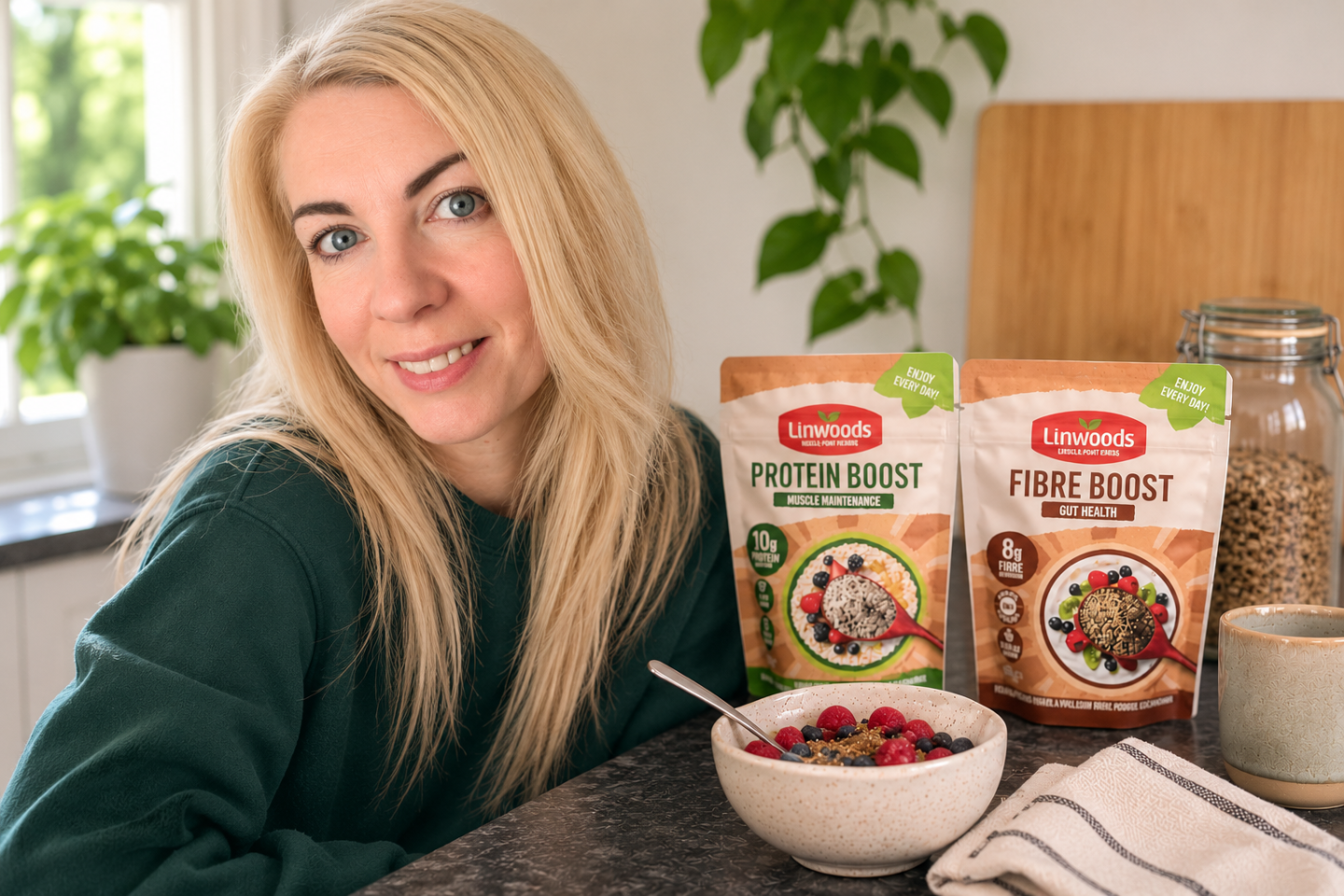
I tried Linwoods Fibre Boost and Protein Boost for a week. Are they worth buying?
Product disclosure: Linwoods gifted me Fibre Boost and Protein Boost to try, with no payment, editorial conditions or obligation to publish. This is an independent review, and the opinions are my own.
If I had to buy just one, I’d choose Fibre Boost.
When did eating enough protein become a thing to worry about?
I can tell you roughly how much protein is in my yoghurt, but ask me how much fibre I’ve eaten today and I’m stumped. I’ve even noticed other mums in our local shop studying the backs of food packets, trying to work out if they’ve eaten enough protein that day.
There we are, standing in the aisle, scrutinising nutritional labels as though we’re gearing up for a sporting event instead of just deciding what to have for tea.
Protein is everywhere on labels these days. It’s in breakfast cereals, chocolate bars, puddings, yoghurts and even coffee. We’re constantly reminded that we need more of it, especially as we get older. And while there’s good reason to pay attention to protein during midlife, I do wonder if we’ve become so preoccupied with it that we’ve forgotten about everything else.
At 51, in perimenopause, I’m interested in eating well, but not interested in turning every main meal into a maths exercise. So when Linwoods sent me its Fibre Boost and Protein Boost products, I decided to try them for a week.
When was the last time you checked whether you’d eaten enough fibre?
I wanted to find out if these two products offered anything more than what I could get from ordinary food.
How much fibre are we actually eating?
According to NHS guidance on dietary fibre, adults should aim for 30g daily. In the 2019–2023 National Diet and Nutrition Survey, adults aged 19 to 64 averaged 16.4g a day. Fibre supports digestion and is associated with a lower risk of several long-term health conditions.
Protein is important as we get older, and maintaining muscle is vital during and after menopause because protein alongside resistance training can help preserve strength. But concentrating on one nutrient while neglecting another does seem a strange approach to healthy ageing.
What exactly are you getting?
Linwoods Fibre Boost
Linwoods Fibre Boost contains milled flaxseed, hemp seeds, chia seeds and psyllium husk. According to the manufacturer, a 20g serving provides 8g of fibre, including soluble and insoluble types. That’s more than a quarter of the recommended daily intake, making it a potentially useful addition for anyone regularly falling short.
Psyllium husk absorbs moisture and thickens food, so how you prepare it also matters. Linwoods says to mix Fibre Boost into moist food and drink 300ml of fluid with each 20g serving. Follow the pack instructions and avoid taking it dry. Adding too much fibre too quickly can cause bloating or digestive discomfort.
The ingredients themselves aren’t unusual. I’ve used flaxseed for years, and chia seeds are readily available in supermarkets. What you’re paying for is the convenience of having everything combined in one packet.
Linwoods Protein Boost
Linwoods Protein Boost contains shelled hemp, milled chia and plant protein powders, providing 10g of protein per 20g serving, according to Linwoods.
As someone who likes strength training, but struggles to fit everything into a day, I can see the attraction. Protein helps maintain and repair muscle, although the amount we need depends on factors including age, activity and overall diet. I’ve previously written about trying seed cycling for four weeks, and my priorities haven’t changed a huge amount. I want to remain strong and active, not just chase whatever nutritional trend happens to be fashionable at the time.
Of course, protein doesn’t have to come from a packet, which H keeps telling me. Eggs, yoghurt, fish, beans and lentils all help towards our daily requirements. Protein Boost is just an easy option.
Seven days of yoghurt, berries and Linwoods
My usual bowl of yoghurt and berries became the obvious place to try both products. It’s something I eat daily, especially around my gym sessions, and I wasn’t about to start preparing fancy breakfasts for the sake of a new ingredient.
The berries give me flavour, while the yoghurt makes a decent base for the milled seeds. Neither product required a separate drink, recipe or meal.
Fibre Boost does take some care because its psyllium content absorbs liquid. It’s important to follow the serving instructions and increase fibre gradually, especially if your usual diet is relatively low in fibre.
The most useful result of the week was discovering that both products fitted into something I already liked eating. I’ve decided to continue using them. That’s a real result rather than a medical one.
What shouldn’t you expect after seven days?
I wouldn’t expect either product to transform my digestion, give me dramatic weight loss or suddenly improve my performance in the gym. A week isn’t long enough to track changes in muscle mass, gut microbiome composition or even long-term health.
It’s also worth remembering that eating more fibre doesn’t mean feeling better immediately. Some people experience bloating when increasing their intake, especially if they do so too quickly. And remember, adding 10g of protein to breakfast won’t guarantee muscle growth. Resistance exercise, overall protein intake, adequate energy and recovery are all part of the mix too.
There’s nothing wrong with making small nutritional improvements, but I think we do ourselves a disservice when we expect every healthy food to produce an obvious physical result.
Would I buy Linwoods again?
Yes, I’d continue with both. I’m already conscious of protein because I exercise regularly, but fibre has been something of a blind spot. A full serving of Fibre Boost could help me work towards the recommended daily intake without needing a completely different breakfast.
Protein Boost is useful when I want to increase my protein intake, but I wouldn’t add it if I’d already eaten enough from other foods. There is also the question of cost. On 10 November 2026, Linwoods listed both at £4.99 per 200g pack, about 50p per 20g serving. Both products contain ingredients available separately, so I’d compare the price per serving with buying individual seeds before making them a permanent shopping-list fixture.
I’ve previously experimented with reducing sugar and intermittent fasting, and at 51, I’ve become less interested in complicated eating rules. What matters to me is whether something fits into everyday life.
These products do, and that’s why I’ll continue adding them to my yoghurt and berries. They’re not miracle foods, and they don’t need to be. They offer a convenient way to increase two nutrients that deserve attention, without pretending that a week of eating milled seeds can undo years of ageing.
More from Saffron & Cyrus
More from The Saffron Experiment
Come along for the ride.
Occasional stories, experiments, discoveries and questions from Saffron & Cyrus.
Discover more from Saffron & Cyrus
Subscribe to get the latest posts sent to your email.


Saffron & Cyrus is an independent women’s editorial publication with a recognisable voice, real-life perspective, a defined midlife audience and a commercial model built around useful, relevant partnerships.

I have been working out for almost five years now and cannot imagine my life without it.