
Can a smoothie subscription make healthy eating easier for busy mums?
Between the school run, gym sessions and my increasingly complicated relationship with coffee, I put The Honestly Good Smoothie Company to the test to see whether convenience really can make healthy eating easier.
There are certain people at the gym whose recommendations I take seriously. Not necessarily the ones lifting the heaviest weights or arriving in matching gym outfits, but the women who have worked out how to keep themselves reasonably healthy while managing everything else life throws at them.
My gym buddy is one of those women. So, when she started enthusiastically telling me about her new smoothie subscription from The Honestly Good Smoothie Company, I was interested. She had been using the smoothies during Dry January and seemed rather pleased with herself. Apparently, they were convenient, full of interesting ingredients and a welcome alternative to the usual post-Christmas promises involving green vegetables and abstinence.
I have always been interested in nutrition, partly because I enjoy exercise and partly because being a mum over 40 has made me much more conscious of how I look after myself. I love the gym, especially a good Body Combat class or a sweaty spin session, but I am also quite capable of spending a morning surviving on coffee before realising that I have forgotten to eat something. It is not that I don’t understand the importance of a balanced diet. I just find that understanding nutrition and putting it into practice are two different things, especially when there is a child to get ready for school and a list of jobs waiting before I have even brushed my hair.
The idea of a smoothie subscription appealed to the practical side of me. I enjoy fresh fruit and vegetables, but I am less enthusiastic about preparing them when I am already running late. There is also the problem of buying ingredients with good intentions, only to discover several days later that the spinach has turned into something rather unpleasant at the bottom of the fridge. If someone could take away the chopping, measuring and inevitable food waste, I was prepared to listen.
First impressions of The Honestly Good Smoothie Company
When my delivery arrived, I wondered whether the smoothies would live up to my friend’s enthusiasm. The frozen, pre-portioned sachets came with names that sounded more like desserts or cheerful messages than the sort of thing I usually associate with health food. There was Cheer Me Up, More Mochi and The Almond Tart One, among others. I rather liked that. Healthy eating can become terribly earnest, particularly when every ingredient is described as a superfood and every meal appears to require a nutritional explanation.
The concept was straightforward. Each sachet contained a prepared combination of ingredients, ready to be blended with 300ml of milk or water for around 30 seconds. There was no weighing, chopping or wondering what to do with half a butternut squash. I could take a sachet out of the freezer the night before and have breakfast or a snack ready the following morning. For someone who spends enough time organising everybody else’s day, that simplicity was appealing.
Of course, convenience means very little if the finished drink tastes dreadful. I have tried enough supposedly healthy concoctions over the years to know that adding several nutritious ingredients to a blender does not automatically produce something enjoyable. Sometimes the result is delicious. Sometimes it resembles pond water with an ambitious marketing department.
My first few attempts were a mixture of both.
The smoothie that nearly defeated me
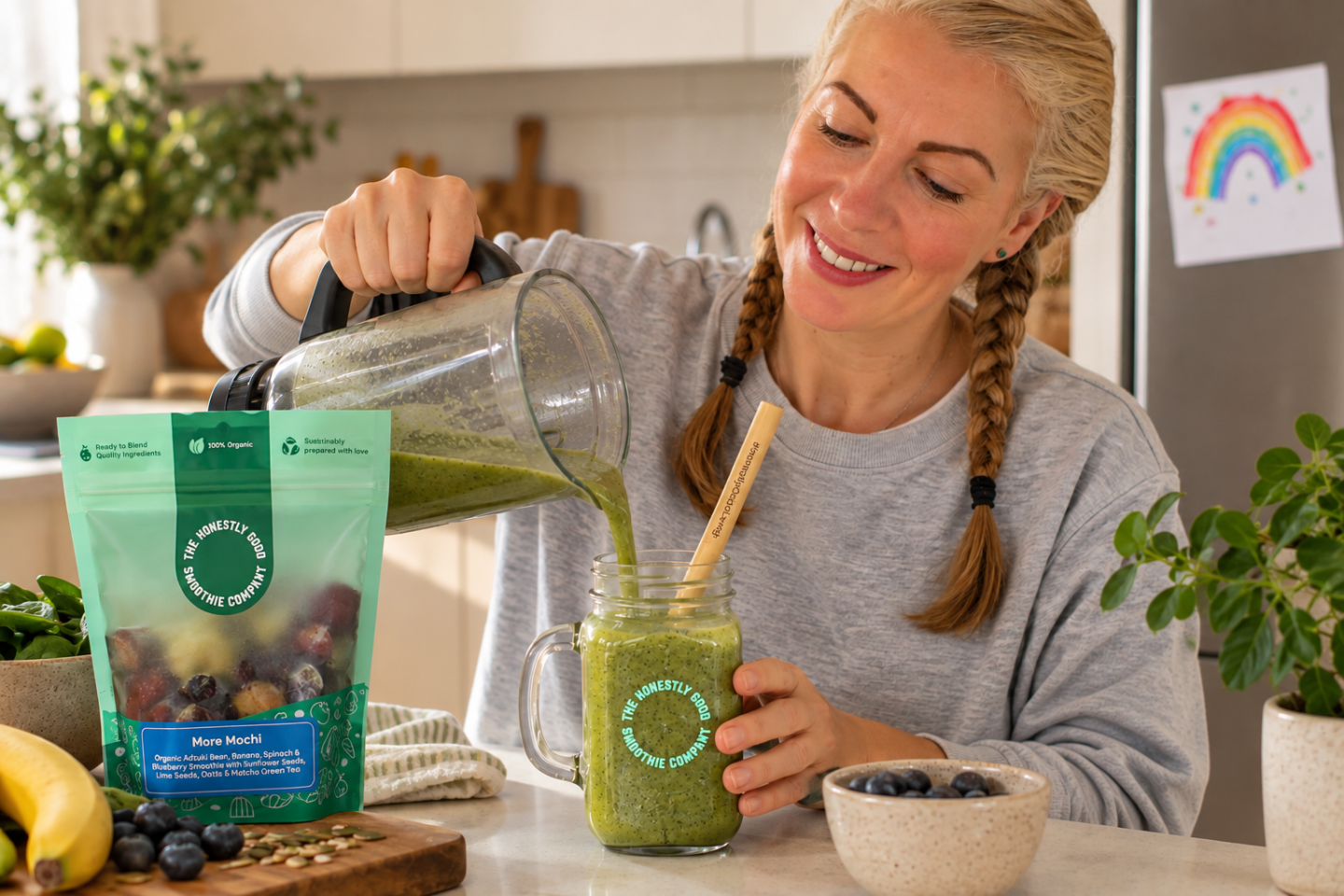
More Mochi was one of the more unusual combinations, partly because it contained adzuki beans. I am familiar with beans in savoury cooking, but the idea of drinking them took a little getting used to. There is nothing particularly strange about using pulses in sweet dishes, especially in parts of Asia, but it was not something I had previously considered adding to my morning routine.
My first attempt was not a triumph. I rushed the blending, which was probably my own fault, and ended up with a texture that was rather less smooth than I had hoped. I stood over the kitchen sink trying to finish it, wondering whether I had made a terrible mistake. There are few things more disappointing than preparing something healthy and discovering that you have to persuade yourself to swallow it.
Cyrus, naturally, was interested. Children have an extraordinary ability to appear the moment you are eating or drinking something they haven’t been offered. He wanted to know what I had made and whether he could try it. I was still recovering from my first mouthful, but his curiosity made me laugh. I have never been particularly keen on disguising vegetables or unusual ingredients in children’s food. I would rather he understood what he was eating, even if he occasionally decides that my latest experiment is best left to his mother.
The experience also reminded me that convenience products are not completely foolproof. A sachet might remove most of the preparation, but the finished drink still depends on how you make it. I learned fairly quickly that giving the ingredients enough time in the blender made a considerable difference.
A better start to the morning
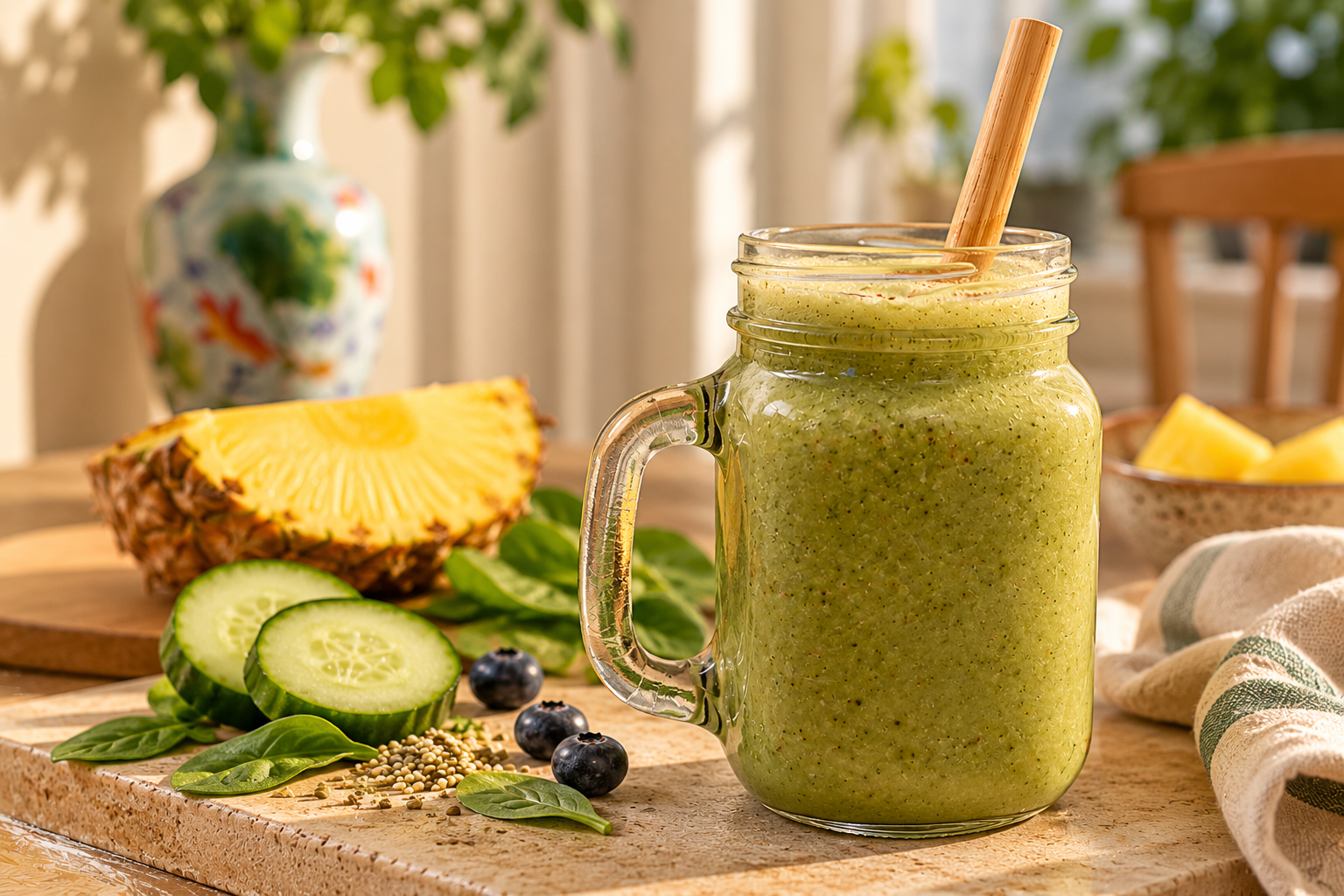
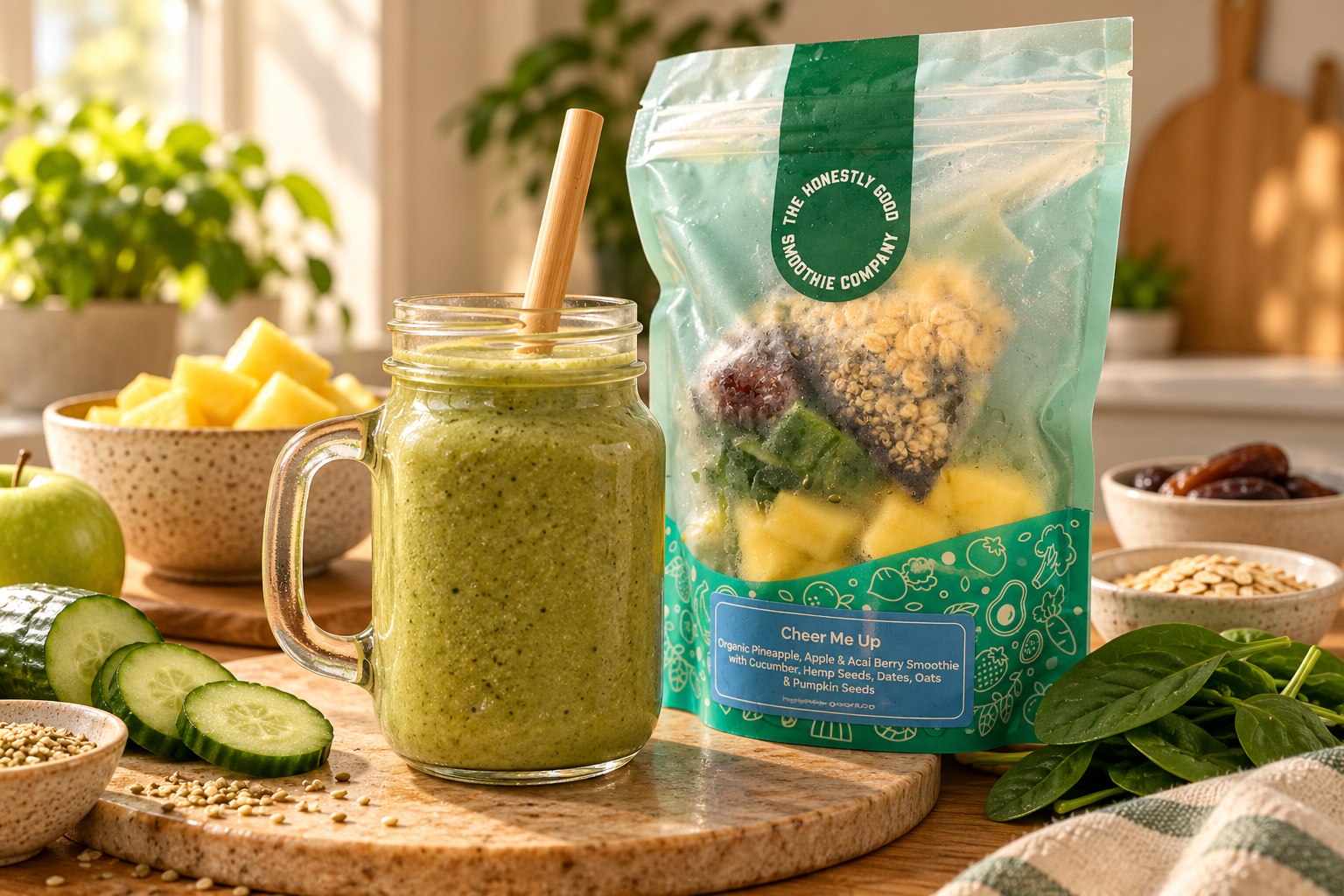
Thankfully, Cheer Me Up was much more successful. Made with cucumber, pineapple, hemp seeds and açaí berry, it had a fresher flavour that I enjoyed immediately. The pineapple brought some sweetness, while the cucumber made it feel light rather than heavy. It was the sort of drink I could imagine having after a workout or on a warm morning when another coffee seemed less appealing.
Coffee is something of a permanent fixture in my life. I enjoy it, probably spend more money on it than I should and have absolutely no intention of pretending otherwise. However, there are mornings when I reach for another cup out of habit rather than because I particularly want one. Having a smoothie ready to blend gave me another option, which was useful when breakfast might otherwise have been an afterthought.
The real test was whether I could fit it into our normal routine. Mornings in our house have never resembled the serene family breakfasts featured in lifestyle magazines. There are school shoes to locate, bags to check and the occasional last-minute discovery that something important has been left upstairs. By the time we are approaching the school run, I am usually more concerned about getting everyone out of the door than creating a beautifully balanced breakfast.
With the smoothie sachets, I could prepare something for myself without adding another complicated job to the morning. That was probably the first point at which I began to appreciate the subscription. It did not transform our household into a model of domestic efficiency, but it made one small part of the day easier.
Did drinking smoothies make a difference to my workouts?
By the middle of the week, I was getting into the habit of preparing a smoothie when I wanted something quick before or after exercise. I train regularly and enjoy pushing myself, particularly in Body Combat and spin, where there is little opportunity to stand around contemplating whether you have enough energy to finish the class.
I felt reasonably good during my workouts that week and noticed that I was paying more attention to what I ate around my training sessions. I also found myself less inclined to skip food and rely on coffee until lunchtime. Whether the smoothies themselves made a measurable difference to my energy is impossible to say. A week is hardly enough time to establish that, and sleep, hydration, hormones and the rest of my diet all have a part to play.
As a woman navigating midlife, I have become increasingly wary of products that promise dramatic improvements in energy, metabolism or general wellbeing. Perimenopause has taught me that the human body is not a machine that responds predictably to every healthy decision. Some days I can get through a demanding workout and still have energy to spare. On others, I would quite happily exchange the entire gym for an uninterrupted afternoon on the sofa.
What I liked about the smoothies was that they encouraged me to think about eating regularly and including a wider variety of ingredients. They were not a replacement for proper meals, and I would not expect them to provide everything my body needs. But they were useful when I wanted something convenient rather than skipping food altogether.
The Almond Tart One wins me over
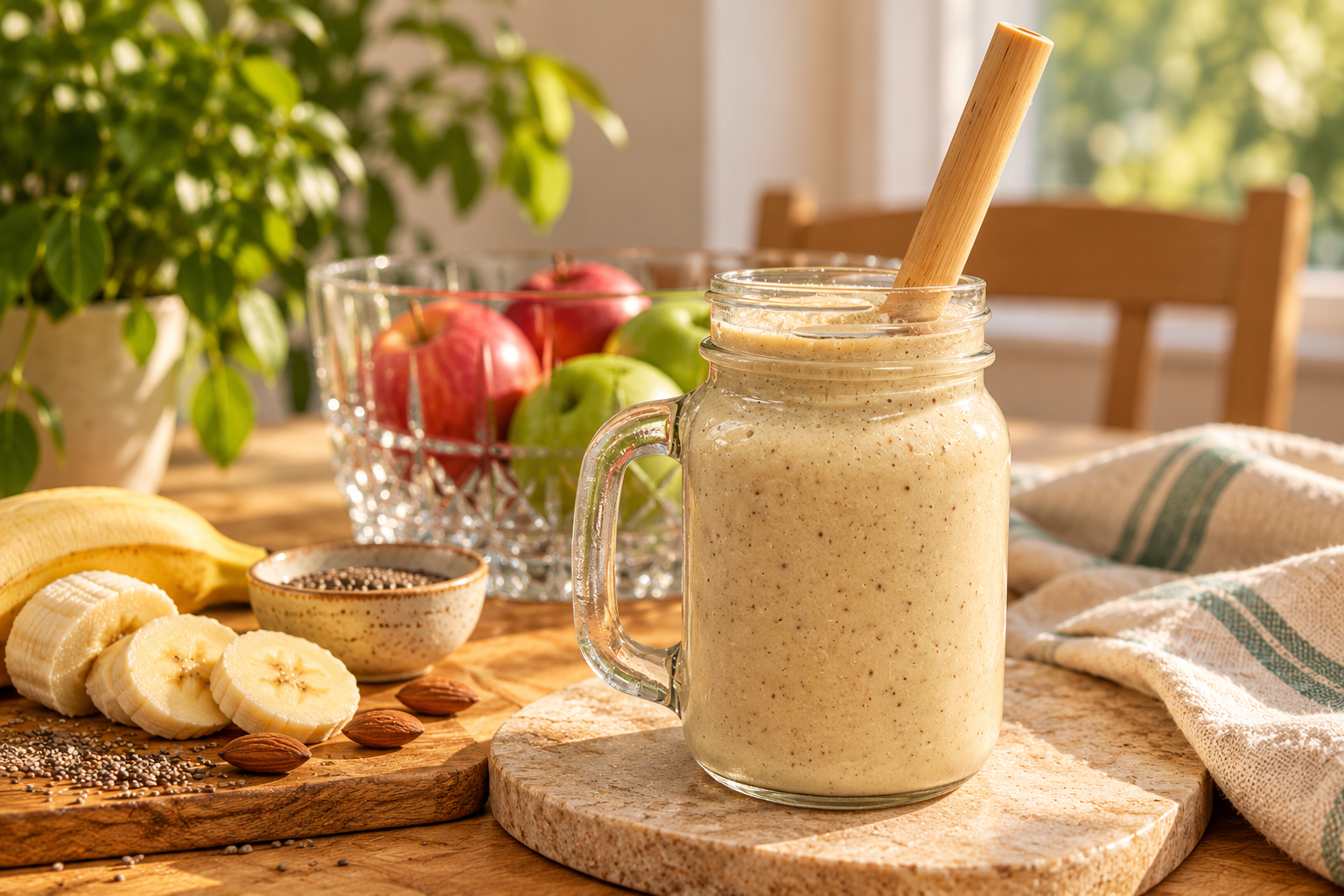
Saturday morning brought my favourite discovery of the week. The Almond Tart One contained almonds, prunes, cinnamon, pear and butternut squash, a combination that sounded slightly peculiar on paper but worked surprisingly well in a glass.
I have always enjoyed the flavour of almonds, and the cinnamon gave this smoothie a warmth that reminded me of something you might eat for dessert. The pear and prunes contributed sweetness, while the butternut squash blended into the background without making its presence particularly obvious. It was satisfying, pleasantly different and considerably more interesting than the banana-based smoothies I usually make at home.
I was enjoying it when Cyrus decided he wanted to investigate. He has always been curious about food, and I encourage that curiosity whenever I can. There is something rather lovely about watching a child discover new flavours without first being told whether they are supposed to like them. He took a taste, appeared perfectly happy with his decision and promptly wanted more.
I considered that a small victory. Not because I had managed to sneak vegetables into him, but because we had found something we could both enjoy. There is a difference, and I think it matters. I would much rather children develop an interest in different ingredients than grow up believing that healthy food is something unpleasant adults have to disguise.
The Almond Tart One also made me realise that I had been rather unimaginative with my own smoothie recipes. My usual approach involves whatever fruit happens to be available, perhaps some yoghurt, and a vague hope that the combination will work. I would never have thought to put prunes, pear, almonds and butternut squash together, yet the result was one I would happily have again.
Is a smoothie subscription worth the money?
By the end of the week, I had a much clearer idea of what I liked about The Honestly Good Smoothie Company and where a subscription might fit into everyday life. The biggest advantage was undoubtedly convenience. Having the ingredients prepared and portioned removed several of the small obstacles that can make healthy eating feel like another chore.
There was also less preparation waste. I did not have to buy several different ingredients simply to make one drink, nor did I find myself wondering what to do with leftover produce. That does not necessarily mean a subscription is cheaper or more environmentally friendly than preparing smoothies from scratch. Packaging, delivery, portion sizes and the price of the ingredients all need to be considered. But for someone who regularly throws away unused fruit or vegetables, pre-portioned ingredients may be worth investigating.
The other advantage was variety. I enjoyed trying combinations that I would not normally prepare myself, even if More Mochi and I did not get off to the most promising start. The experience encouraged me to be more adventurous with ingredients, which is something I could carry into my own cooking.
There are limitations, of course. You need freezer space, a blender and a little organisation. The drinks also need to fit into your wider diet rather than becoming an expensive substitute for balanced meals. Depending on the ingredients and what you blend them with, a smoothie may work better as a snack or as part of breakfast than as a complete meal. And while smoothies can contribute to a varied diet, they are not a direct replacement for eating whole fruit and vegetables.
For me, the value was less about buying a particular health benefit and more about paying for something that made everyday life easier. Whether that justifies the cost will depend on your budget, how often you use the sachets and how much you dislike preparing everything yourself.
Healthy eating in midlife should not require another full-time job
One of the things that frustrates me about the modern wellness industry is the suggestion that women should constantly be doing more. We should be lifting weights, eating enough protein, getting sufficient sleep, managing stress, drinking water, taking supplements and somehow finding time for mindfulness. Most of that advice has merit, but when you are juggling work, children and the general demands of family life, it can begin to sound like a second occupation.
I am particularly conscious of this in midlife. I want to stay strong, keep exercising and look after my long-term health. I also want to enjoy my food, drink my coffee and occasionally eat something without calculating its nutritional contribution. I have no desire to turn every meal into a performance review.
That is why I found the smoothie subscription interesting. It did not ask me to follow a complicated plan or give up anything I enjoyed. I simply had to remember to prepare a sachet, switch on the blender and drink the result. Some flavours suited me better than others, but the process was easy enough to become part of my routine.
For parents, particularly those who spend much of their day making sure everybody else is fed, that sort of convenience can be useful. It is remarkably easy to prepare a decent breakfast for your child while forgetting to have one yourself. I have certainly done it often enough.
My verdict on The Honestly Good Smoothie Company
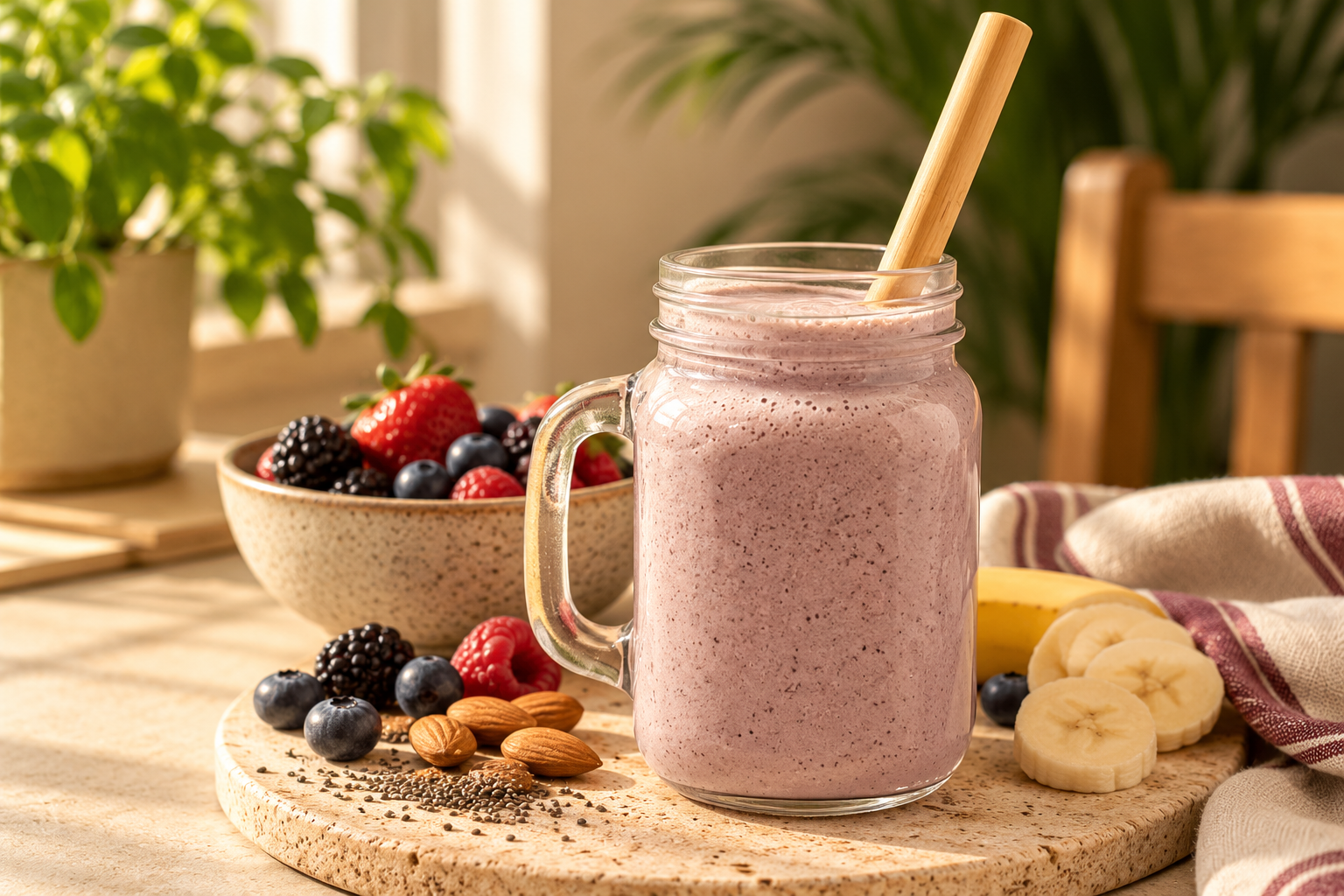
After a week of trying The Honestly Good Smoothie Company, I could see why my gym buddy had been so enthusiastic. The sachets were convenient, the flavours were more adventurous than my usual homemade efforts and several were genuinely enjoyable. Cheer Me Up was refreshing, The Almond Tart One was my favourite, and More Mochi taught me that even a quick breakfast deserves a properly functioning blender.
I would not claim that the smoothies transformed my fitness, made me noticeably healthier or solved the problem of feeling tired during a busy week. There is no sensible way to establish those things from such a short experiment. What they did was make it easier for me to include different ingredients in my diet and give myself something to eat or drink when I might otherwise have relied on coffee.
Would I use them again? Yes, particularly during busy periods when I know that preparing food is likely to slip down my list of priorities. I would still make my own smoothies, eat whole fruit and vegetables and enjoy proper meals, but I can see the appeal of having a few ready-made options in the freezer.
As for Dry January, I can understand why my friend found them useful. Having something interesting and enjoyable to drink can make a change from water or the usual soft drinks, whether you are avoiding alcohol or simply trying to introduce more variety into your routine.
Ultimately, I don’t need a smoothie company to change my life. I need food that tastes good, fits around my family and doesn’t require me to wash six different kitchen utensils before eight in the morning. On that front, The Honestly Good Smoothie Company made a rather convincing case for itself.
And if I can enjoy a decent breakfast, get Cyrus to school on time and still make it to the gym, I am inclined to consider that a successful morning.
Join the conversation
Have you ever tried a smoothie subscription, or do you prefer making your own? I’m particularly interested in whether convenience makes a difference to how well you eat when life gets busy. Would you pay more to save time in the kitchen, or is it another wellness expense you could happily live without?
More from Saffron & Cyrus
Explore more stories from Saffron & Cyrus
Occasional stories, experiments, discoveries and questions from Saffron & Cyrus.
Discover more from Saffron & Cyrus
Subscribe to get the latest posts sent to your email.


Saffron & Cyrus is an independent women’s editorial publication with a recognisable voice, real-life perspective, a defined midlife audience and a commercial model built around useful, relevant partnerships.
