
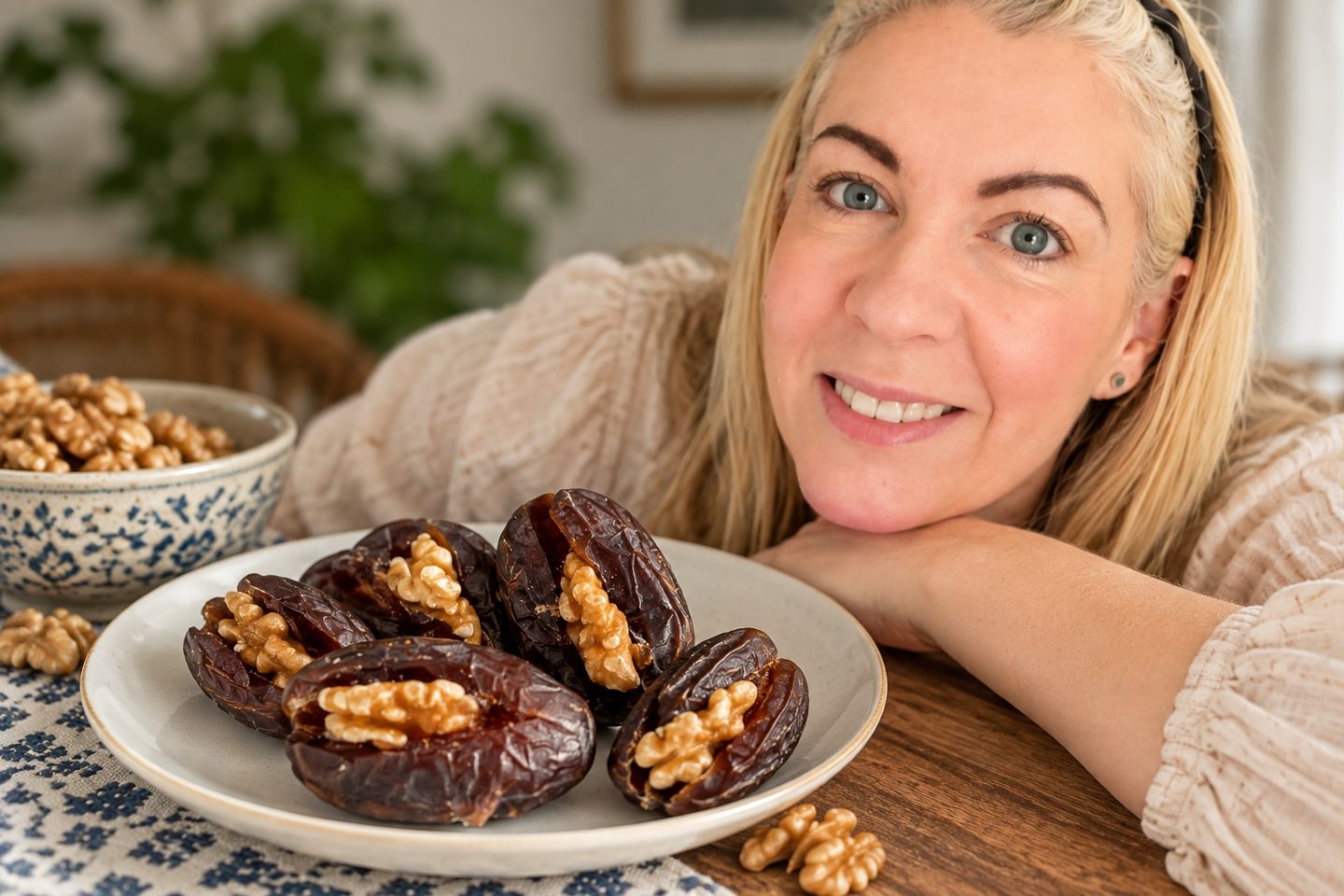
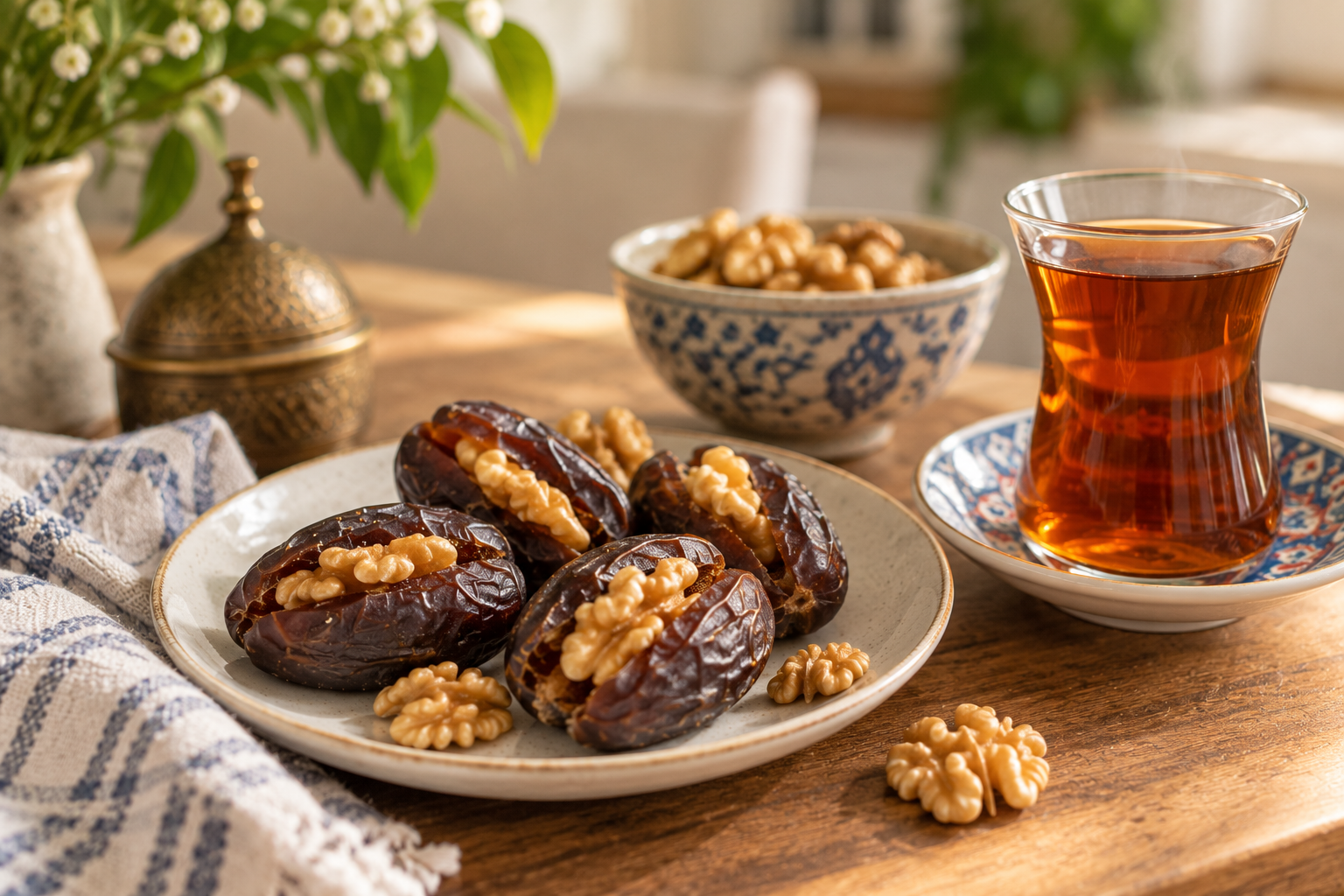
Having a baby at 40 introduced me to many things I hadn’t previously given much thought to, including the interest other people would take in what I was eating. I was breastfeeding Cyrus, recovering from birth and adjusting to broken sleep while dealing with keeping a newborn alive. My Persian in-laws, meanwhile, had views.
Their advice was well-intentioned and delivered with the sort of confidence that makes you suspect generations of mothers have already settled the matter. What I ate, I was told, mattered not only for my own strength but for breastfeeding too. Fortunately, their solution wasn’t a complicated postpartum diet. It was gerdoo and khorma: walnuts and dates, eaten in the morning with a cup of tea. In fairness, I’ve followed more difficult health advice over the years.
At the time, I didn’t question it. Years later, I wanted to know where family tradition ended and the evidence began.
The Persian answer was in the cupboard
There was something ordinary about it. No powders, no expensive breastfeeding snacks and no recipe needing seventeen ingredients and a blender while newborn Cyrus screamed in the next room. It was just foods that belonged in our family.
Walnuts had been part of my diet during pregnancy, so continuing to eat them afterwards didn’t feel unusual. Dates were sweet, easy to grab and needed no preparation. That last point becomes more important once you’ve had a baby. There were days when sitting down to eat something properly took more organisation than I’d anticipated, so walnuts and dates with tea gave me something quick when I was hungry.
At the time, though, I thought they were doing rather more than just feeding me, I believed they were helping me breastfeed.
So do dates increase breast milk?
This is where family tradition becomes interesting. NHS advice on diet while breastfeeding is less exotic than the advice I received from my Persian family. Breastfeeding women don’t really need a special diet, but are advised to eat a varied, balanced one and nuts can form part of that.
There has been some research into dates and breastfeeding. A small randomised controlled trial published in 2021 involved 48 breastfeeding mothers and their babies. Twenty-five mothers were asked to eat 10 dates a day for four weeks, while 23 continued their normal diets without dates. Researchers reported a greater increase in measured breast-milk quantity in the date group, although there was no big difference in the babies’ nutritional status.
It’s an intriguing result when I think about the advice I was receiving from my family, but 48 mother-and-baby pairs is a small study isn’t enough to conclude that eating dates will increase a woman’s milk supply, and it certainly doesn’t mean that the dates I ate with my morning tea were responsible for mine. I find it fascinating that something I was eating because my Persian family told me to has attracted the attention of researchers.
What about the walnuts?
Walnuts are nutritious, provide protein, fibre and unsaturated fats, and nuts are among the protein foods included in NHS guidance on eating well while breastfeeding. What I wouldn’t say now is that eating walnuts while breastfeeding was directly supporting Cyrus’s brain development.
What I can say is I was eating something nutritious at a point when my body was recovering from pregnancy and birth while I was breastfeeding a newborn. The walnuts didn’t need to be a miracle breastfeeding food, they also had another advantage for a woman with a newborn. I could eat them with one hand.
The bit I understand differently
Looking back, breastfeeding can make you intensely aware of your own body because you can’t see how much milk your baby has taken in the way you can measure milk in a bottle. I wondered whether I was producing enough and whether something I ate, drank or did might make a difference.
Eat this, drink this and keep doing it, and that was part of the appeal of the walnuts and dates. They gave me something to eat when much of my day was being dictated by somebody considerably smaller than me. Walnuts, dates and a cup of tea were manageable when plenty of other things didn’t feel quite so manageable. Whether they transformed my breast milk is another matter.
I still think my in-laws were onto something
They weren’t handing me a scientifically proven lactation treatment, but they were making sure a tired breastfeeding mother ate something nutritious and familiar.
There is a generosity in that which I appreciate much more now. My Persian family wasn’t thinking about nutrition labels or clinical trials when they encouraged me to eat gerdoo and khorma. They were passing on this is what we eat, this is what mothers have eaten, and this is how we look after you while you are looking after the baby.
The science behind the breastfeeding claims may be much less certain than the family advice sounded, but the care behind it wasn’t.
Discover more from Saffron & Cyrus
Subscribe to get the latest posts sent to your email.


Saffron & Cyrus is an independent women’s editorial publication with a recognisable voice, real-life perspective, a defined midlife audience and a commercial model built around useful, relevant partnerships.
