
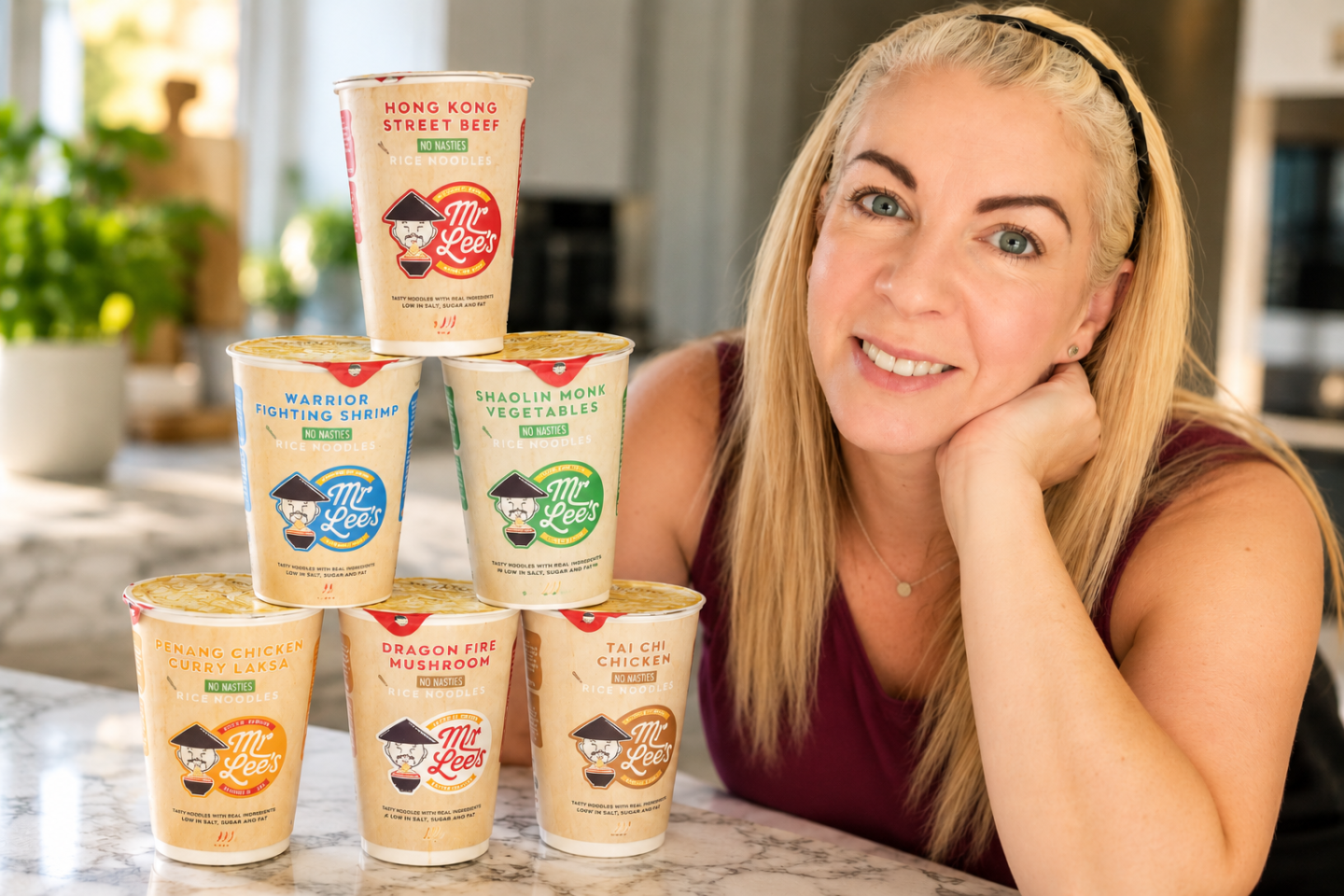
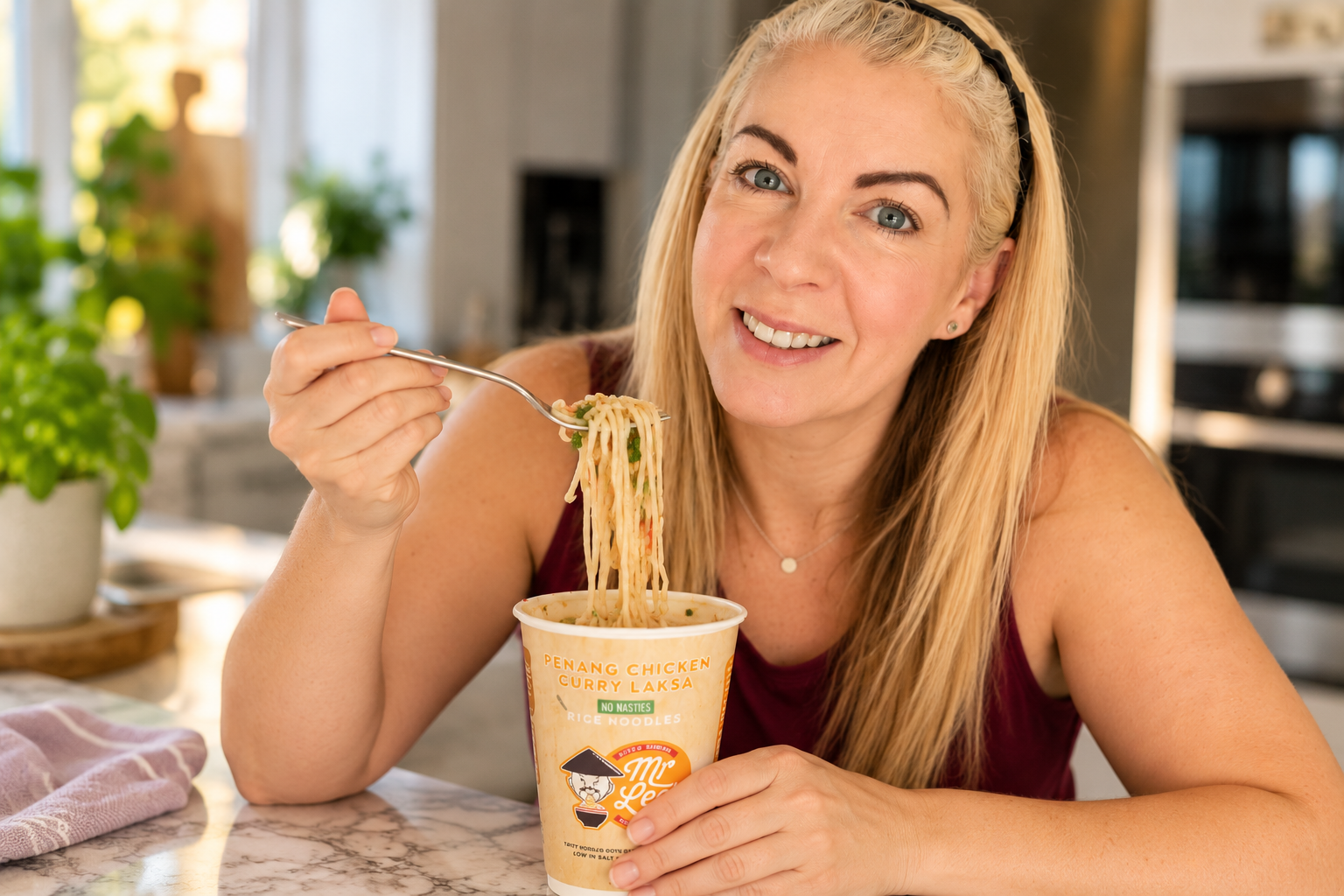
Planning ahead has always been my secret weapon when it comes to eating well. I like knowing what is for dinner before breakfast has finished, preferably with something green involved. Then I had a baby at 40, and all those good intentions collided with sleep deprivation.
For a few weeks, my kitchen became a graveyard of good intentions. Ready-made porridge, chocolate, coffee and instant noodles replaced the colourful, nourishing post-baby diet I had imagined for myself. I even managed to convince myself that the occasional chocolate chip cookie at work counted as an energy strategy. Technically, I suppose it did provide energy, but whether this constitutes sound nutritional planning is another matter.
The problem wasn’t that I suddenly knew nothing about healthy eating. I knew that I needed protein, vegetables, fruit and proper meals. The problem was finding the energy to make them when I was exhausted. We talk about healthy eating as though knowledge is the difficult part, but most women already know the broad rules. Real life is what tends to interfere with them, when you wander into the kitchen carrying a crying baby after you’ve barely slept.
There were days when changing out of my pyjamas felt like a considerable achievement. Netflix went on, chocolate came out and I took endless photographs of Cyrus while wondering when I was supposed to transform into one of those beautifully organised mothers who apparently batch-cook while their babies nap. Then a parcel of Mr Lee’s Noodles arrived. Even Cyrus wanted to investigate.
Before Cyrus, I could be faintly judgemental about instant food. Why not just cook something? It is an easy question to ask when you have slept for eight hours, have control of your own timetable and nobody is depending on you for almost every aspect of their survival.
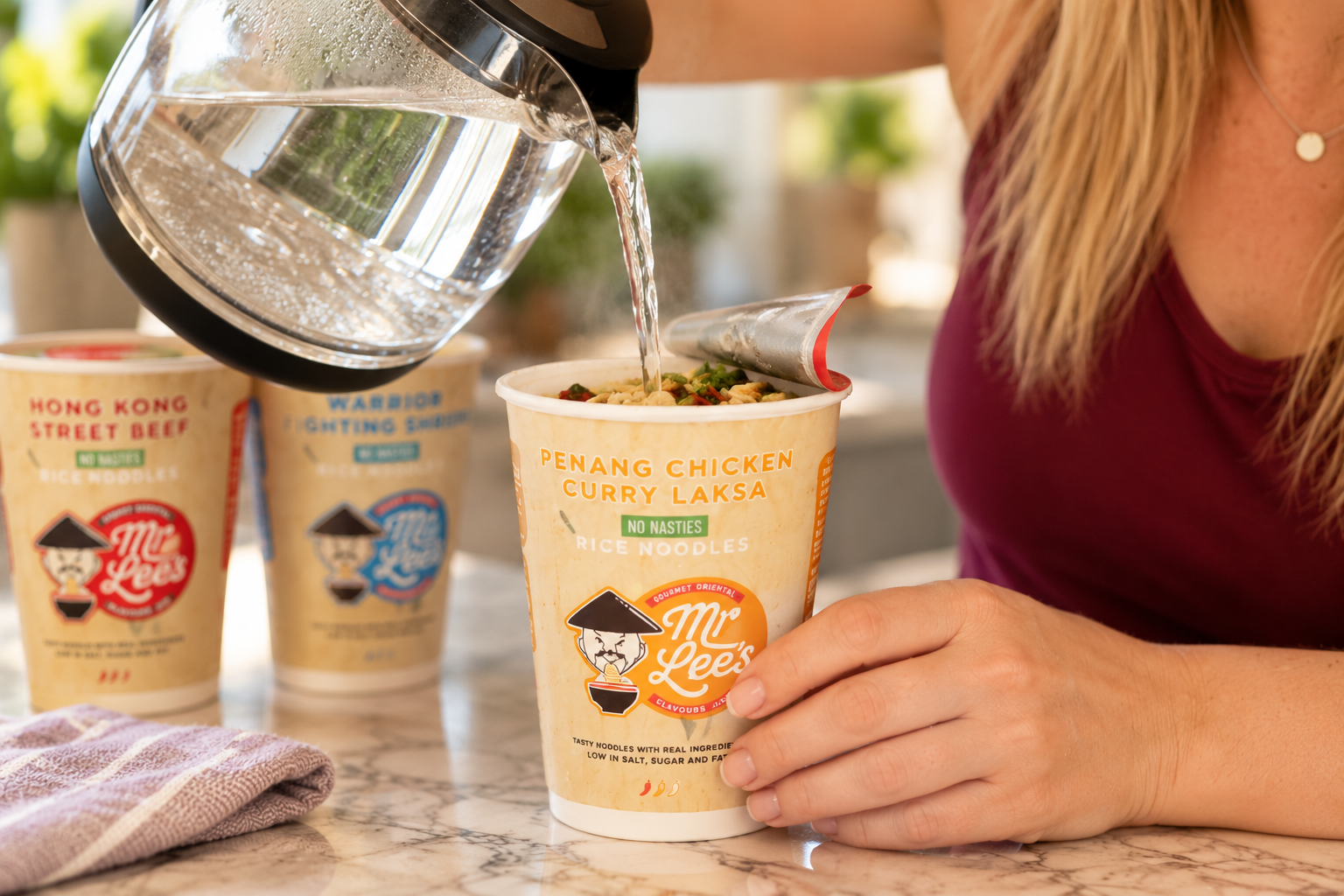
There really was a Mr Lee. Damien Lee was an Australian-born entrepreneur and single father to two boys, James and Joshua, who eventually settled in Bournemouth. Before entering the noodle business, his career had already travelled through an eclectic collection of industries, including digital marketing, recruitment, maritime communications, restaurants and other ventures. Then his life changed completely.
Damien was diagnosed with late Stage 4 cancer and was reportedly given only weeks to live. He underwent 16 rounds of aggressive chemotherapy and began reconsidering the food he was eating alongside his medical treatment. According to interviews about the origins of the company, he cut back on sugar and heavily processed carbohydrates and became much more conscious of what he was putting into his body.
And somewhere in the middle of chemotherapy, Damien wanted noodles. I find that detail more compelling than any polished company origin story because it is so ordinary. Faced with an unimaginably serious illness, he didn’t suddenly crave a photogenic bowl of kale. He wanted instant noodles.
The problem was that the products available didn’t fit the way he now wanted to eat. After his cancer went into remission, that craving stayed with him and eventually became the idea behind Mr Lee’s Noodles: take one convenience food and reconsider what goes into the cup.
The company described its philosophy with the rather memorable line “100% tasty, 0% nasty.” It is a good slogan. It is also, obviously, a slogan. Strip away the marketing language, however, and there was a more interesting proposition underneath it.
Mr Lee’s developed a range of gluten-free rice noodle pots inspired by Asian flavours and made with freeze-dried ingredients, including vegetables, herbs and meat. According to the company, the range contained no artificial additives, preservatives or colouring and no added MSG. It also positioned the noodles as relatively low in salt, sugar, saturated fat and calories within the instant-noodle category.
The company promoted its noodles as gluten-free and certified by Coeliac UK, while the range was also marketed as certified low in added sugar by Sugarwise. Those are useful distinctions, although they don’t magically turn an instant noodle into broccoli.
A woman eating vegetables she has lovingly chopped herself isn’t morally superior to the woman pouring boiling water into a cup because she has been awake since 3 a.m. Sometimes convenience is just convenience, and what Mr Lee’s was attempting was fairly pragmatic: take a food people already eat because it is fast and easy, and reconsider the ingredients used to make it. For a sleep-deprived new mum, that argument had my attention.
There were six flavours to try: Hong Kong Street Beef, Penang Chicken Curry Laksa, Tai Chi Chicken, Shaolin Monk Vegetable, Dragon Fire Mushroom and Warrior Fighting Shrimp. Nobody in the naming department was having a timid week.
I approached the pots with the scepticism of somebody who has eaten enough instant noodles to know that the photograph on the packaging and the contents of the cup can sometimes be only distant relatives. Mr Lee’s used freeze-dried ingredients rather than relying solely on the tiny dried fragments usually found lurking beneath an instant noodle block. Freeze-drying removes moisture at low temperatures and can help retain qualities such as flavour, colour and texture.
More importantly to me, I could recognise what I was eating. There were actual pieces of vegetables in there, rather than three mysterious green flecks requiring forensic examination. This might sound like a very low bar for lunch, but instant-noodle veterans will understand.
My proper test came when I caught one of those delightful bugs small children collect and distribute with astonishing efficiency. I felt dreadful. My appetite had disappeared, my energy had gone with it and the prospect of standing over the cooker preparing something nutritionally magnificent was laughable.
So I made the Penang Chicken Curry Laksa. It was warm, aromatic and substantial enough to feel like a meal rather than something I had eaten purely because the alternative was another biscuit. Ginger and turmeric brought warmth to the broth, while the vegetables added texture and made the whole thing feel considerably more substantial than the instant noodles I remembered from student days.
Was I sitting at the kitchen table congratulating myself on achieving nutritional perfection? Absolutely not. I was ill, tired and looking after a baby. But I had eaten something hot, it tasted good and it required very little from me.
Before having Cyrus, I thought healthy eating largely came down to organisation. To some extent, it does. But motherhood showed me the flaw in that argument. Planning works beautifully until the baby doesn’t sleep, somebody gets ill, you return to work, the washing multiplies overnight and your carefully prepared lunch remains sitting in the fridge while you survive on coffee.
Women are good at turning these ordinary failures of logistics into evidence against ourselves. We should be cooking more, should have prepared something. We shouldn’t have eaten that. We should be losing the baby weight. We should be healthier. There is an awful lot of “should” attached to women’s bodies after childbirth, and I don’t think lunch needs to join the list.
One part of the original Mr Lee’s proposition sits differently with me now: the phrase “guilt-free noodles”. Why should noodles require absolution in the first place?
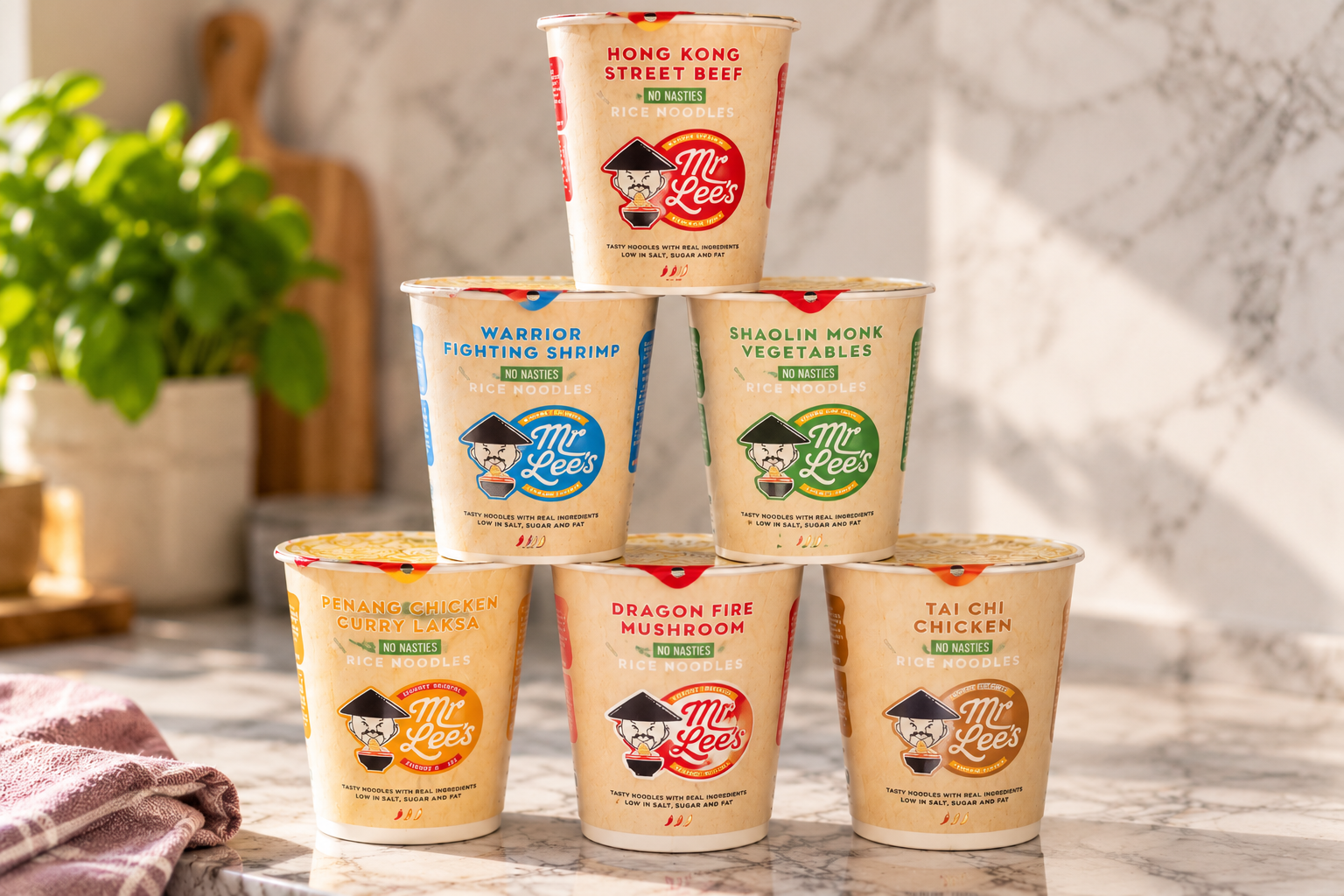
Food marketing has spent decades telling women that eating comes with a moral scorecard. Chocolate is naughty, salad is virtuous. Desserts are sinful. Reduced-calorie versions allow us to “indulge” without guilt. It is strange language when you stop and think about it, and I am increasingly tired of the idea that women should feel they have committed an offence because they ate something they enjoyed.
If I eat chocolate, I have eaten chocolate. I haven’t committed a crime. Likewise, if I eat instant noodles because I am exhausted, it doesn’t mean I have abandoned my interest in fitness, nutrition or wellbeing. It means I needed lunch.
That is one of the more useful things motherhood has taught me about food. Health isn’t determined by a single meal. The occasional instant dinner does not erase the vegetables, home cooking, exercise and other choices surrounding it.
Damien’s business eventually went far beyond selling cups of noodles. Mr Lee’s developed digital Noodle Kiosks designed to dispense noodles and hot water, with an early machine installed at Bournemouth University, and the company expanded into the travel market. What began with one man’s craving during chemotherapy developed into an attempt to rethink how a familiar convenience food was made and sold.
The idea began because somebody wanted convenient food at a point when life was extremely difficult. It became a business designed around making that food available precisely where people needed convenience.
My circumstances were nowhere near Damien’s. I wasn’t fighting cancer. I was a tired new mother who occasionally discovered at 3 p.m. that coffee and half a biscuit were apparently all I had eaten that day. But the product made me reconsider one of my own assumptions. Convenience food isn’t the enemy of healthy eating, but unrealistic expectations are.
I still prefer cooking from scratch. Give me Persian rice, herbs, vegetables and something bubbling gently on the hob and I am happier than I am peeling the lid from a cup. I also still believe that what we eat matters. Convenience isn’t an excuse to ignore nutrition all together, and clever branding shouldn’t stop us reading the label.
But real wellbeing has to accommodate newborns, nursery bugs, work, exhaustion, hormones, school runs and those inexplicable evenings when everybody in the house appears to need something from you simultaneously. If our definition of healthy living only works when we have plenty of time, energy and sleep, it isn’t a useful definition.
That is why I no longer think a healthy diet can be judged meal by meal. Sometimes wellbeing looks like a colourful plate of food you’ve cooked yourself. Sometimes it is a decent breakfast before work or a hot pot of noodles eaten in your pyjamas while your baby attempts to commandeer your fork.
The noodles didn’t fix my diet but I didn’t expect them to. They reminded me that feeding myself didn’t have to become another test of whether I was doing motherhood properly.
Did becoming a parent change the way you think about healthy eating? And do you think we need to stop attaching guilt to the convenient foods that sometimes get us through the day?
Occasional stories, experiments, discoveries and questions from Saffron & Cyrus.
Discover more from Saffron & Cyrus
Subscribe to get the latest posts sent to your email.


Saffron & Cyrus is an independent women’s editorial publication with a recognisable voice, real-life perspective, a defined midlife audience and a commercial model built around useful, relevant partnerships.
