
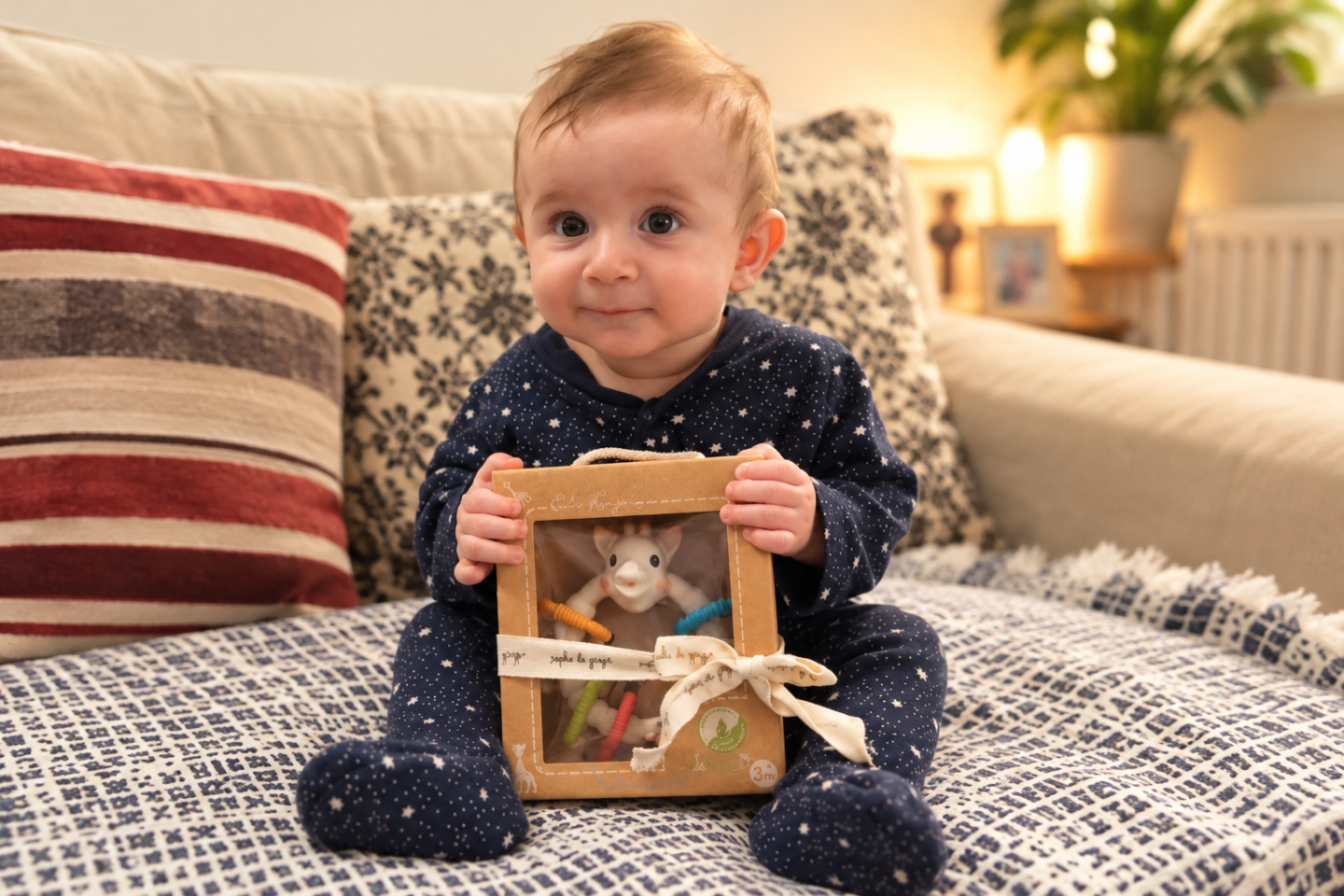
From whisky to wooden rings: the bizarre teething remedies parents swear by around the world
When nine-month-old Cyrus started teething, I discovered that parents across the world have some rather inventive ideas for soothing sore gums. From French giraffes to German biscuits and an auntie’s suggestion involving raw onion, I went looking for answers. Some were surprisingly sensible. Others made me wonder whether the parents needed more help than the babies.
When the first tooth becomes everyone’s problem
It started with the dribbling. Then came the determined chewing of anything within reach, including fingers, toys and the occasional unsuspecting shoulder. By the time the sleepless nights arrived, nine-month-old Cyrus was thoroughly fed up, and so were his slightly frazzled maman and baba.
I’d heard plenty about teething before becoming a mother, usually from parents who spoke about it with the weary authority of people who had survived something dreadful. I assumed they were exaggerating. After all, how much trouble could one tiny tooth cause?
Quite a lot, as it turns out.
Watching Cyrus gnaw furiously on his toys while producing enough dribble to soak through another bib, I began to understand why generations of parents have gone to extraordinary lengths to soothe their babies’ gums. When you’re awake at three in the morning with a miserable child, even the most peculiar suggestion can begin to sound worth investigating.
H and I decided to see how parents around the world tackle teething. With our English and Persian family backgrounds, we’re already accustomed to different approaches to raising children. But nothing quite prepared me for the international collection of remedies we uncovered.
There were suggestions involving whisky, raw onion, wooden rings and even an egg suspended in a sock. One old-fashioned remedy involved making a necklace from pennies. I couldn’t help wondering who first came up with these ideas, and what on earth persuaded another parent to try them.
Thankfully, there were rather more sensible options too.
The weird and wonderful world of traditional teething remedies
Every culture seems to have its own answer to the misery of emerging teeth. Some remedies have survived for generations, passed between grandparents, parents and increasingly desperate new mothers.
One auntie suggested chewing raw onion. I wasn’t entirely sure whether Cyrus was supposed to do the chewing or whether I was expected to demonstrate. Either way, I couldn’t see it becoming a regular feature of our bedtime routine.
Then there was the suggestion of rubbing whisky on sore gums, an old remedy that crops up in conversations about teething. Alcohol is unsafe for babies, so that particular piece of parental folklore went straight into the reject pile.
The penny necklace was another non-starter. Coins and necklaces present obvious choking and strangulation hazards, however persuasive the family story behind them might be.
And the egg in a sock? Apparently, some traditional beliefs hold that hanging an egg in a baby’s room can help with teething discomfort. I remain unconvinced, although I admire the optimism of anyone who believes a suspended egg might persuade a baby to sleep.
What interested me most was how much these remedies reveal about parenting. Long before teething toys filled supermarket shelves, families worked with whatever they had available. Some ideas were rooted in practical experience, others in superstition, and a few seem to have survived simply because nobody thought to question them.
So, with the more questionable suggestions safely dismissed, we turned our attention to remedies that might actually help Cyrus.
Japan: could a simple wooden teething ring help?
Japanese craftsmanship has long fascinated me, particularly the attention given to everyday objects. Even something as ordinary as a baby’s teething ring can become a beautifully made little object.
One product we discovered was the Onigiri Hinoki, a triangular teething ring made from Japanese hinoki cypress wood. Its shape takes inspiration from the familiar Japanese rice ball, and its smooth finish makes it an interesting alternative to the brightly coloured plastic teethers that seem to multiply around the house.
Hinoki wood has naturally occurring compounds with antimicrobial properties, although that doesn’t mean a wooden teether is germ-free or requires less cleaning.
I liked the simplicity of the idea. No flashing lights, irritating tunes or batteries to replace. Just a small object designed for little hands and sore gums.
Of course, wooden teethers need to be specifically made for babies, with no splinters, detachable parts or unsafe finishes. I’d also check the manufacturer’s age guidance and cleaning instructions before handing one to Cyrus.
Sometimes the simplest ideas are the most appealing, particularly when you’ve already spent half the day listening to a musical plastic elephant.
Germany: the tradition of Zwieback biscuits
In Germany, generations of families have turned to Zwieback, a twice-baked bread or rusk, as part of their children’s early feeding experiences.
The name literally refers to something baked twice, which explains its distinctive dry, crisp texture. Traditionally, these biscuits have been given to young children, including babies who are cutting their first teeth.
I can understand the appeal. When a baby is determined to chew everything in sight, offering something edible might seem like a practical solution.
But there’s an important distinction between tradition and safety. Hard rusks and biscuits can break into pieces and create a choking risk, particularly for younger babies. They may also contain added sugar.
For Cyrus, I’d rather stick to suitable, soft finger foods that he can manage safely while sitting upright and being closely supervised.
It’s a reminder that just because generations of babies have been given something doesn’t necessarily mean it’s the best choice today.
France: why Sophie la Girafe is practically a parenting institution
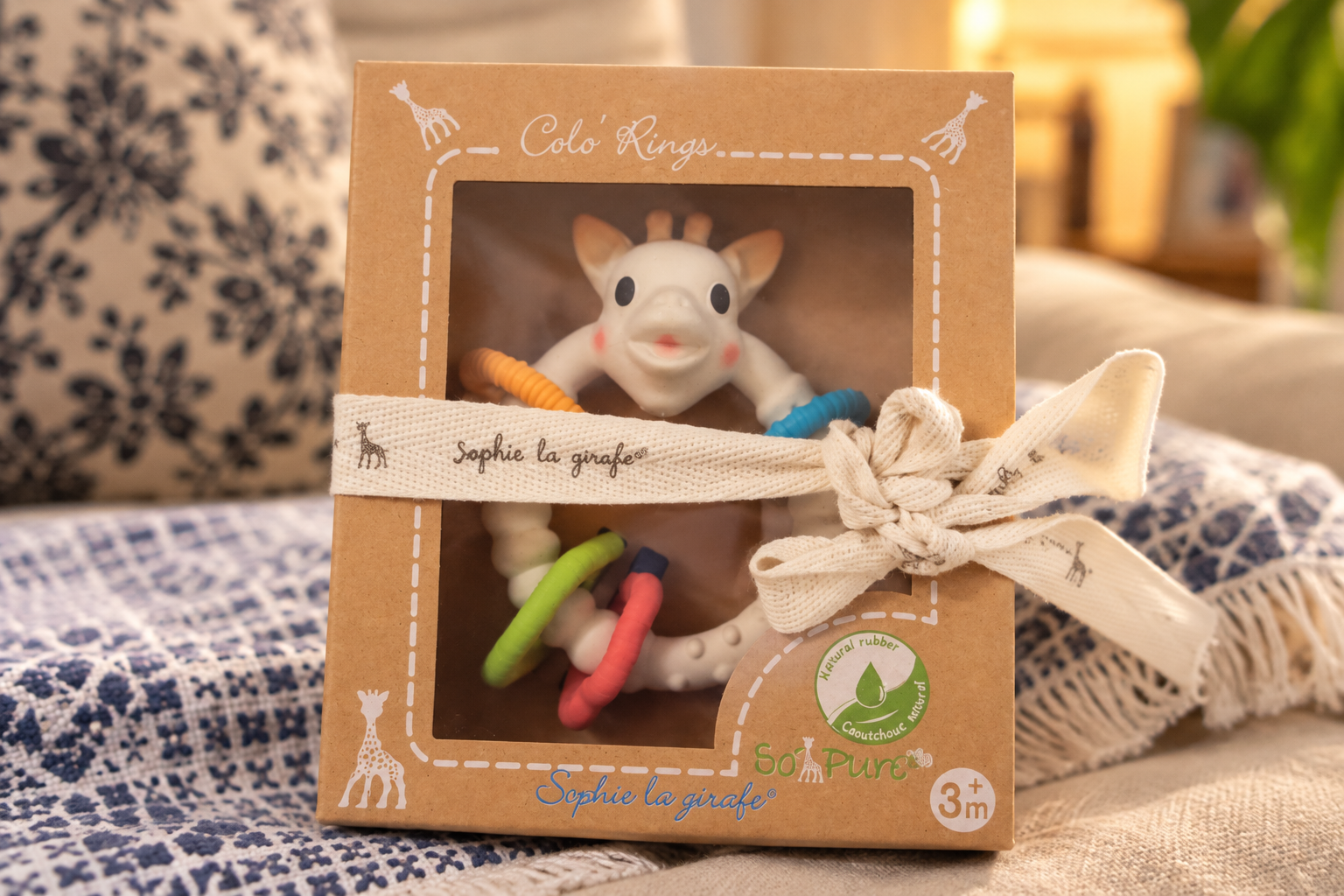
If there’s one teething toy that appears to have achieved celebrity status, it’s Sophie la Girafe.
Created in France in 1961, this cheerful little giraffe has become a familiar sight in changing bags and nurseries around the world. She’s instantly recognisable, with her long neck, spotted body and expression of mild surprise.
We have one for Cyrus, and she’s become a useful companion when we’re out and about. Her shape gives little hands plenty to grip, while the soft material offers something suitable to chew.
There’s something rather reassuring about a toy that has survived decades of changing parenting fashions. Sophie doesn’t promise to transform your baby’s development or turn them into a miniature genius. She’s simply a giraffe that babies enjoy chewing.
I can live with that.
We keep her clean according to the manufacturer’s instructions and check her regularly for damage. As with any teething toy, hygiene matters, particularly when it spends half its life being dropped, retrieved and enthusiastically returned to a baby’s mouth.
Greece: cooling sore gums with yoghurt and cucumber
Another idea that caught my attention was a Mediterranean-inspired combination of plain yoghurt and cucumber.
Both are familiar foods in Greek cooking, although I wouldn’t claim that putting them in a baby’s feeder is an established Greek teething tradition. It is, however, an interesting way of adapting everyday ingredients.
Cool foods can sometimes provide temporary comfort for sore gums, and Cyrus is already discovering the pleasures of eating something other than milk.
For babies who have started solids, plain, unsweetened pasteurised yoghurt can be offered as part of a balanced diet. Soft, age-appropriate cucumber may also be suitable, provided it’s prepared to reduce choking risks.
A clean baby food feeder can help contain suitable foods, although it still requires close supervision and careful cleaning.
The important thing is to keep everything cool rather than frozen solid, and to introduce foods in line with a baby’s stage of development.
I suspect the attraction for Cyrus would be as much about the opportunity to make a spectacular mess as any relief for his gums.
Back home: the humble gum massage
After investigating remedies from several countries, one of the simplest approaches turned out to be something we could do at home without buying anything particularly exotic.
A gentle gum massage with a clean finger can help soothe a teething baby, and it’s something H and I can do when Cyrus becomes particularly unsettled.
We’ve also introduced a soft baby toothbrush from Brush-Baby, partly to get Cyrus accustomed to having something in his mouth before regular toothbrushing becomes a twice-daily negotiation.
The toothbrush gives us an opportunity to establish a routine while gently tending to his gums. Once that first tooth appears, brushing with an age-appropriate smear of fluoride toothpaste becomes important.
There’s something rather lovely about these small moments of care. Cyrus might not appreciate the finer points of dental hygiene just yet, but he certainly understands the comfort of having maman or baba nearby.
And unlike some of the more elaborate teething gadgets, a clean finger is unlikely to disappear into the mysterious depths of the changing bag.
Baltic amber necklaces: an old belief worth questioning
Of all the teething remedies I came across, Baltic amber necklaces were among the most intriguing.
Supporters claim that amber contains succinic acid, which is believed to have anti-inflammatory properties. The theory is that warmth from a baby’s skin releases the substance, helping to ease discomfort.
It sounds appealing, particularly when presented as a natural alternative to medication. Unfortunately, there’s no convincing clinical evidence that wearing amber relieves teething pain.
More importantly, necklaces and bracelets pose serious strangulation and choking risks for babies. Supervision doesn’t eliminate those dangers.
For that reason, amber jewellery isn’t something I’d use for Cyrus.
I appreciate the appeal of traditional remedies, particularly those with a long cultural history, but being natural doesn’t automatically make something safe. Sometimes the most useful part of researching an old remedy is discovering why it belongs in the past.
What about teething medicines?
When Cyrus is particularly miserable, I can understand why parents reach for something stronger than a teething ring.
Anbesol liquid was one of the products that came up during our search, but medicated teething treatments require more caution than many parents realise.
In the UK, products containing lidocaine for teething are not a first-choice treatment. They should only be considered when non-medicinal approaches haven’t helped, with advice from a pharmacist and strict attention to the product’s age restrictions and instructions.
For a baby who is genuinely distressed, a pharmacist or healthcare professional can advise whether an age-appropriate painkiller, such as infant paracetamol or ibuprofen, is suitable.
I wouldn’t use a medicated product simply because Cyrus is dribbling or chewing more than usual. Babies explore the world with their mouths, and not every unsettled afternoon is necessarily caused by teething.
As tempting as it is to blame every grumble on a new tooth, sometimes there’s something else going on.
The Nuby teething book: a little distraction goes a long way
Another discovery was the Nuby Flip Flop Teething Book, a small, colourful baby book with textured surfaces designed for little hands and mouths.
I rather like toys that serve more than one purpose, particularly when every outing already seems to require enough equipment for a fortnight abroad.
A soft, washable teething book offers Cyrus something to explore while giving him safe surfaces to chew, provided it’s suitable for his age and remains in good condition.
The different textures also encourage him to investigate the pages, even if his current interpretation of reading involves attempting to eat the book.
At around £5.84 when I came across it, it seemed a relatively modest addition to the growing collection of baby paraphernalia taking over our house.
I wouldn’t pretend it works miracles, but sometimes distraction is half the battle. If Cyrus spends ten minutes happily investigating a toy instead of complaining about his gums, I’ll consider that a small victory.
What I’ve learned from our international teething experiment
After looking at remedies from Japan, Germany, France and beyond, I’ve realised that parents have far more in common than our different traditions might suggest.
We all want the same thing when our babies are uncomfortable. We want to help them feel better, preferably before the entire household reaches the point of exhaustion.
Some cultures turn to familiar foods, others favour beautifully crafted toys, and some rely on remedies handed down through generations. The details differ, but the instinct behind them is much the same.
What I’ve also learned is that there’s no magical answer to teething. A chilled teething ring might help one afternoon, while a cuddle and a change of scenery work better the next.
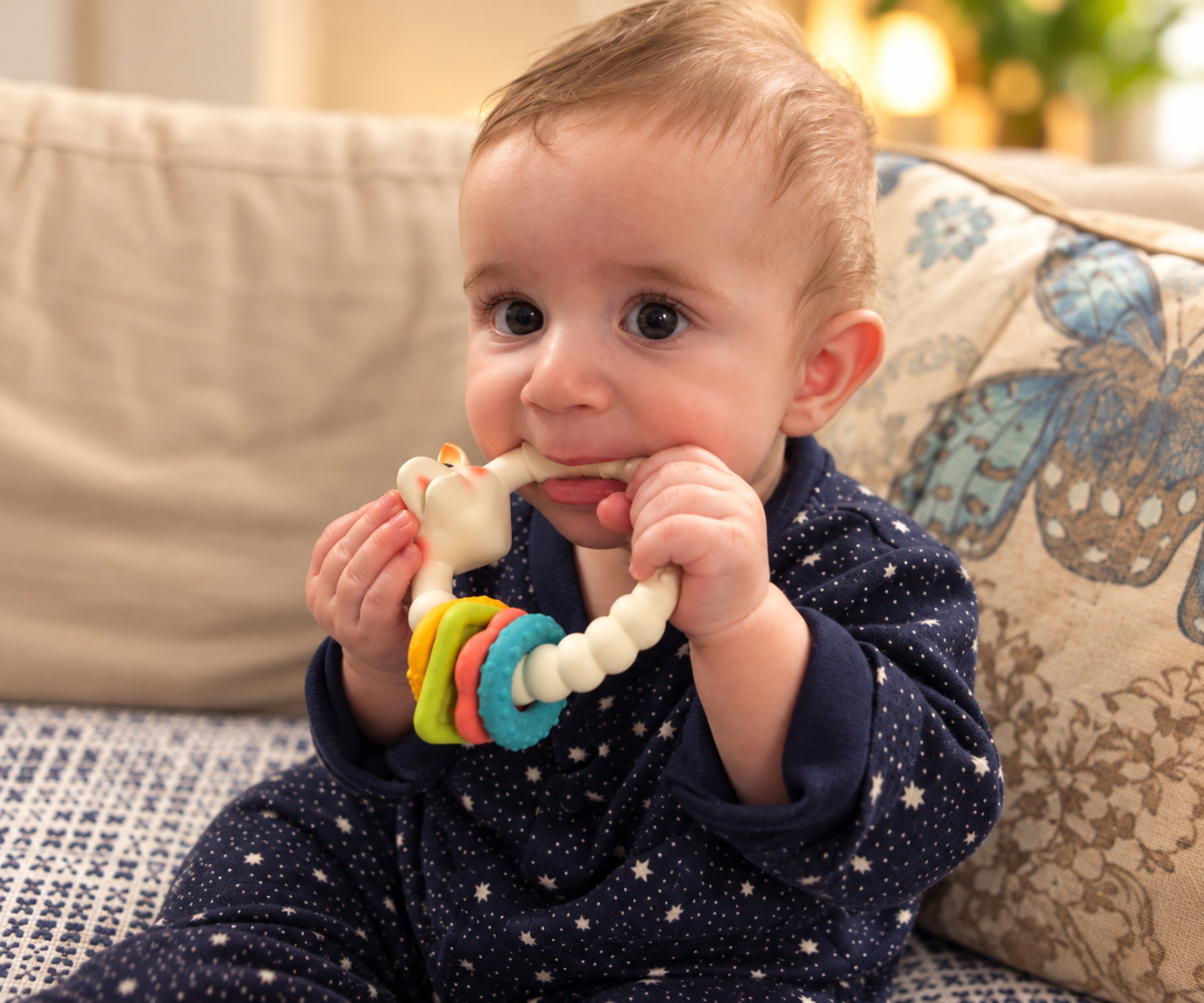
For us, Sophie la Girafe, gentle gum massage and suitable teething toys have been the most practical things to keep close at hand.
And while I enjoy hearing about traditional remedies, I’ve become rather more selective about which ones deserve a place in Cyrus’s routine.
The whisky can stay in the cupboard, the pennies can remain in my purse, and the egg can go into an omelette.
Is it really teething, or could something else be wrong?
One thing worth remembering is that teething doesn’t explain every symptom a baby experiences.
Dribbling, chewing, sore gums and mild irritability are common, but diarrhoea, fever and significant illness shouldn’t automatically be dismissed as teething.
Cyrus has had unsettled nights and changes in his nappies during this stage, but I’ve learned not to assume that every symptom is connected to his emerging teeth.
If a baby has a high temperature, persistent diarrhoea, seems unusually unwell or shows signs of dehydration, it’s important to seek medical advice.
The NHS guide to teething is a useful starting point for parents wondering what’s normal and when to ask for help.
Frequently asked questions about baby teething
What is the safest way to soothe a teething baby?
A clean teething ring cooled in the fridge, gentle gum massage and plenty of comfort are sensible first steps. Avoid freezing teething rings, as very cold surfaces can damage delicate gums.
Are amber teething necklaces safe?
No. Amber necklaces and bracelets pose choking and strangulation risks, and there is no reliable evidence that wearing amber reduces teething pain.
Can babies use teething gels?
Medicated teething products aren’t recommended as a first option. Speak to a pharmacist before using one, check that it’s suitable for your baby’s age and follow the instructions carefully. General oral pain gels may not be suitable for infants.
Can teething cause diarrhoea or a high temperature?
Teething may coincide with mild discomfort and other changes, but diarrhoea and fever shouldn’t be assumed to be caused by new teeth. Seek medical advice if your baby is unwell.
When do babies usually get their first teeth?
Many babies begin teething at around six months, although some start earlier and others much later. Every baby develops at their own pace, something I’m learning applies to just about every aspect of motherhood.
What did your family swear by?
Nine months into motherhood, I’m discovering that parenting advice comes from everywhere. Grandparents, aunties, friends, strangers in supermarkets and, of course, the internet all seem to have a remedy for whatever your baby is going through.
Some advice is genuinely useful. Some makes you laugh. And occasionally, you find yourself wondering how an entire generation survived it.
I love hearing how different families and cultures approach the same everyday challenges, even when I have no intention of trying their suggestions myself.
Did your family have an unusual teething remedy? Was there something your parents or grandparents swore by that you’d never dream of using today?
I’d love to hear your stories, particularly those with a cultural twist. Email me at saffronandcyrus@gmail.com and tell me what worked, what didn’t and what made you raise an eyebrow.
After all, if there’s one thing teething has taught me, it’s that babies may be small, but their teeth can cause an astonishing amount of household drama.
Editor’s note: This article shares our family’s experience and explores traditional teething remedies. It isn’t medical advice. Always follow current NHS guidance and consult a pharmacist, health visitor or GP if you’re concerned about your baby’s symptoms or pain relief.
Discover more from Saffron & Cyrus
Subscribe to get the latest posts sent to your email.


Saffron & Cyrus is an independent women’s editorial publication with a recognisable voice, real-life perspective, a defined midlife audience and a commercial model built around useful, relevant partnerships.
