
Good Bubble kindly gifted us the Good Bubble products featured in this article for Cyrus to try. There was no obligation to provide a positive review, and all opinions and experiences are my own.
There is a certain look Cyrus used to have when he came home from nursery. His hair would be slightly wild, there would be food somewhere on his clothes, and his hands often suggested he had spent the afternoon redecorating the nursery with poster paint.
Bath time was less of an optional evening activity and more of a necessary exercise. It also became one of my favourite parts of our routine. Once Cyrus was in the bath, he played, I sat beside him and, for a little while, we relaxed.
Like most parents, we had accumulated plenty of bath-time paraphernalia along the way. That is the problem with shopping for small children as almost everything is presented as essential, educational, developmental or just capable of making family life miraculously easier. In reality, the products I liked just did something useful and did it well.
Because there is a difference between something marketed as a parenting essential and something you find yourself using night after night.
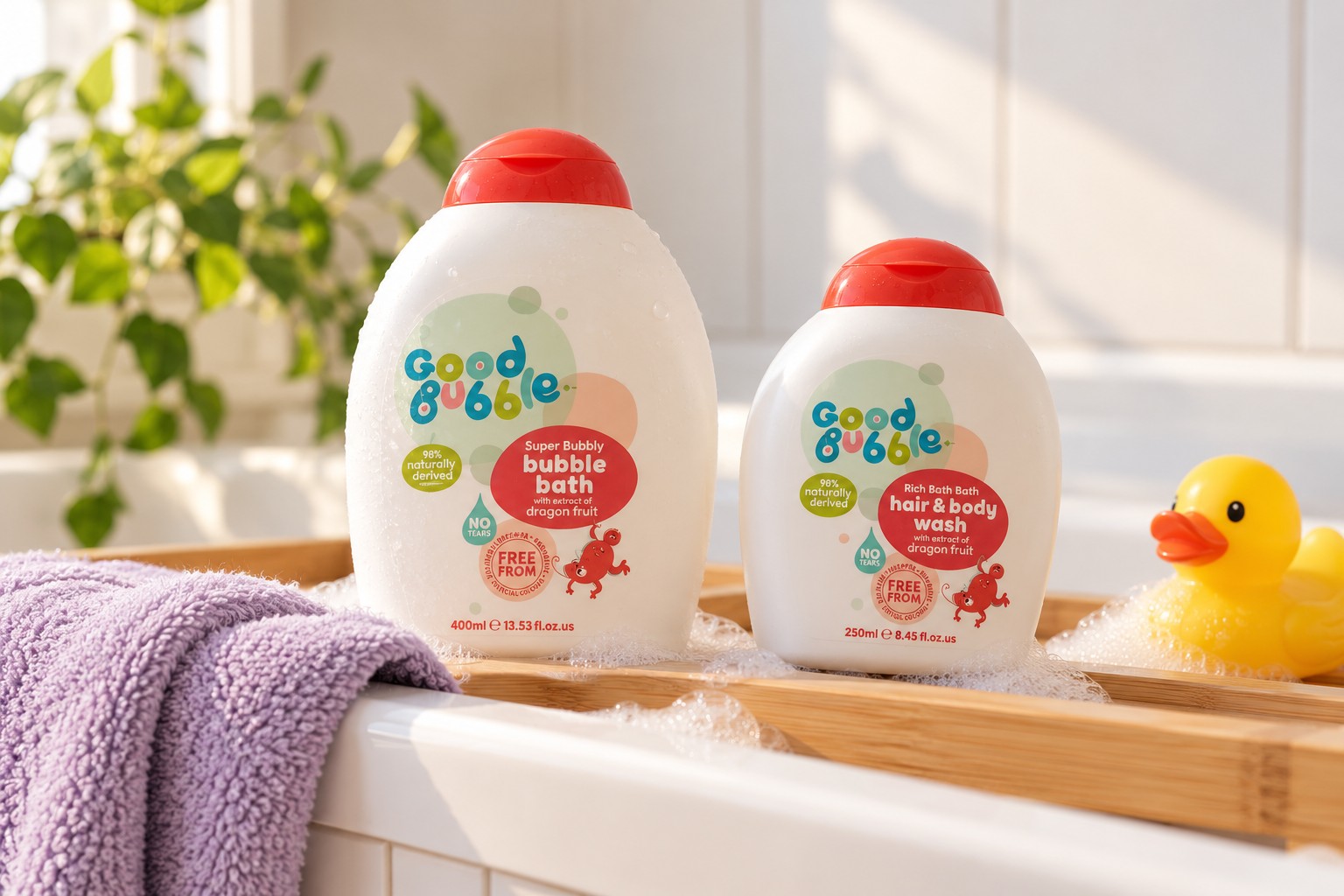
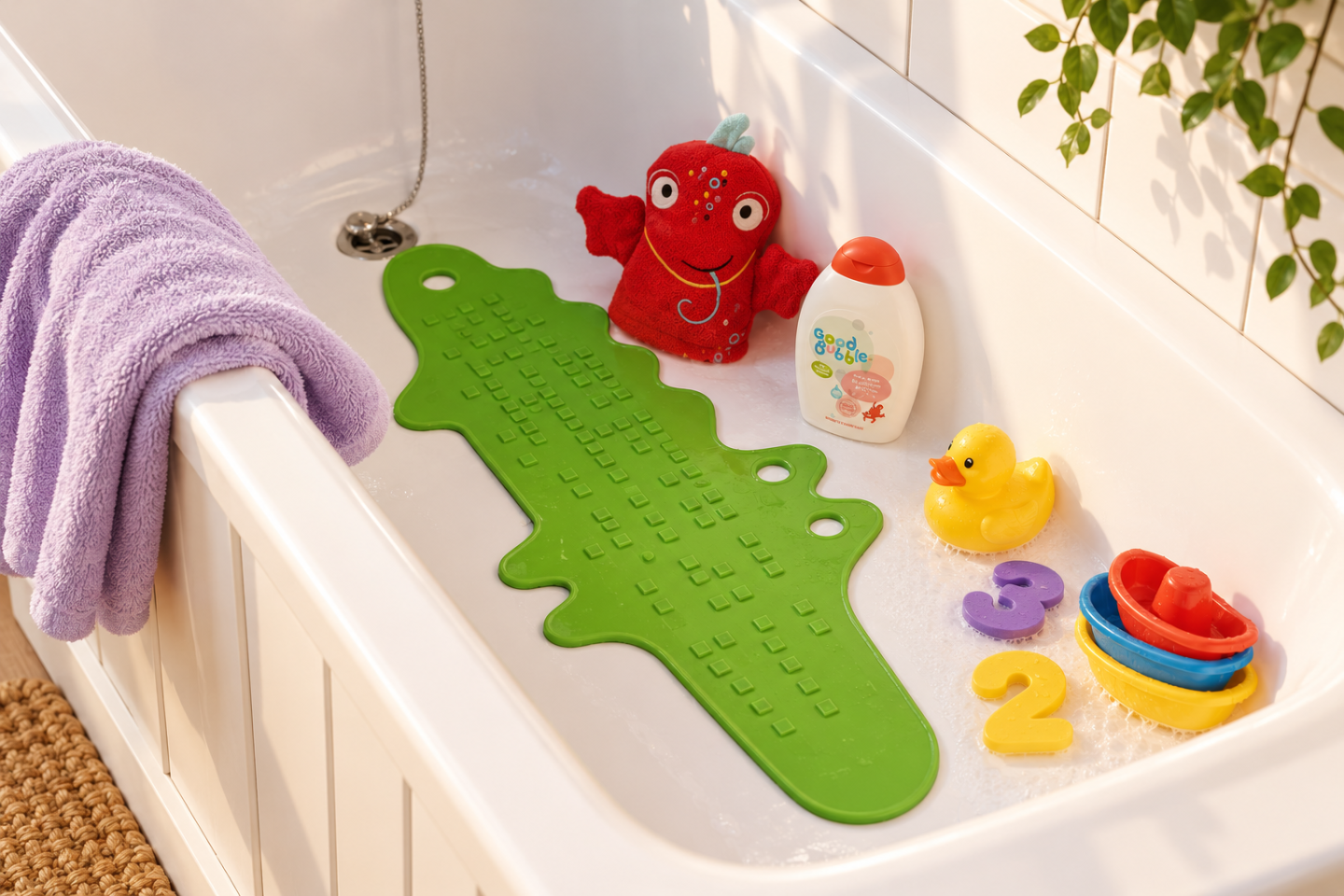
Of all the bath-time products we bought, the IKEA Crocodile Bath Mat was one of the easiest to recommend. Ours was an unsubtle lime-green crocodile sitting along the bottom of the bath. It was never going to feature in a minimalist bathroom photograph, but then neither were the foam numbers, plastic boats and collection of bottles surrounding it.
The useful bit was the suction cups that helped secure the mat to the bath, giving Cyrus a less slippery surface when sitting, standing or moving around. Anyone who has watched a toddler suddenly decide to stand in a wet bath will understand the appeal. Small children have a huge amount of confidence in their own balance, usually at the moment a parent has none whatsoever.
At around £6 when we bought ours, it represented excellent value. It fitted the bath, was easy to use and solved a problem without batteries. I would buy it again for that reason.
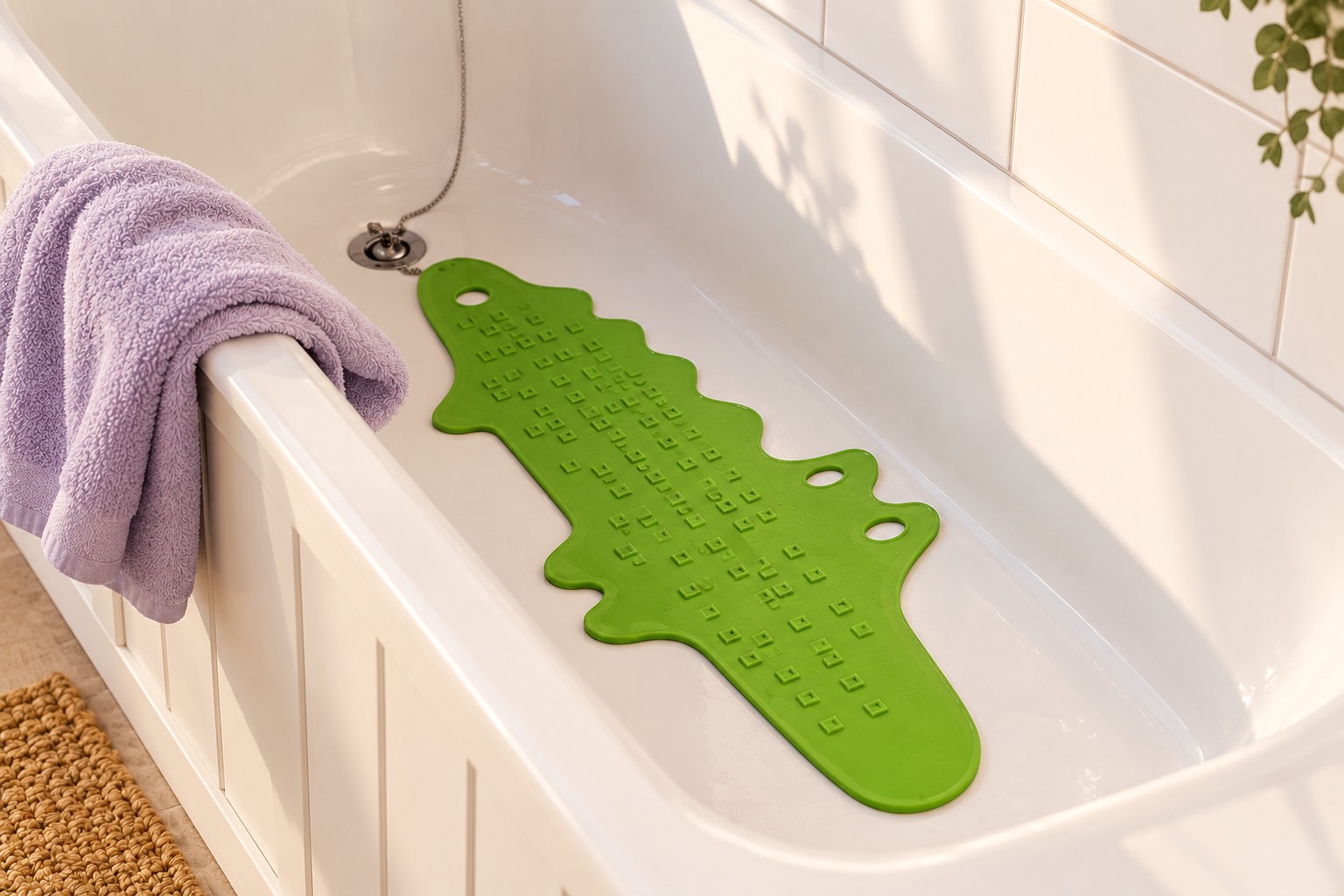
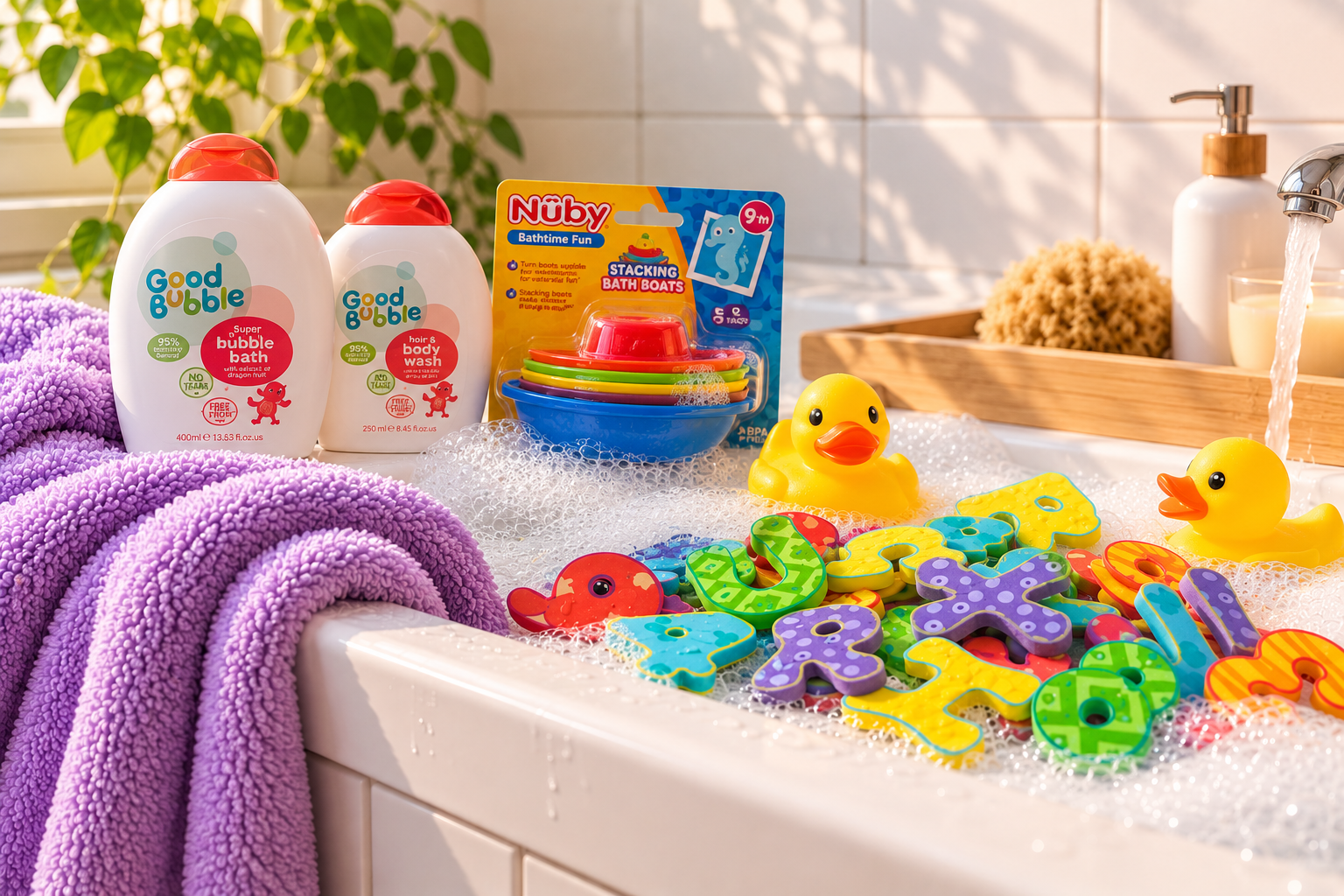
Good Bubble came into our bathroom because the company gifted us products for Cyrus to try. I wanted something gentle for his skin.
Of course, Cyrus just wanted bubbles, and enough to manufacture a white Santa beard. I wanted something that cleaned properly, did not leave his skin feeling dry or uncomfortable and contained ingredients I was happy using on a small child.
According to Good Bubble, its products contain at least 98% naturally derived ingredients. The brand’s range includes sulphate-free formulations and allergen-free fragrances, while Good Bubble is also approved by Cruelty Free International.
Those credentials are positive, but gifted products to Saffron & Cyrus still have to survive ordinary family life. I was less interested in how cheerful the bottles looked beside the bath than whether I would want to use the products again once they were empty.
For us, they worked. Cyrus enjoyed them, his skin remained comfortable and the bubble bath produced proper bubbles. Good Bubble managed to appeal to Cyrus, while I got a children’s product I was comfortable using. That, rather than the fact it had been gifted, is why it gets a positive review.
There is also an interesting British business story behind Good Bubble. Founder Amy Wordsworth took Good Bubble onto BBC’s Dragons’ Den in August 2015. She secured a £60,000 investment from Deborah Meaden. There is also a pleasing coincidence in a children’s toiletries business backed by a Dragon going on to put a dragon at the heart of one of its ranges. Whether anyone planned that piece of symmetry, I hope somebody enjoyed it.
The original Dexter Dragon Fruit range had a better backstory than the average bottle of children’s toiletries. Good Bubble drew on the dragon connection surrounding the fruit to create Dexter, giving parents something more entertaining to talk about while attempting to remove nursery paint from behind a child’s ears.
The brand describes dragon fruit extract as containing vitamins and other compounds that can help moisturise and condition hair and skin. Those are Good Bubble’s claims, and I am careful with the language of antioxidants and superfruits when it starts appearing on children’s toiletries.
For us, Cyrus wanted bubbles and a dragon, while I wanted something that cleaned him without leaving his skin uncomfortable. On those much more practical measures, Dexter worked. The dragon fruit story gave the product personality, but I would use it again because Cyrus enjoyed it and it performed well in our bathroom, not because I expected dragon fruit to revolutionise children’s skin care.
Clara Cloudberry took a similar approach with an ingredient likely to be less familiar to many British families. The superfruit story gave the product something distinctive, but I think the character was more interesting from a parenting perspective.
Small children do not care about ingredient strategies, but they do respond to characters, colours, smells, textures and stories. Parents are the ones standing at the side of the bath scrutinising the ingredient list. That was where Good Bubble got the balance right for us. Dexter and Clara made the products playful for Cyrus, while the formulation information gave me something substantial to consider.
I still would not buy children’s toiletries because they contain an exotic fruit. “Naturally derived” does not automatically mean a product will suit every child’s skin. The question is really: does the product work for your child? For Cyrus, it did.
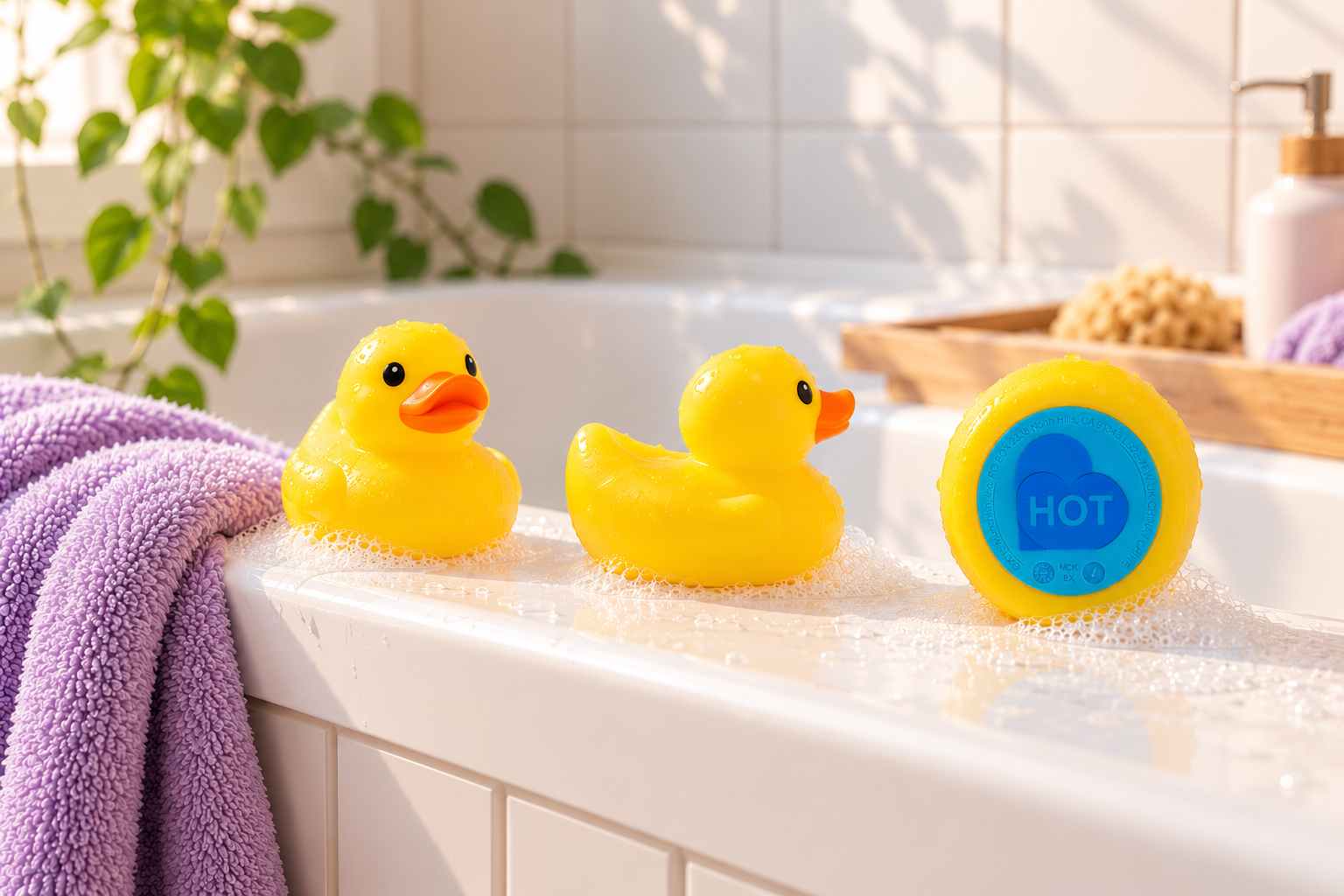
The Munchkin White Hot Safety Bath Ducky appealed because it combined two things that do not always coexist in children’s products. Cyrus thought it was a toy, while I could see an actual reason for owning it.
The duck is designed to provide a visual indication when bath water may be too hot. I would never use a bath toy as a substitute for checking the water myself, but I found it useful as an additional prompt, during evenings when dinner, bath and bedtime seemed to happen within seven minutes.
Cyrus had no interest whatsoever in its safety credentials. As far as he was concerned, he owned a duck, and that arrangement suited both of us perfectly. I would buy it again as a useful additional visual prompt that also happens to function as an ordinary bath toy. The important word there is additional: parents still need to check bath-water temperature themselves.
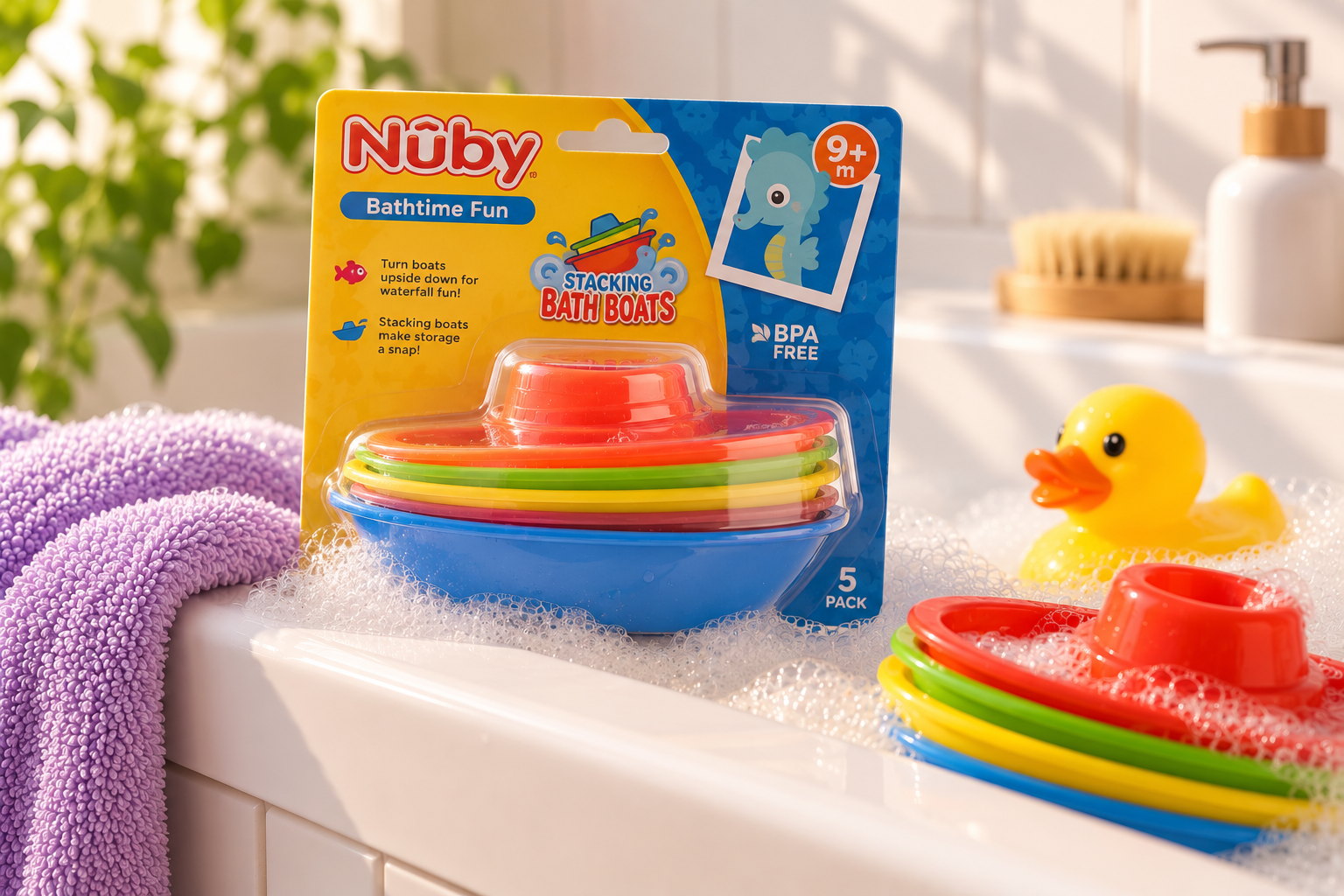
The Nuby stackable boats were another success, largely because they did not attempt to do too much. Cyrus could stack them, float them, sink them, fill them and pour water from one into another. They occupied him for considerably longer than some children’s toys with far more ambitious claims on the packaging.
There are obvious opportunities for coordination and learning through this kind of play, but I hesitate to turn that into the main reason to buy them. One of my frustrations with modern parenting is the suggestion that every toy must provide some measurable educational return.
Cyrus played with the boats while we talked about colours, filling and emptying, floating and sinking. He was learning because he was playing. That simplicity is exactly why I liked them. They were versatile, suited small hands and allowed Cyrus to decide what to do with them rather than doing all the entertaining for him.
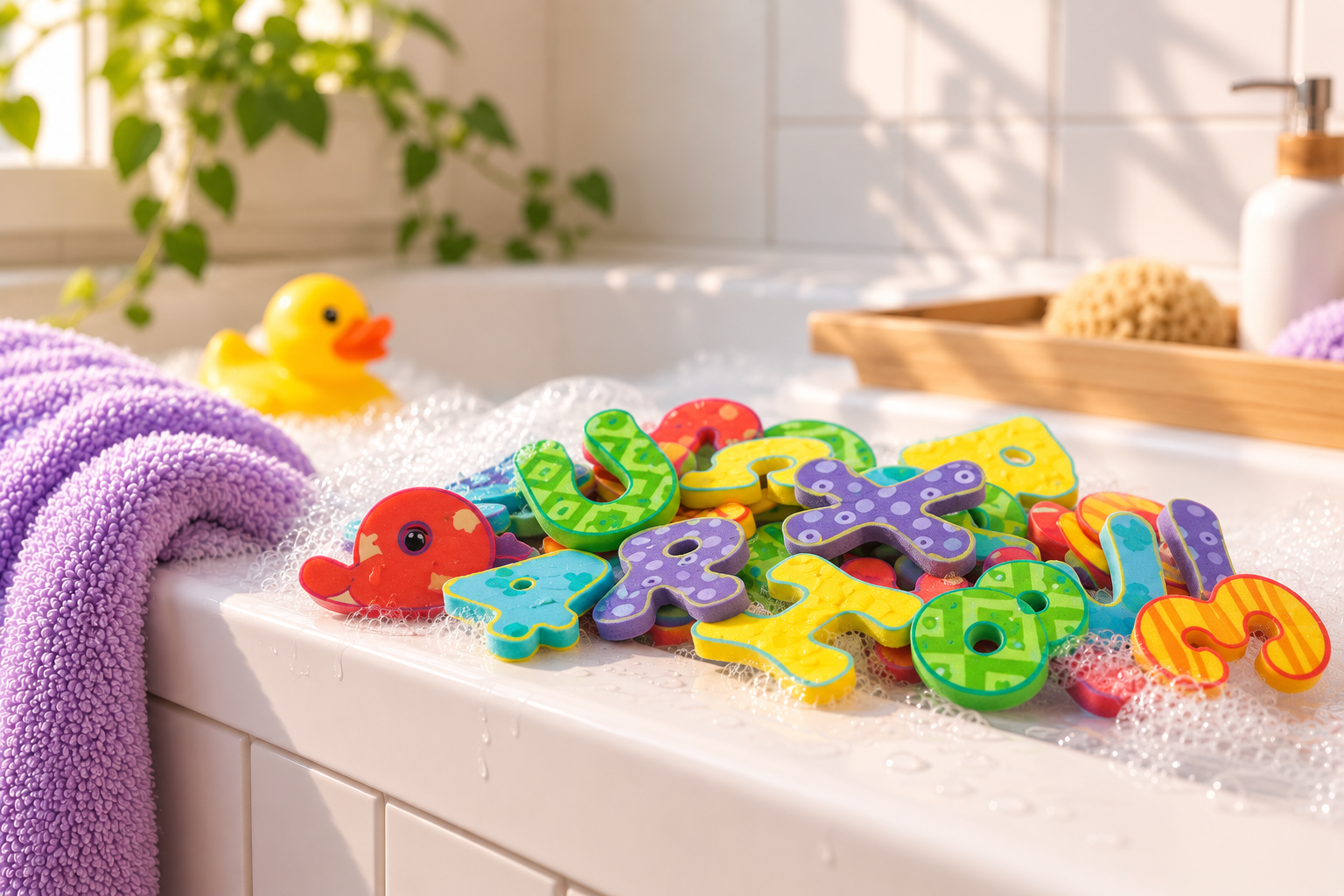
Foam numbers and letters also became a regular fixture. Once wet, they stuck to the bath or tiles, so Cyrus could move them around while we talked about numbers, shapes and colours.
Again, the appeal was how naturally that happened. Small children spend a lot of their life learning. We count steps, name colours while getting dressed, identify animals in books and answer an impressive number of questions before lunchtime. Bath time did not need a lesson plan as well. The foam numbers and letters from Nuby were cheap, easy entertainment and gave us something to talk about while Cyrus played. That was quite enough.
Looking back, the products that lasted in our bathroom had surprisingly little in common with the grander promises of the children’s market. The IKEA crocodile made a slippery bath easier to manage. Good Bubble gave Cyrus the bubbles he wanted while suiting his skin. The Munchkin duck provided an additional temperature prompt while doubling as a toy, while the Nuby boats and foam numbers entertained him.
If I were buying everything again, the IKEA Crocodile Bath Mat would be an easy yes because it was inexpensive and genuinely practical. I would also use Good Bubble again based on our experience with Cyrus. The fact that our products were gifted does not change that verdict, although I would always judge children’s toiletries on how they work for the individual child rather than the claims on the bottle.
If you want to find out more about the range, you can visit Good Bubble directly.
None of these products transformed parenting, and I distrust anything that suggests it will. They just made one small part of family life safer, easier or more enjoyable, which is probably a more useful standard for judging most of the things marketed to parents.
For all this discussion of ingredients, crocodiles and temperature-sensitive ducks, the thing I remember most is sitting beside the bath while Cyrus played.
At the time, bath time could feel like another task between nursery collection and bedtime. Looking back, I remember the conversations, the plastic boats, the bubble beards and those few minutes when the day seemed to wash away with the nursery paint.
The products helped, and some were genuinely good.
I am interested in children’s bath and family products that solve genuine everyday problems. If you make or represent something you think would suit Saffron & Cyrus for editorial testing, contact me at saffronandcyrus@gmail.com.
And if you are a parent, I would love to know what survived your own bathroom cull. Which supposedly essential product disappeared into a cupboard, and which ordinary little purchase would you buy again tomorrow?
Occasional stories, experiments, discoveries and questions from Saffron & Cyrus.
Discover more from Saffron & Cyrus
Subscribe to get the latest posts sent to your email.

Saffron & Cyrus is an independent women’s editorial publication with a recognisable voice, real-life perspective, a defined midlife audience and a commercial model built around useful, relevant partnerships.
