
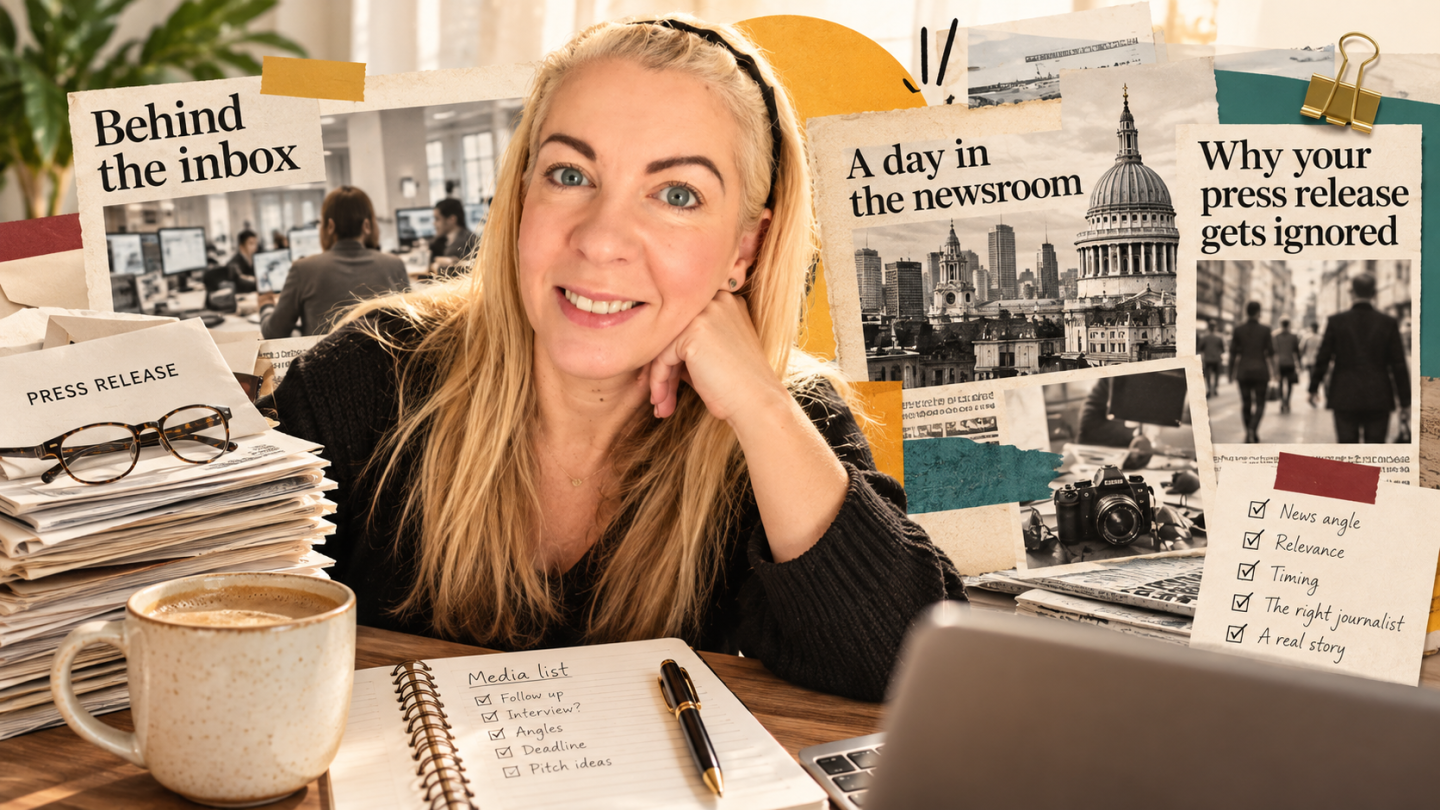

Disclaimer: This article draws on my experience in journalism and public relations. The diary brings together newsroom situations rather than describing one specific working day or publication.
It can be irritating spending the best part of a day writing a press release, only for it to disappear into a journalist’s inbox without so much as an acknowledgement. I’ve checked the facts, rewritten the introduction, questioned the quotes and spent longer than I’d care to admit deciding whether the subject line is interesting enough to make someone open the email.
Then I hit send and wait. Sometimes there’s a reply within minutes. But at other times, a journalist asks for an interview or additional information. More often, there’s nothing. Not even a polite rejection. Just silence, while I’m left wondering whether the story has been read, rejected or buried beneath another hundred emails.
Having worked in journalism before moving into PR, I know what happens on the other side. I remember the deadlines, the interruptions and the releases that arrived just as something far more important was happening. I also remember the good pitches, the ones that saved me time and turned an ordinary working day into a rather interesting one.
So, for anyone who has ever wondered why a perfectly decent press release goes unanswered, here’s a glimpse of life behind the newsroom inbox.
The answer has nothing to do with the quality of the writing. To understand why, you need to spend a day on the receiving end.
6 a.m. | The news starts before I reach the office
I wake early and check the headlines before work. It’s a habit that’s difficult to shake once you’ve worked in journalism. Even on days when nothing dramatic appears to be happening, there’s always the possibility that something will develop before breakfast is over.
On the bus, most people are looking at their phones. I remember when commuters unfolded newspapers, sometimes with little regard for the person sitting beside them. I still prefer print, although I understand why people would rather carry the morning’s news in their pockets than wrestle with several pages of newsprint on public transport.
By the time I reach the office, I’ve already made a mental note of a few stories worth following. Whether the editor agrees is another matter entirely.
7 a.m. | The first press release arrives
I switch on the computer and open my inbox. Several press releases have already arrived, including one announcing that a company is delighted to launch an exciting new initiative. It takes me three paragraphs to discover what the initiative actually is, and even then I’m not convinced there’s a story.
This is where many releases fall down. They’re written for the people approving them not the people expected to read them. There’s plenty about the company’s achievements, ambitions and commitment to excellence, but very little about why anyone outside the organisation should be interested.
I put the email aside, intending to return to it when I have more time. I probably won’t. Not because I have anything against the company or the person who sent it, but because there are other stories demanding my attention.
9 a.m. | Coffee number four and a growing inbox
By nine, I’ve had several coffees and the inbox is filling faster than I can empty it. There are product launches, executive appointments, invitations to events and a survey with findings so predictable that I wonder why anyone bothered commissioning it.
I sometimes wish PR teams could spend a morning watching how journalists work because it’s easy to lose sight of the reader when you’ve spent weeks discussing an announcement internally.
A company might regard a new appointment as significant. Its customers, competitors and employees may agree. But that doesn’t necessarily make it a story for a national newspaper or a specialist publication with a very different audience. That really matters when someone is expecting coverage just because the announcement has been issued.
9.30 a.m. | Everything changes
The editor calls me over. A developing story needs attention, and whatever I planned to do that morning is immediately pushed aside. I start contacting sources, arranging interviews and checking information while keeping one eye on the clock.
There’s pressure that comes with trying to reach someone who has promised to call back but hasn’t. You leave messages, try another number and wonder whether the person you’re looking for has decided to disappear for the day. Meanwhile, the editor wants to know how the story is progressing.
The press releases continue arriving, but I barely look at them. One might contain something useful, although I won’t know until later. This is something I remember whenever a journalist doesn’t respond to one of my pitches. Sometimes an email arrives at the wrong moment, and there’s very little the sender can do about it.
10 a.m. | A PR calls with an actual story
The phone rings. It’s a PR contact I’ve dealt with before, and they have something worth discussing. They explain what’s happened, why it’s relevant and who I can speak to. There’s no lengthy introduction about the company’s history or its position as a market leader.
I ask a few questions. They know the answers, or at least know who can provide them. We discuss the angle, and I make a note to follow it up. The conversation takes only a few minutes, but it’s useful because they’ve understood what I’m looking for.
This is what good media relations looks like from a journalist’s perspective. Someone has done their homework and recognised an opportunity. They aren’t asking me to reproduce a press release. They’re offering information that might help me develop a story for my readers.
A journalist isn’t looking for a company announcement to reproduce. They’re looking for a story their readers will want to read.
Noon | An interview, a sandwich and an aching back
By lunchtime, I’ve finished another interview and spent most of the morning sitting at my desk or leaning over the telephone. My lower back is aching, and I make a mental note to get up and walk around more often. As usual, I forget.
I head to the canteen, hoping to eat something before the next interview. The trouble with journalism is that lunch tends to happen when the news allows it. Someone calls while you’re halfway through a sandwich, an interview runs late or an editor wants an update just as you’ve sat down.
By the time I return to my desk, there are more emails waiting. I scan a few subject lines, flag one that looks interesting and return to the story I’m supposed to be finishing.
1 p.m. | The follow-ups begin
The afternoon brings the follow-up emails. One PR wants to check whether I received a release. Another asks if I’m interested in covering an announcement. A third wants to know when their story might appear, although I haven’t agreed to write it.
I understand the pressure behind these messages. Now that I work in PR, I’m often the person waiting for an answer, with a client understandably keen to know whether their news has attracted interest. It’s uncomfortable when you’ve done the work, sent the pitch and have nothing to report.
But from the journalist’s side, repeated follow-ups can become another interruption. A short email offering a new detail or a relevant interview might be welcome. A telephone call asking whether I’ve read something sent an hour ago is less likely to improve anyone’s afternoon.
2 p.m. | Someone isn’t happy with their quote
A company gets in touch because a spokesperson is unhappy with how their comments have appeared. I check my notes and look again at the published article. The quote is accurate, but the company would have preferred a different emphasis.
It’s a common problem. People sometimes expect an interview to produce the story they had in mind, not the one the journalist decides is most relevant. If there’s a factual mistake, it needs correcting. But an accurate quotation doesn’t become incorrect because someone dislikes seeing it in print.
Another request arrives asking whether a company can approve an article before publication. I explain that this isn’t how editorial independence works. There may be occasions when technical details need checking, but allowing an organisation to rewrite coverage to suit its preferences is another matter.
3 p.m. | The PR who won’t give up
Another PR calls about a release sent earlier in the week. I explain that I haven’t used it because the story doesn’t fit what we’re covering. They’re disappointed but polite, and the conversation ends without difficulty.
Not everyone accepts the answer quite so readily. I’ve had conversations where someone continues explaining why an announcement deserves coverage long after I’ve said it isn’t suitable. I understand the determination, particularly when a client has high expectations, but there’s a point at which persistence stops being helpful.
The PR contacts I remember most favourably are those who know their publications and respect an editorial decision. They might not secure coverage every time, but when they call with something relevant, I’m inclined to listen. That’s worth more than repeatedly chasing an announcement that was never right for the publication.
5 p.m. | The inbox clear-out
As the working day draws to a close, I make another attempt to clear my inbox. There are still dozens of emails waiting, and I know some will remain unanswered. I open the ones that look promising, save a few for later and delete those that have little relevance to the publication.
After a while, you become quite good at recognising whether a press release contains something useful. A clear opening makes a big difference. So does a strong statistic, an unexpected finding or access to someone with a really interesting story to tell.
What doesn’t help is hiding the news beneath paragraphs of corporate language. If I have to read half the release before discovering what’s happened, there’s a good chance I’ll move on. It’s not that journalists are incapable of reading long documents. We do it all the time. But when we’re looking through dozens of emails, we need to know quickly whether something deserves further attention.
9 p.m. | Tomorrow, the inbox fills again
By the evening, I’m home and thinking about the stories I didn’t quite finish. There are calls to make tomorrow, information to check and at least one email I meant to answer before leaving the office.
Somewhere, a PR professional is probably making the final amendments to a press release scheduled for the following morning. Perhaps they’ve spent all afternoon trying to get a quote approved or persuading someone that the most interesting detail belongs in the opening paragraph.
Tomorrow, the emails will arrive again. Some will be useful, others won’t, and a few might contain the beginnings of a story I hadn’t expected to find. That’s the reason I keep opening them.
Working in PR has made me appreciate how much effort goes into securing media coverage. There’s the research, the writing, the approvals and the careful business of finding the right journalist. Sometimes all that work produces a strong piece of coverage. Sometimes it produces nothing at all.
But my time in journalism has taught me not to confuse effort with newsworthiness. A press release doesn’t become a good story because several people have spent a week approving it. Nor does an announcement deserve coverage because a company considers it important.
I’ve seen strong stories overtaken by breaking news and modest announcements attract interest because they connect with something readers are already talking about. I’ve also seen perfectly written releases fail because, once you strip away the corporate language, there isn’t much left to report.
Journalists don’t owe PR professionals coverage. Their responsibility is to their readers. That’s something worth remembering when you’re waiting for a reply, particularly if you’ve spent hours preparing a pitch and are beginning to wonder whether anyone has even opened it.
Of course, the relationship between journalism and PR can be a productive one. Journalists need reliable information and access to credible sources, while PR professionals need to understand what makes a story relevant to a publication. When both sides get that right, everyone benefits, including the reader.
These days, when I send a release and hear nothing back, I still feel a flicker of disappointment. I’m only human, and I’d quite like someone to appreciate the work. But I also remember the newsroom, the ringing telephone and the editor asking whether that story is ready yet.
Sometimes the release isn’t right. Sometimes the timing is unfortunate. And sometimes the journalist simply has more pressing things to do.
If you work in PR, how long do you wait before following up on a press release? And if you’re a journalist, what makes you open an email rather than send it straight to the bin? I’d be interested to hear what life looks like on your side of the inbox.
Occasional stories, experiments, discoveries and questions from Saffron & Cyrus.
Discover more from Saffron & Cyrus
Subscribe to get the latest posts sent to your email.


Saffron & Cyrus is an independent women’s editorial publication with a recognisable voice, real-life perspective, a defined midlife audience and a commercial model built around useful, relevant partnerships.
