
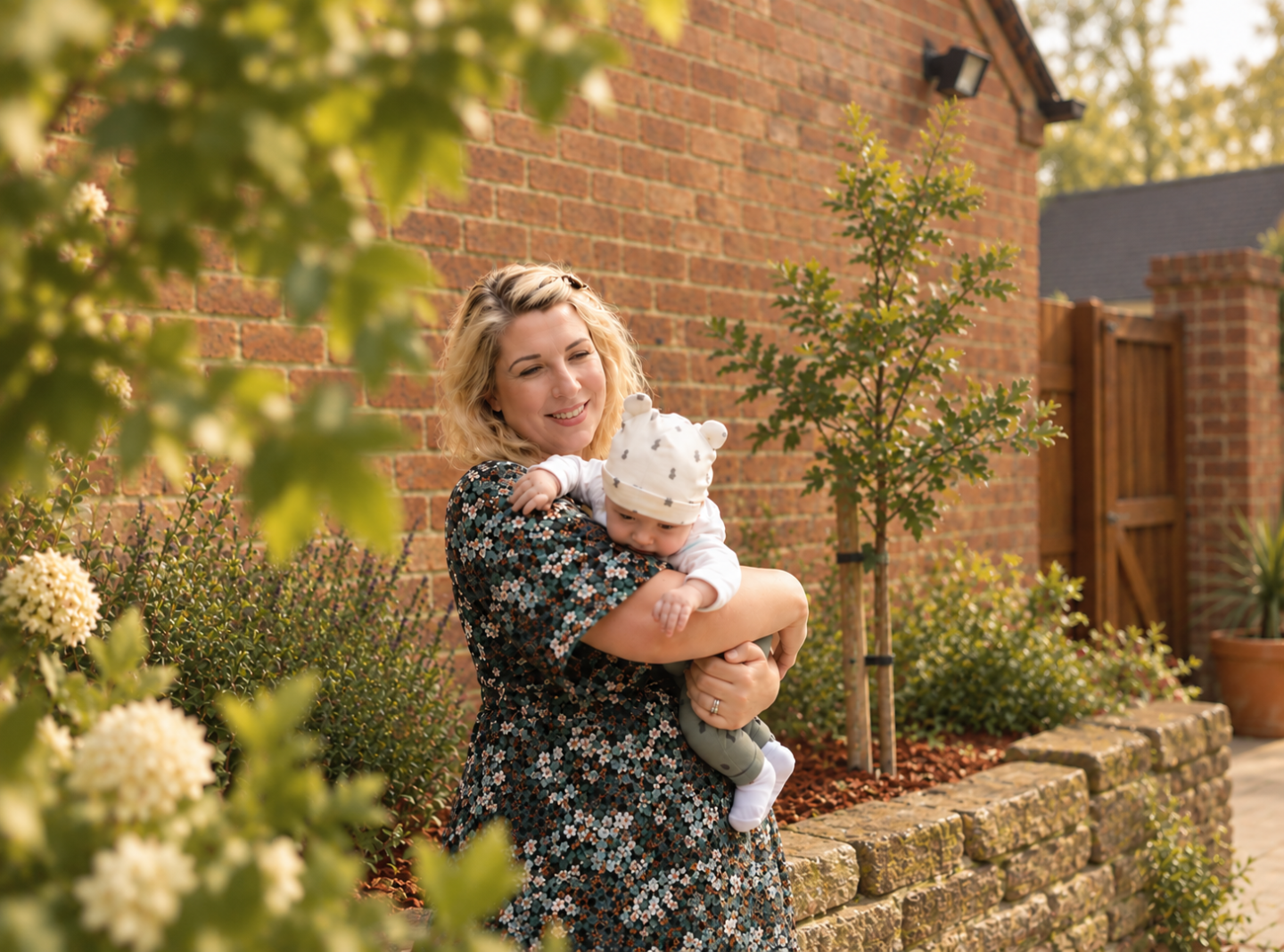
Newborn clothes are outgrown almost before you have worked out which way the poppers go. Moses baskets disappear. Bottles go into cupboards and even the sleepless nights that feel interminable eventually become something you struggle to remember properly.
Perhaps that is why we look for things that might survive the tiny clothes, sleepless nights and paraphernalia of babyhood.
At antenatal classes, mums-to-be learn far more than breathing and relaxation techniques. There are birth plans, pain relief options, feeding discussions, hypnobirthing playlists and, among all that information is the placenta.
You can donate it for research, have it encapsulated. Others bury it and plant something above it, turning a biological necessity into a family must.
When Cyrus arrived, I could not tell you much about mine. I do not remember seeing it. I had signed a form allowing it to be used for research, which felt sensible and useful at the time.
It also seemed considerably wiser than burying it in our garden, given that one of our neighbour’s cats had already claimed the flowerbeds as its personal spa retreat.
It turns out choosing a tree is not terribly different from choosing a baby name. Everyone has an opinion.
Evergreen or deciduous? Native or exotic? Something flowering or dramatic, or just sensible enough not to take over the garden and frighten the neighbours?
I loved the bright orange berries of the rowan, but H preferred the delicate blossom of a cherry tree. We somehow met in the middle with an American red oak. Not exactly halfway between rowan and cherry, admittedly, but marriage has never been an exact science.
We chose it partly because of its autumn colour. Red oaks can turn a spectacular shade of red before their leaves fall, and there was something about that seasonal change that appealed to me.
But more than its autumn colour, I liked what the oak seemed to represent.
Long before H and I stood debating trees for a suburban garden, people were attaching meaning to oaks. Across cultures and centuries, they have been associated with strength, stability, wisdom, longevity, fertility and endurance. Their long lives made them an obvious symbol for something humans have always been fascinated by: what lasts.
There was something about that symbolism that appealed to me. Not strength in the modern, shouty sense of constantly proving how resilient you are. Years of standing through weather and parenthood, as it turns out, is not a bad comparison.
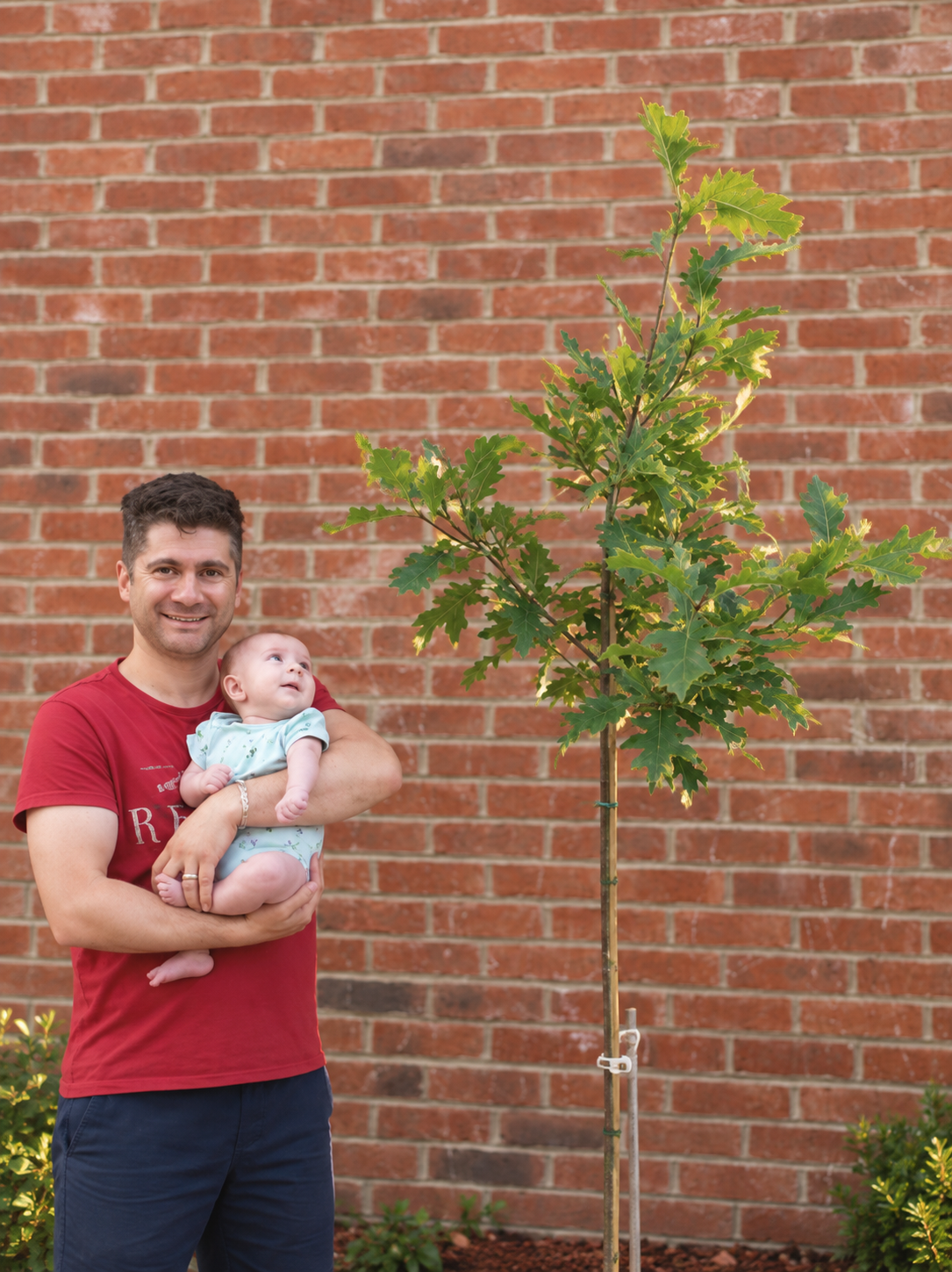
When our red oak arrived, it was rather less majestic than the photograph online. There was no mighty canopy or magnificent trunk. Nothing suggested that future generations might one day gather beneath its branches and speak reverently about the ancestors who planted it. It was basically a stick.
A hopeful stick, certainly, but a stick nonetheless, which made it more appropriate. Cyrus was tiny and the tree was tiny. Neither came with much indication of what they would eventually become. We planted it anyway.
There is one thing I would think about differently now.
The red oak is not native to Britain. At the time, I was not conducting an ecological impact assessment in the garden. I was a new mum choosing a tree because I liked what it represented and because its autumn colour was beautiful. I do not regret that. But if I were planting a birth tree today, biodiversity would be part of the decision as well as beauty and symbolism.
A native species may offer more value to local wildlife, and that feels like something worth considering when the whole point of planting a tree is to think beyond the immediate moment.
That is perhaps the useful thing about looking back. You realise that decisions do not have to be perfect to be meaningful. Standing back and looking at our not-so-mighty oak, I realised eventually that we had not planted it only for Cyrus, we had planted something we might never see at its best. That is an unusual idea in a culture built around immediacy.
We buy quickly, replace quickly and expect results quickly, and we become irritated when anything takes longer than the delivery estimate. Trees refuse to cooperate with any of that. They grow according to their own timetable.
A few things I would consider now:
What I understand about our oak now that I did not when we planted it is why planting one to mark the birth of a child feels so appropriate. Raising children is another long-term project in which you put in an enormous amount of time and effort to help them grow.
Discover more from Saffron & Cyrus
Subscribe to get the latest posts sent to your email.

Saffron & Cyrus is an independent women’s editorial publication with a recognisable voice, real-life perspective, a defined midlife audience and a commercial model built around useful, relevant partnerships.
