
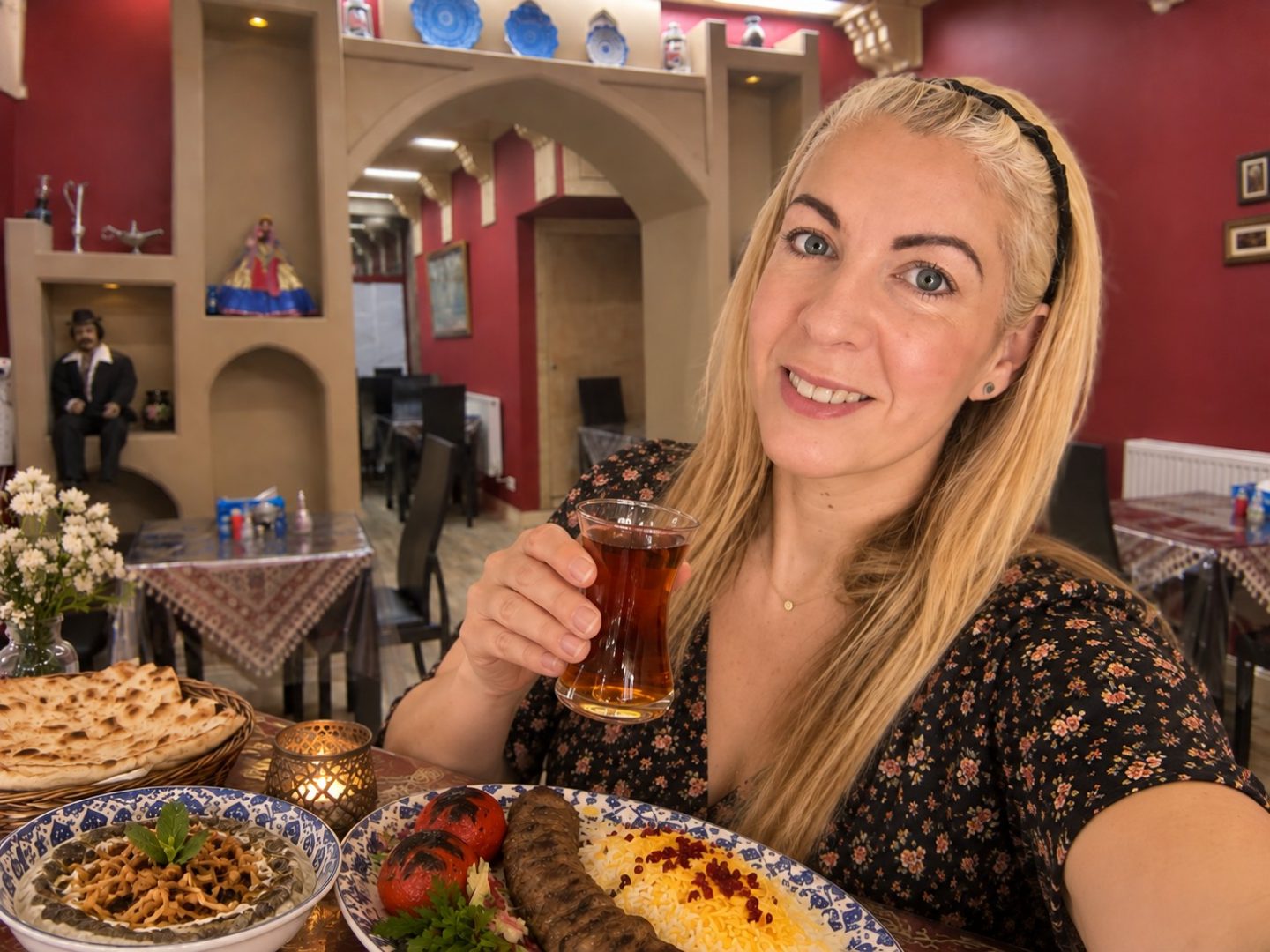
There is a particular difficulty in reviewing Persian food when you are married to a Persian man.
I am not Iranian, but neither am I approaching the table as someone encountering Persian food for the first time. Over the years, I have eaten the home-cooked versions, watched H cook, listened to family discussions about food and learned that minor matters involving rice, can inspire remarkably firm opinions.
Persian food entered my life through people before I ever thought seriously about recipes. It is aunties cooking, H in the kitchen, Cyrus discovering the foods his dad grew up with and me gradually learning that being told to eat more is less a suggestion than a form of Persian hospitality.
So when we visited Persian Delight in Newcastle with Cyrus, I wanted to know whether a restaurant could reproduce something much harder to put on a menu: familiarity.
Newcastle has no shortage of places serving kebabs, but a Persian kebab is its own thing. Saffron, citrus, grilled tomato, properly cooked meat, bread and rice with butter, but so does the way everything arrives together and gets shared across the table.
The cooking can look deceptively easy. Yet dry chicken is still dry chicken, however enthusiastically somebody has waved saffron at it, so be warned.
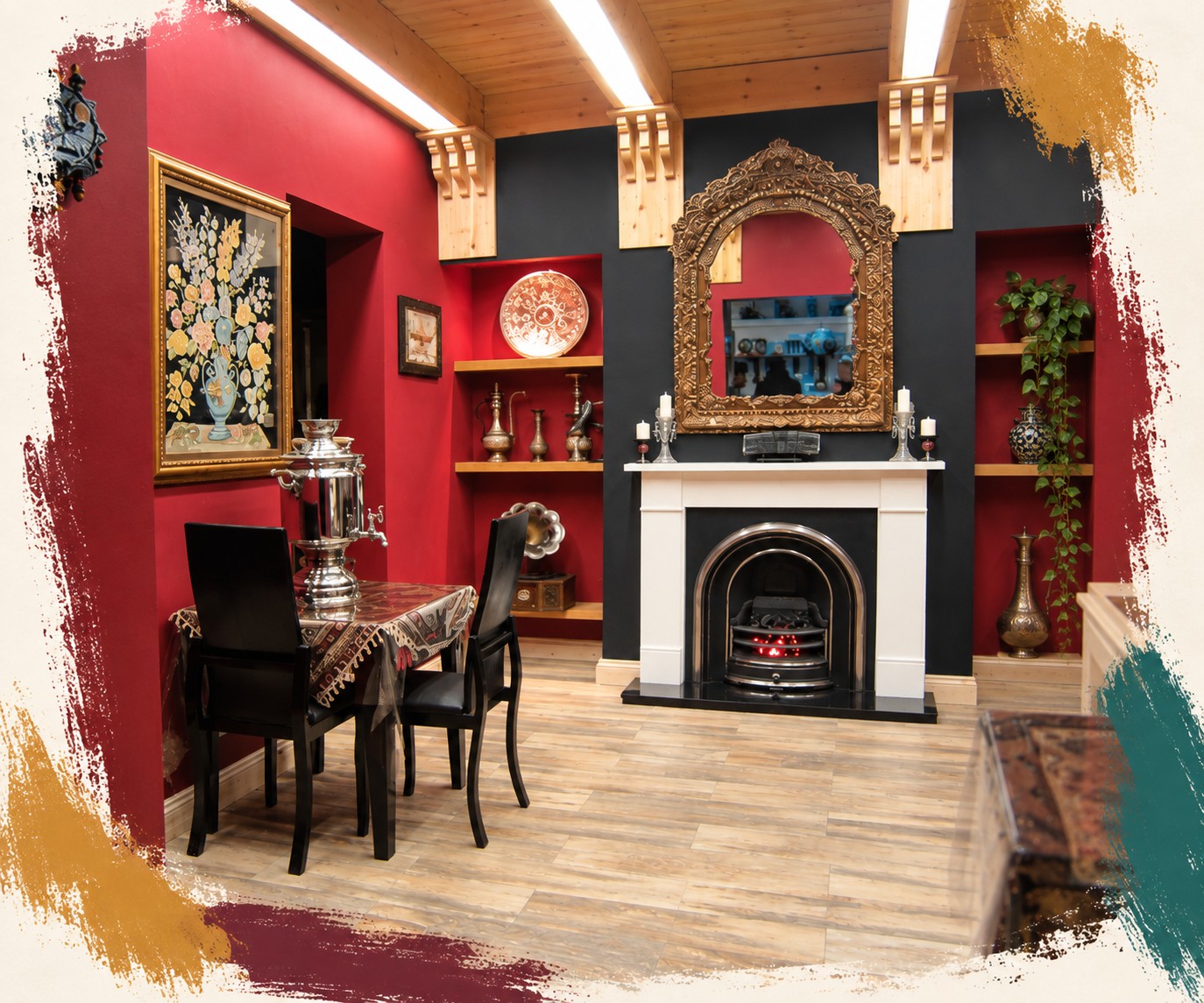
Persian Delight feels informal, which suits this food. This isn’t somewhere that needs children to sit silently while adults contemplate a tasting menu. It is somewhere families can order several dishes, put them in the middle and get on with eating. And that already feels Persian.
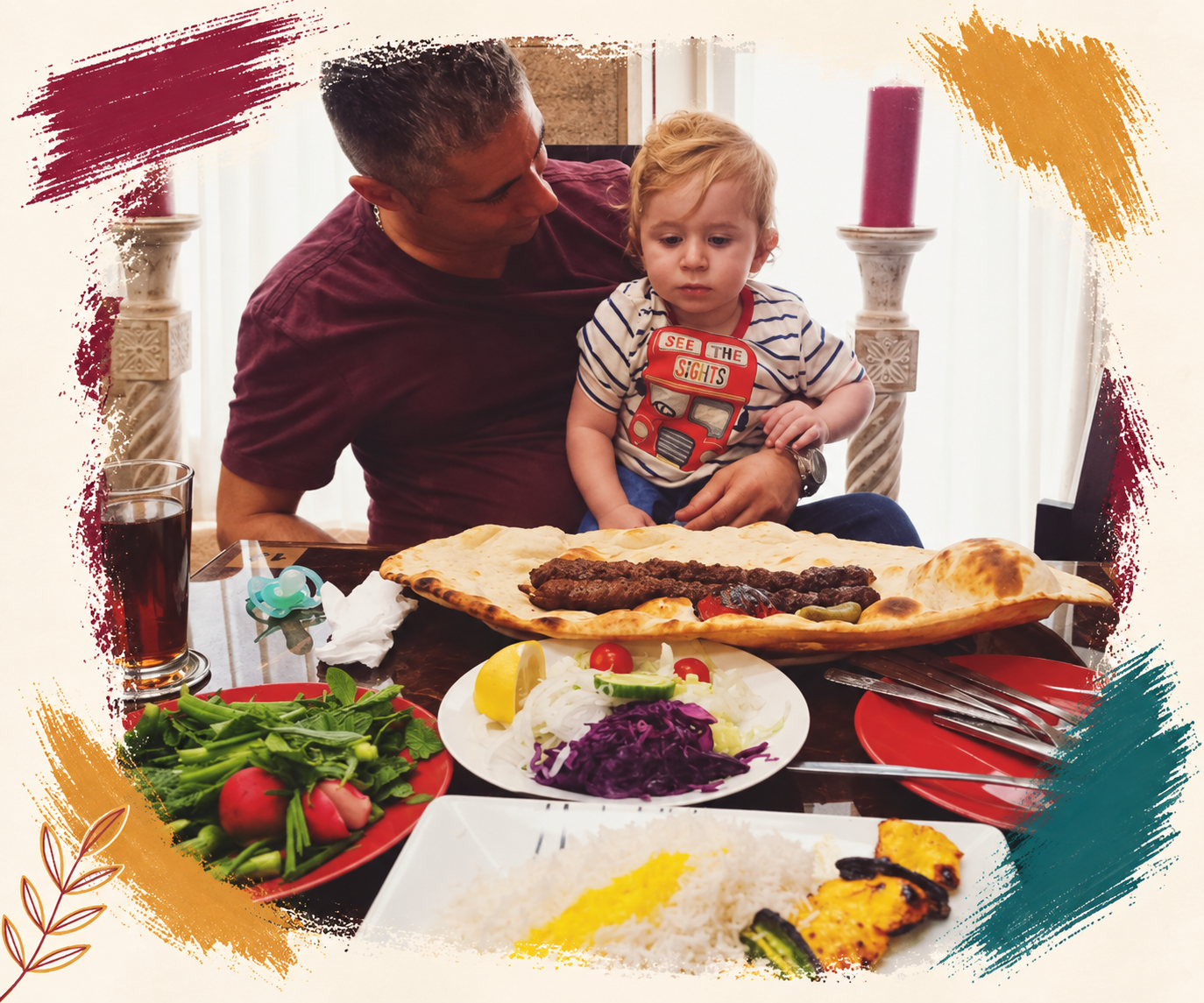
Fresh flatbread arrived at the table and immediately became more interesting to Cyrus than anything the adults were discussing.
Restaurant reviews tend to assess family-friendliness through highchairs, children’s menus and whether staff tolerate a buggy. Parents know children operate a different rating system. Can I tear it apart with my hands? And I am clearly hungry where’s the food?
Persian food works really well for children because much of it doesn’t need to be turned into “children’s food”. Grilled chicken, bread, rice, tomato, cucumber and salad offer something they know alongside dishes they may not have encountered before.
I like that. Cyrus is growing up with Persian food as part of ordinary family life, not as something that belongs to special occasions only. Watching him reach for the bread made the meal feel less like a restaurant review and more like our own family table, albeit one where somebody else would be doing the washing-up.
We began with naan and kashk-e bademjan, an aubergine dish made with ingredients including onion, garlic, mint and kashk, a fermented dairy product used in Persian cooking.
It is not necessarily a dish that sells itself beautifully in translation. “Aubergine and fermented whey” lacks some of the seductive power of chocolate. Put it in the middle of a table with warm bread, however, and everyone starts tearing, dipping and reaching across one another.
For my main course, I chose jujeh kebab, chicken traditionally flavoured with saffron and citrus and served with grilled tomato. Good jujeh needs to stay juicy beneath the char. There is a considerable difference between saffron chicken and a piece of chicken that happens to be yellow, something I have become much better at spotting since Persian food became part of my life.
Our table also included Soltani, a combination of kebab-e koobideh, seasoned minced meat cooked on skewers, and kebab-e barg, pieces of marinated fillet.
For Cyrus, the simpler elements worked perfectly. Chicken, bread and salad meant he could eat from the same sort of food as us rather than being dispatched to a separate children’s menu of nuggets and chips.
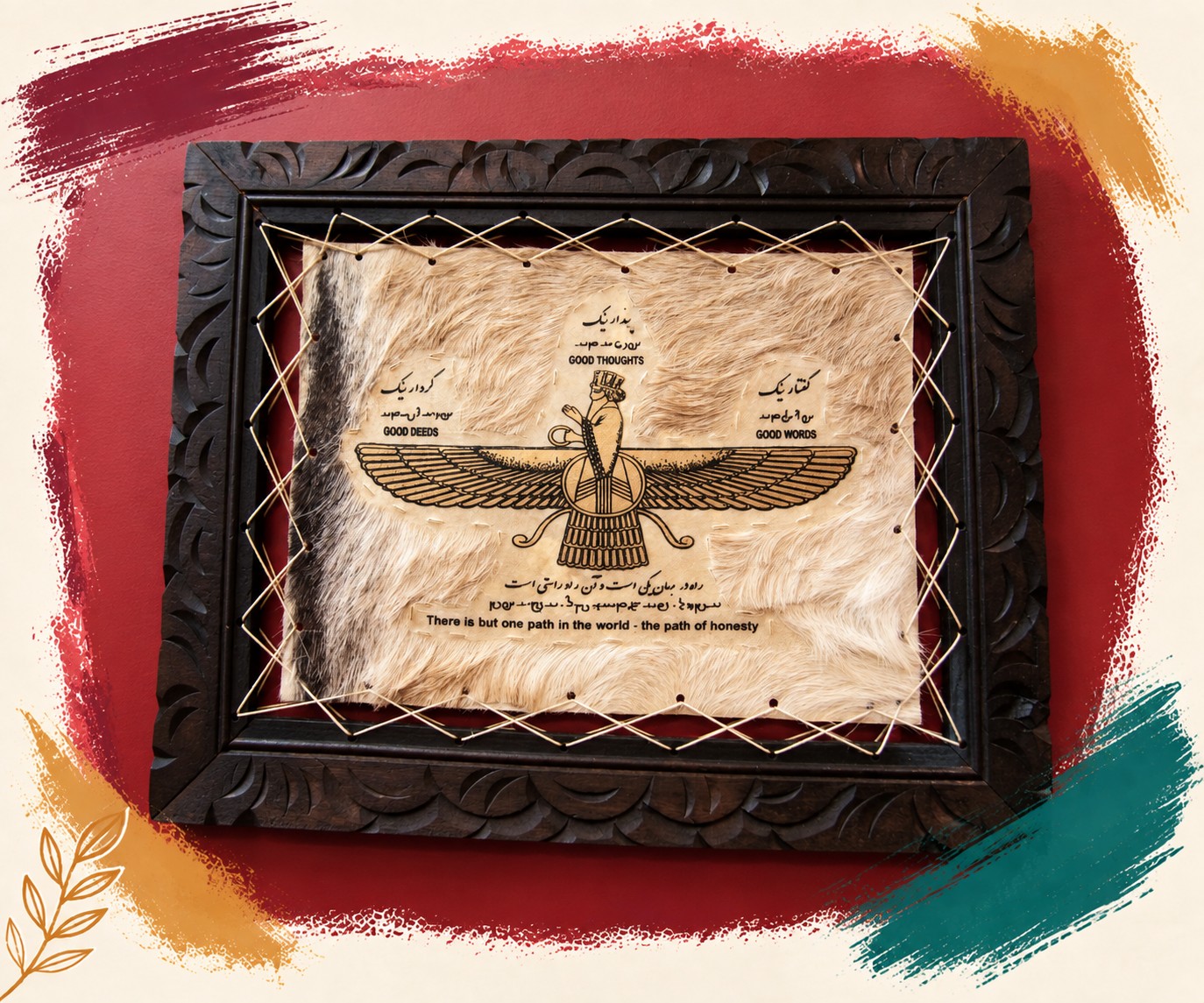
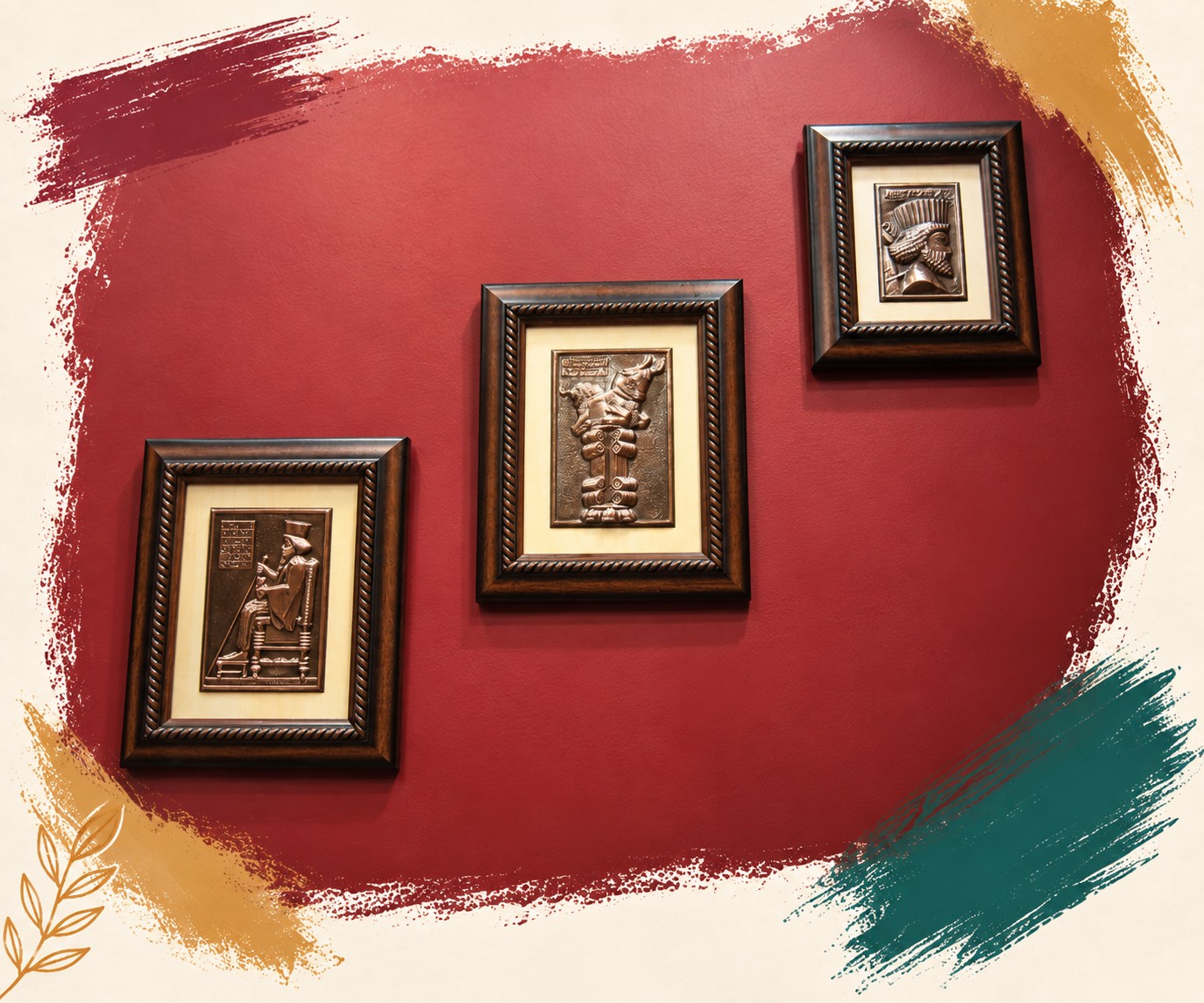
One detail particularly caught my attention: the Faravahar artwork.
The ancient symbol is strongly associated with Zoroastrianism and Persian cultural identity, and it is often discussed alongside the Zoroastrian principle of good thoughts, good words and good deeds.
It could easily have been just another piece of restaurant décor. For me, it wasn’t.
When you raise a child between two cultures, you start noticing the small places where those worlds appear outside your own home. A Persian symbol on a restaurant wall in Newcastle might not mean much to another diner. To me, it is another quiet reminder to Cyrus that the Persian part of his family exists beyond his dad, his and the traditions we practise at home.
I don’t need every family meal to become a cultural lesson, as getting through one without somebody needing the toilet just as the food arrives is achievement enough. But I do like Cyrus seeing both sides of himself reflected in ordinary places.
We use the word authentic rather casually around food. It suggests there is one correct recipe somewhere in Tehran, guarded by a old-school grandmother who will tell the rest of us where we have gone wrong.
Family cooking doesn’t work like that.
Spend enough time around Persian families and you discover that recipes shift between regions, households and generations. One person adds more of something. Another insists it should never be there. Somebody’s mother makes it differently, and somebody else’s auntie makes the version against which all future cooking must be judged. I recognise this from my own British family too.
That is why I am increasingly wary of awarding restaurants points for “authenticity”.
The better question is whether I recognise something. At Persian Delight, I did. The saffron, aubergine, grilled meats, bread and tea belonged to a food culture I know through my family. It wasn’t H’s kitchen or an auntie’s table, but it was familiar.
We finished with Persian tea scented with cardamom.
Tea appears when you arrive, after you eat, while you are talking and sometimes because nobody has poured any for several minutes.
Of course, we had Cyrus with us. Parents know that the person who decides when a family meal has finished is rarely the person paying for it.
Still, sitting in Newcastle with the scent of cardamom rising from the tea and Persian food spread across the table, the distance between H’s culture and mine felt a little bit smaller. That is what I had been looking for all along.
Persian Delight worked for us because it felt relaxed. Persian food also lends itself naturally to sharing, which is useful when dining with a child who may reject the thing you ordered specifically for him before developing an urgent interest in whatever is on your plate.
When we visited, the bathroom facilities were compact and there were no baby-changing facilities, something worth bearing in mind if you are visiting with a baby or toddler. Restaurants change, as do menus, prices and facilities, so check the latest information before visiting.
I went into Persian Delight wondering whether Persian food served in Newcastle could taste like home.
The problem, I realised, is that I don’t have only one version of home anymore.
There is the British food I grew up with. There is the Persian food, like fesenjan, that entered my life with H and there are the dishes Cyrus now grows up loving thinking they’re ordinary, like ghormeh sabzi. That is what happens in a mixed-culture family.
Cyrus eating food connected to his dad’s childhood while building an entirely different childhood of his own.
Yes.
Not because Persian Delight somehow recreates Iran in the middle of Newcastle. That would be an impossible and rather silly standard to impose on any restaurant.
I would go back because it gives us somewhere relaxed to eat food that feels familiar, introduce Cyrus to more of the flavours connected with his Persian family and just enjoy the luxury of somebody else cooking it.
The jujeh is what I would order again, while kashk-e bademjan and warm bread belong in the middle of the table where everybody can reach them. But the thing I remember most is Cyrus reaching for the bread.
That is the trouble with reviewing food once it becomes tangled up with family. Eventually, you stop reviewing the restaurant and start remembering the meal.
Is it the recipe, the person who cooks it or the people sitting around the table?
And if you know a Persian restaurant in Newcastle or elsewhere in the North East that deserves a visit, tell me what you order. I am always interested in another family’s supposedly definitive version of Persian food.
Occasional stories, experiments, discoveries and challenges from Saffron & Cyrus.
“`
Discover more from Saffron & Cyrus
Subscribe to get the latest posts sent to your email.

Saffron & Cyrus is an independent women’s editorial publication with a recognisable voice, real-life perspective, a defined midlife audience and a commercial model built around useful, relevant partnerships.
