

The woman underneath the M-word
There is a strange moment that can creep up on you in your 40s, somewhere between figuring out why your nine-year-old has suddenly decided he doesn’t like tomatoes and trying to remember the last time you drank a coffee before it went cold. You start noticing tiny things. The way people pause before explaining technology you already use every day. The way some women, once they cross a certain invisible age line, are treated as though they have somehow malfunctioned. Or worse, expired.
And then there is the big one. Perimenopause in midlife, followed eventually by menopause. The M-word.
Because the woman experiencing the symptoms is still the same woman with a career, a family, a body, a sense of humour and quite a lot left to say.
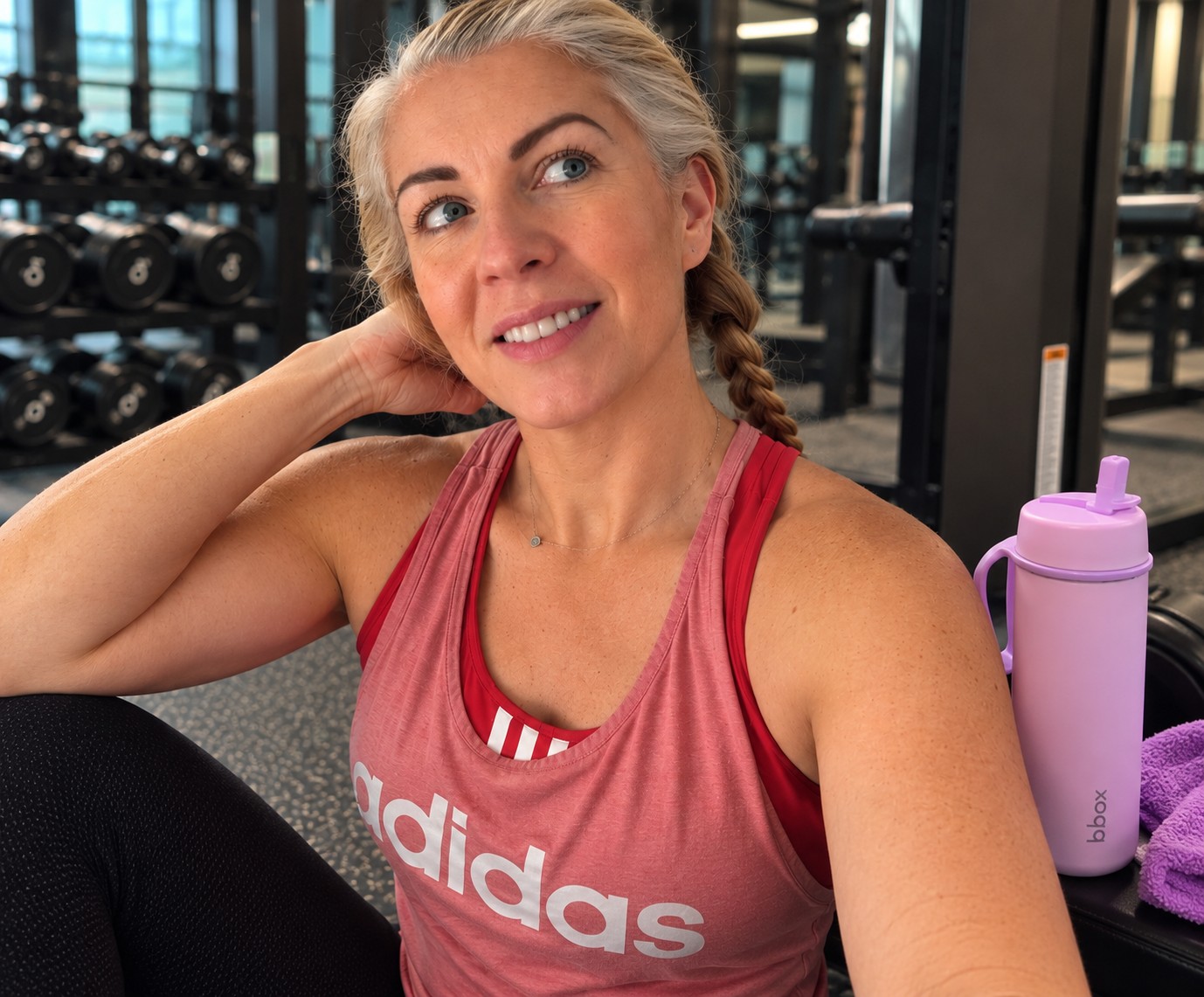
Still me, still plaits, still showing up
I am still wearing plaits, still turning up to the gym and still refusing to give up my Saturday morning punchy-kicky routine. I am raising the son I had at 40 and living in a home that is charmingly lived-in and will never resemble one of those spotless, sterile influencer flats.
I am also trying to pay unforgiving school fees, wondering what on earth happened to my pension planning and carrying the quiet worry of whether I will be able to afford my mortgage in the years ahead. Which is why I find the idea that women somehow retreat from real life at menopause so bloody irritating.
At 50, I don’t have the luxury of drifting through life in linen trousers and slow mornings. I need to earn. I need to parent. I need to plan for a future that hasn’t conveniently become cheaper because I have reached menopause. I haven’t retired from life simply because my ovaries are reconsidering their job description.
When the symptoms creep in quietly
I have noticed the shift myself. Recently I’ve found myself quietly ticking off my own symptoms in the Balance app. The odd nights when my body decides to run its own sauna, and “hot, hot, hot” means something very different from what it means for H. The afternoons when my brain decides it would rather be on a beach in Kish Island listening to Persian pop than answering emails. The mood swings that could give any Marvel villain a run for their money. It has also made me much more interested in the wider conversation around menopause, including what emerging research can, and cannot, tell us about HRT and dementia risk.
Why midlife women get pushed aside
I’d like to think I’d be a mix of Black Widow and Hela, strategic enough to survive my Saturday morning punchy-kicky routine and stubborn enough to reject the “midlife woman, please stay in your lane” script. My lair is considerably less glamorous: a lived-in home filled with books, molehill piles of stray socks and the occasional missing car key.
I haven’t fallen apart, but I have started paying closer attention to my body, mostly because it keeps finding new ways to get my attention. And actually, it’s not the symptoms that frustrate me most. It’s the cultural shrug that can come with them.
There is something particularly frustrating about reaching an age when many women finally feel more comfortable in their own skin, only to find that the wider world seems less interested in them. I hear it from women around me too. They know themselves better than they did when they were younger, yet somehow they feel less visible.
That contradiction is far more interesting to me than the tired idea that turning 50 automatically makes a woman wiser, more confident or magically immune to insecurity. We are still individuals. We just happen to be individuals who are getting older in a culture that doesn’t always know what to do with ageing women.
The gym is not the place they tell us it is
I spent my 20s trying to be smaller and quieter. I juggled expectations in my 30s. Then I had a baby at 40, and getting through pregnancy, birth and motherhood made me look differently at what my body could do. Then came the slow realisation that I could lift heavier weights in the gym and choose kinder friendships than I ever did in my youth. That relationship with exercise is not always straightforward, though. I have even found myself asking whether I should give up the gym in midlife.
Yet so much of the language around midlife still sounds like damage limitation. Fix this. Lose that. Correct the other thing. Apparently ageing requires a maintenance department.
What midlife women actually need from society
And then there is social media, where confidence can sometimes look suspiciously like another performance. Ring lights, wardrobe transitions, body-positive declarations and carefully composed imperfection all have their place. I understand why younger women have embraced ways of talking about their bodies that my generation rarely had, and I’m glad they have.
But I am interested in the less photogenic version too. The women who are bloated, exhausted or awake at 3am wondering why their hormones are behaving like rebellious teenagers. The homes where the washing is sitting on the staircase and your mascara has quietly developed an Alice Cooper tribute act.
Confidence, at least in my book, isn’t measured by how much or how little of yourself you’re willing to show online. It’s about knowing yourself, respecting yourself and standing your ground when the world keeps nudging you towards the sidelines.
And if social media wants realism, it is welcome to film me in the kitchen having a small argument with H because I can’t remember where I put the car keys. That’s midlife too.
Midlife is not a downgrade
Which brings me back to the way menopause is so often framed as the end of something. I don’t accept the cultural laziness that reduces midlife women to symptoms, stereotypes or punchlines, then expects us to fade quietly into the background like the ZX Spectrum of the computer world.
Women’s health deserves better stories than that. Fitness in midlife deserves to be about what our bodies can do, not simply what needs fixing. And wellbeing should leave room for women who are neither falling apart nor pretending everything is marvellous.
The more I talk to women of different ages, the more I think we might actually learn something if we listened to one another. This isn’t about young women versus older women. I want my son to grow up seeing women as leaders, creators and thinkers at every age, rather than learning that female relevance comes with an expiry date.
So I am keeping my plaits. I am keeping my punchy-kicky gym classes. And I am keeping my voice. Menopause may change my body and occasionally send my brain off to Kish Island without permission, but it does not get to decide whether I still have something worth saying.
Biological age vs BMI in midlife women
Occasional stories, experiments, discoveries and questions from Saffron & Cyrus.
Discover more from Saffron & Cyrus
Subscribe to get the latest posts sent to your email.

Saffron & Cyrus is an independent women’s editorial publication with a recognisable voice, real-life perspective, a defined midlife audience and a commercial model built around useful, relevant partnerships.

I relate to a lot of this – child at 40, a love of punching and kicking on a Saturday morning, enjoying the freedom of 40s 😂😂😂 also, I will not quietly fade away. Great post
Author
Thank you so much Sarah, appreciate this and it’s nice to know I’m not alone