
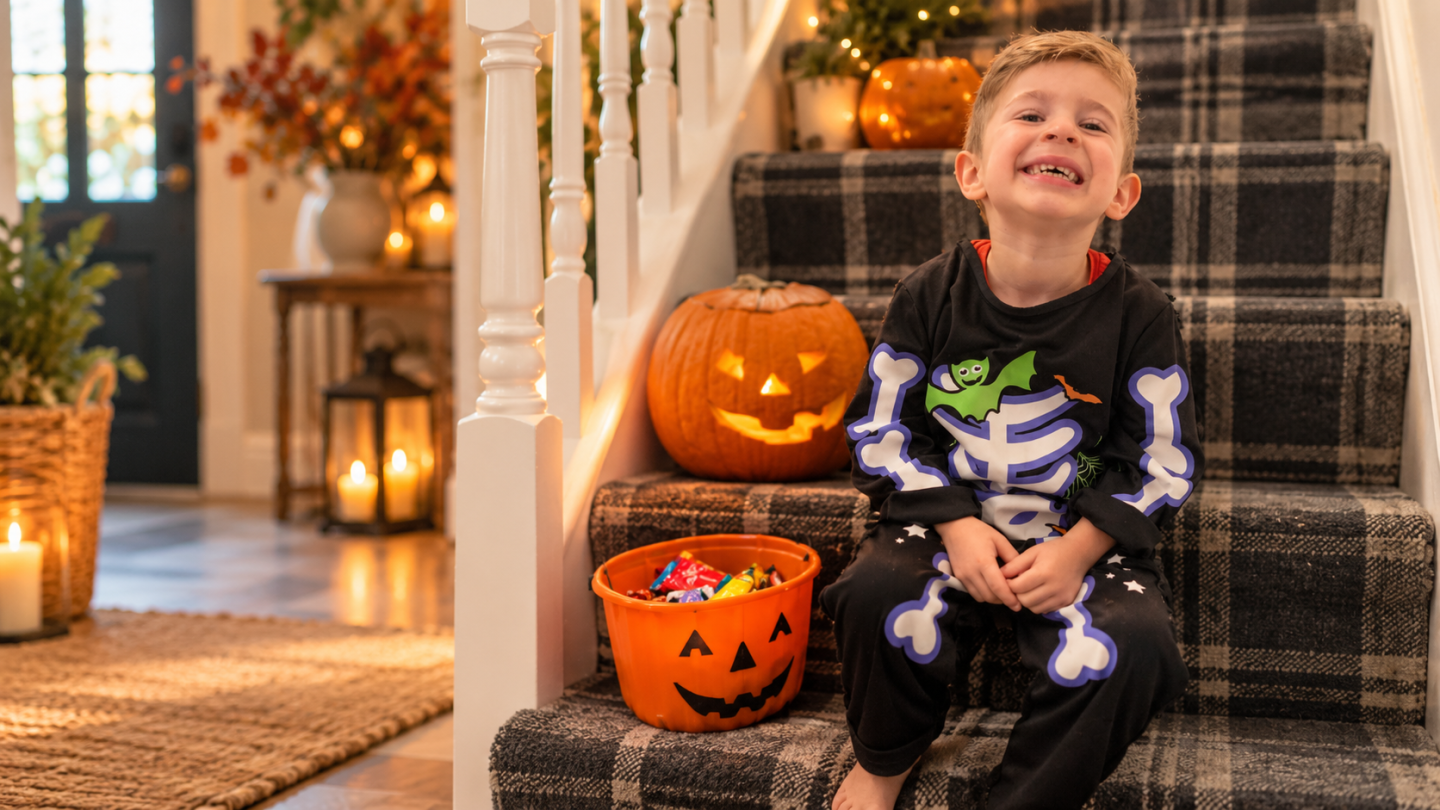
How to make Halloween fun for children at home when trick-or-treating is cancelled.
Halloween in 2020 is going to be a quieter affair for many families, but there are still plenty of ways to entertain the children, from pumpkin hunts and homemade games to revolting party food.
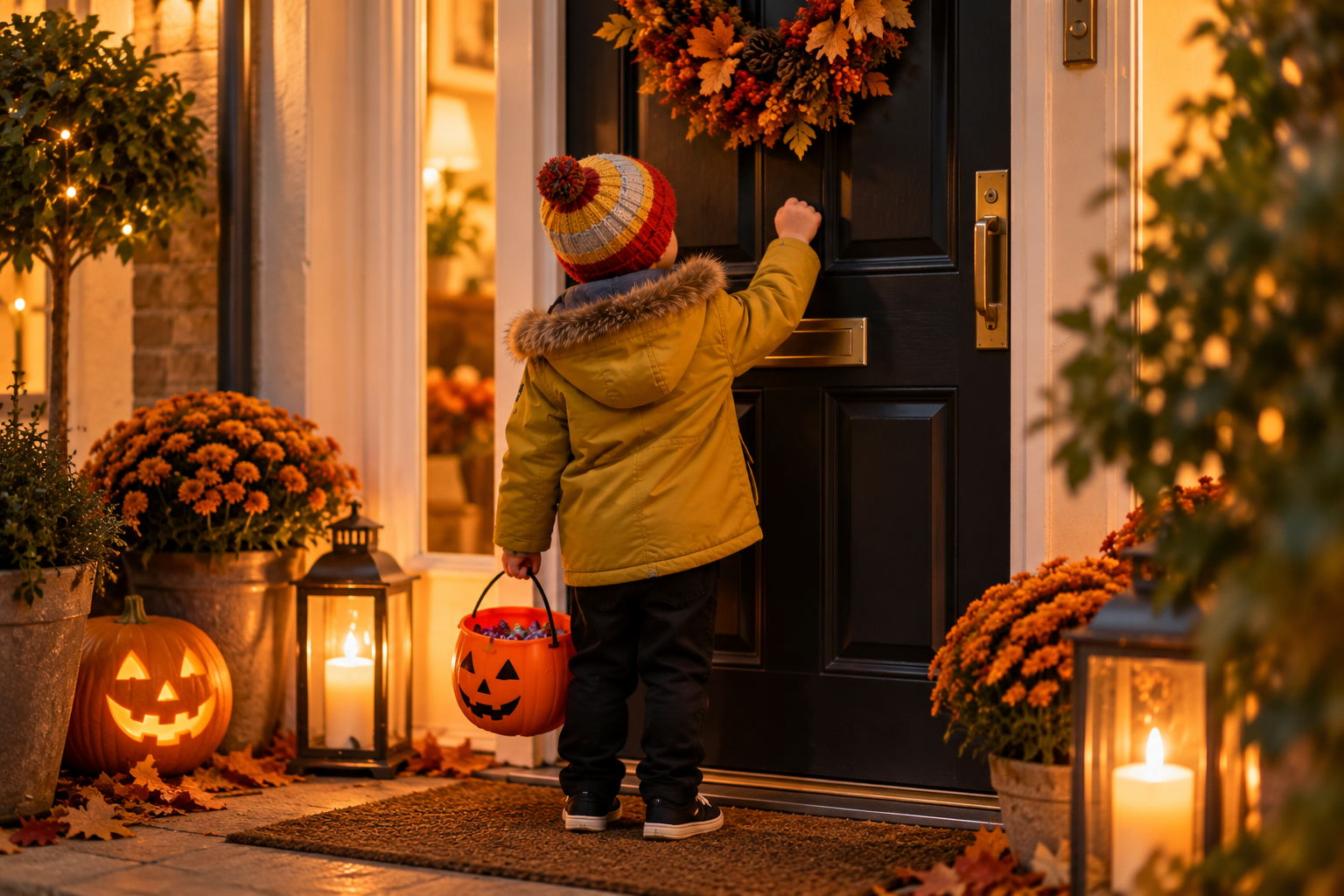
A different sort of Halloween
I never thought I’d find myself worrying about whether my child could dress up as a vampire and collect sweets from the neighbours, but 2020 has been full of surprises, most of them unwelcome.
Halloween is approaching and, like practically everything else this year, it’s going to require a bit of improvisation. With coronavirus restrictions affecting social gatherings and household mixing, the usual parties and trick-or-treating aren’t necessarily an option. It’s disappointing, particularly for children who’ve already had so much of their normal routine disrupted.
Cyrus is four, and at that age Halloween is a fairly straightforward proposition. You get to dress up, eat sweets and possibly frighten somebody. What’s not to like? He doesn’t need to understand the finer points of the festival’s history to appreciate the opportunity to run around the house pretending to be something dreadful.
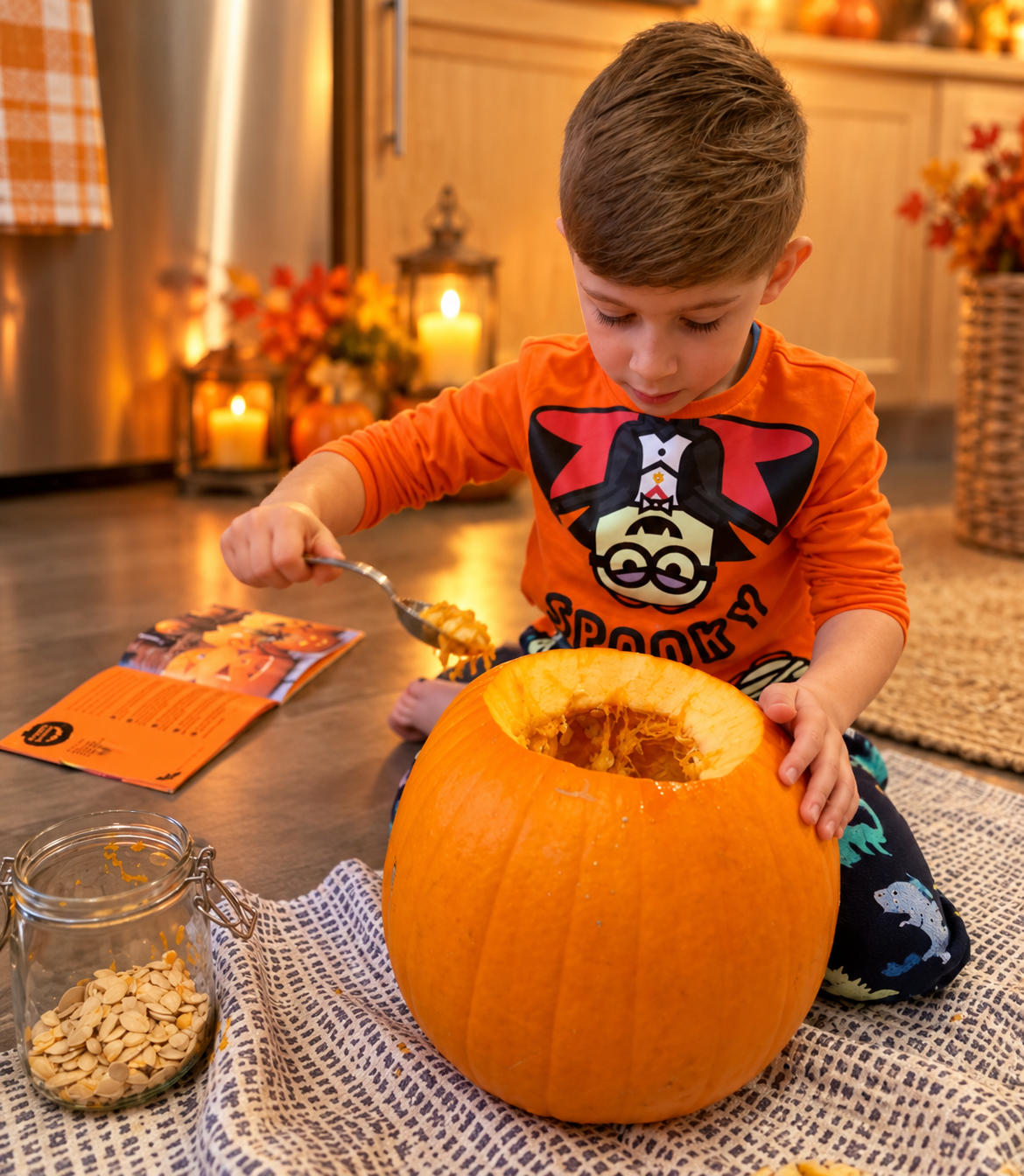
I’ve never been particularly interested in throwing elaborate children’s parties. I like a celebration as much as anyone, but there’s a point at which organising the entertainment becomes more exhausting than the event itself. Add a four-year-old to the proceedings and there’s every chance the carefully planned activities will be abandoned in favour of playing with the packaging.
Still, I don’t want Halloween to pass without doing something. We’ve spent enough of this year explaining why we can’t go somewhere or see somebody, and I’d rather give Cyrus something to enjoy than another disappointment.
Fortunately, Halloween lends itself rather well to staying at home. All you really need is a little imagination, a few decorations and something sweet hidden somewhere it shouldn’t be.
Forget trick-or-treating and organise a pumpkin hunt
Easter egg hunts are always popular with children, so I can’t see why the same idea wouldn’t work at Halloween. Instead of chocolate eggs, hide small pumpkins, Halloween pictures or wrapped sweets around the garden and let the children loose.
If you’re feeling particularly organised, you could make a little treasure map or write clues for older children. Personally, I think hiding things behind flowerpots and garden furniture will be quite sufficient for a four-year-old. There’s no need to turn it into an elaborate military exercise.
The weather may be the biggest obstacle. October in the North East isn’t exactly known for its balmy evenings, and there’s a reasonable chance we’ll be hunting for pumpkins in the rain. But that’s what wellies and waterproof coats are for. If it becomes too miserable, we can move everything indoors and hide the treats around the living room.
I’d also be inclined to include a few little toys or stickers among the sweets. Otherwise, there’s the possibility of Cyrus eating his entire haul before we’ve even finished the activity.
Turn ordinary children’s games into Halloween games
You don’t have to buy a collection of Halloween-themed games when you’ve probably got perfectly suitable ones sitting in a cupboard already.
HedBanz, for example, is easily adapted. It’s the game where you wear a picture on your forehead and ask questions to discover what you are. Make a few Halloween cards featuring witches, pumpkins, skeletons and ghosts, and you’ve got a seasonal version without spending anything.
It’s particularly useful this year because nobody needs to share equipment or put their hands into the same mystery box. If you’re playing over FaceTime, each household can make its own Halloween cards. You could even ask the children to draw the pictures themselves beforehand. Admittedly, guessing whether Cyrus has drawn a ghost, a potato or something entirely different might prove to be the most challenging part of the evening.
The questions are usually more entertaining than the answers, particularly when young children are involved. They have a wonderful ability to ask something completely irrelevant and then announce the correct answer with enormous confidence.
Another idea, if you’re keeping the celebrations within your own household, is the old-fashioned mystery box game. Put cold spaghetti, jelly or peeled grapes into separate containers and ask the children to guess what they’re touching. Tell them the spaghetti is a collection of worms and the grapes are eyeballs, and watch their expressions.
It’s the sort of activity that sounds revolting to adults but appeals enormously to children. Just make sure everyone has their own container or takes turns with clean hands, particularly given the current circumstances.
I wouldn’t worry too much about prizes or keeping score. Half the entertainment will come from watching everyone recoil from a bowl of perfectly harmless spaghetti.
Have a Halloween party over Zoom
I think we’ve all had quite enough of Zoom this year, but a short virtual Halloween party might be a reasonable compromise if the children are missing their friends.
Arrange a call with a few families and ask everyone to dress up. The children could show off their costumes, take part in a little quiz or display pumpkins they’ve decorated beforehand. You could even have a competition for the funniest face or most peculiar costume.
I’d keep the whole thing fairly short. Small children aren’t known for sitting patiently through lengthy video calls, and there’s only so much enthusiasm you can expect them to maintain while staring at a screen.
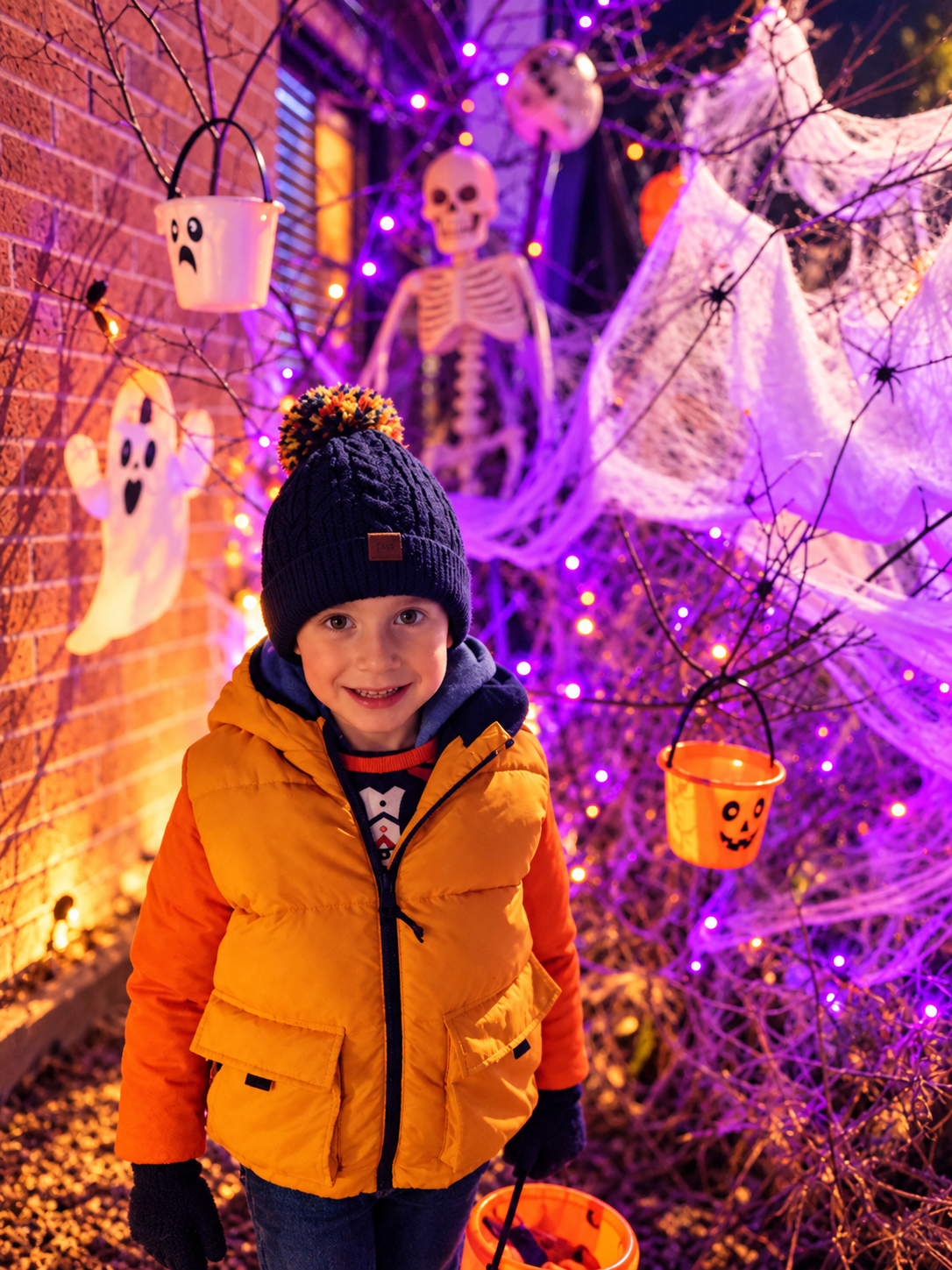
You could also ask everyone to prepare the same simple activity at home, such as decorating biscuits or making paper ghosts. That way the children are doing something together rather than simply looking at one another.
It won’t be quite the same as having friends round, but they’ll still get to see one another in costume. And nobody will have to spend the following morning clearing up somebody else’s party mess.
A Halloween piñata should keep them entertained
A piñata is another possibility, particularly if you’re trying to replace the excitement of collecting sweets.
You can buy Halloween versions shaped like pumpkins and ghosts, or make your own with papier-mâché if you’re feeling ambitious. Fill it with wrapped sweets, stickers and little treats, then let the children have a go at opening it.
For younger children, I’d choose a pull-string version rather than one they have to hit with a stick. I’ve seen enough enthusiastic preschoolers wielding toys to know that introducing a blindfold and a swinging object into the equation isn’t necessarily wise.
If you want to involve friends virtually, each household could have its own little piñata and open them during a video call.
Admittedly, there’s something faintly ridiculous about watching children on a screen pulling sweets out of cardboard pumpkins, but we’ve all become accustomed to stranger things this year.
Apple bobbing without everyone sharing the same water
Apple bobbing is one of those traditional Halloween games that always looks more enjoyable before you actually try it.
The idea is simple enough. Put apples in a bowl of water and attempt to catch one with your teeth while keeping your hands behind your back. In practice, it usually involves getting thoroughly soaked while an audience laughs at you.
A communal bowl isn’t a good idea during a pandemic, so give each child their own bowl if you want to keep the tradition going. An adult should supervise, and younger children may find a different apple game more suitable.
You could hang apples from strings and challenge older children to take a bite without using their hands, or simply hide paper apples around the house for younger ones to find.
Personally, I think Cyrus would be quite happy eating the apple without the additional challenge, but I’m prepared to be proved wrong.
Make Halloween food that looks disgusting
Halloween is probably the only occasion when making food look unpleasant is considered a culinary achievement.
One of the easiest ideas is hotdog fingers. Make little cuts in cooked sausages to resemble knuckles, shape the ends to look like fingernails and add ketchup for blood. It’s not particularly sophisticated, but that’s hardly the point.
Mini mummy pizzas are another option. Use English muffins as the base, spread them with tomato sauce and arrange strips of cheese across the top like bandages. Add a couple of olive slices for eyes and bake until the cheese melts.
Children can help assemble them, although I suspect Cyrus will eat a fair proportion of the ingredients before they reach the oven.
For something healthier, peeled satsumas can be made to look like miniature pumpkins with a little piece of cucumber for the stalk. Banana halves with chocolate-chip eyes also make reasonably convincing ghosts.
There’s also the option of making a Halloween fruit platter, which sounds rather more virtuous than a bowl of chocolate but can actually look quite impressive. Arrange orange segments into the shape of a pumpkin, then use blueberries or halved black grapes to make its eyes, nose and crooked mouth. Cyrus could help put the pieces together, although I suspect we’d have to replenish the fruit several times before the finished pumpkin made it to the table.
I’ll still have a bowl of Halloween sweets, of course. I don’t see much point in pretending that a satsuma is a satisfactory substitute for chocolate, although there’s no reason we can’t have both.
Rather than sending children out trick-or-treating, you could fill a pumpkin-shaped bucket with their favourite sweets and hide it at the end of a treasure hunt. Chocolate pumpkins, gummy worms and a few little surprises would make a decent haul. The advantage is that you can decide how much goes into the bucket, rather than discovering that your child has somehow collected enough sugar to see him through until Christmas.
The advantage of making the food ourselves is that preparing it becomes part of the afternoon’s entertainment. And if the pizzas look more like injured sandwiches than mummies, I’m not going to lose any sleep over it.
Make Halloween decorations with things you’ve already got
I’ve noticed that seasonal decorations seem to become more elaborate every year. There are enormous inflatable pumpkins, illuminated skeletons and enough plastic cobwebs to cover an entire street.
I rather like the homemade approach, partly because it gives children something to do and partly because I don’t want to spend a fortune decorating the house for one evening.
Black paper bats are easy enough to make. Fold a sheet of paper, draw half a bat along the crease and cut it out. When you open the paper, you’ll have a complete bat, although whether it resembles an actual bat will depend on your artistic ability.
You can stick them to windows, doors or walls, using something that won’t damage the paintwork. White paper ghosts are even simpler, and children can draw whatever expressions they like.
Old glass jars also make good lanterns. Decorate the outside with paper faces and put battery-operated tea lights inside. They’re much safer than candles when there are young children running around.
If you want the house to look as though you’ve made an effort without spending a fortune, choose a few Halloween colours and stick to them. Orange and black are the obvious choices, although purple and green work well too. A handful of balloons, homemade bats and a few glowing lanterns will make the living room look festive enough. I wouldn’t bother trying to make everything match perfectly. With a four-year-old helping, that particular ambition is probably best abandoned before we start.
Keep uninflated and burst balloons away from small children, and avoid leaving them loose where younger children can get hold of them.
I quite like having Cyrus involved in decorating the house. He’s at an age where he’s proud of anything he’s made, and I know he’ll insist on showing H exactly which bats are his.
Whether we’ll be allowed to take them down before Christmas is another matter.
Why do we celebrate Halloween in the first place?
Halloween has been around in one form or another for centuries, although the modern version, with its costumes, sweets and plastic pumpkins, would probably be unrecognisable to the people who observed its earliest traditions.
The festival is commonly associated with Samhain, an ancient Gaelic celebration marking the end of the harvest season and the beginning of winter. It took place around the start of November, when the darker months were approaching and communities were preparing for the change in season.
In Irish folklore, Samhain was also associated with supernatural beings and the Otherworld. Stories suggested that the boundary between the ordinary world and the supernatural became less distinct at this time of year.
The precise relationship between those early customs and modern Halloween isn’t always clear. Traditions developed over many centuries, and it’s difficult to draw a straight line from ancient celebrations to the costumes and games we recognise today.
Christian observances also influenced the festival. All Saints’ Day falls on 1 November, and the evening before became known as All Hallows’ Eve, eventually shortened to Halloween.
In parts of Britain and Ireland, people practised guising, dressing in disguise and visiting homes, sometimes performing songs or verses in exchange for food or small gifts. These customs are among the traditions associated with the development of modern trick-or-treating.
Irish and Scottish immigrants carried Halloween customs to North America during the 19th century. Over time, celebrations there developed into the costume parties, decorated houses and neighbourhood trick-or-treating that have become familiar around the world.
The carved pumpkin has an interesting history of its own. In Ireland, people traditionally carved lanterns from turnips and other root vegetables. Pumpkins became popular in America, where they were easier to obtain and rather more practical to carve.
Having spent time removing the insides of a pumpkin, I can only imagine the effort involved in hollowing out a turnip.
Apple bobbing has a long association with autumn celebrations, too. You’ll sometimes read that it originated with the Roman goddess Pomona, but historians haven’t established a direct link. It’s safer to say that apples have featured in British seasonal games and customs for generations.
What I find interesting is how Halloween has changed as people have taken their traditions to different countries and adapted them. The celebrations we know today are a mixture of old customs and much newer ideas.
And this year, families are having to adapt them again.
Halloween doesn’t have to be cancelled just because we’re staying home
I think one of the hardest things about this year has been watching children miss out on experiences that would ordinarily be taken for granted. Birthday parties, days out, school activities and visits to family have all been affected in one way or another.
Halloween might not be the most important occasion on the calendar, but it’s another little thing that children look forward to. At four, Cyrus doesn’t understand all the reasons why life has changed, and I don’t particularly want to spend the evening explaining another list of things we can’t do.
So we’ll make our own entertainment. There’ll be paper bats on the walls, something unpleasant-looking for tea and probably more sweets than I’d normally allow.
I expect the house will be a mess by bedtime. There’ll be scraps of black paper on the floor, chocolate wrappers appearing in unlikely places and at least one decoration that refuses to stay attached to the wall.
That sounds like a fairly normal family Halloween to me.
And if Cyrus wants to spend the following morning eating his breakfast dressed as a vampire, I don’t suppose there’s any great harm in that either.
Occasional stories, experiments, discoveries and rabbit holes from Saffron & Cyrus.
Discover more from Saffron & Cyrus
Subscribe to get the latest posts sent to your email.

Saffron & Cyrus is an independent women’s editorial publication with a recognisable voice, real-life perspective, a defined midlife audience and a commercial model built around useful, relevant partnerships.
