
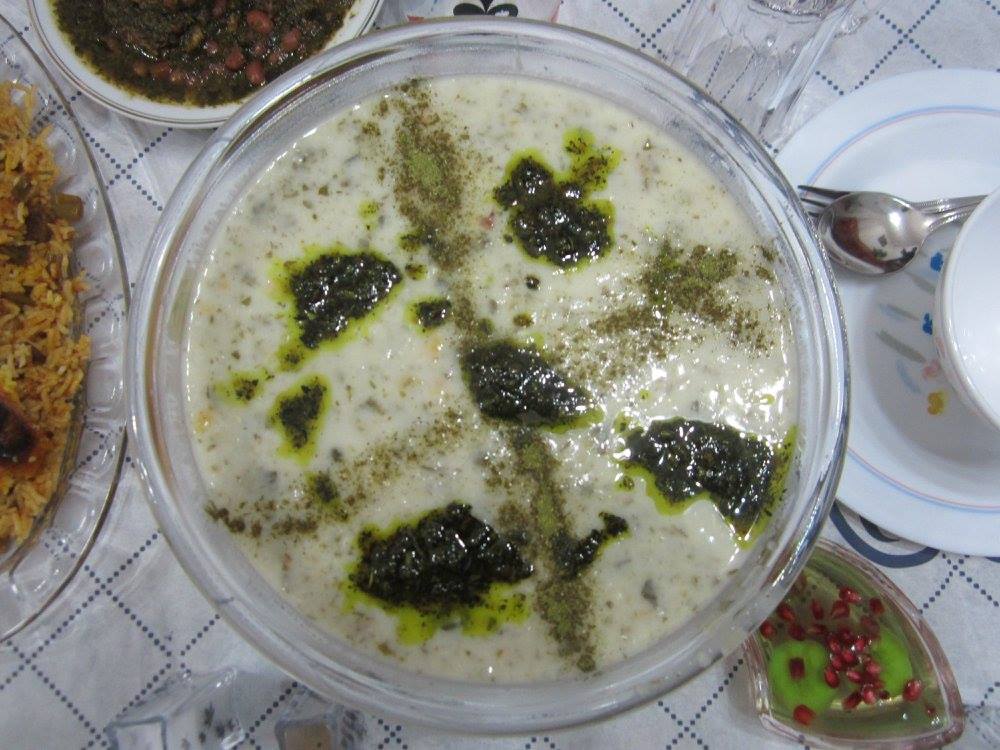
I was six weeks pregnant in Iran when I discovered the Persian yoghurt soup I couldn’t stop eating
The soup I found in northern Iran
I was six weeks pregnant with Cyrus when I first tasted Ash-e Doogh, a traditional Persian yoghurt soup, during a road trip to Ardabil in northern Iran. It was cold outside, and I remember walking into a warm kitchen where something wonderful was cooking.
At that stage of pregnancy, food and I weren’t getting along too well. Morning sickness had made eating anything pretty unpleasant business, and I never quite knew what would turn my stomach next. Even the smell of certain foods was enough to put me off. Then one of H’s auntie’s put a bowl of Ash-e Doogh in front of me.
It was thick with rice, chickpeas and fresh herbs, with a slightly sour yoghurt flavour and the unmistakable smell of fried mint and garlic. I wasn’t sure what to expect, but I tried a spoonful and promptly wanted more. For once, I could eat without feeling dreadful afterwards. I remember enjoying bowl after bowl, which was quite an achievement considering how little else appealed to me at the time.
I had eaten plenty of Persian food before, thanks to H, but this was something different. I’d never thought of yoghurt as the main ingredient in a hot soup. In Britain, I’d grown up eating it cold, usually with fruit or straight from the pot. The idea of heating it with rice and herbs was completely new to me. Yet there I was, pregnant, cold and thoroughly enjoying my yoghurt-based soup.
Why Persians believe in balancing hot and cold foods
One of the things I’ve learnt from H and his family is that Persian cooking comes with its own set of rules, many of which have been passed down through generations. Among them is the traditional belief that foods have either a hot or cold nature. This has nothing to do with their actual temperature, but with how they are thought to affect the body.
Yoghurt, cucumber, rice and pomegranate are traditionally considered cooling foods, while walnuts, dates, lamb and certain spices are regarded as warming. Persian cooks often combine ingredients from both groups to create what they consider a balanced meal. I found the whole concept fascinating when I first encountered it. Growing up in Britain, food advice generally involved eating five portions of fruit and vegetables, avoiding too much sugar, and being told as a child that carrots would help me see in the dark! Nobody had ever suggested that my yoghurt might need balancing with something warming.
Of course, the hot and cold classification comes from traditional Persian medicine rather than modern nutritional science. There isn’t convincing scientific evidence that these categories affect digestion or energy in the way the tradition suggests. Nevertheless, the belief remains an interesting part of Persian food culture, and one that helps explain why certain ingredients are so often served together.
Ash-e Doogh is a good example. The yoghurt forms the base, while chickpeas, rice, herbs, garlic and mint provide the substance and flavour. Depending on the region and family recipe, the ingredients can vary considerably. And, as I’ve discovered and said in other articles on my site, Persian families can be quite particular about how their favourite dishes should be made.
I still make Ash-e Doogh at home
Back in England, Ash-e Doogh has become one of those dishes I turn to when the weather is miserable and I fancy something warming without spending the whole afternoon cooking. It’s not the prettiest soup in the world. The yoghurt gives it a pale, creamy appearance, interrupted by green herbs and chickpeas. But what it lacks in looks, it more than makes up for in flavour.
The yoghurt gives it a pleasant sharpness, the rice thickens the broth, and the chickpeas make it filling enough to serve as a meal. I really like the fried onion, garlic and mint topping, which adds a lovely savoury flavour. Yoghurt is a staple in Persian households, much like rice. It appears alongside kebabs, stews and countless other meals, often mixed with cucumber, herbs or garlic. Ash-e Doogh takes an ingredient most of us associate with something cold and turns it into a proper winter dish.
Every time I make it, I think about that journey through northern Iran to Ardabil. I remember being pregnant, feeling sick and wondering how I was going to manage another meal. Then I remember the soup. It’s funny what stays with you.
How to make Persian Ash-e Doogh
There are several regional versions of Ash-e Doogh, particularly across northern and northwestern Iran. Some families add small meatballs, while others use different combinations of herbs or prefer a thinner consistency. This is a simple home-style version inspired by the soup I enjoyed in Iran. You can adjust the herbs and thickness to suit your taste, although I’d recommend keeping the mint and garlic topping. For me, that’s one of the best parts.
Ingredients
For the soup
- 1 tablespoon butter
- 1 medium onion, finely chopped
- ½ teaspoon turmeric
- 1 cup cooked chickpeas, drained
- ½ cup uncooked rice, rinsed
- 6–8 cups water, plus extra if needed
- 2 cups chopped fresh herbs, such as coriander, parsley, dill and chives
- 500g plain natural yoghurt
- 1 egg yolk
- 1–2 tablespoons plain flour
- Salt and black pepper, to taste
For the topping
- 1 tablespoon oil or butter
- 1 small onion, thinly sliced
- 2 garlic cloves, finely chopped
- 1 teaspoon dried mint
Method
Melt the butter in a frying pan over a medium heat and add the chopped onion. Cook until golden, then stir in the turmeric and continue cooking for another minute or two. Remove from the heat and set aside.
Place the cooked chickpeas in a large saucepan with the water and bring to a gentle boil. Add the rinsed rice and simmer for around 15–20 minutes, until it begins to soften. If the mixture becomes too thick, add a little more water. If you’re using dried chickpeas rather than tinned ones, soak and cook them until tender beforehand.
Add the chopped herbs and cooked onion mixture to the saucepan. Stir well and continue simmering for another 15–20 minutes, until the rice is tender and the herbs have softened.
In a separate bowl, whisk the egg yolk with two tablespoons of yoghurt and the flour until smooth. Gradually add the remaining yoghurt, stirring until combined. To help prevent the yoghurt from curdling, slowly whisk in a few spoonfuls of the warm soup liquid before adding the mixture to the saucepan.
Keep the heat low and stir frequently as the soup warms through. Avoid boiling it vigorously, as yoghurt can separate when overheated. Continue cooking gently for around 20–30 minutes, until the soup has thickened slightly. Season with salt and black pepper.
Heat the oil or butter in a small frying pan and add the sliced onion. Cook until golden, then add the garlic and stir until fragrant. Add the dried mint and cook briefly. Be careful not to burn it, as mint can turn bitter very quickly.
Ladle the soup into bowls and spoon the fried onion, garlic and mint mixture over the top. I like mine served warm with fresh bread, although it’s filling enough to eat on its own.
A Persian recipe with a special place in my family
I sometimes wonder whether I would have developed quite the same affection for Ash-e Doogh if I’d first eaten it in a restaurant in Newcastle rather than during that trip to Iran. Probably not.
I was 40, newly pregnant and travelling through a country that was becoming an important part of my family’s life. I was discovering more about H’s culture, meeting people, trying unfamiliar foods and learning that pregnancy doesn’t always make travelling particularly enjoyable. But that bowl of soup was one of the happier moments.
These days, Cyrus is old enough to have his own opinions about dinner, and he’s certainly not shy about sharing them. Still, I like that some of the recipes I discovered while pregnant with him have found their way into our family kitchen. When I make Ash-e Doogh, I don’t need to consult a photograph to remember where I first ate it. And although I can’t promise it will cure morning sickness, I can recommend it for a cold afternoon when you fancy something a little different from the usual bowl of tomato soup.
Join the conversation
Have you ever discovered a dish while travelling that you’ve continued making at home? Or perhaps there’s a family recipe that reminds you of a particular place or time in your life? I’d love to hear about it, especially if you’ve tried Ash-e Doogh or have your own Persian family recipe.
Occasional stories, experiments, discoveries and questions from Saffron & Cyrus.
Discover more from Saffron & Cyrus
Subscribe to get the latest posts sent to your email.


Saffron & Cyrus is an independent women’s editorial publication with a recognisable voice, real-life perspective, a defined midlife audience and a commercial model built around useful, relevant partnerships.
