
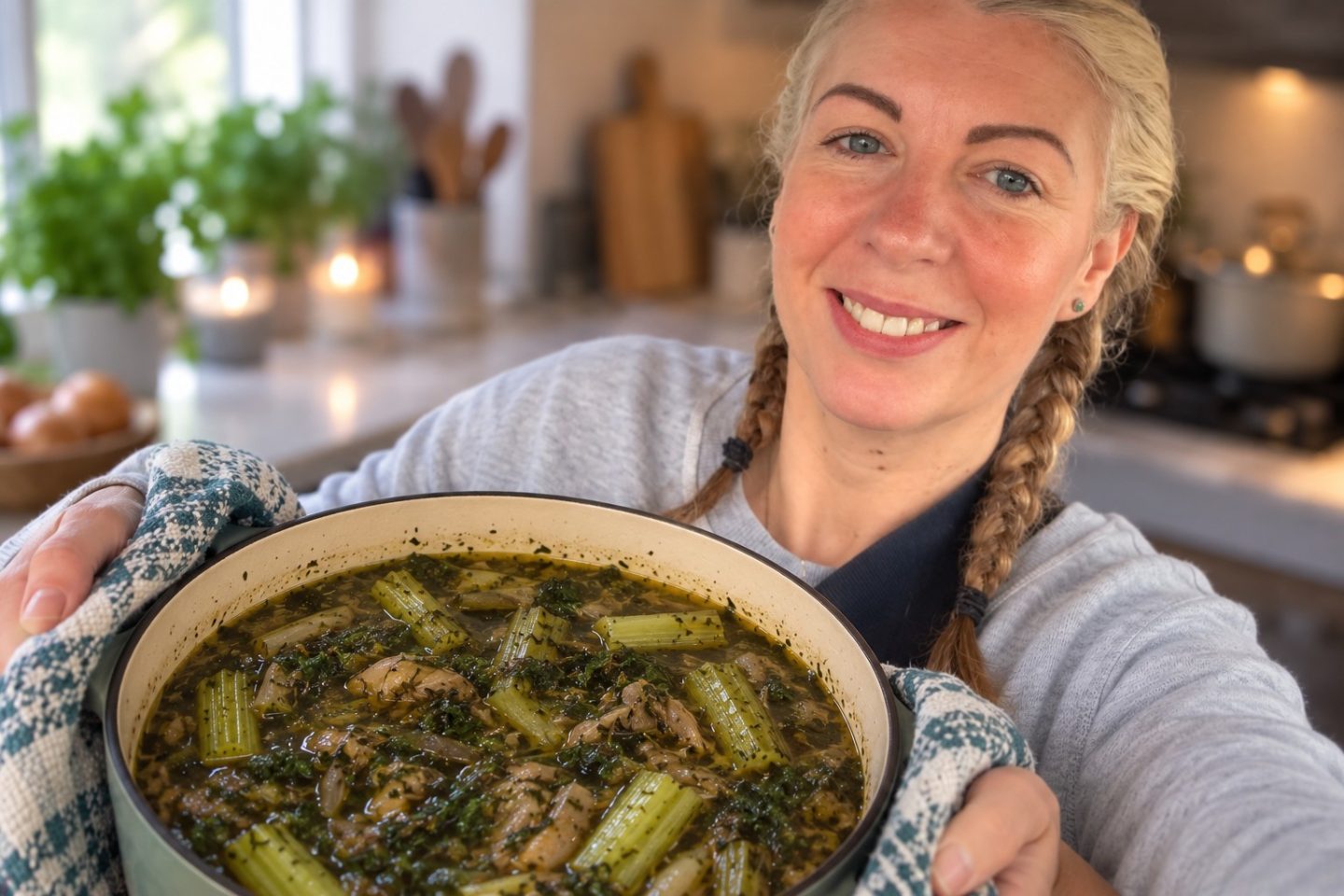
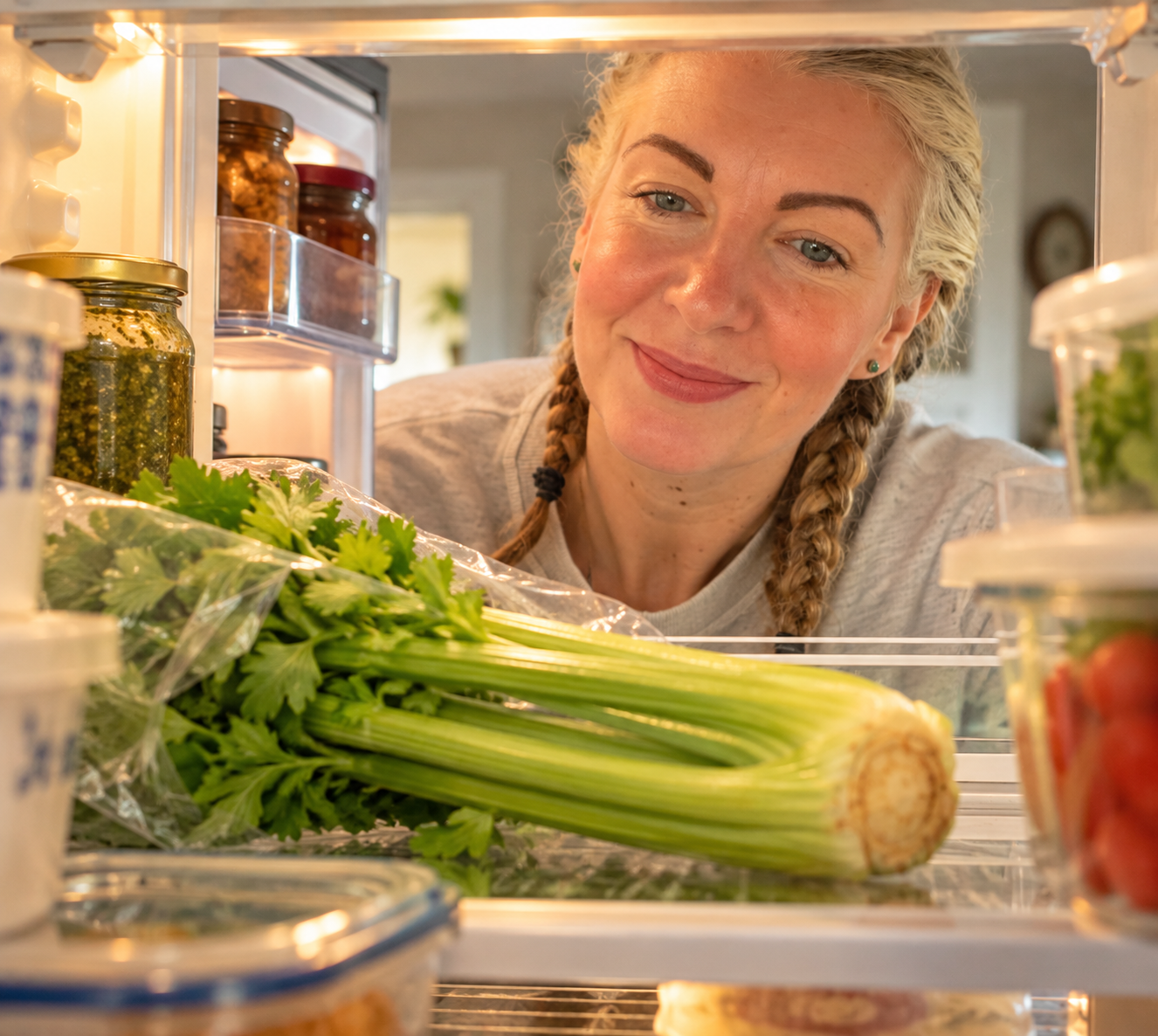
Six weeks after having Cyrus at 40, I was told I was obese. I bought celery with vague plans for salads. H had a better idea: a Persian lamb and celery stew with parsley, mint and lime.
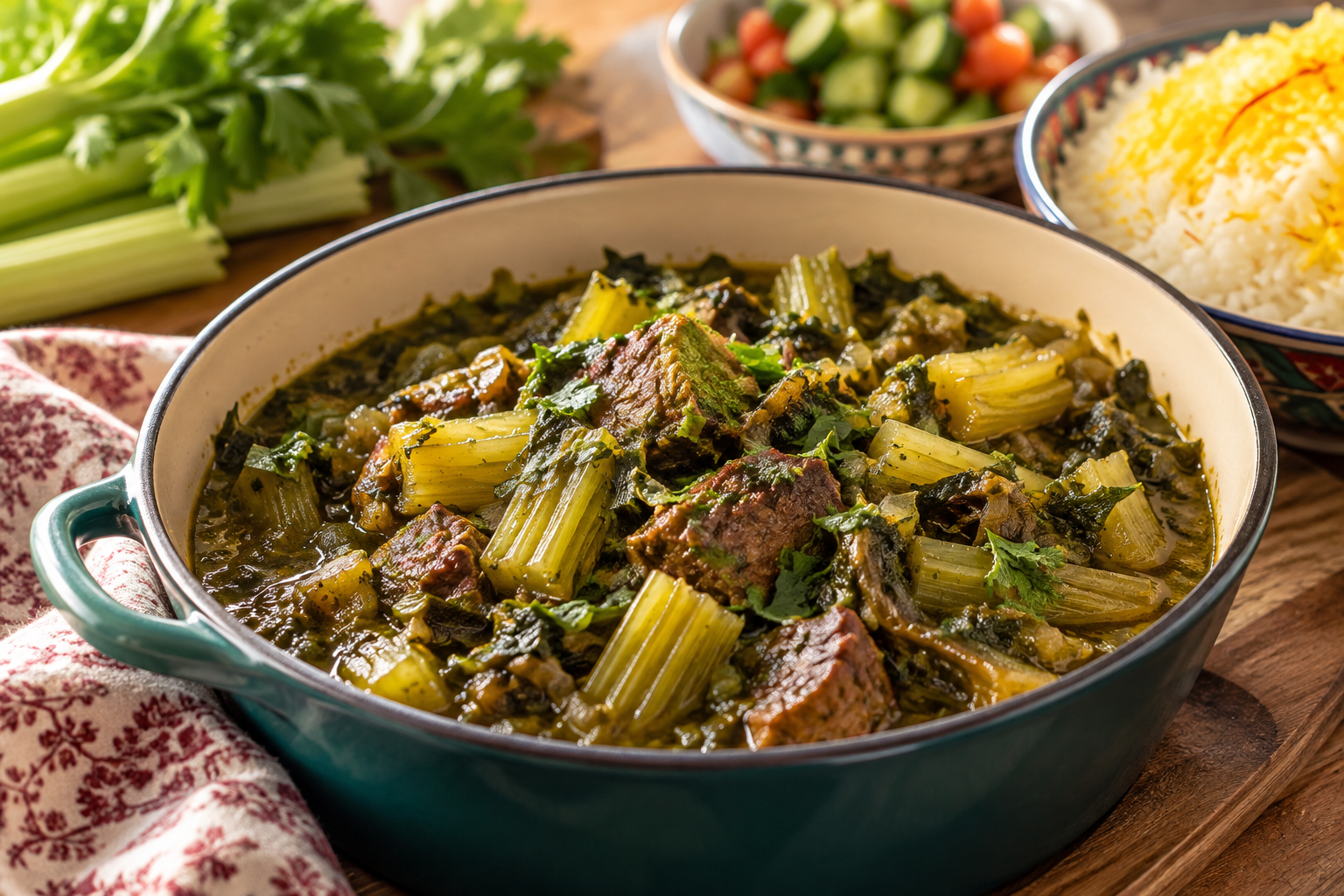
Every time I opened the fridge, I found something more interesting to eat than the celery, usually cheese. I’d bought it after my six-week postnatal check, when the word ‘obese’ had followed me home. Still recovering from childbirth and surviving on broken sleep, I responded by shopping for vegetables I didn’t much fancy.
My plan was to chop the celery into salads with cucumber and tomato, then congratulate myself on making better choices. Instead, it stayed in the fridge until H noticed it and suggested khoresht karafs. I’d eaten the stew before, although my experience of preparing it involved opening a tin from MA Brothers in Newcastle. Cooking it from scratch sounded more ambitious with a newborn in the house.
H saw the beginnings of dinner where I saw an abandoned diet purchase. And, let’s face it, khoresht karafs sounds considerably more appetising than celery stew.
What is khoresht karafs?
Khoresht karafs is a Persian celery stew, often made with lamb or beef, parsley, mint and a sour ingredient such as lemon or lime. Khoresht means stew and karafs means celery. Our version uses lamb, fresh lime juice and a little dill, although family recipes vary.
In H’s kitchen, parsley isn’t a decorative afterthought. It comes in large bunches, gets washed thoroughly and goes into the pan by the handful. When the herbs began frying, the kitchen filled with the smell I associate with Persian home cooking. After a slow simmer, the celery softened and took on the flavour of the lamb and herbs, while the lime gave the sauce a sharp finish.
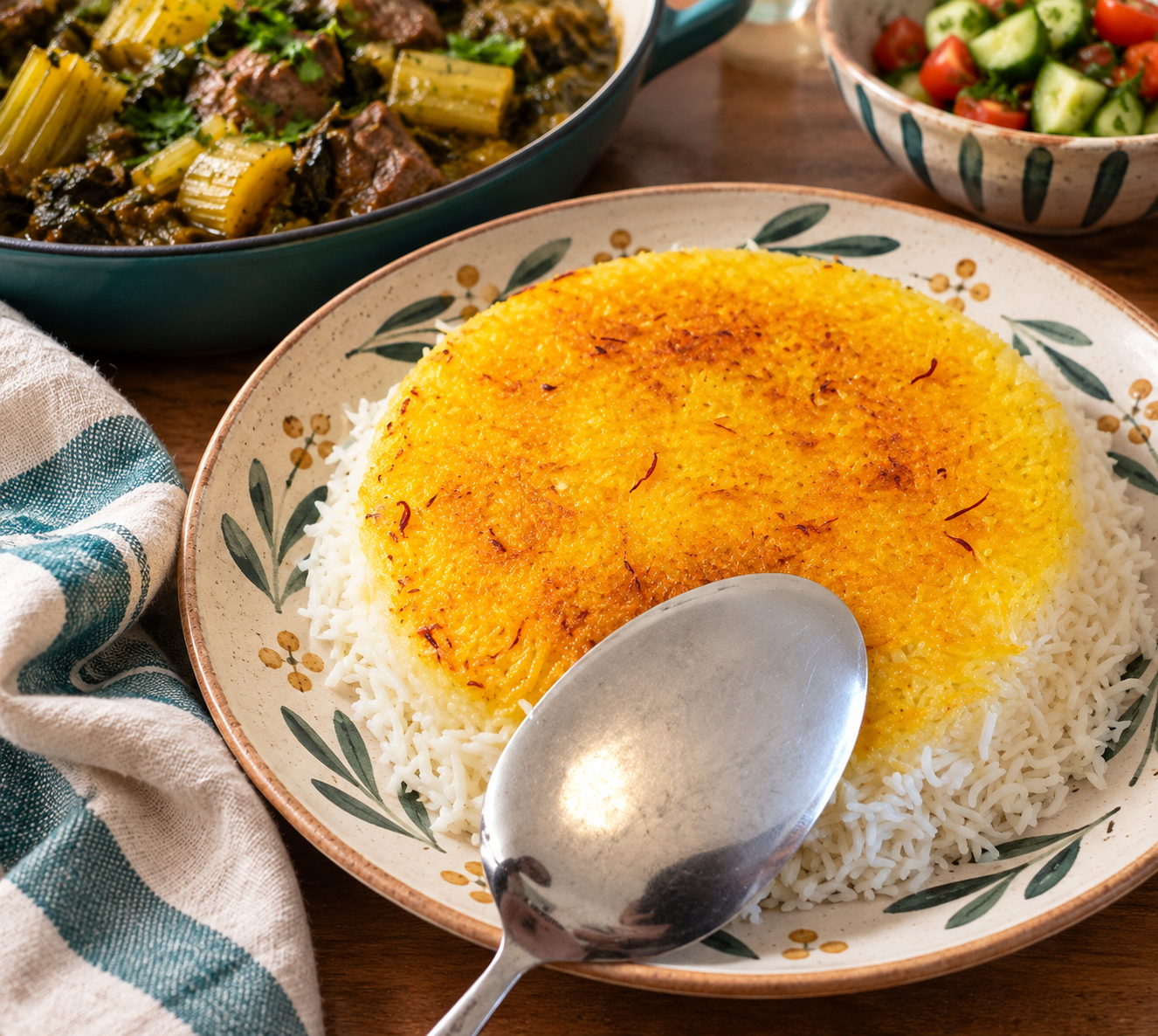
That generous use of herbs runs through other family dishes too, including the ghormeh sabzi Cyrus called ‘lamb on the bone’. Rice is the usual accompaniment in our house, preferably with tahdig, the crisp crust from the bottom of the pan.
How to make our family-style khoresht karafs
Persian lamb and celery stew
Serves 4–6 with rice | Preparation: about 25 minutes | Cooking: about 3 hours
This is our family-style version. The cooking time is a guide: the lamb needs to be tender before you serve it, and the amount of water depends on your pan and heat.
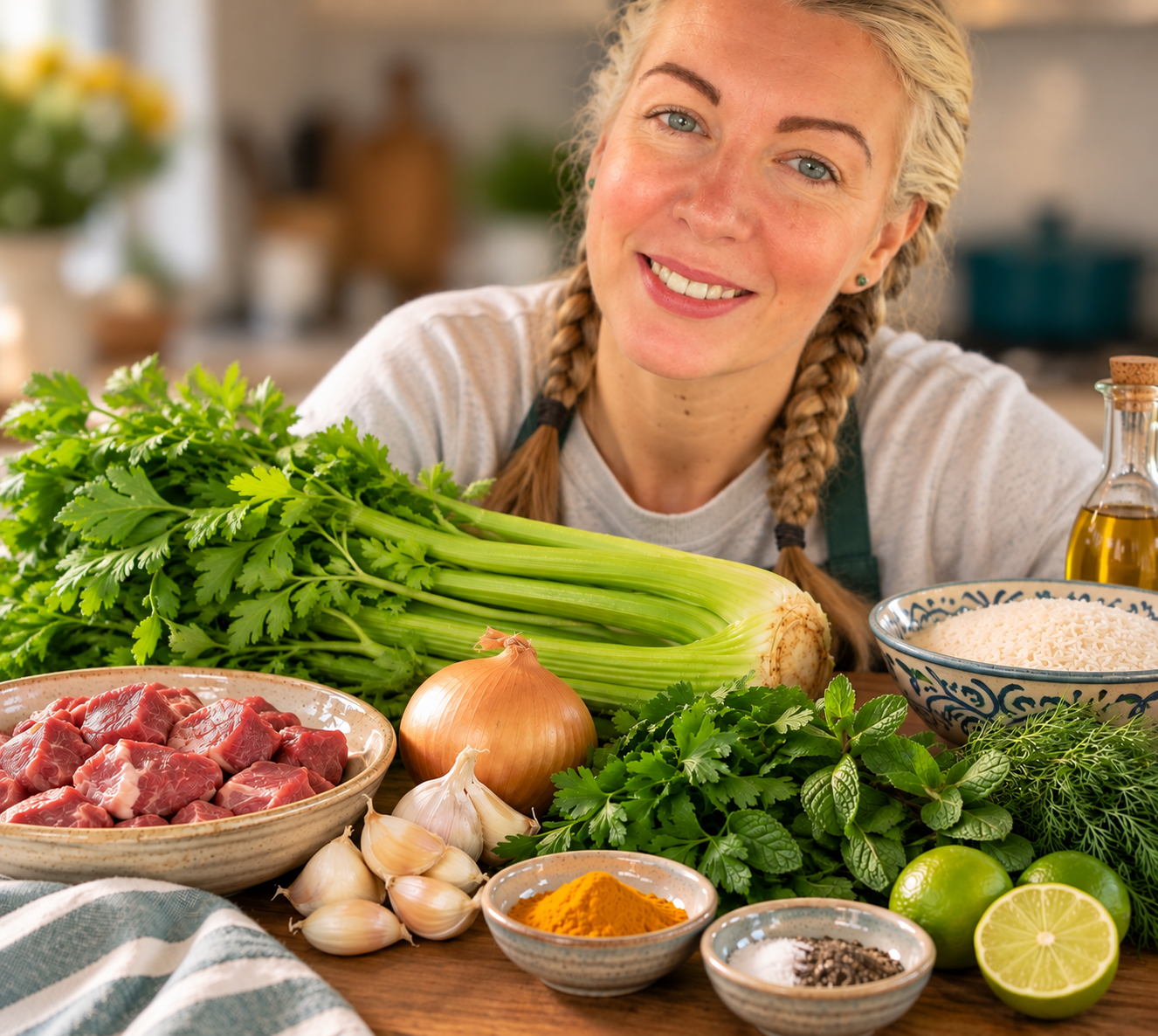
Ingredients
- 500g diced lamb
- 1 large head of celery, washed, trimmed and chopped
- 1 large onion, finely chopped
- 2–3 garlic cloves, crushed
- 1 large bunch of fresh parsley, washed and finely chopped
- 1 small bunch of fresh mint, washed and chopped
- A small handful of fresh dill, washed and chopped (optional)
- 1 tsp turmeric
- 2–3 tbsp fresh lime juice, or to taste
- Vegetable or corn oil for frying, including about 3 tbsp for the herbs
- Approximately 750ml water, plus extra if needed
- Salt and freshly ground black pepper, to taste
- Persian rice, to serve
Allergen note: This recipe contains celery.
Method
- Soften the onion. Heat a little oil in a large, heavy-based pot over a medium heat. Add the onion and cook until soft. Add the garlic and cook briefly, stirring so it doesn’t burn.
- Add the lamb. Stir in the turmeric, then add the lamb. Turn the pieces until lightly browned on all sides and season with salt and pepper.
- Start the simmer. Add about 750ml water and bring to the boil. Reduce the heat, cover and simmer gently for about an hour.
- Fry the herbs. While the lamb simmers, heat about 3 tbsp oil in a separate frying pan over a low to medium heat. Add the parsley, mint and optional dill. Stir until fragrant and slightly darker, without letting them blacken. Transfer the herbs to a bowl.
- Cook the celery. Add a little more oil to the frying pan if needed. Fry the celery over a medium heat until it begins to soften and colour around the edges.
- Combine and cook slowly. Add the herbs and celery to the lamb pot. Stir, cover and simmer gently for another 90 minutes to two hours, until the lamb is tender. Stir from time to time and add water if the sauce starts to catch or becomes too thick. If it looks watery near the end, remove the lid briefly to reduce it.
- Finish with lime. Stir in 2 tbsp lime juice towards the end of cooking. Taste, then add more if needed and adjust the seasoning. Serve hot with Persian rice.
As H would say, nooshe joon, enjoy your meal.
Storing and reheating the leftovers
I often prefer Persian stews the following day. Divide leftover stew into smaller containers so it cools quickly, cover and refrigerate within one to two hours. Eat it within 48 hours or freeze it. Reheat only once, until steaming hot throughout, following the Food Standards Agency’s advice on chilling and storing cooked food.
Rice needs separate care. Cool it as quickly as possible, ideally within an hour, and refrigerate it for no more than 24 hours before eating or reheating. Reheat only once, until steaming hot throughout. Don’t leave it in the rice pan to cool. The FSA’s rice-storage guidance explains why storage is so important.
Dinner was more useful than another diet rule
I don’t think the person who weighed me intended to upset me, but the word stayed with me when I was already feeling vulnerable about my body. H didn’t lecture me about calories or suggest I replace dinner with a salad. He helped turn something I felt obliged to eat into a meal I wanted.
I’m not presenting this stew as a postnatal weight-loss recipe. For general advice on a balanced diet, the NHS Eatwell Guide is a better starting point than my fridge. What changed for me was more modest: celery stopped being something I associated only with diets and became an ingredient in one of my favourite dinners.
Which vegetable changed your mind once someone cooked it differently?
If your family makes khoresht karafs, I’d love to hear how your version differs from ours.
More from our British-Persian kitchen
Occasional stories, experiments, discoveries and questions from Saffron & Cyrus.
This article describes my personal experience of postnatal recovery and family cooking. It is not medical or weight-loss advice. The recipe is our family’s version of khoresht karafs.
Discover more from Saffron & Cyrus
Subscribe to get the latest posts sent to your email.

Saffron & Cyrus is an independent women’s editorial publication with a recognisable voice, real-life perspective, a defined midlife audience and a commercial model built around useful, relevant partnerships.
