
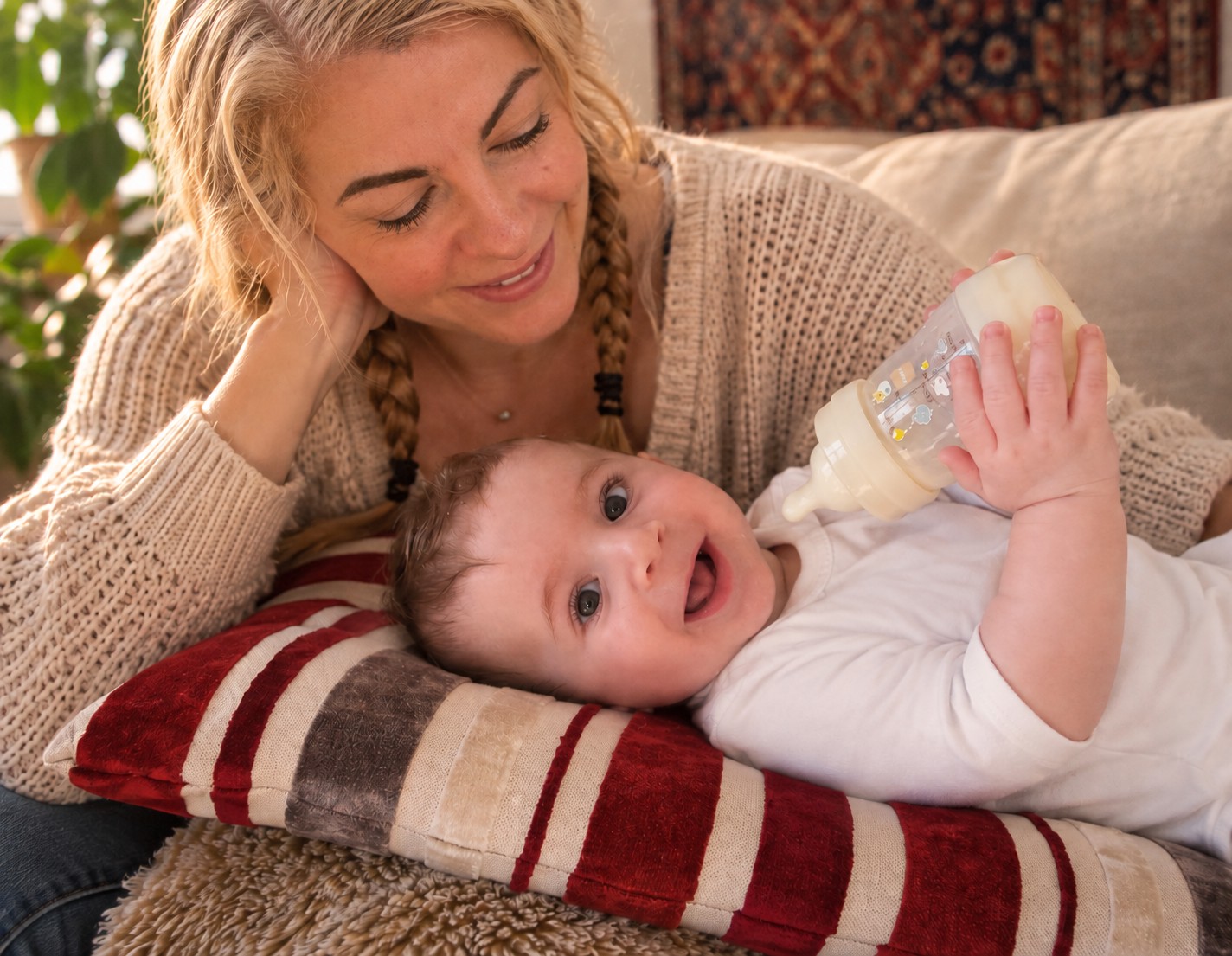
When Cyrus was seven months old, getting him to nap wasn’t particularly sophisticated.
There was no carefully curated nursery soundtrack or elaborate sleep programme. And no sense that I had cracked motherhood by 10 a.m.
There was me and H, usually tired. There was Cyrus and a balash, the feather-filled pillow we placed across H;s outstretched legs while I sat with him. And there was Persian music.
My husband and I had fallen into a little routine. Cyrus would lie supported on the pillow while H gently moved his legs from side to side, staying with him as he settled.
Then came the important bit. A Textile Dream, a Persian lalaei, or lullaby.
At the time, I wasn’t thinking about cultural identity. I was thinking about whether Cyrus would actually go to sleep.
This is one of the less glamorous truths about having a baby. You can attach enormous meaning to these moments years later, but while you’re living them, you mostly want the small person to close his eyes so you can drink a cup of coffee while it is still recognisably hot.
Yet something else was happening. Cyrus was hearing Persian sounds and melodies before he could understand a word of them.
His dad’s culture wasn’t being formally taught to him. It was in the music. In the balash. In the way we soothed him. In our ordinary family life.
There is good reason lullabies appear across cultures and generations.
Research into parent-infant singing suggests that singing can support interaction between babies and caregivers, while the familiar rhythm and repetition can help regulate an infant’s arousal and create opportunities for connection.
But I am wary of turning every lovely thing we do with babies into a developmental assignment.
Sing this song for cognitive development. Make eye contact for attachment. Do this for language. Do that for sleep. Sometimes a mother is allowed to sing to her baby simply because her baby likes her singing.
And sometimes the value of a lullaby isn’t something you can put neatly on a milestone chart.
Our routine was remarkably simple.
Either myself or H would sit down with our legs stretched in front of us and place the balash across them.
Cyrus would lie on it while we supported him, close enough to see our faces. Then we’d gently sway our legs from side to side. We’d play or sing A Textile Dream.
That was it. No expensive equipment. Just repetition.
He began to recognise what was coming. The movement, our voices and the familiar melody belonged together. Once he was asleep, we transferred him to his cot for safe sleep. Suddenly the house was quiet.
You don’t sit down with your partner and say, “Today we shall establish an emotionally significant cross-cultural family tradition.”
You are far too busy locating a clean babygrow. You simply do something because it works, and then you do it again. Eventually, repetition gives it meaning.
For us, that meaning happened to contain a little piece of Persia.
I’d be lying if I said I didn’t appreciate the silence once Cyrus finally went down.
Ten uninterrupted minutes can feel positively decadent when you have a seven-month-old.
But looking back, I don’t remember what I did during those precious scraps of quiet. I remember the bit before them. His little body resting across my legs, and the movement of the pillow. The music.
You spend an enormous amount of time trying to get to the next bit, the nap, bedtime, nursery, school, a little independence, and then discover that the bit you were hurrying through was the memory.
I’ve thought about that little routine differently as Cyrus has grown.
Children with parents from different cultures don’t learn where they come from only through deliberate explanations.
Culture seeps in around the edges. It is food appearing on the table, words overheard between adults. Music playing in the house. Celebrations. Family jokes. Objects whose names don’t translate particularly neatly into English. And, sometimes, a Persian lullaby playing while your mum desperately hopes you might nap.
Cyrus couldn’t have told me what a lalaei was. He didn’t need to. He was already experiencing one.
If I could go back to myself as a new mum at 40, I think I’d tell her to stop looking quite so hard for the correct way to do everything.
Babies need safety, care and consistency. But families also develop their own rhythms.
Ours included a balash, a Persian lullaby and a mother whose ambition some afternoons was to sit down with a coffee before somebody needed her again. The older Cyrus gets, the more I understand that family culture isn’t something we hand to children in one grand ceremony. We give it to them in tiny pieces.
Did your family have a lullaby, song or slightly peculiar bedtime ritual that stayed with you?
And if you’re raising children between two cultures, which tiny traditions have found their way into everyday family life?
More stories about Persian family life and culture
More from my motherhood after 40 journey
Occasional stories, experiments, discoveries and questions from Saffron & Cyrus.
“`
Discover more from Saffron & Cyrus
Subscribe to get the latest posts sent to your email.

Saffron & Cyrus is an independent women’s editorial publication with a recognisable voice, real-life perspective, a defined midlife audience and a commercial model built around useful, relevant partnerships.
