
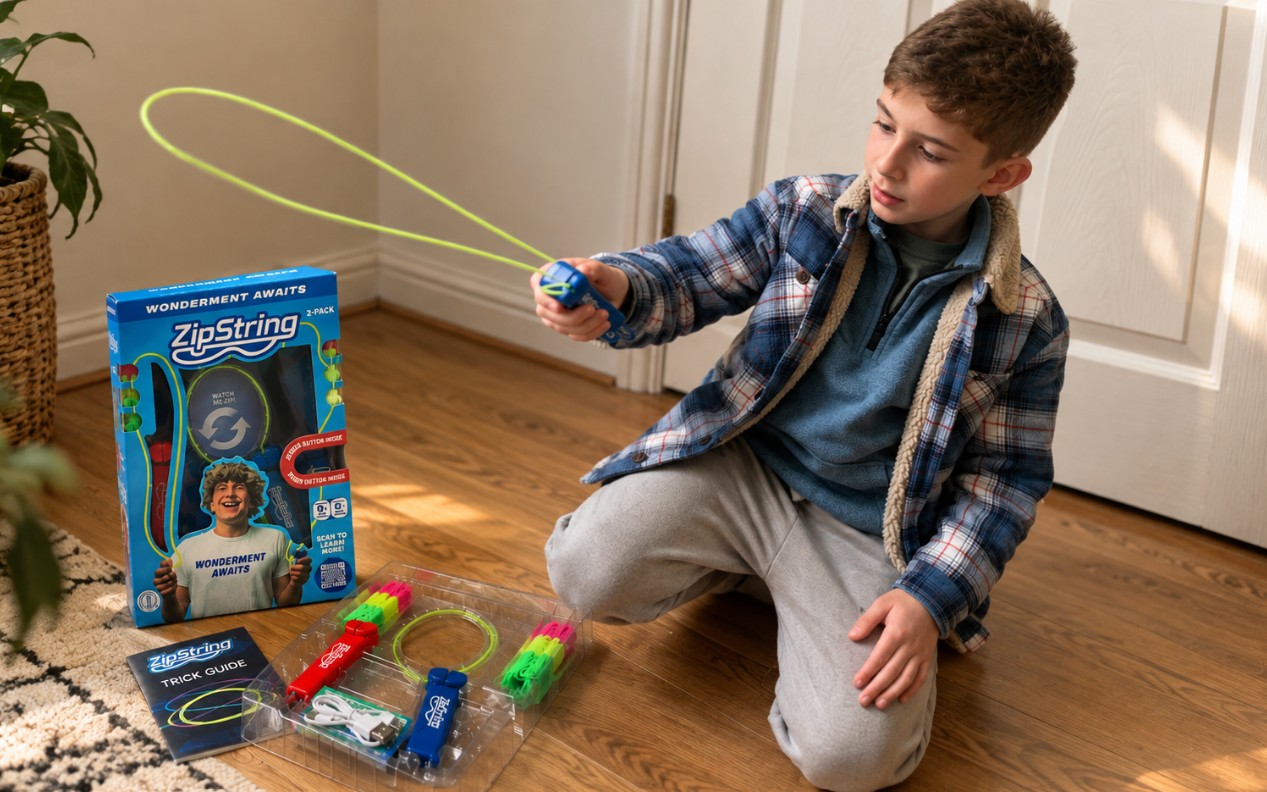
The ZipString featured in this review was kindly gifted. As always, the opinions here are entirely our own, Cyrus’s verdict included.
When I first spotted ZipString, I admit I rolled my eyes. “A flying string?” I thought. Surely this wouldn’t hold Cyrus’s attention for more than five minutes. There are toys with flashing lights, complicated controls and entire fictional universes attached to them. This was, quite literally, a piece of string flying through the air.
I was so wrong. The moment Cyrus picked it up, his eyes lit up and his fingers went into full-on trick mode. Before long I was watching too. Then H was involved. Soon we had mum-versus-son-versus-baba competition, increasingly ambitious tricks and a minor collision involving me, the TV and the blinds.
That was when the more interesting question occurred to me. In a world where children have access to games capable of creating entire digital universes, can something this simple really compete with a screen?
Once Cyrus started experimenting, the answer was interesting.
Watching Cyrus play, I started noticing something I hadn’t expected. He wasn’t just waving the ZipString around. He was changing the angle, adjusting the timing of his movements, watching what happened and then trying again. If a trick didn’t work, he altered something. If it did, he wanted to know whether he could make it bigger, faster or stranger. Before long, our living room had become a physics experiment, albeit one with more shouting and danger to the blinds.
I hesitate to call every toy that involves a bit of problem-solving “educational”, because children are entitled to play without adults turning it into learning. But there was experimentation happening here. Cyrus was exploring movement, timing and angles because he wanted the string to do something spectacular, not because anyone had told him he was learning about them.
That is what makes the STEM element convincing. Cyrus wasn’t sitting down to “do STEM”. He was trying to invent a better trick, and the learning came too.
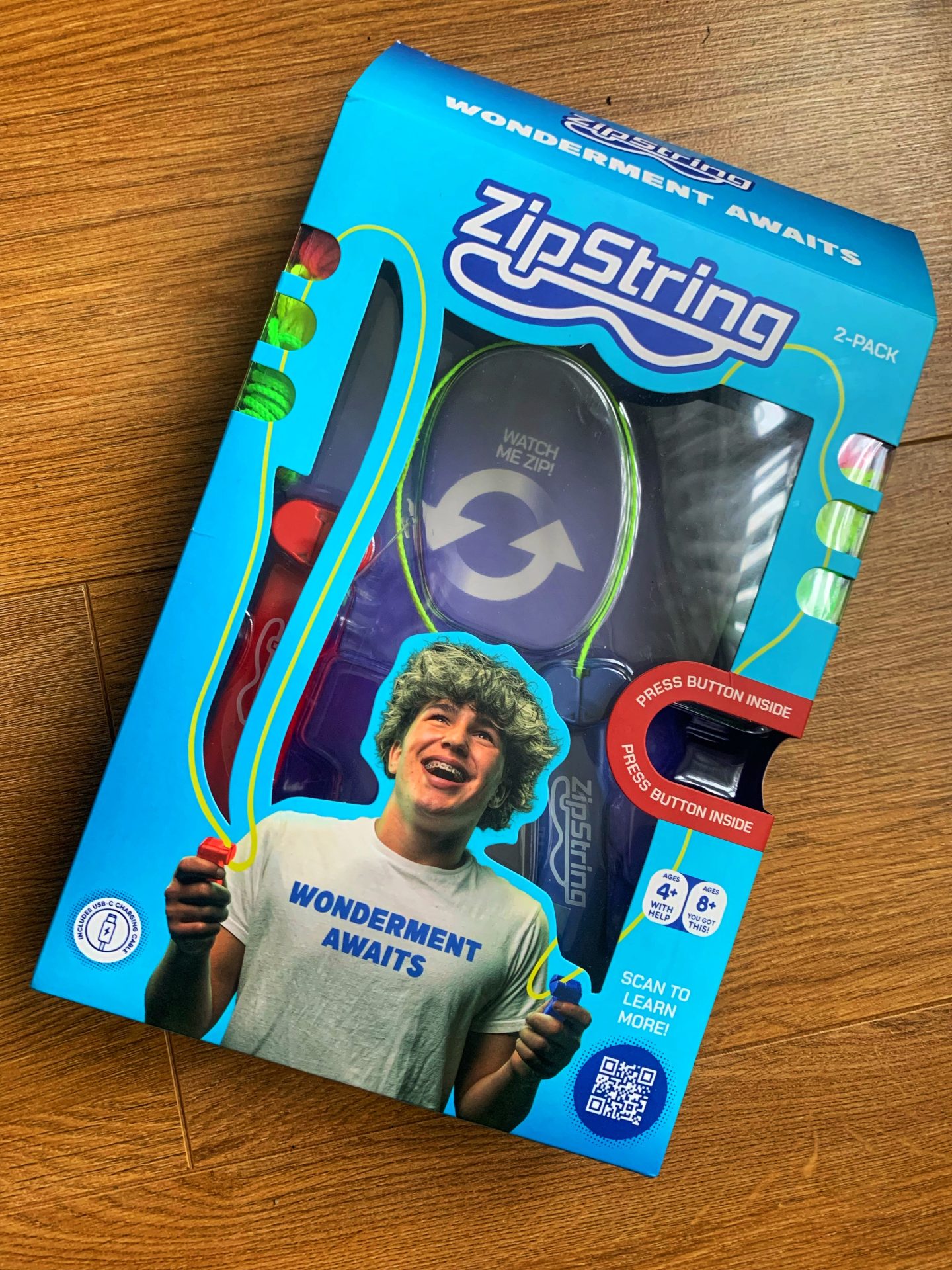
The other surprise was how social ZipString became. I had assumed it would be something Cyrus played with by himself. Instead, he wanted to show me what he’d worked out, teach me tricks and challenge baba H. We compared attempts, invented moves and became competitive.
It practically begs to be filmed in slow motion because the moving string looks far more impressive on camera. But I didn’t want to spend the whole experience behind my phone. There was something refreshing about watching Cyrus concentrate on something physical and immediate, with no levels to complete, characters to unlock or notifications competing for his attention.
That isn’t an argument that screens are bad. Cyrus uses technology and enjoys it, but what interested me was seeing how little was needed to create the same determination to master something. A piece of string, some movement and the possibility that the next attempt might finally work were enough.
Cyrus, unsurprisingly, has rather more detailed thoughts. “I love STEM toys, and this one is awesome. You can learn about motion and angles while having fun at the same time. I can’t stop trying new tricks! It’s really easy to use, and I got the hang of it super fast.”
He did, however, identify one irritation. “Sometimes the string gets all knotted, and that’s a bit annoying to fix, but it’s still fun. I really like the coloured strings because they look cool when you do tricks, but I wish they glowed in the dark too. That would be epic!”
His final assessment: “I love making up my own moves, timing my swings and seeing how far it can go without crashing into anything. It’s really, really cool, and everyone should try it!”
The knots are worth mentioning because they were the one thing that interrupted the fun. Cyrus found them irritating, although they were straightforward enough to sort out. His glow-in-the-dark suggestion, meanwhile, is one I suspect he would happily submit directly to the product-development department.
From a parent’s point of view, one of ZipString’s advantages is its simplicity. It is lightweight, doesn’t take a huge amount of storage space and can be picked up without a huge setup process. It also survived our less-than-scientific durability testing, otherwise known as repeatedly crashing it into things.
What interested me more than a checklist of features, though, was whether Cyrus returned to it once the initial novelty had passed. That’s usually the point at which supposedly brilliant toys reveal themselves. They create excitement for ten minutes and are then quietly absorbed into the toy cupboard.
ZipString did better than that. Cyrus kept wanting another attempt because there was always another trick to try or something he thought he could improve. For me, that says rather more about its play value than a list of claims on the packaging.
It is worth being realistic about space, though. While the toy itself is small, children experimenting with ambitious tricks are not. I’d give them enough room to play without valuable ornaments, TVs or unsuspecting parents becoming part of the experiment. Consider that advice learned through experience.
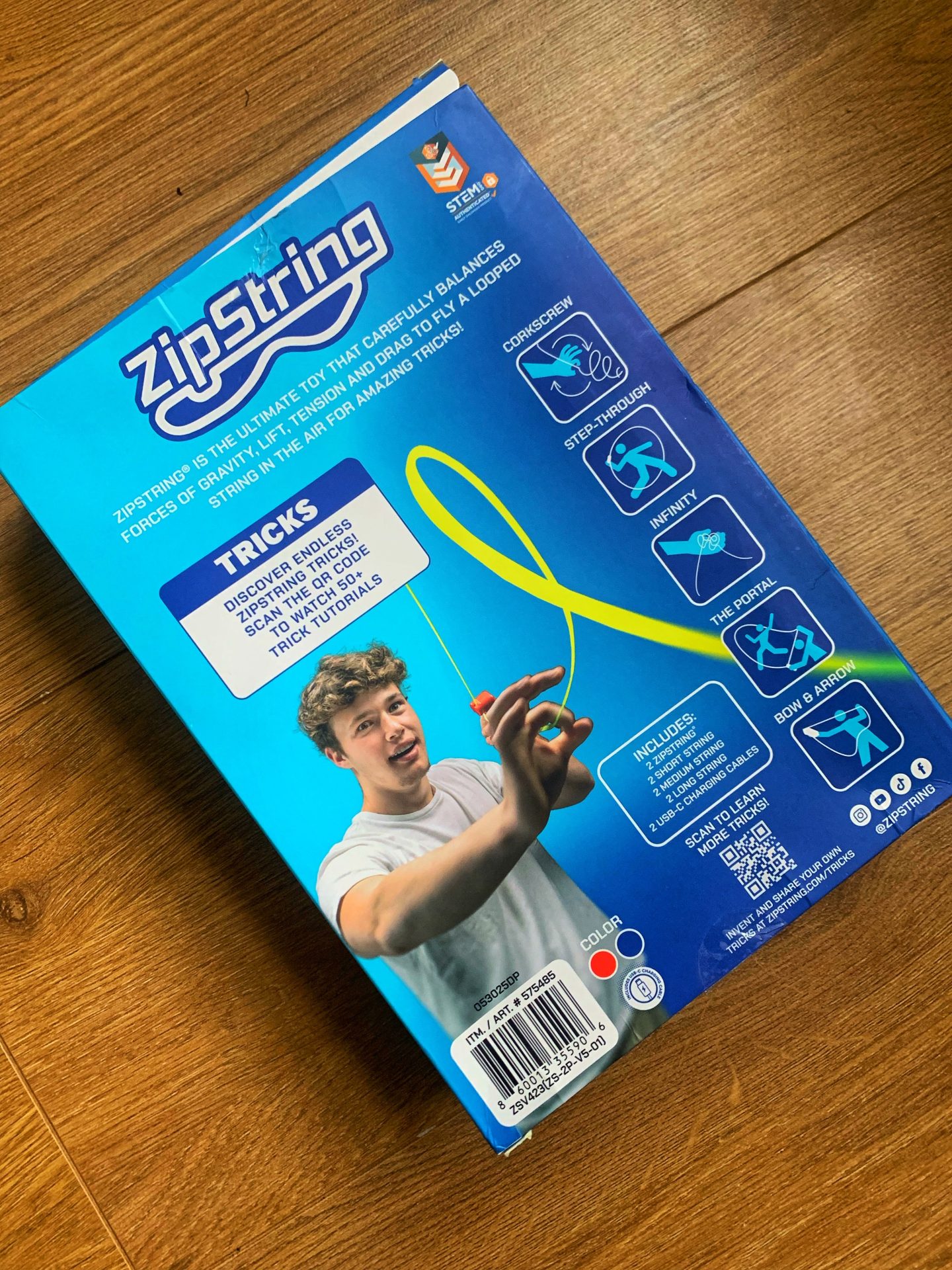
I think so, especially for a child who enjoys mastering tricks, experimenting with how things work or challenging other people to have a go. It also works as a Christmas or birthday present because the entertainment starts almost immediately. There isn’t a lengthy learning curve before anything interesting happens. Pick it up, start moving and within minutes someone is likely to announce that they have invented a trick nobody else can do.
At the time of writing, ZipString was available from Costco UK as a twin pack. Availability and prices can change, so I would check the retailer directly for the latest information rather than relying on an old price quoted in a review. You can check the current ZipString Twin Pack details at Costco UK here.
In a house full of toys, this one stands out because it doesn’t look as though it should be capable of doing very much. It is replayable and just difficult enough to make you want to improve. I’ve even caught myself stopping to watch the tricks Cyrus has invented.
There are no complicated rules to understand. You pick it up, work out what the string can do and then wonder whether you can make it do something better. And that is the most useful test of any toy. Not whether the packaging tells parents it is educational, creative or engaging, but whether the child comes back once the novelty should have worn off.
The missing half-point goes to the knots. Cyrus would presumably restore it immediately if somebody invents those glow-in-the-dark strings.
Occasional stories, experiments, discoveries and questions from Saffron & Cyrus.
Discover more from Saffron & Cyrus
Subscribe to get the latest posts sent to your email.


Saffron & Cyrus is an independent women’s editorial publication with a recognisable voice, real-life perspective, a defined midlife audience and a commercial model built around useful, relevant partnerships.
