
Rainy day in Newcastle? Why Discovery Museum is worth a visit with the kids.
From a record-breaking steamship to hands-on science experiments, Newcastle’s Discovery Museum gave us a good excuse to escape the rain, learn a little local history and enjoy an afternoon out without spending a fortune.
When the forecast says rain
There is nothing quite like the British weather for ruining a family day out before you’ve even left the house. You check the forecast, pack the snacks, persuade your child to put on something vaguely waterproof and head out hoping for the best. Then it rains. Not the occasional shower you can shelter from, but the sort of downpour that makes you question why you bothered getting dressed in the first place.
Living in Newcastle, I’ve learnt to keep a few indoor alternatives in reserve, especially when entertaining a young child who has no intention of spending the afternoon quietly at home. One of our favourites is Discovery Museum, where admission is free and there is enough to occupy everyone for several hours. It’s also somewhere H, my husband and resident engineer, can indulge his enthusiasm for machinery without me having to pretend I’m equally fascinated by mechanical engineering.
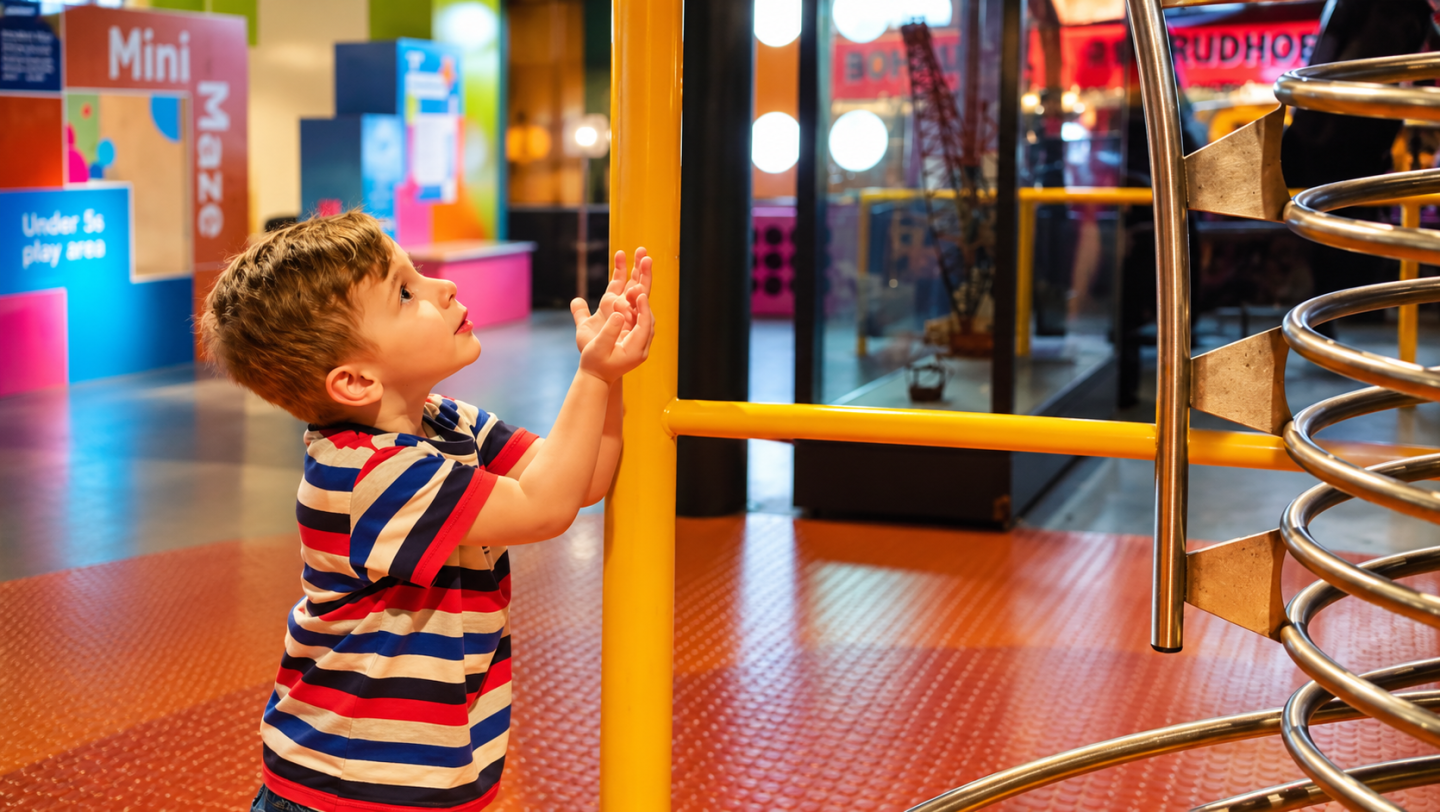
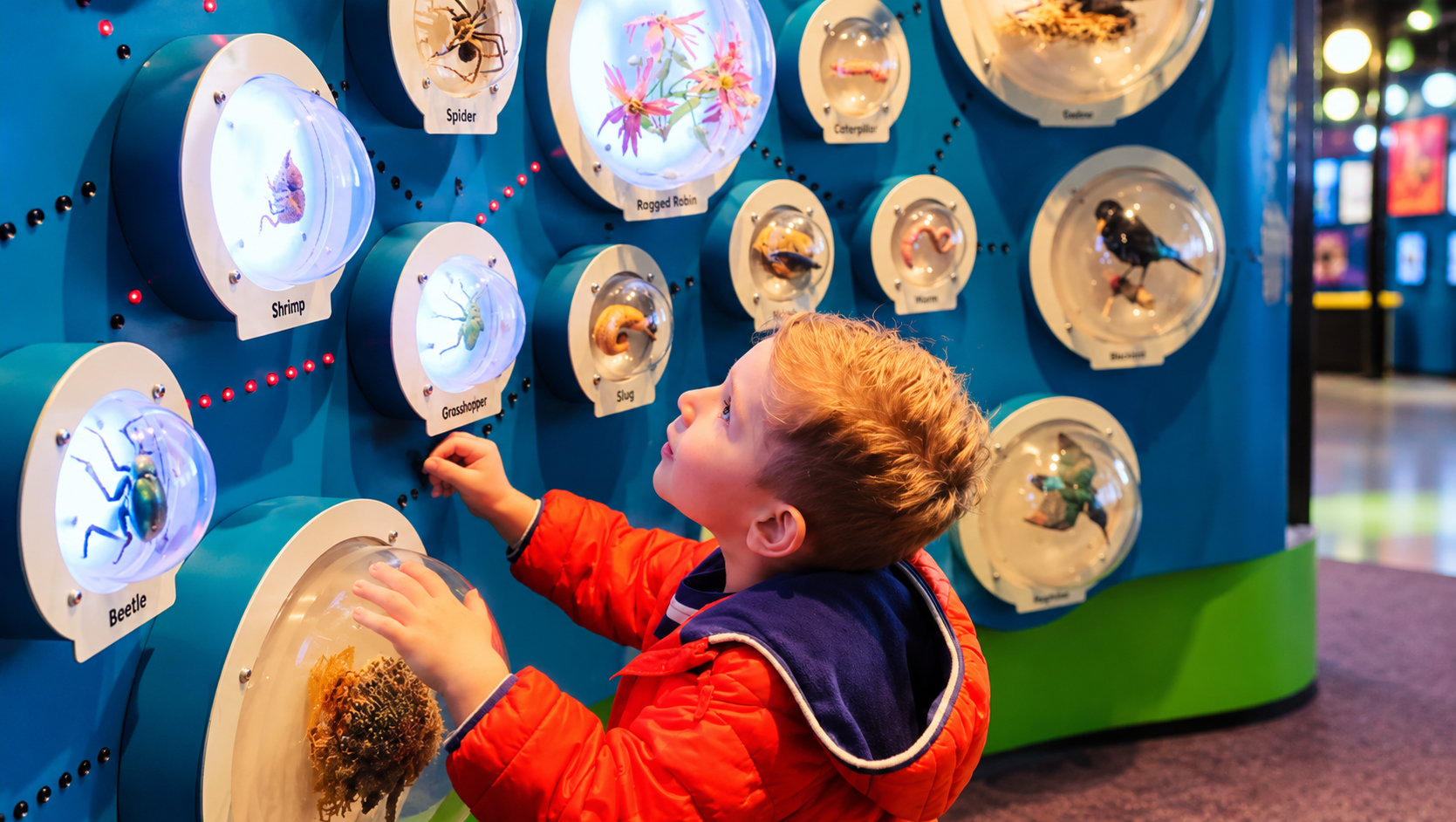
Cyrus, meanwhile, was delighted to discover a building where pressing buttons, pulling levers and investigating unfamiliar objects was actively encouraged. Normally, I’m telling him to leave things alone. Here, he could get stuck in without me hovering over him, worrying about what he might break. As far as he was concerned, we’d found somewhere wonderful.
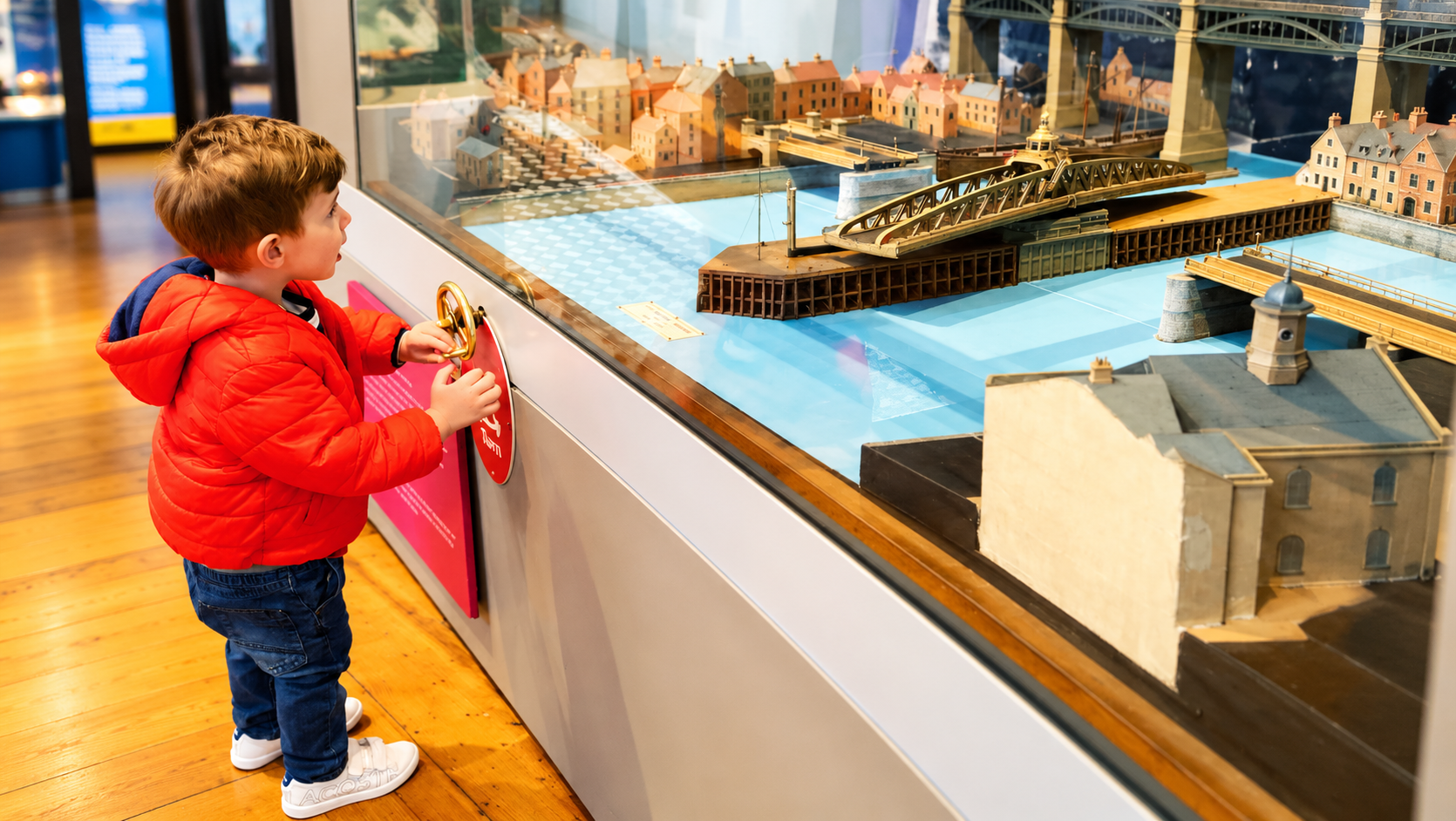
Discovery Museum is free to enter, and Cyrus could press buttons, pull levers and investigate to his heart’s content.~
A museum where children can get stuck in
Discovery Museum tells the story of Newcastle and Tyneside through science, engineering, industry and maritime history. It’s a substantial collection, spread across several floors, with enough interactive exhibits to stop younger visitors losing interest before you’ve finished reading the first information panel.
What I like is that children don’t have to understand the history behind an exhibit to enjoy it. They can experiment with something, see what happens and then ask questions. Sometimes the explanation comes afterwards, although in our case it usually involved H giving a detailed account of how something worked while Cyrus was already halfway across the room investigating something else.
Newcastle has a remarkable industrial past, but I wonder how much of it we appreciate when we live here. We walk past old buildings, cross the Tyne and take the city’s landmarks for granted without necessarily thinking about the engineering and manufacturing that once made this region famous. Discovery Museum brings some of that history together, and I found myself paying rather more attention than I’d expected.
Some museums are wonderful for adults but rather less accommodating when you’ve brought along a small person with a short attention span. Here, Cyrus could move between exhibits, try things for himself and ask questions when something caught his interest. I could read the displays without constantly having to tell him to stop touching things, which made a pleasant change.
Turbinia: The enormous ship that caught Cyrus’s attention
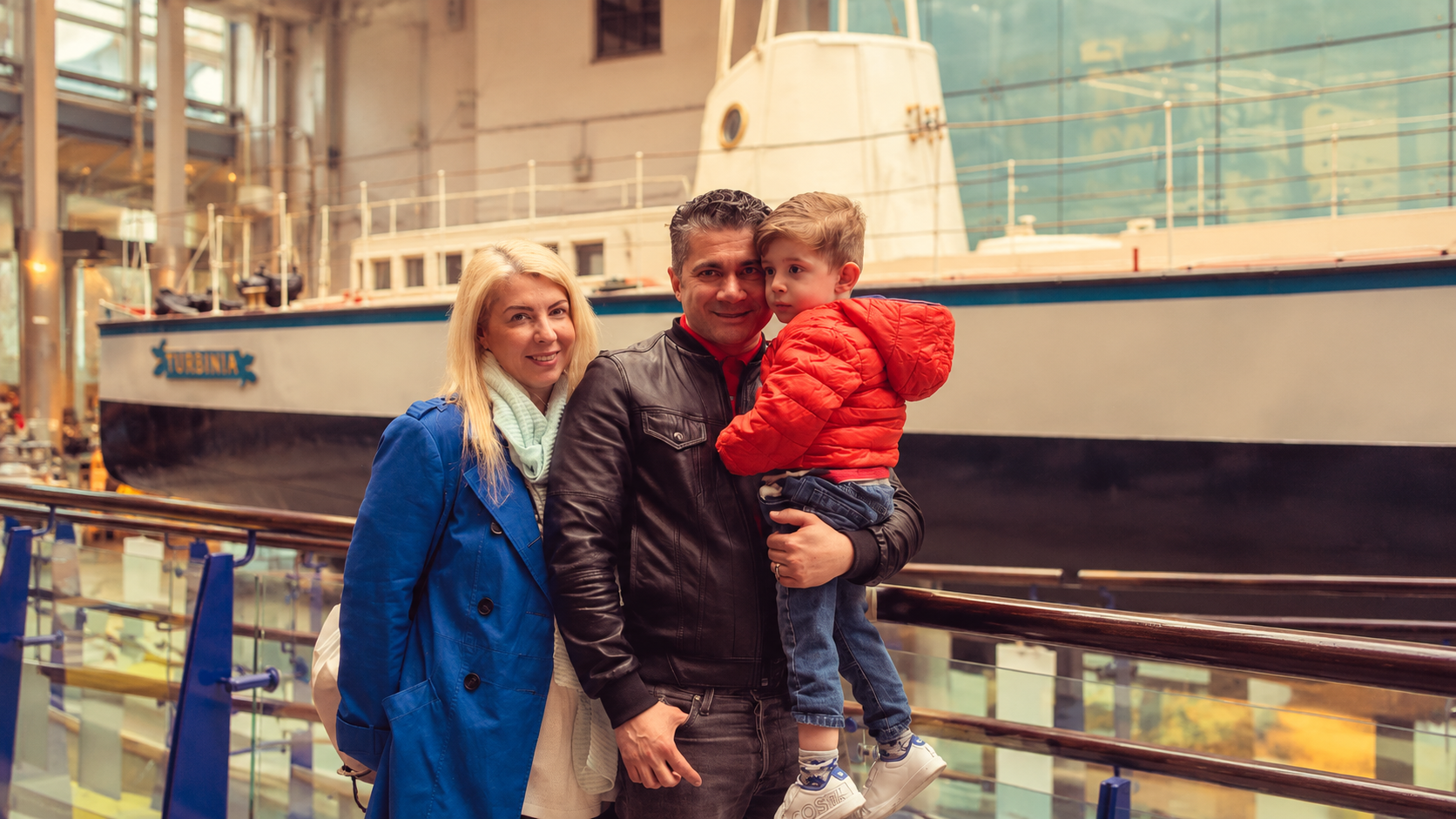
You can’t miss Turbinia. The steam-powered vessel dominates the museum’s central hall, and it was the first thing Cyrus wanted to investigate. Built by engineer Charles Algernon Parsons and launched in 1894, Turbinia was once the fastest ship in the world. It was also the first vessel powered by steam turbines, an important achievement in Tyneside’s engineering history.
In 1897, Parsons famously demonstrated the vessel’s speed at the naval review at Spithead, held for Queen Victoria’s Diamond Jubilee. Turbinia raced through the assembled fleet at around 34 knots, showing what steam turbine propulsion could achieve. It was a rather bold way of attracting attention, particularly in front of the Royal Navy, but it helped establish a technology that would change shipbuilding.
H was in his element. I could see him studying the vessel and mentally working through the engineering, while Cyrus was more concerned with how fast it could travel and why such a large boat was sitting inside a building. Both had perfectly reasonable questions, although only one of them required an explanation involving turbines.
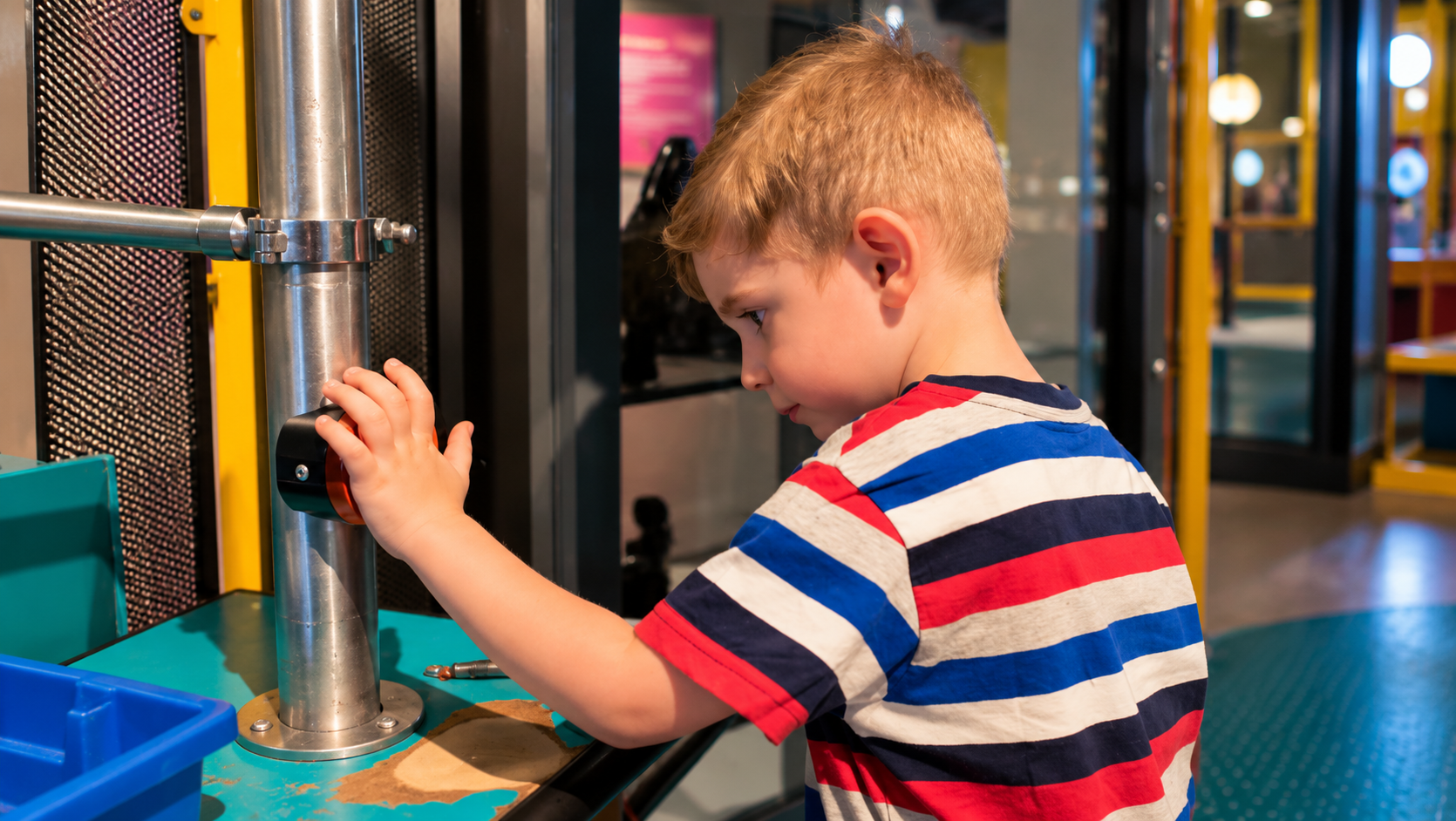
I enjoyed watching them together. H could have happily spent much longer examining the ship, while Cyrus wanted to move around it and see everything from different angles. I was left trying to keep up with the conversation and occasionally asking a question that probably exposed just how little I remembered from school physics.
Even if engineering isn’t your particular interest, Turbinia is worth seeing. The size alone is impressive, and I hadn’t appreciated quite how important the vessel was until we visited. It’s one thing to read about Tyneside’s industrial achievements, but rather different to find one of them sitting in front of you.
Science Maze: Where Cyrus became the expert
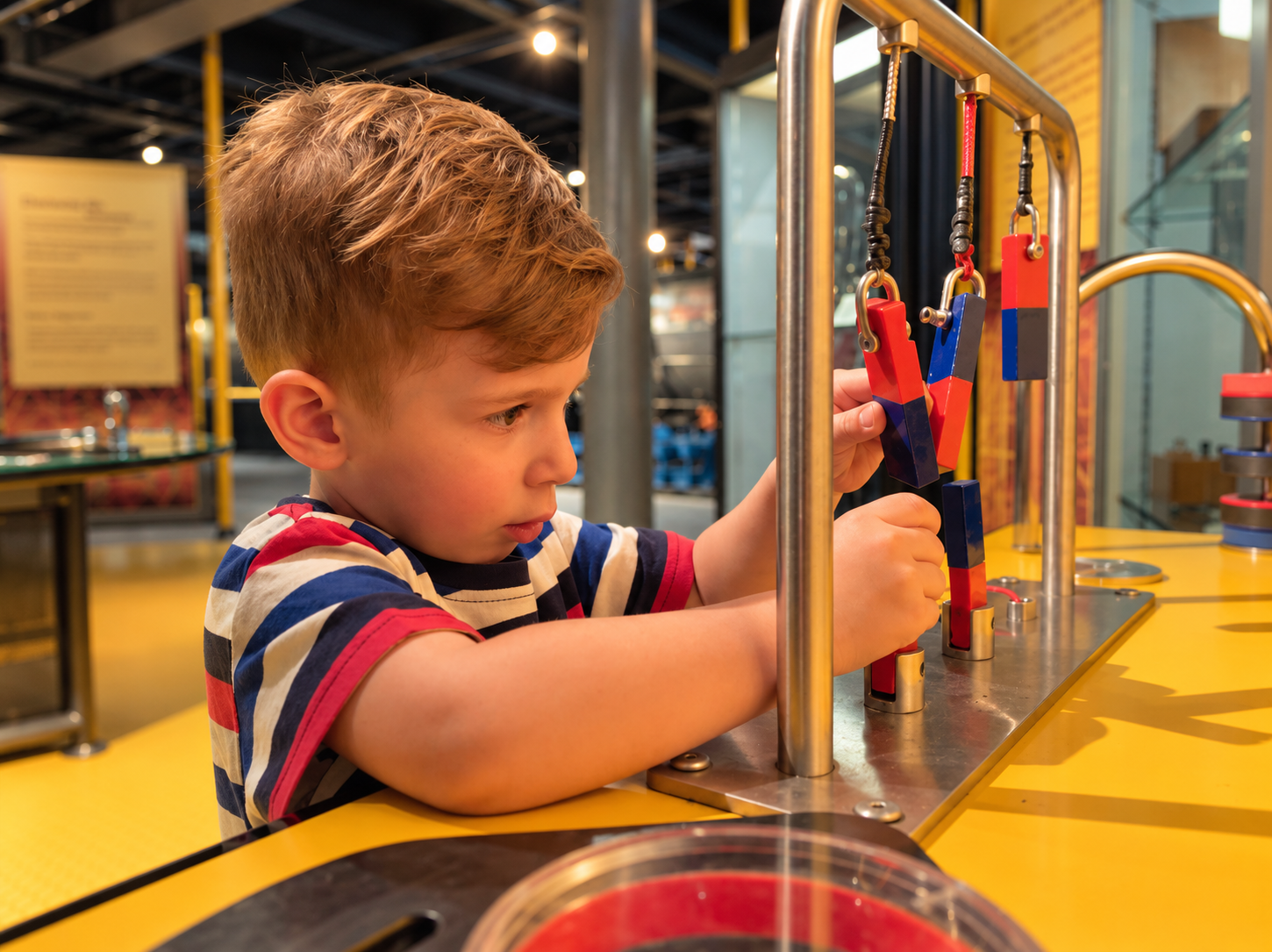
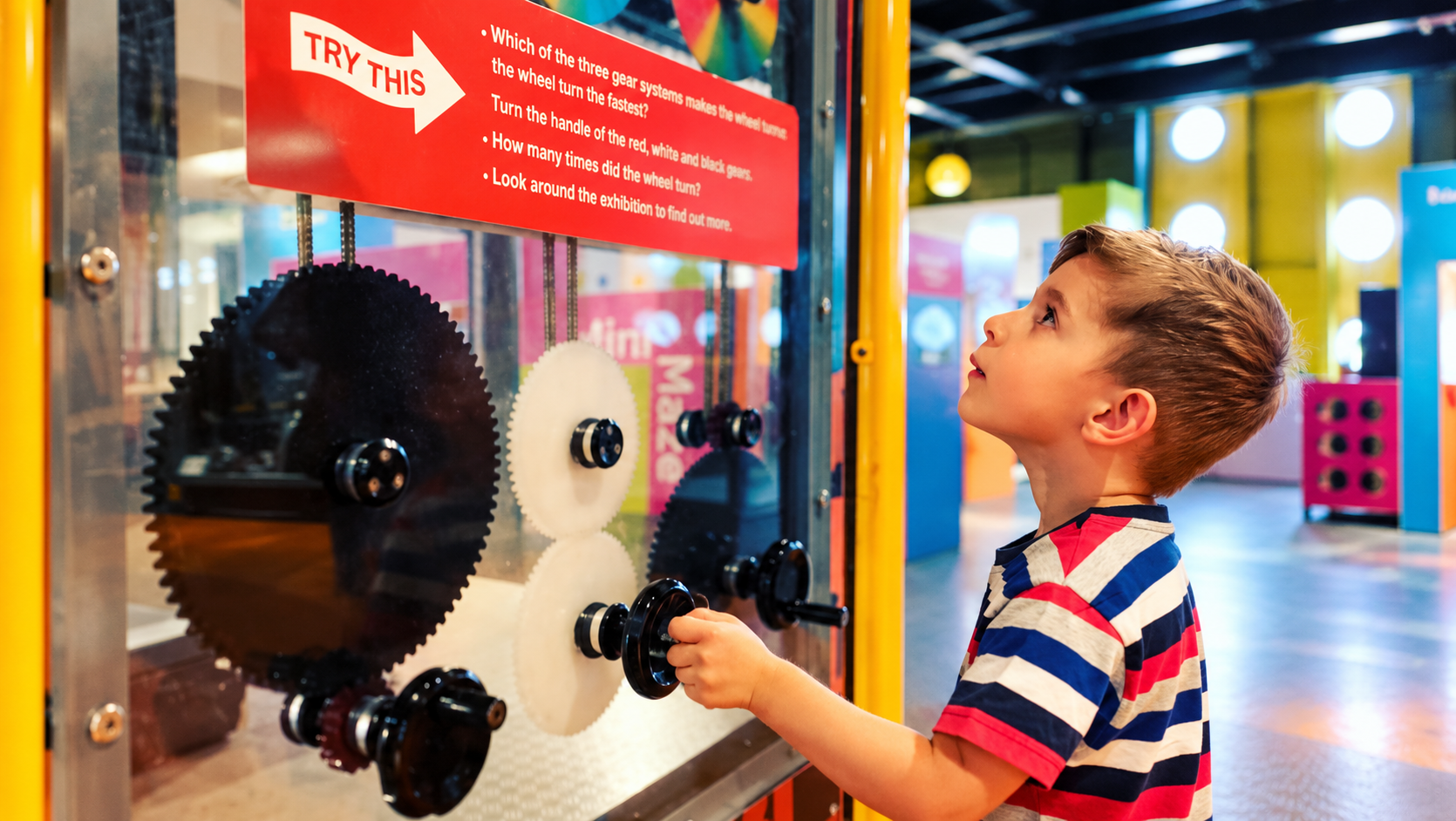
If Turbinia impressed Cyrus, Science Maze was where he really wanted to spend his time. The interactive gallery is full of practical experiments, with plenty of opportunities to investigate movement, forces and how things work. There was enough to keep him occupied, and he could move between activities without waiting for me to explain what he was supposed to be doing.
I watched him experimenting with different objects, trying one approach and then another when something didn’t work. Children have a habit of getting on with things without worrying too much about whether they’re doing them correctly. Cyrus would try something, look at the result and immediately have another go. I, on the other hand, was reading the instructions and wondering whether I’d missed something obvious.
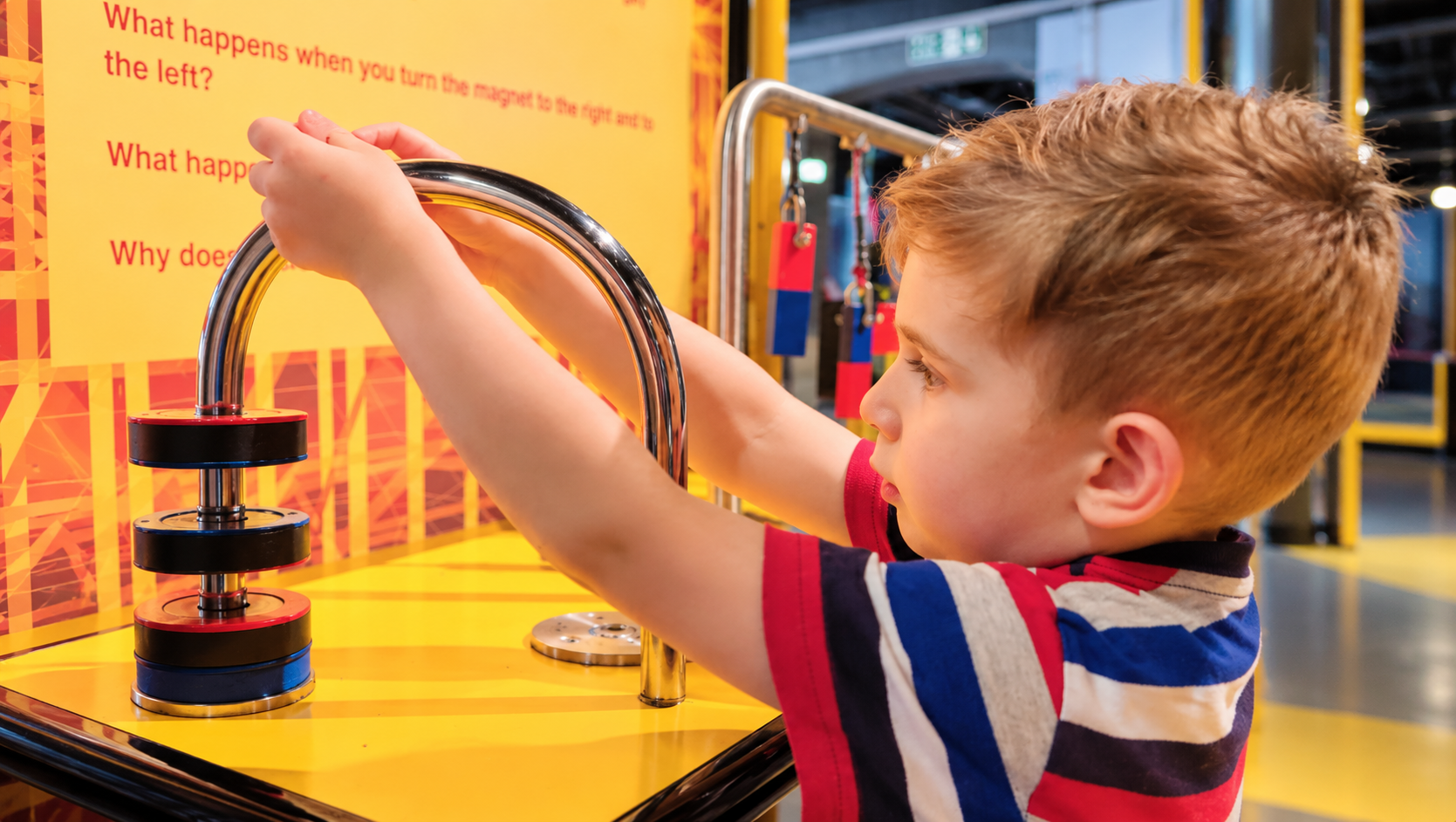
H joined in, naturally. Give an engineer a room full of scientific experiments and you can more or less forget about having an ordinary conversation for the next half-hour. At one point, both of them were engrossed in an activity while I stood nearby wondering whether I should contribute or simply let them get on with it.
It was lovely seeing Cyrus so absorbed in something that didn’t involve a screen. Not that I’m particularly opposed to screens, especially when I need to get something done at home, but I do like watching him work things out for himself. He wasn’t thinking about science or education. He was having fun, and I suspect he learnt more than he realised.
We could also take our time. If Cyrus wanted to spend ten minutes on one exhibit, we stayed. If he lost interest after thirty seconds, we moved on. There was no timetable to follow and nobody insisting that we complete an activity before moving to the next one. Anyone who has attempted to keep a young child interested in something for longer than five minutes will appreciate the advantage.
Newcastle’s history is about more than ships and machinery
Away from the science exhibits, Discovery Museum has plenty to say about the people who built Newcastle and the communities that grew around its industries. The Newcastle Story explores the city’s development through the centuries, while exhibitions covering working lives, engineering and the River Tyne offer a closer look at the region’s industrial past.
I found the social history particularly interesting. It’s easy to admire a famous invention or an impressive piece of machinery without thinking about the people who worked in the factories, shipyards and workshops. Generations of families depended on those industries, often working in conditions that would be difficult to imagine today.
The Story of the Tyne also puts the river into perspective. These days, I tend to think of the Tyne in terms of bridges, restaurants and the views along the Quayside. But the river was once central to one of Britain’s most important industrial regions, with ships built on Tyneside travelling around the world.
Another exhibition worth exploring is Destination Tyneside, which looks at migration and the experiences of people who have settled in the region. This interested me for personal reasons. Cyrus is growing up with British and Persian heritage, and I want him to understand that communities are shaped by people arriving from different places, bringing their own experiences, traditions and ideas.
He was still young when we visited, so I wasn’t expecting a detailed conversation about migration and cultural identity. Nevertheless, I think these are stories children should encounter. They may not understand everything at the time, but it gives us something to talk about as they get older. And, given how many questions Cyrus can ask in the space of ten minutes, I doubt I’ll be short of opportunities.
Coffee, cake and a chance to sit down
After exploring several floors, I was ready for coffee. Cyrus had been happily moving from one exhibit to another, H was still interested in finding more things to examine and my feet were beginning to suggest that a short break would be sensible.
We headed to the Turbinia Café on the second floor, where we ordered two lattes, a smoothie, a slice of apple cake, a Coke and some crisps. The bill came to £11, which I thought was remarkably reasonable at the time. I wouldn’t expect to pay the same today, but it was a pleasant surprise, particularly when you consider how quickly refreshments can add to the cost of a family outing.
The café was comfortable for families, with highchairs and room for buggies. More importantly, nobody seemed remotely bothered by the usual business of eating out with a young child. There were crumbs, the occasional interruption and the inevitable negotiation over who was having what. Nothing particularly unusual in our household.
I enjoyed having a proper sit down with my coffee while H and Cyrus talked about what they’d seen. H was still thinking about the engineering, Cyrus had his own ideas about which exhibits were best and I was quite happy to let them discuss it while I finished my cake.
I also appreciated the fact that we hadn’t spent a fortune. Family outings can become expensive before you’ve even accounted for parking, refreshments and the inevitable request for something from the gift shop. With free admission, Discovery Museum is somewhere you can spend a few hours without worrying about getting your money’s worth.
Why Discovery Museum is worth visiting again
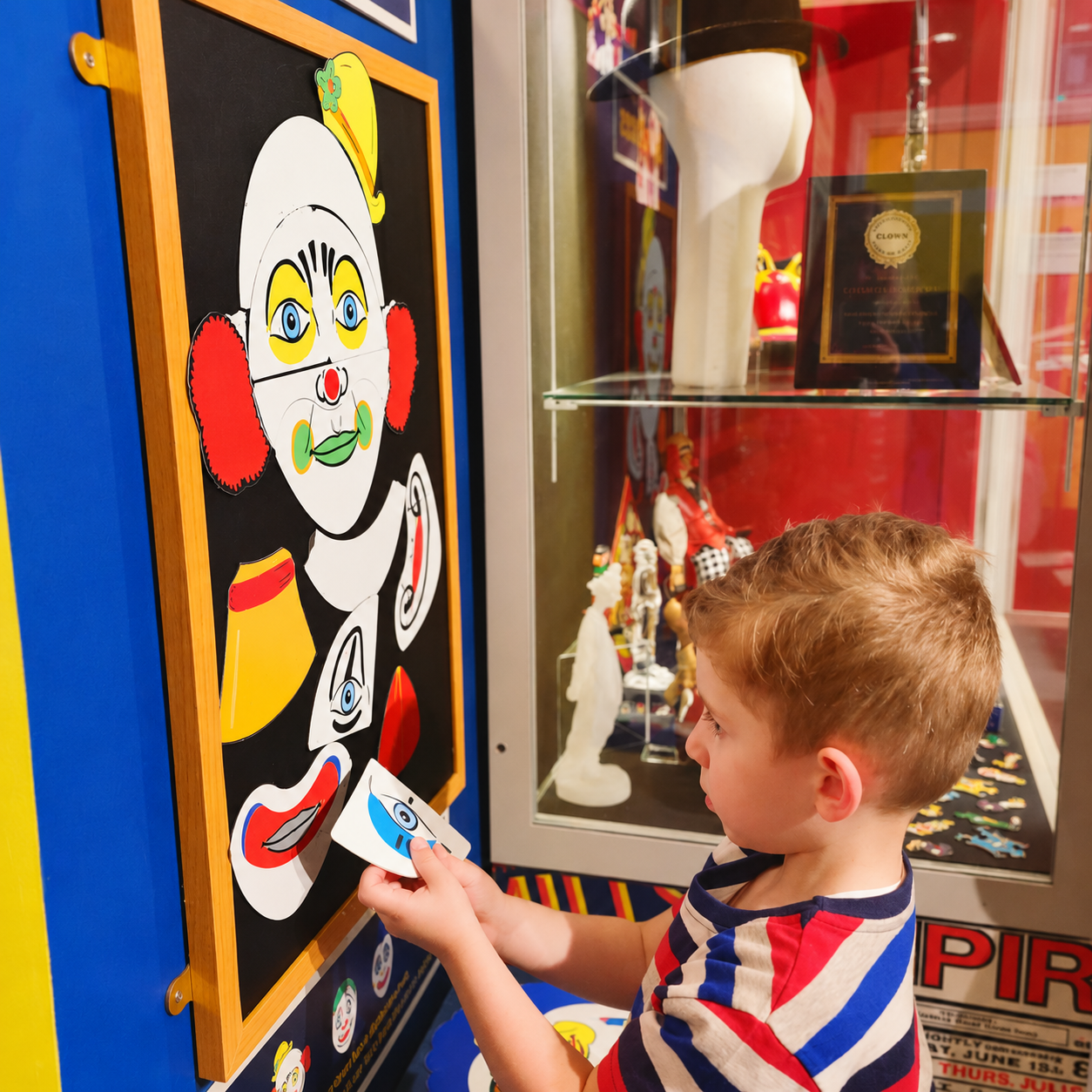
One of the advantages of Discovery Museum is its changing programme of temporary exhibitions and activities. Alongside the permanent collections, the museum has hosted everything from circus-themed displays to LEGO events, giving families something different to explore.
I think this matters when you have young children because their interests change so quickly. Something that barely registers on one visit can become fascinating a few months later. Cyrus might be interested in the enormous ship one day and completely absorbed by magnets or pulleys the next.
As he gets older, I imagine he’ll begin to understand more of the science and history behind the exhibits. For now, I’m happy that he enjoys going. There will be plenty of time for detailed explanations when he’s old enough to appreciate them, although knowing H, those explanations will probably arrive whether Cyrus asks for them or not.
It’s also somewhere we can return without feeling obliged to spend an entire day there. We can pop in for a couple of hours, revisit our favourite exhibits and leave when we’ve had enough. I rather like that. Not every outing needs to involve a packed itinerary and a car boot full of emergency supplies.
Is Discovery Museum one of Newcastle’s best free family attractions?
I’d put Discovery Museum high on my list of places to take children in Newcastle, especially when the weather is miserable. There’s enough variety to interest different ages, the interactive galleries are excellent for younger visitors and adults can spend time looking at the exhibits without feeling they’re accompanying the children.
We sometimes overlook the places closest to home when planning family activities. It’s tempting to search for somewhere new or assume that an enjoyable day out must involve paying for an attraction. Yet Newcastle has some excellent museums and cultural spaces that are well worth visiting, and Discovery Museum is one of them.
By the time we left, Cyrus had thoroughly enjoyed himself, H had satisfied his engineering curiosity and I’d managed to get my coffee and cake. Outside, the weather was still distinctly British, but we’d had a good afternoon and nobody had complained about being bored.
Cyrus probably won’t remember all the details of Turbinia’s contribution to maritime engineering, and I doubt he’ll be explaining the principles of electromagnetism any time soon. What he will remember is the enormous ship, the experiments and being allowed to investigate things for himself.
And as for H, I’m fairly certain he’d have stayed longer if we’d let him.
Planning a visit to Discovery Museum
Discovery Museum is on Blandford Square in Newcastle city centre, around an eight-minute walk from Central Station. Admission is free, although donations are welcome, and there is no need to book for a general visit.
The museum is currently open from 10am to 4pm Monday to Friday and 11am to 4pm at weekends, with bank holiday closures. There are lifts, baby-changing facilities and a buggy park, while the Turbinia Café serves drinks and light meals. Opening arrangements and temporary exhibitions can change, so it’s worth checking the official Discovery Museum website before setting off.
Have your say: Where do you take the children when the weather turns miserable in Newcastle or the North East? Have you visited Discovery Museum, or is there another free attraction we should try? I’d love to hear your recommendations.
Occasional stories, experiments, discoveries and questions from Saffron & Cyrus.
Discover more from Saffron & Cyrus
Subscribe to get the latest posts sent to your email.


Saffron & Cyrus is an independent women’s editorial publication with a recognisable voice, real-life perspective, a defined midlife audience and a commercial model built around useful, relevant partnerships.
