
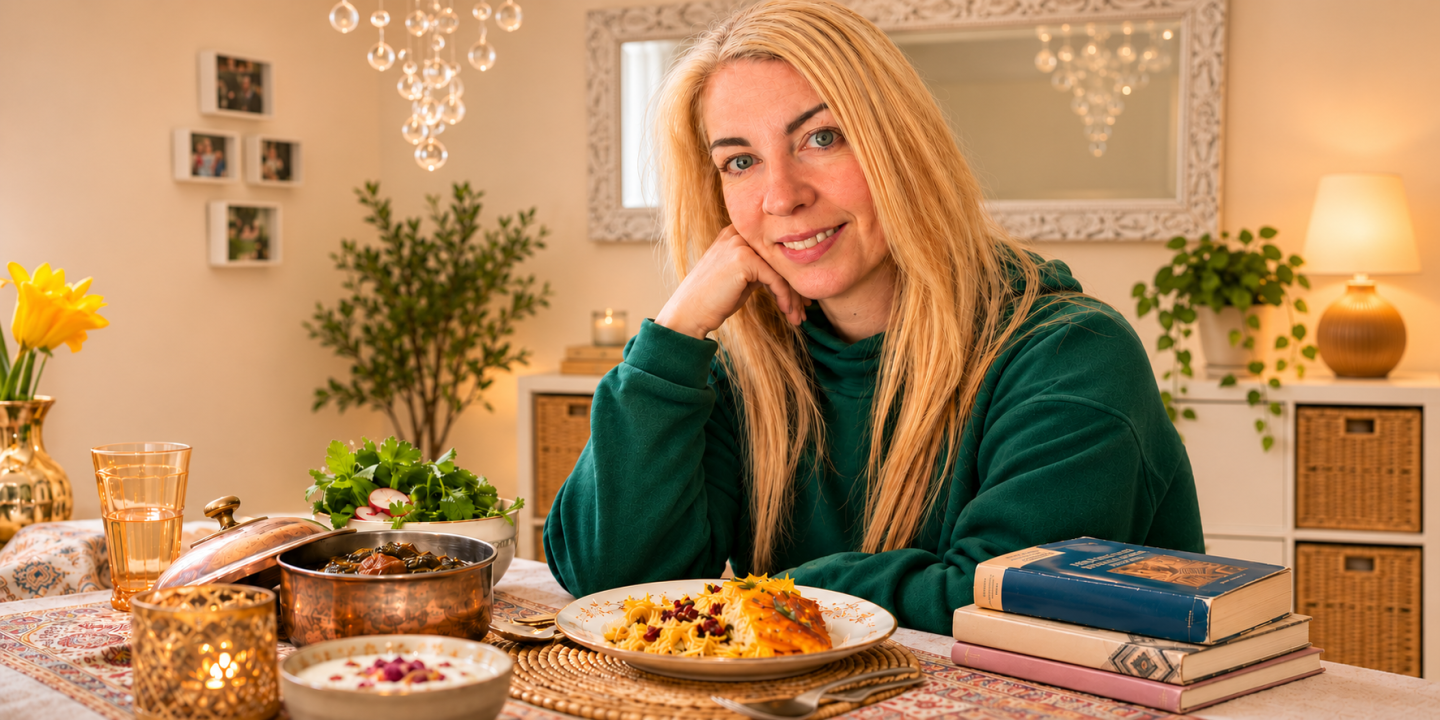
How many ways can you say thank you in Farsi?
English gives me “thanks”; Geordie gives me “ta” (and sometimes “pet”). In Farsi, there are so many different ways to express that you’re grateful for something.
A Persian wedding, a pocketful of thank-yous
At our big fat Persian wedding, one family after another handed me a pâket-e pul, a little envelope with money inside. I wanted each of them to know how grateful I was. After several envelopes, I was glad to have kheyli mamnoon up my sleeve. I tried merci, mamnoon, then moteshakkeram as another family came over. Looking around at the family gathered there, I thought, shokr-e khoda (“thank God”). In just a few minutes, I had found quite a few variations of Farsi thank-yous to strangers who were handing me money.
Leyla Shams’s recent e-newsletter from Chai and Conversation, about saying thank you in Farsi, got me thinking about that wedding again. I found myself reminiscing about family, and all those different ways of saying thank you. If you ever want to learn Farsi, Leyla is a brilliant teacher.
Farsi, Geordie and the words that stay with you
Geordie has its own compact answer: ta. Add pet and the thanks comes with a term of affection. Newcastle University’s Geordie dictionary lists ta as “thanks” and pet as a term of endearment.
If saying thank you is all I ever get the hang of in Farsi, I have done all right. It is already more useful than my German GCSE speaking exam, when I told the examiner my mum was fat, my dad was bald and I had two green dogs. I had been predicted an A and came away with a C. The exam was the day after a Guns ‘n’ Roses concert at Gateshead Stadium, so perhaps my priorities were not in the right order. But looking back, hearing Axl Rose belt out ‘You Could Be Mine’ was definitely the right decision!
I had more or less decided languages were not my thing until I met H. Then suddenly I had a reason to learn another one, and plenty of chances to get it all wrong again. I could understand the individual words and still need H to explain why you would say them to somebody.
Years later, in Germany, I expected some of my school German to return. Instead, I found myself speaking Farsi to bemused Germans in a lift. The same happened in Paris, then in Greece. The Farsi has stuck so firmly that I sometimes forget the English. In Paris, at least, I could rescue the moment with merci.
From “ta, pet” to “kheyli mamnoon”
English has “thanks”, “cheers” and “thank you”. Geordie gives us “ta”, and Farsi has several ways to express gratitude, depending on how formal you want to sound:
- Merci is an everyday “thanks”, borrowed from French. I use it where I might say “cheers” in English.
- Mamnoon means “thank you” or “thanks”. You may also hear mamnoonam, “I’m grateful”.
- Kheyli mamnoon means “thanks very much”. Kheyli means “very”.
- Moteshakkeram is a polite, slightly more formal “thank you”.
- Tashakkor mikonam means “I thank you”.
I want Cyrus to learn to say thank you in Farsi, too. He is ten and still getting used to it. I would like him to feel as at home saying it to H in Farsi as he does saying it to me in English. When I thank either of them, I usually add azizam at the end. Merci, azizam means “thanks, darling”.
What to say to the person who cooked
Then there is the phrase for someone who has fed you. When H first translated dast-e shoma dard nakone, he told me it meant “you have a pain in your hand”. I took his word for it. He speaks Farsi. I am beginning to think I gave him a little too much credit that day. Dast-e shoma dard nakone means “may your hand not hurt”. You are wishing the cook’s hand well, and you can say it to someone who has gone to trouble for you.
I still like H’s version. It is exactly the sort of thing I might say if I had got the tahdig out of the pan in one piece and wanted somebody else to do the washing-up. With someone close, I can say dastet dard nakone. A polite spoken form is dastetoon dard nakone.
Discover more from Saffron & Cyrus
Subscribe to get the latest posts sent to your email.

Saffron & Cyrus is an independent women’s editorial publication with a recognisable voice, real-life perspective, a defined midlife audience and a commercial model built around useful, relevant partnerships.
