
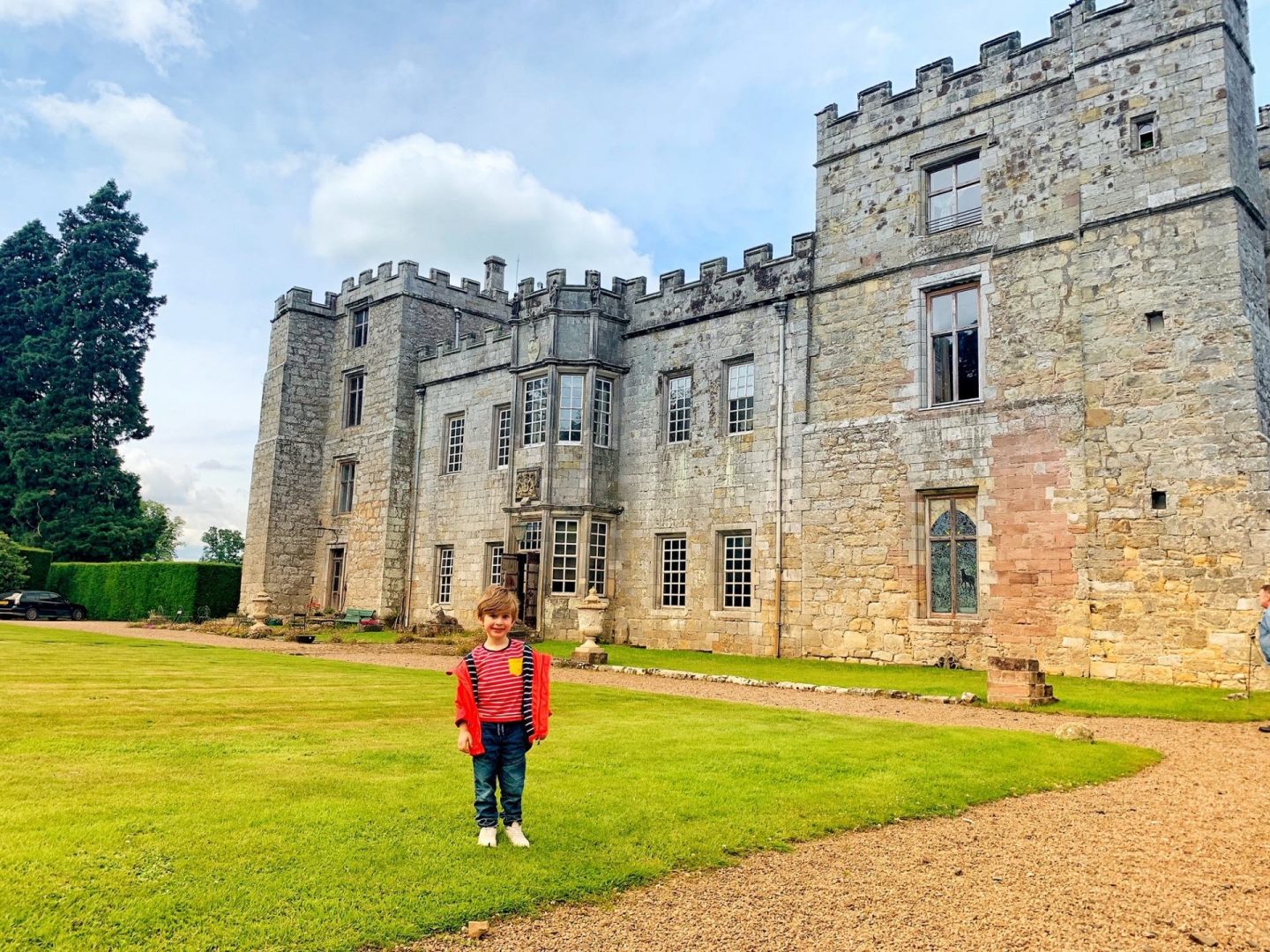

At 50, I’ve come to the conclusion that childhood memories are rather unreliable. Entire school holidays have disappeared from my mind, along with the places we visited, the things we learned and a fair amount of money my mum spent keeping me entertained. Yet I can remember cucumber sandwiches with clarity. Unfortunately, that’s because I ate them on a trip to Edinburgh and was spectacularly sick in my mum’s car on the journey home. Sorry, Mum.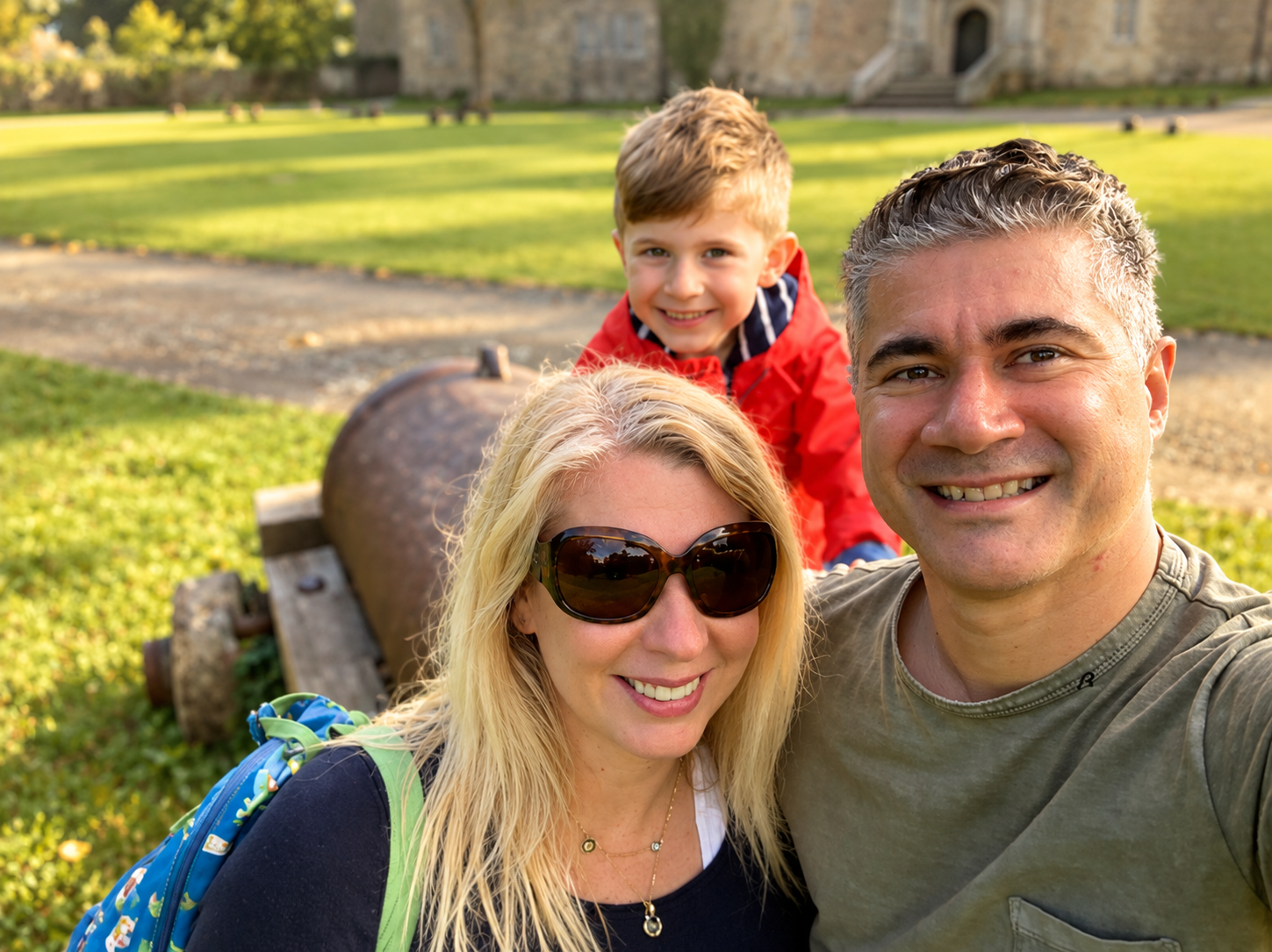
I couldn’t tell you what most of the museum displays said, how much we paid to get into castles or whether the weather was good. What I can remember is a mechanical swan, a talking dead budgie, ice cream with my gran and the smell of damp stone inside old churches. These things have occupied a corner of my brain for more than 40 years, apparently considered more important than whatever I was supposed to be learning at the time.
And now, having become a mum myself, I’m watching the same thing happen with Cyrus. I can spend hours planning a family day out, checking opening times, researching places to visit and imagining all the wonderful things he’ll discover. He, meanwhile, is perfectly capable of deciding that the most memorable part of an afternoon exploring medieval ruins is the amount of sheep poo on the footpath. Which brings me to Chillingham Castle, Dunstanburgh Castle and a rather unexpected lesson about the memories we pass on to our children.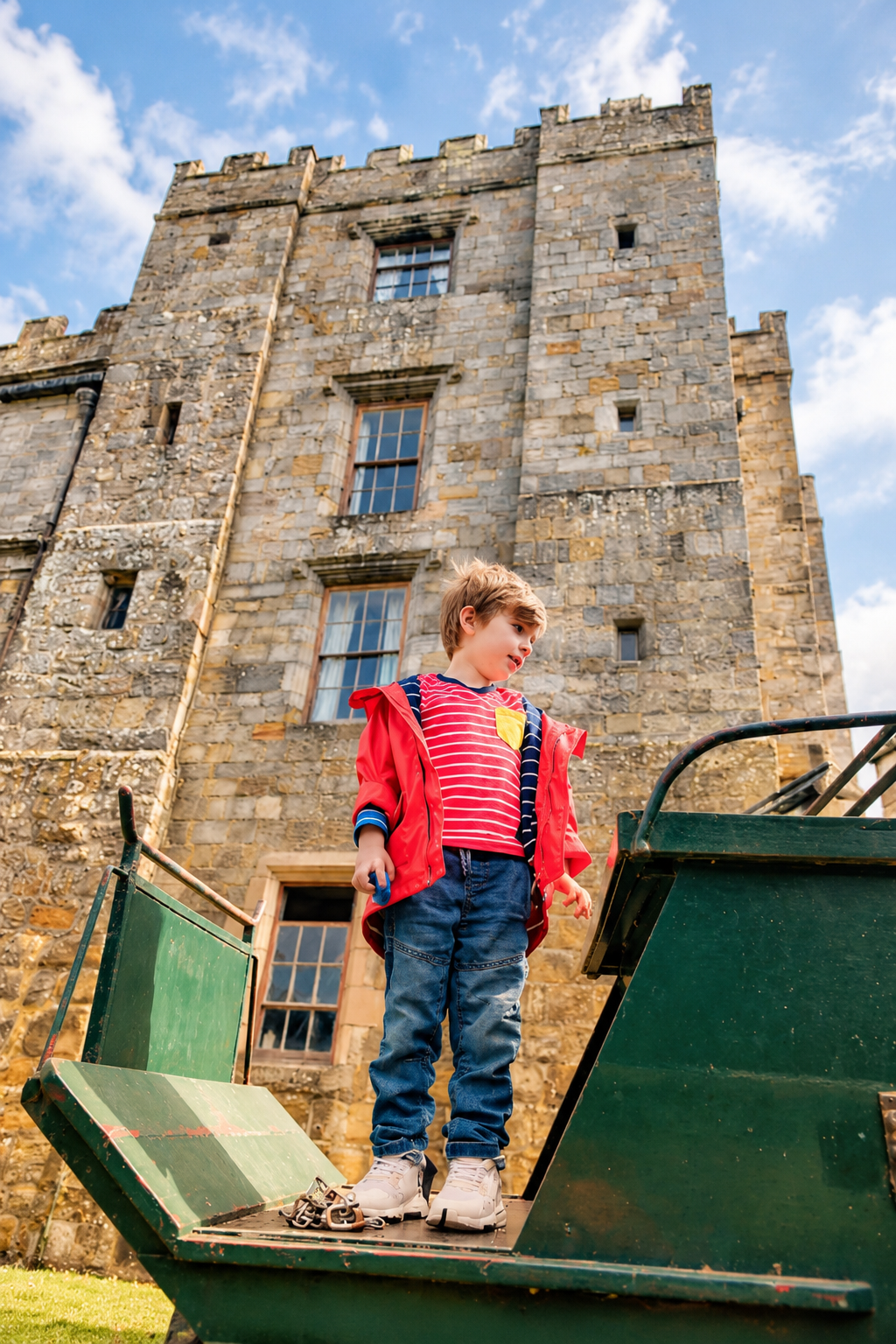
I remember a mechanical swan, a talking dead budgie, ice cream with my gran and cucumber sandwiches for all the wrong reasons. Not one interpretation board has survived.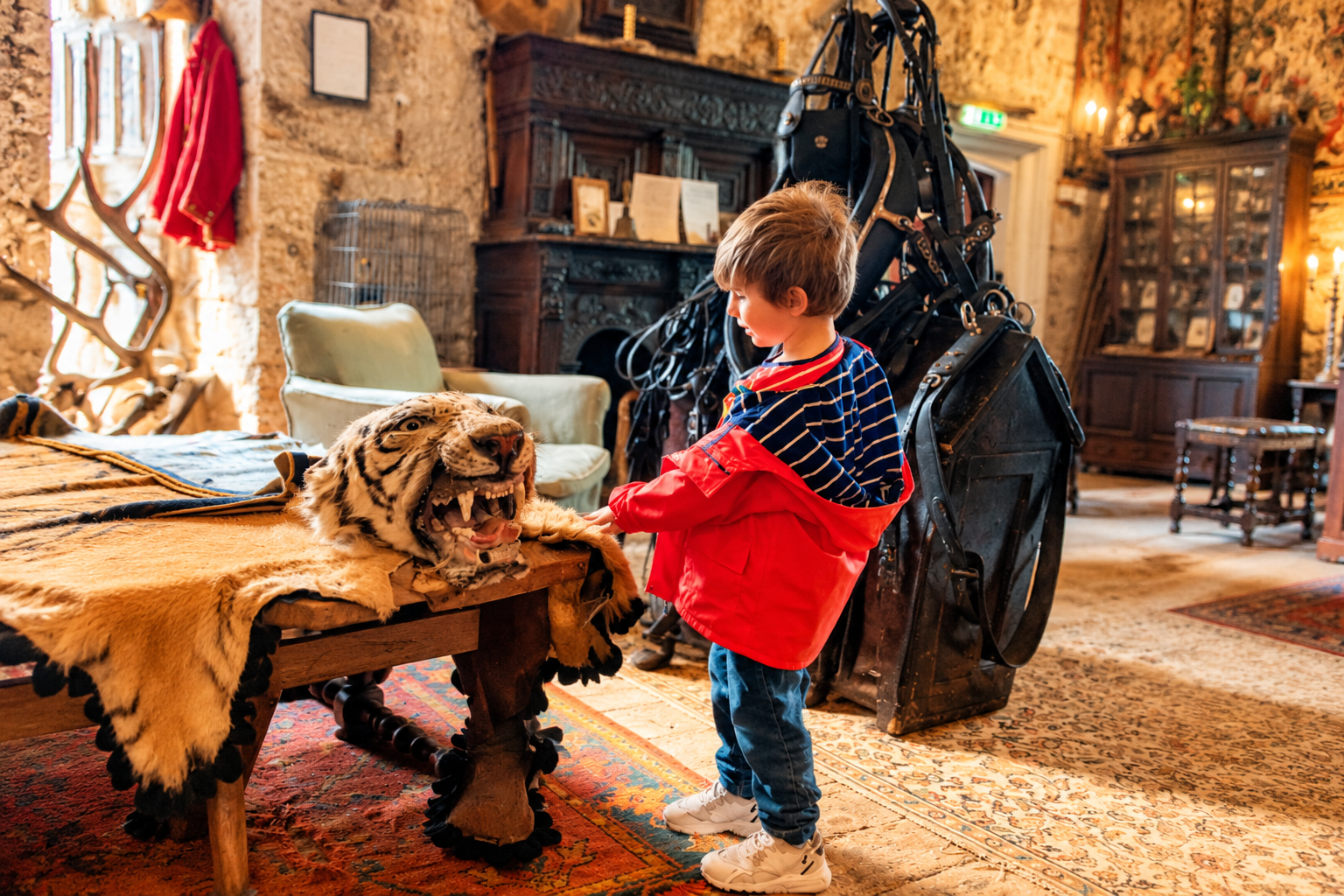
My mum and gran both loved history, particularly castles, churches and old graveyards. After my grandad died, my gran had more time to explore, and she and Mum would take me on trips around Northumberland and further afield. We weren’t travelling abroad or doing anything especially extravagant. These were ordinary school holiday outings, often involving a packed lunch, a car journey and somewhere old enough to have accumulated a few ghosts.
I loved those places, although perhaps not always for the reasons the adults intended. Castles appealed to my imagination, while graveyards fascinated me because of the inscriptions. I’d wander between the headstones reading the words, wondering about the people buried beneath them and trying to imagine the lives they had led. There was something compelling about the language people chose to remember someone they loved.
Of course, I wasn’t always quite so philosophical. Old churchyards could be creepy, especially when the light was fading and my imagination began supplying residents who hadn’t entirely accepted that they were dead. I remember the smell of old churches particularly well, that mixture of cold stone, dampness and centuries of people coming and going. Even now, walking into an ancient church can transport me straight back to those afternoons.
Rather unexpectedly, those childhood excursions eventually found their way into my education. When I was studying A-Level English Language, I chose to investigate the language used in gravestone epitaphs. This meant returning to Northumberland churchyards, except this time I was examining the words rather than wondering whether something might emerge from behind a particularly imposing headstone.
I studied the phrases people used, the recurring expressions of grief and remembrance, and the way language reflected attitudes towards death. Looking back, it was a rather melancholic subject for a teenager, although I’ve always been interested in the stories people leave behind. I got a B at A-Level English Language, which at least proved that all those afternoons trailing around old graveyards with Mum and Gran hadn’t been entirely wasted.
There were museums too, particularly the old Hancock Museum in Newcastle, which is now the Great North Museum: Hancock. Gran would take me there when Mum was working, and I remember the enormous collection of stuffed animals arranged in what seemed to me like a rather eccentric Noah’s Ark. There was something both fascinating and unsettling about seeing so many creatures gathered together, frozen in time behind glass.
But my favourite exhibit was Sparkie, the talking budgie. Sparkie was a stuffed bird with a recording of his voice that visitors could pay to hear. The fact that he was dead seemed almost incidental to my younger self. Here was a budgie who could talk, and I thought he was magnificent. Then there was the mechanical silver swan at the Bowes Museum, another extraordinary object that seemed to belong in a fairy tale rather than a museum. I remember watching it with complete fascination, although I couldn’t tell you what else we saw that day.
After our trips to the Hancock, Gran and I would often go to Mark Toney for ice cream. I remember those ice cream sundaes almost as clearly as the museum itself, perhaps more clearly, if I’m being fair. It’s a reminder that what stays with us isn’t always the main attraction but the little rituals surrounding it, particularly when they involve somebody we love.
One of my strongest childhood memories is a visit to Warkworth Castle when I was about 10. I went with my middle school, and although I can’t remember much of the organised visit, I remember seeing the cells and wondering what it must have felt like to be imprisoned inside one.
The thought disturbed me. I imagined someone shut away from the world, unable to leave, perhaps forgotten by the people outside. While other children may have been imagining knights and battles, I was thinking about loneliness. I went home and wrote a poem about it, which I rather unimaginatively titled Loneliness.
That poem went on to win a local newspaper poetry competition. At 10, I was delighted, although I doubt I gave much thought to the significance of writing something that another person considered worth publishing. I was simply a child who had visited a castle, imagined the life of someone who might once have been imprisoned there and put those thoughts into words.
What I couldn’t have known was that more than 20 years later, in my 30s, I would end up working as a reporter for that same newspaper. There is something rather pleasing about that connection now. A school trip inspired a poem, a newspaper gave it a prize, and years later I walked through the newspaper’s doors to earn a living doing something I had loved since childhood.
I sometimes wonder whether those early visits shaped my interest in writing more than I realised. I was never interested in remembering dates or military campaigns. I wanted to know about the people who had lived in those buildings, the ordinary lives that unfolded behind the grand architecture and the emotions that history books don’t always capture. Who had slept in those rooms? Who had been frightened? Who had been lonely? Who had looked through those windows and wondered what might happen next?
By my 20s, I’d developed a habit of travelling along the Northumberland coast, visiting the castles between Newcastle and Scotland. I loved the atmosphere, the skies, the wind coming off the sea and the sense that the past was never very far away. So when Cyrus came along, taking him to explore these places seemed the most natural thing in the world. I assumed he’d love them too, although naturally, he had his own opinions.
Our first stop was Dunstanburgh Castle, one of the most striking ruins on the Northumberland coast. It stands above the sea, surrounded by open grassland, with enormous stone walls that seem to rise straight out of the landscape. On a clear day, the views are wonderful, although even in miserable weather there’s something dramatic about the place.
I have always loved Dunstanburgh. The ruins, the cliffs and the North Sea beyond make it feel wonderfully remote, as though you’ve wandered into a painting. It’s the sort of landscape that makes me stop, look around and imagine everything that might have happened there centuries ago. Getting there, however, requires a walk, and Cyrus considered this a significant flaw in the day’s arrangements.
He was six, and the walk was not receiving favourable reviews. There were regular questions about how much further we had to go, observations about the grass and increasingly detailed reports concerning the amount of sheep poo scattered along the route. Apparently, Northumberland’s livestock had been particularly productive.
I tried pointing out the scenery, the coastline and the castle growing larger in the distance. Cyrus remained more interested in avoiding what the sheep had left behind. By the time we reached the ruins, I was ready for him to experience the same sense of wonder I’d felt visiting castles as a child. I stood looking at the magnificent remains of a medieval fortress, the sea stretching beyond its ancient walls. Cyrus looked up and announced, “It’s broken.”
And there it was. Several centuries of Northumberland history dismissed in two words. I couldn’t really argue with him. The castle was, technically, broken. Its walls were incomplete, much of the building had disappeared and nobody appeared to be doing anything about the roof. To me, it was a romantic ruin filled with history. To Cyrus, it was a building in a rather poor state of repair.
I laughed, although I should have recognised what was happening. After all, my mam and gran had spent years taking me to museums and historic buildings, and what had I remembered? A mechanical swan, a dead budgie and an unfortunate incident involving cucumber sandwiches. Children have very little respect for what the tourist brochure considers important, but I hoped our next castle might capture his imagination.
Chillingham Castle is a very different proposition from Dunstanburgh. Tucked away in the Northumberland countryside, it has a reputation for ghosts, unusual collections and a history that is considerably darker than the picturesque ruins along the coast.
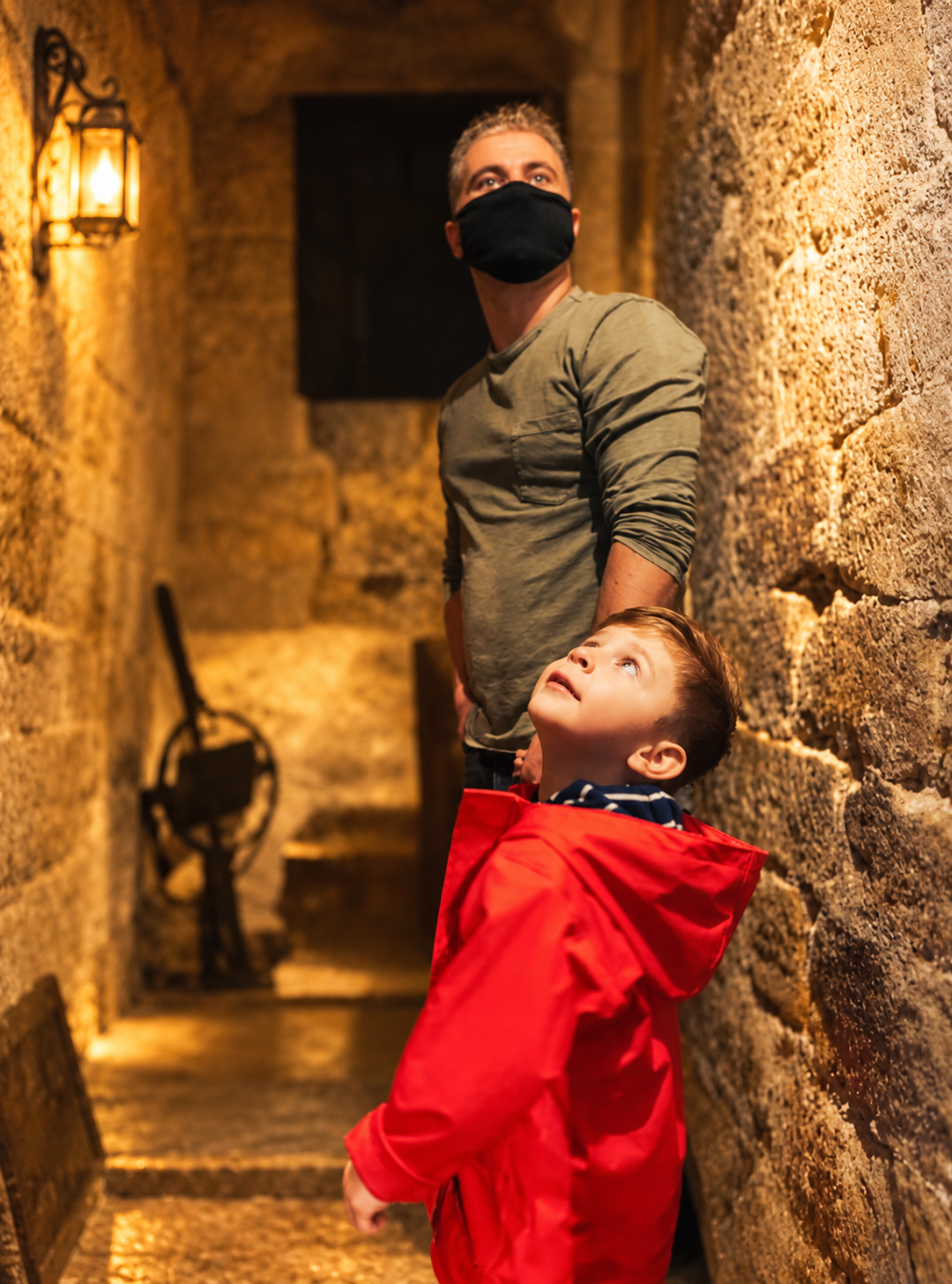
Even the approach feels different. The road narrows, old trees crowd around the drive and the castle gradually appears through the surrounding greenery. It’s the sort of place where you half expect someone in medieval clothing to emerge from behind a tree, although whether they’d be welcoming visitors or warning them to leave is another matter.
Before we’d even reached the castle, we came to a ford, which delighted Cyrus. Driving through water was apparently much more exciting than walking towards a ruined fortress. He watched as the car splashed through, while I quietly considered how I might explain to my husband that his vehicle had become part of Northumberland’s river system. Thankfully, we reached the other side without incident, and Cyrus was already in a better mood before we’d even bought our tickets.
Chillingham isn’t one of those immaculate historic attractions where everything has been carefully restored and presented with perfect lighting. Its character comes partly from the fact that it feels old, genuinely old, with uneven floors, narrow staircases, peeling walls, dusty corners and rooms filled with an extraordinary assortment of objects.
Some of the interiors look as though several generations of eccentric relatives have spent their lives collecting things and nobody has ever quite had the courage to suggest a clear-out. There are portraits, furniture, strange ornaments and displays that don’t always appear to follow any obvious organising principle. I mean that affectionately. I rather liked it. At Disney’s Haunted Mansion, I imagine every cobweb has been approved by a committee. At Chillingham, the cobwebs look as though they’ve acquired permanent residency.
There is something wonderfully atmospheric about a place that hasn’t had all its rough edges polished away. You can wander into a room and find yourself wondering what on earth you’re looking at, or why somebody decided it belonged there. For children, that unpredictability can be far more interesting than a perfectly organised exhibition, and for Cyrus, it meant there was plenty of room to invent his own stories.
One of the moments I remember most clearly happened when Cyrus discovered a narrow window in the castle wall. To me, it was an interesting piece of medieval architecture, the sort of opening designed to allow defenders to fire arrows while remaining protected behind thick stone. To Cyrus, it was an opportunity to defend the castle against an approaching army.
Within seconds, he was standing at the window, firing imaginary arrows at an equally imaginary enemy. I have no idea who was attacking Chillingham Castle that afternoon or what diplomatic negotiations had taken place before hostilities began, but Cyrus had clearly decided that talking was no longer an option. He was defending the castle, and he took the responsibility seriously.
There was no touchscreen, no interactive display and nobody dressed as a medieval knight explaining how the building had once been defended. He didn’t need any of that. The window was enough, and watching him, I suddenly remembered myself at Warkworth Castle, standing in front of a cell and imagining the prisoner who might once have sat inside it.
At 10, I had invented a story about loneliness. At six, Cyrus was inventing a battle. Our imaginations had taken us in very different directions, but the instinct was much the same. We had both found something in an old building that allowed us to create a story of our own. Perhaps that’s one of the things I love most about castles. They give you the setting, but they don’t insist on telling you what to imagine.
Of course, you can’t visit Chillingham Castle without encountering its reputation for ghosts. The castle has long been associated with paranormal stories, including tales of the Blue Boy, and there are enough dark corners and creaking floorboards to keep even a committed sceptic looking over their shoulder.
I enjoy a good ghost story, although I’m rather less enthusiastic about the possibility of becoming personally involved in one. I can happily read about haunted buildings, watch paranormal programmes and speculate about strange noises, provided the strange noises remain safely confined to somebody else’s house. Put me inside an ancient castle with a particularly dark corridor, however, and my imagination becomes considerably less entertaining.
Chillingham has precisely the sort of atmosphere that encourages such thoughts. The thick walls keep the interiors cool, footsteps echo through the rooms and the light changes as you move between staircases and corridors. Every so often, you find yourself looking into a doorway and wondering what might be waiting beyond it.
Then there was the torture chamber. I approached it with the expression of a mature woman taking a scholarly interest in medieval punishment, although inside I was considerably less composed. There’s something deeply unpleasant about looking at instruments designed specifically to cause human suffering, especially when you’re standing in a building old enough to make the history feel uncomfortably close.
Cyrus, meanwhile, was remarkably untroubled. This was the same child who could become suspicious of a dark landing at home but appeared perfectly willing to investigate a medieval torture chamber. He didn’t linger, and neither did I, although I suspect our reasons were rather different.
As for the ghosts, I didn’t see any, and I wasn’t particularly disappointed. There is a limit to how much historical authenticity I require from a family day out, and an encounter with a lingering medieval resident would have exceeded it.
Among all the curious objects inside Chillingham, one thing caught my attention for a completely different reason. It was a Persian rug, which might not sound particularly remarkable until you consider that I’m married to a Persian man who takes a rather serious interest in them.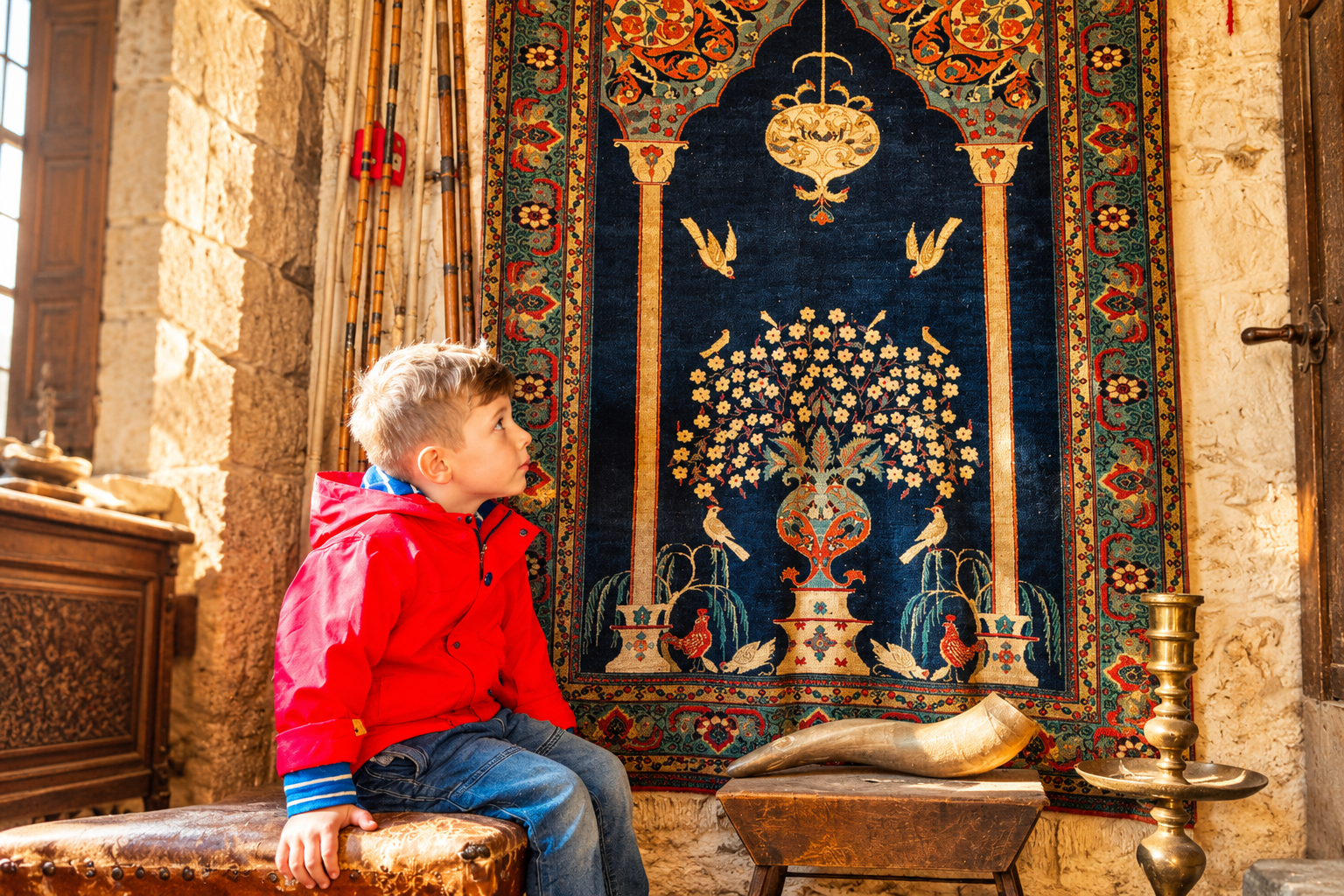
I’ve learned that a Persian rug is rarely just something you put on the floor. There are patterns to consider, regions to discuss, colours to examine and, depending on who’s doing the examining, quite firm opinions about quality. My husband has an eye for a good rug and is perfectly capable of turning what I consider a simple decorative purchase into a detailed discussion about craftsmanship and origins. Even he was impressed by the one at Chillingham.
Standing there with Cyrus, however, I found myself thinking about something beyond the rug itself. Persian culture is woven into our family life. It’s there in the food we eat, the words Cyrus hears, the stories his dad tells him and the traditions we celebrate, particularly Nowruz. Some of it is deliberate, but much of it happens without anyone making a special effort. It’s simply part of growing up in our family.
And here we were, in an eccentric English castle in the middle of Northumberland, surrounded by medieval architecture and ghost stories, looking at something that connected with another part of Cyrus’s heritage. I doubt he gave the rug anything like the amount of thought I did. He was six, after all, and there were imaginary battles to fight. But I liked the moment, particularly because it reminded me how children absorb the cultures and traditions around them without necessarily recognising their significance.
The Persian rug was hardly the most unusual thing we encountered. Chillingham’s rooms contained all sorts of curiosities, including a crystal skull displayed behind bars, Easter Island-style figures, portraits, antique furniture and objects that appeared to have been collected simply because somebody found them interesting.
I rather admire that approach to decorating, although I’m not sure my husband would be quite so enthusiastic if I attempted something similar at home. There is an eccentricity to Chillingham that makes it difficult to compare with more conventional historic attractions. Some rooms are grand, others feel oddly domestic, and occasionally you find yourself standing in front of something so unexpected that you forget what you originally came to see.
I liked the fact that the castle didn’t seem particularly concerned with presenting a neat, sanitised version of its past. It was a little untidy, occasionally unsettling and full of things that invited questions. Cyrus could look at an object and invent his own explanation. I could look at the same thing and wonder about the person who had brought it there. Neither of us needed to have every question answered, and for a child who enjoys exploring, that freedom is rather valuable.
After spending time inside the castle, we headed out into the gardens, where Cyrus found another opportunity to become a medieval knight. There were hedges, winding paths and little corners that seemed made for exploring. He raced ahead, inventing adventures as he went, while I followed at a considerably more measured pace.
I go to the gym regularly, so I like to think I’m reasonably fit. Unfortunately, keeping up with an enthusiastic six-year-old who has decided he’s defending a medieval kingdom requires a rather different sort of stamina. There are no scheduled recovery periods, and the instructor doesn’t announce when the class is nearly finished. Cyrus was having a wonderful time, while I was beginning to appreciate the benches.
But it was lovely watching him enjoy the place without needing constant entertainment. He wasn’t asking for a screen or complaining that there was nothing to do. He was running around, exploring paths and making up stories about things that only he could see. I thought about all the afternoons I’d spent doing much the same thing as a child, when Mam and Gran would take me somewhere old and I’d disappear into my imagination.
For a place famous for ghosts and dark history, one of the things I remember most fondly about Chillingham is a very ordinary human interaction. The man at the ticket office was friendly, chatty and full of local knowledge. Part of the castle was closed during our visit, and rather than simply charging the usual admission, he reduced the price to reflect what we could actually see.
I paid £8, and Cyrus was admitted free. Those were the prices during our visit, not current admission charges, so do check before travelling. It wasn’t a grand gesture, but I appreciated it. There was no complicated explanation or awkward discussion. He simply recognised that visitors weren’t getting access to the whole castle and adjusted the price accordingly.
I’ve worked in journalism and PR long enough to know how much organisations like to talk about customer experience. Sometimes, however, good service is simply a person being decent. Looking back, that little exchange has stayed with me almost as clearly as the castle itself. I don’t remember every room we entered, but I remember the man who treated us kindly.
As I’ve grown older, I’ve found myself returning more often to memories of my mam and gran. Perhaps that’s inevitable once you become a parent, particularly when you have a child later in life. I had Cyrus at 40, and there are moments when I look at him and realise how much of my own childhood has quietly followed me into motherhood.
The old Hancock Museum is a good example. The museum I remember isn’t quite the Great North Museum: Hancock that exists today. Displays have changed, collections have been rearranged and the wonderful, slightly unsettling arrangement of stuffed animals that fascinated me as a child is no longer there in the form I remember.
I understand why museums change. They need to attract new visitors, respond to new ideas and make room for different collections. Still, there’s a part of me that misses the museum I knew as a little girl, although I suspect that’s memory being unreasonable. The museum doesn’t belong to the child I was. Cyrus could walk through it today and become fascinated by something I barely notice. He might remember a particular object for the rest of his life, just as I remember Sparkie the budgie. Then, 40 years from now, he might complain that somebody has removed it. I rather hope he does.
What I understand now, which I couldn’t possibly have understood as a child, is that my mam and gran weren’t necessarily trying to create memories that would last a lifetime. They were simply finding things for us to do during the school holidays. Mam drove, Gran came along, and there were packed lunches, castles, museums, churches and occasionally a rather unfortunate incident involving cucumber sandwiches.
They probably had no idea that those ordinary days would still be occupying my thoughts decades later. My gran couldn’t have known that taking me to the Hancock would leave me with such affection for museums. Mam couldn’t have known that a school trip to Warkworth would inspire a poem, or that I’d eventually work as a reporter for the newspaper that published it. They certainly couldn’t have known that I’d one day take my own son to Northumberland’s castles and find myself remembering all those childhood adventures.
For us, absolutely. Chillingham Castle was one of those family days out that worked because it offered something for both of us without trying too hard to entertain either of us.
I enjoyed the history, the atmosphere, the eccentric collections and the sense that the building had accumulated centuries of stories. Cyrus enjoyed exploring, pretending to be a knight and finding places where his imagination could take over. The gardens gave him room to run, while the interiors provided enough unusual objects and dark corners to keep us both curious.
That said, Chillingham isn’t necessarily the right choice for every child. Some of the rooms are dark, the castle has uneven floors and staircases, and the torture chamber may be unsettling for younger or more sensitive visitors. Parents will know best whether their children are likely to enjoy the atmosphere or find it frightening.
Sensible shoes are essential, and younger children will need supervision, particularly around historic stairs and uneven surfaces. I’d also recommend allowing time to explore the gardens rather than rushing through the interiors. Sometimes the best part of a family visit happens when you stop trying to make every minute educational.
It’s also worth checking the latest opening times, admission prices, accessibility information and any temporary closures before travelling. Our visit took place when Cyrus was six, and the admission arrangement we received reflected the fact that part of the castle was closed at the time.
If you’re planning to combine Chillingham with Dunstanburgh, remember that the latter involves a decent walk across open countryside. Take suitable footwear, allow plenty of time and prepare yourself for a detailed assessment of the local sheep population. Apparently, they make quite an impression.
I don’t know what Cyrus will remember about our visit to Chillingham when he’s 20, 40 or 50. Perhaps he’ll remember driving through the ford, or standing at the narrow window pretending to fire arrows at an invisible army. He might remember the strange skull, the dark rooms or the fact that his mam was considerably more nervous about the torture chamber than he was.
Perhaps something I barely noticed will turn out to be the detail that stays with him. A particular smell, a conversation, the sound of our footsteps on the stairs or the feeling of running through the gardens. Childhood memory doesn’t seem especially interested in preserving the things adults think are important.
I know that because I can still remember the mechanical swan at the Bowes Museum, Sparkie the talking budgie and the ice cream sundaes I shared with Gran. I can remember the cold inside old churches, the words carved into gravestones and the cell at Warkworth that made a 10-year-old girl think about loneliness. What I can’t remember is most of the information I was supposed to learn.
But those trips gave me something else. They gave me an interest in history, a curiosity about people and places, and an imagination that eventually helped me become a writer. They also gave me time with two women who shaped my childhood in ways I probably didn’t recognise until much later.
Now I have Cyrus, and I’m doing what Mam and Gran once did for me. I’m taking him to castles, museums and places that interest me, hoping that somewhere along the way he’ll discover things that interest him too.
Maybe one day he’ll take his own child to a castle in Northumberland. Perhaps he’ll stand in front of a ruined wall, remember an afternoon with his mam and laugh about how he once complained that Dunstanburgh was broken. Or perhaps he’ll remember something completely different. I rather like the thought that I don’t get to decide.
When you think back to the places your parents or grandparents took you, what has stayed with you? Is it the famous attraction you went to see, or something wonderfully ordinary, such as an ice cream, a strange object, a particular smell or a conversation you’ve never forgotten?
And if you’re a parent, what do you think your children will remember about the days you’ve spent together when they’re grown up?
Occasional stories, experiments, discoveries and questions from Saffron & Cyrus.
Discover more from Saffron & Cyrus
Subscribe to get the latest posts sent to your email.

Saffron & Cyrus is an independent women’s editorial publication with a recognisable voice, real-life perspective, a defined midlife audience and a commercial model built around useful, relevant partnerships.
