
Ad. This post is sponsored by AnatoBase.
Can understanding anatomy help you train smarter?
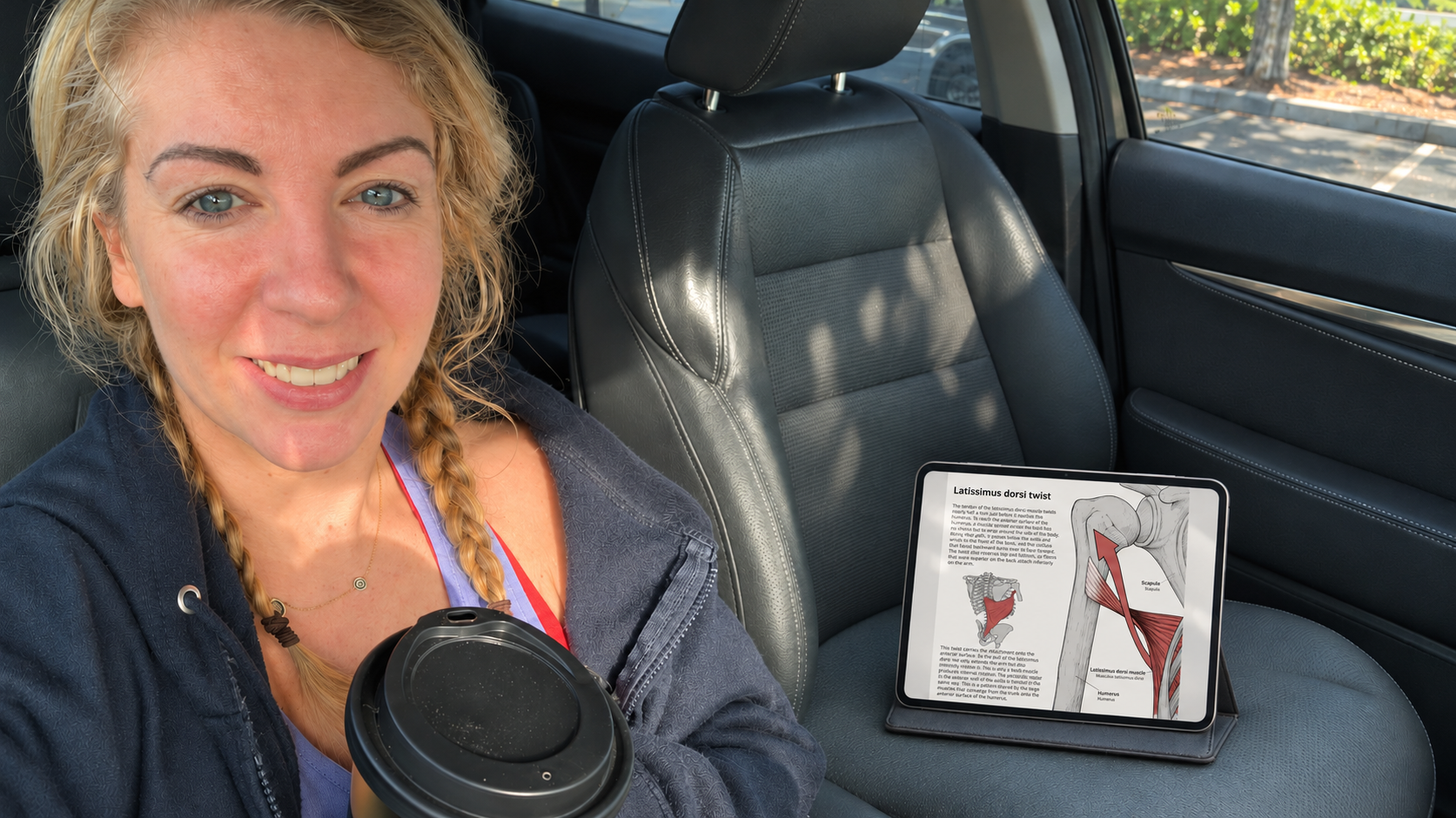
After I qualified as a Level 2 Gym Instructor at 51, I went back to footage of my lifts and H’s to look more closely at how we move. I used AnatoBase to see what my elbows were doing in a row and what his shoulder blades were doing in a pull-up.
Why I went back to the gym footage
I managed to stretch a three-to-five-month gym instructor course over two years. For someone who enjoys a demanding exercise class, I developed quite a bit of stamina for avoiding the final video assessments. On 6 November 2026, I passed my Level 2 practical, and at 51, I finally qualified, but the learning doesn’t stop there.
The assessment videos were the bit I kept putting off. In a class I can concentrate on the exercise. On camera, I also wondered whether I looked like someone who belonged at the back of the room as always. I qualified in the same body I had spent so long doubting, so that has made me question a few things.
How do I explain what happens during a rep to someone who is new to the gym?
What is AnatoBase?
AnatoBase is an online reference for human anatomy and movement. The Anatomy Library shows muscles and bones in videos and illustrations. The Motion Library uses photographs of real models so you can study a movement from different angles and I used both libraries alongside our footage. H’s lifts gave me a chance to see what I could pick out when I watched someone else move. He’s also quite easy on the eye in the gym!
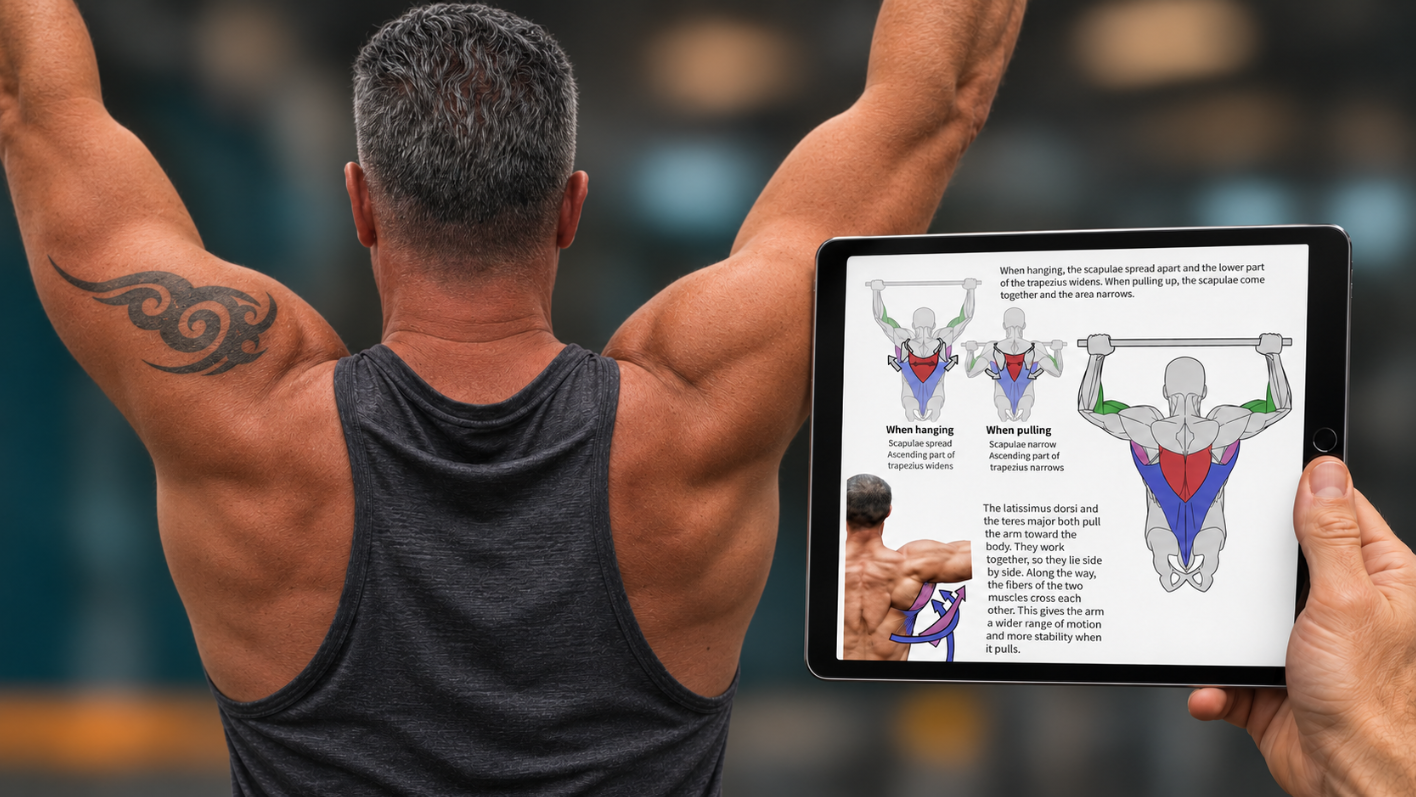
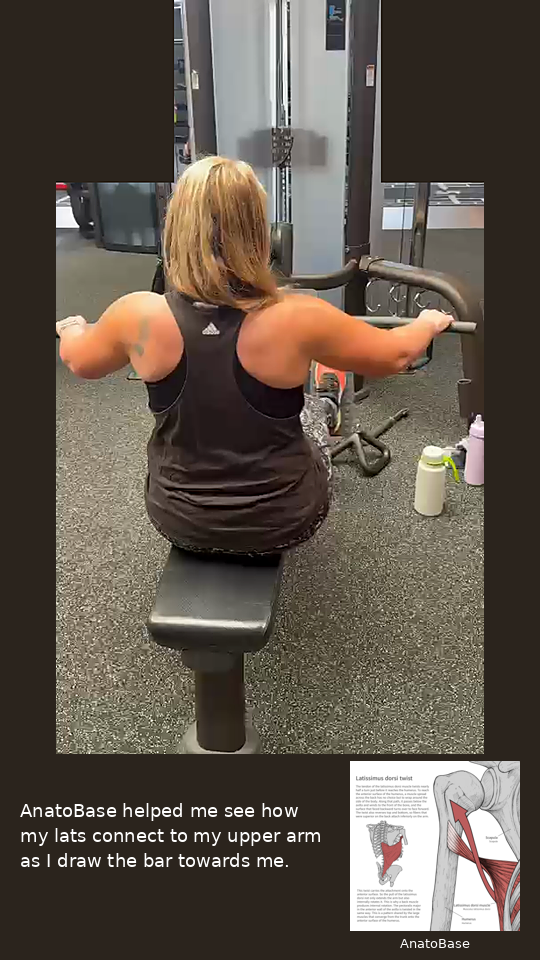
I found the short motion clips easiest to use. I looked at one movement, then went back to my own footage to correct form. The anatomy illustrations will take me more time because there’s a lot to take in for someone starting from scratch. The lat illustration has several labels and explains how the tendon twists before it reaches the upper arm. I prefer to read that at full size after a session, but a short clip is easier to use between sets.
My cable row and weighted rotation
I want to keep the strength I’ve built as I get older. And if there’s a little more to be had, I’ll have that too. I started with my seated cable row. The Latissimus dorsi twist illustration shows how the muscle I know as my lat connects to my upper arm. I watched my clip back and paid more attention to where my elbows went as I pulled the bar towards me.
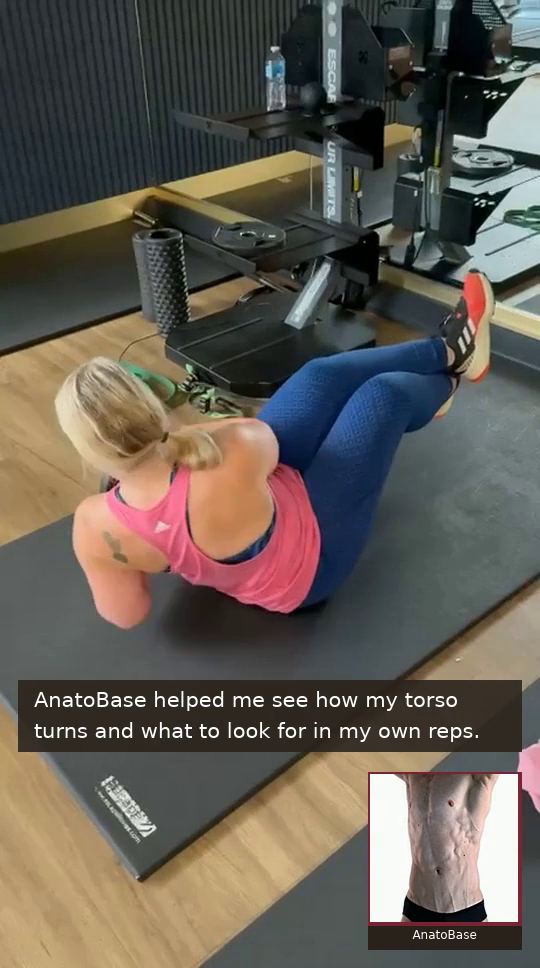
I also compared a clip of my seated weighted rotation with the Motion Library’s Trunk · Rotation reference. The close-up helped me see how the torso turns. When I slowed my own clip, the first thing I noticed was how much my legs moved as well.
H’s pull-up and shoulder press
H’s assisted pull-up gave me a different view. In my row I was watching my elbows. From behind H, I could watch his shoulder blades as he pulled himself up. I replayed his footage after I looked at the AnatoBase animation, which shows the shoulder blades in the hanging and pulling phases.
For H’s seated shoulder press, I used the Arm raise photo to compare the position of his upper arms with the model’s. The exercise and the photo gave me two views of the arms overhead, and a reason to pay attention to the shoulder as well as the weight.
Who can use AnatoBase?
As a newly qualified gym instructor still learning the ropes, I can use the pull-up animation to prepare a simple explanation of how the shoulder blades move. If you train for yourself, pick one detail in a motion clip. Look for it as you play back a rep. If you study anatomy, trace the lat to its attachment on the upper arm. Cover the label and see if you can find the attachment again.
My verdict
I’ll use AnatoBase again when I want to understand a lift or explain it to someone else. Looking at H’s pull-up and my row gave me two questions to bring back to the gym. What do his shoulder blades do as he pulls up? Where do my elbows go as I pull the bar towards me?
Is there an exercise you understood better once you saw yourself doing it?
More from Saffron & Cyrus
At 50, I finally understand the film Labyrinth. How a film I’d known for years made me think differently about finishing my fitness course.
The Fortnightly Edit, issue 01. Three stories from Saffron & Cyrus, including why I kept putting off that course.
Come along for the ride.
Occasional stories, experiments, discoveries and questions from Saffron & Cyrus.
Discover more from Saffron & Cyrus
Subscribe to get the latest posts sent to your email.


Saffron & Cyrus is an independent women’s editorial publication with a recognisable voice, real-life perspective, a defined midlife audience and a commercial model built around useful, relevant partnerships.
