
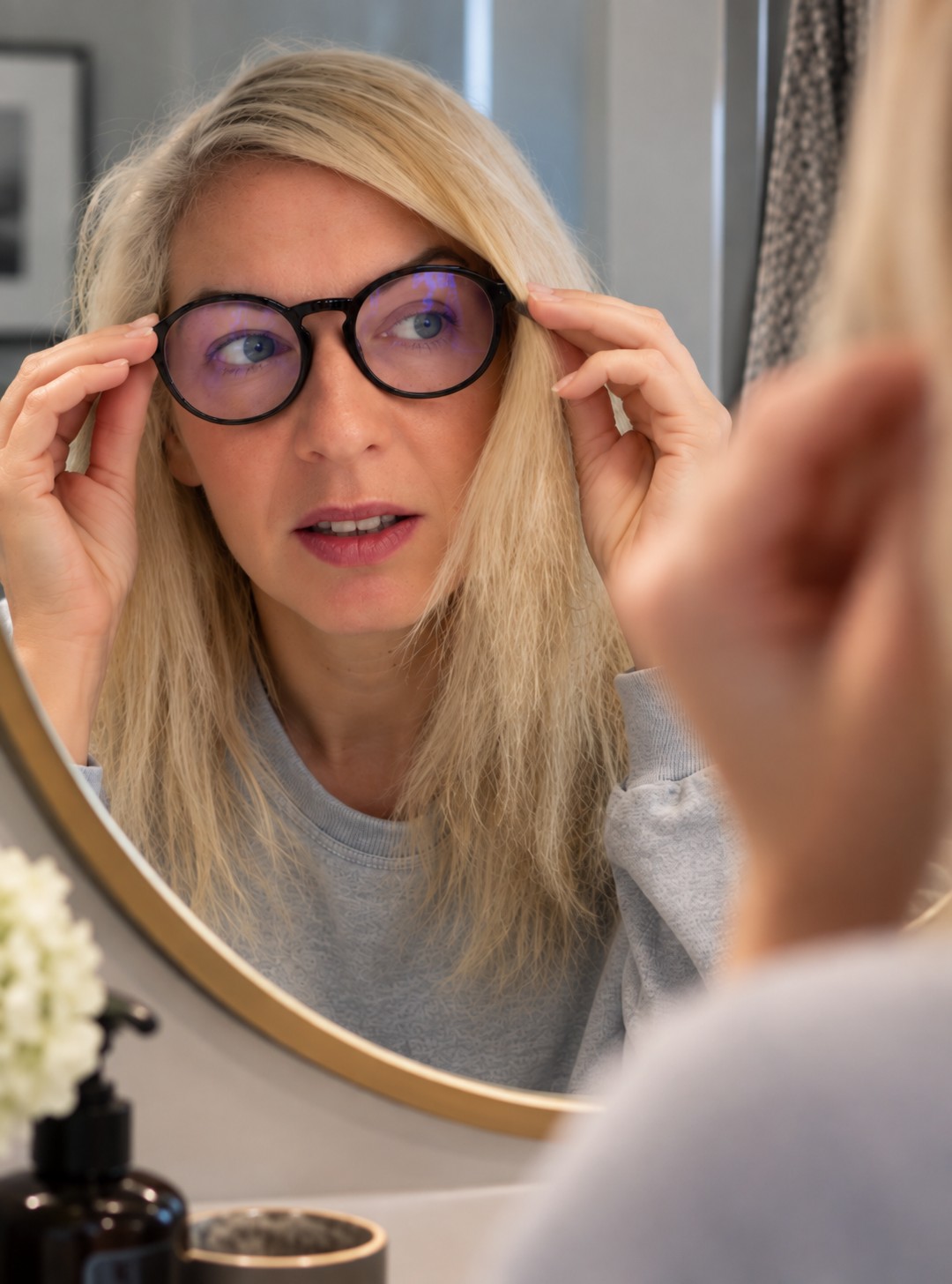
Fifty. Half a century. I had been looking at myself in photographs and noticing something I wasn’t particularly keen on admitting: I thought I looked old.
Not older. Old. I know what I’m supposed to say here. Ageing is a privilege. Every line tells a story. We should embrace our faces exactly as they are. All true, but I still wanted Botox.
For me, the answer involved oversized glasses, hair swept across my face, a great deal of Googling and two months waiting for one eyebrow to return from its unexpected journey north.
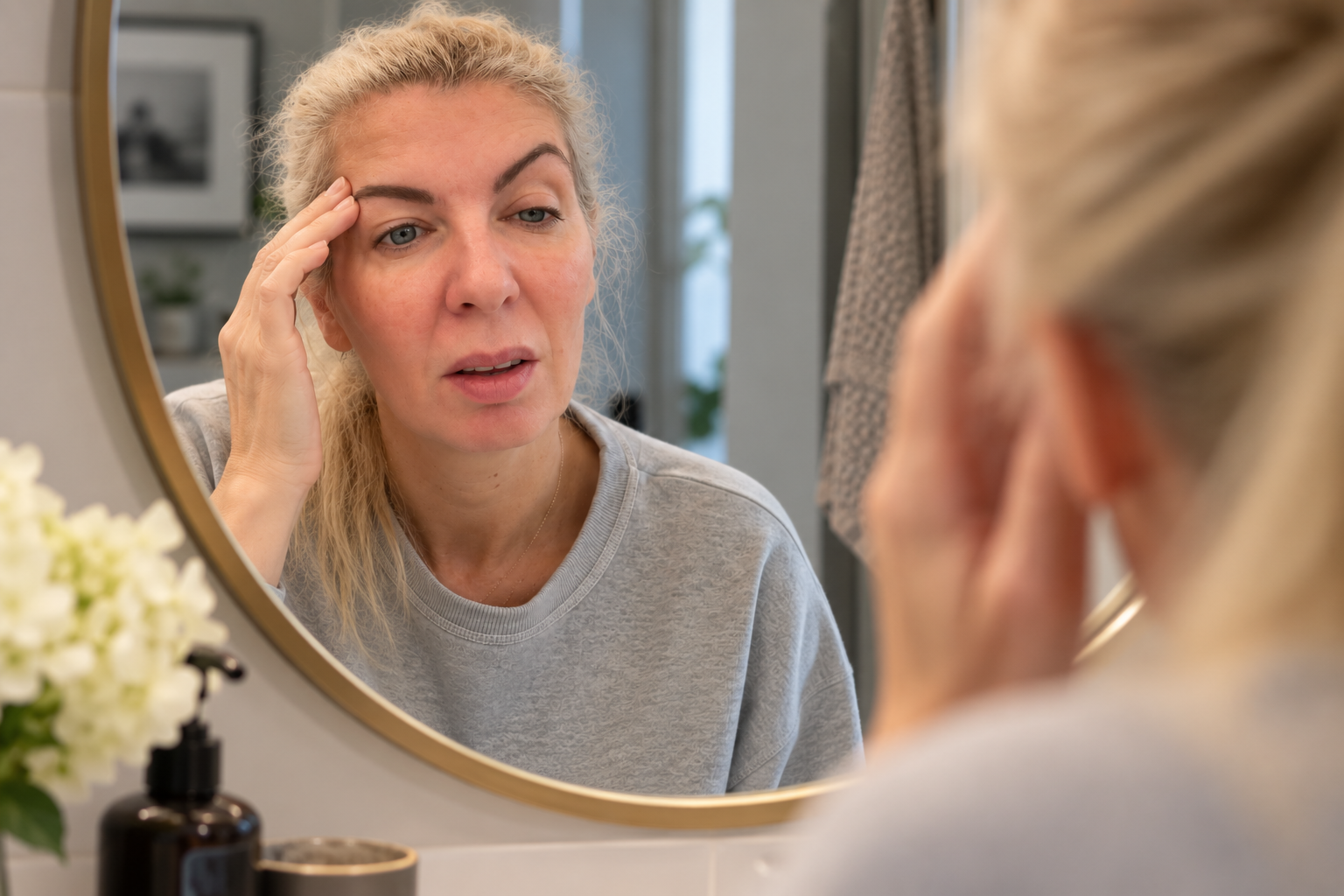
I had already had Botox a few times, so this wasn’t my first nervous encounter with a needle. I knew what I liked about it. I didn’t want to look 30, nor did I want a frozen forehead. I just wanted to look a bit fresher for my 50th birthday year.
There was also the matter of my apparently permanently worried expression. A former newspaper boss once remarked that whenever I walked into his office, I looked worried. That’s because I always was – even when I didn’t need to be. I just wanted everything to be fine again.
Reader, everything was not fine.
I talked through what I wanted with the practitioner: my forehead, the frown lines between my brows, crow’s feet and a little lift around the brow.
I don’t know exactly how many units I had. What I do know is that it cost hundreds of pounds, a figure that caused H to make the sort of noise husbands make when they are trying very hard to support your personal choices while simultaneously calculating what else could have been bought with the money.
Then I waited.
And waited.
Nobody noticed.
There is something rather Emperor’s New Clothes about Botox. You spend hundreds of pounds because you want to look noticeably better, while also desperately hoping nobody notices you’ve had anything done.
Friends didn’t say anything. H peered at me politely. I, meanwhile, was delighted. Over the next few days, I kept checking the mirror for progress. Everything looked smoother. My brows seemed lifted and I felt fresher. I was so pleased that I practically became an unpaid member of the clinic’s marketing department. My purse smarted. My ego glowed. What could possibly go wrong?
At first, it was subtle.
One eyebrow looked slightly more alert than the other. I stared at myself in the mirror. Was it actually higher?
I moved my eyebrows around. Perhaps it was the light, and maybe the other one would catch up. I needed to stop staring at my own forehead. But over the following days, however, there was no mistaking it. The eyebrow kept rising. What had begun as mildly startled gradually became something altogether more dramatic.
I was turning into Spock.
Naturally, I did what any sensible woman with an increasingly rebellious eyebrow does. I Googled it at ridiculous hours. Again and again.
“Botox ptosis.”
“Eyebrow raised after Botox.”
“Why is one eyebrow higher after Botox?”
“Will my eyebrow ever go back down?”
Google is rarely the soothing companion one hopes for at 2 a.m. My practitioner described what was happening as ptosis and explained that the Botox appeared to have affected the balance of the muscles differently than intended. My anatomy and the way the muscles had responded also seemed to have played a part.
The most obvious effect in my case was the dramatically elevated eyebrow, the expression sometimes described as a “Spock brow” or Mephisto sign. And once I’d seen it, I couldn’t stop seeing it.
This was the part I hadn’t anticipated. I had Botox because photographs and mirrors were making me feel older than I wanted to feel. Now I was checking them constantly. Every mirror became an inspection.
Every photograph became evidence.
Had it dropped?
Was it higher?
Could everyone else see it?
I wore oversized glasses. I swept my hair dramatically across one side of my face and I avoided photographs when I could. H reassured me that it wasn’t as bad as I thought. We laughed about it because sometimes laughing is considerably preferable to sitting in the bathroom glaring at your eyebrow.
But I was conscious of it all the time. And yes, I regretted having the Botox.
I returned to the clinic and showed the practitioner what had happened. Even she acknowledged that my eyebrow’s response was unusually dramatic. We discussed trying to rebalance the muscles with another carefully placed injection.
There is a psychological hurdle involved in correcting Botox with more Botox. Part of my brain was saying, This is the thing that got us into this situation. Nevertheless, I agreed. Then I waited again.
As if I needed anything else to worry about, reports began appearing about suspected problems involving Botox-type products and cases in the North East. Excellent timing.
I was already scrutinising my face, now Botox was appearing in the news. My anxiety went through the roof. I submitted a report through the MHRA Yellow Card scheme because I wanted to be cautious. Nothing came of my report, and I never established that what happened to me had anything whatsoever to do with the cases being reported in the news.
The Yellow Card scheme allows people to report suspected side effects or safety concerns. Making a report does not establish that a particular medicine caused what happened. At the time, though, rational distinctions weren’t foremost in my mind. I had one eyebrow halfway to Vulcan and headlines about Botox appearing on my phone. I panicked.
If something looks or feels wrong after treatment, contact your practitioner. If you experience worrying symptoms, seek appropriate medical advice. Suspected reactions can also be reported through the MHRA Yellow Card scheme.
I tried hot compresses. I exercised, partly because I had somehow decided I might be able to sweat the Botox out. I used eye drops when my eye felt uncomfortable. I had the corrective treatment, but I just had to wait for it to wear off.
For the record, going to the gym to “sweat Botox out” was my desperate experiment, not medical advice. Botulinum toxin doesn’t simply leave your forehead because you’ve worked particularly hard in a gym class. Unfortunately. The hardest treatment was the one requiring no prescription whatsoever: patience.
My face did not snap back to normal overnight. It took about two months. Two months of looking and waiting and wondering whether the eyebrow had dropped another millimetre. Gradually, it did.
The corrective treatment helped and, little by little, my eyebrow stopped attempting to communicate with the Starship Enterprise. Eventually I looked in the mirror and saw myself again rather than the eyebrow.
The Botox had been intended to make me think less about ageing and my appearance. For two months, it made me think about my face far more.
My experience doesn’t mean Botox is inherently bad, nor does an unwanted result automatically mean somebody has done something wrong. Unwanted effects can occur, which is why knowing what to look for matters.
I thought I had done my homework the first time. I had read reviews. I had gone to a reputable clinic. I’d had Botox before. Things still went wrong.
I would still research the practitioner carefully. I’d want to know who is prescribing the treatment, what product is being used and whether it is authorised for use in the UK. I’d also talk properly about previous treatments and how my face has responded.
Most importantly, I’d ask about complications before the needle went anywhere near me.
What can go wrong?
What should I look out for?
Who do I contact if I’m worried?
What can actually be corrected, and what simply has to wear off?
For quite a while, I was frightened to. I’d gone from recommending Botox enthusiastically to wondering whether I’d ever voluntarily let anyone near my forehead again.
Eventually, I did. I went back to my previous practitioner, someone I already knew and trusted, and told her everything that had happened.
And then I had to trust her.
One response to “My 50th birthday year Botox disaster and what I learned from it”

This site uses Akismet to reduce spam. Learn how your comment data is processed.
Discover more from Saffron & Cyrus
Subscribe to get the latest posts sent to your email.

Saffron & Cyrus is an independent women’s editorial publication with a recognisable voice, real-life perspective, a defined midlife audience and a commercial model built around useful, relevant partnerships.

Leave a Reply