
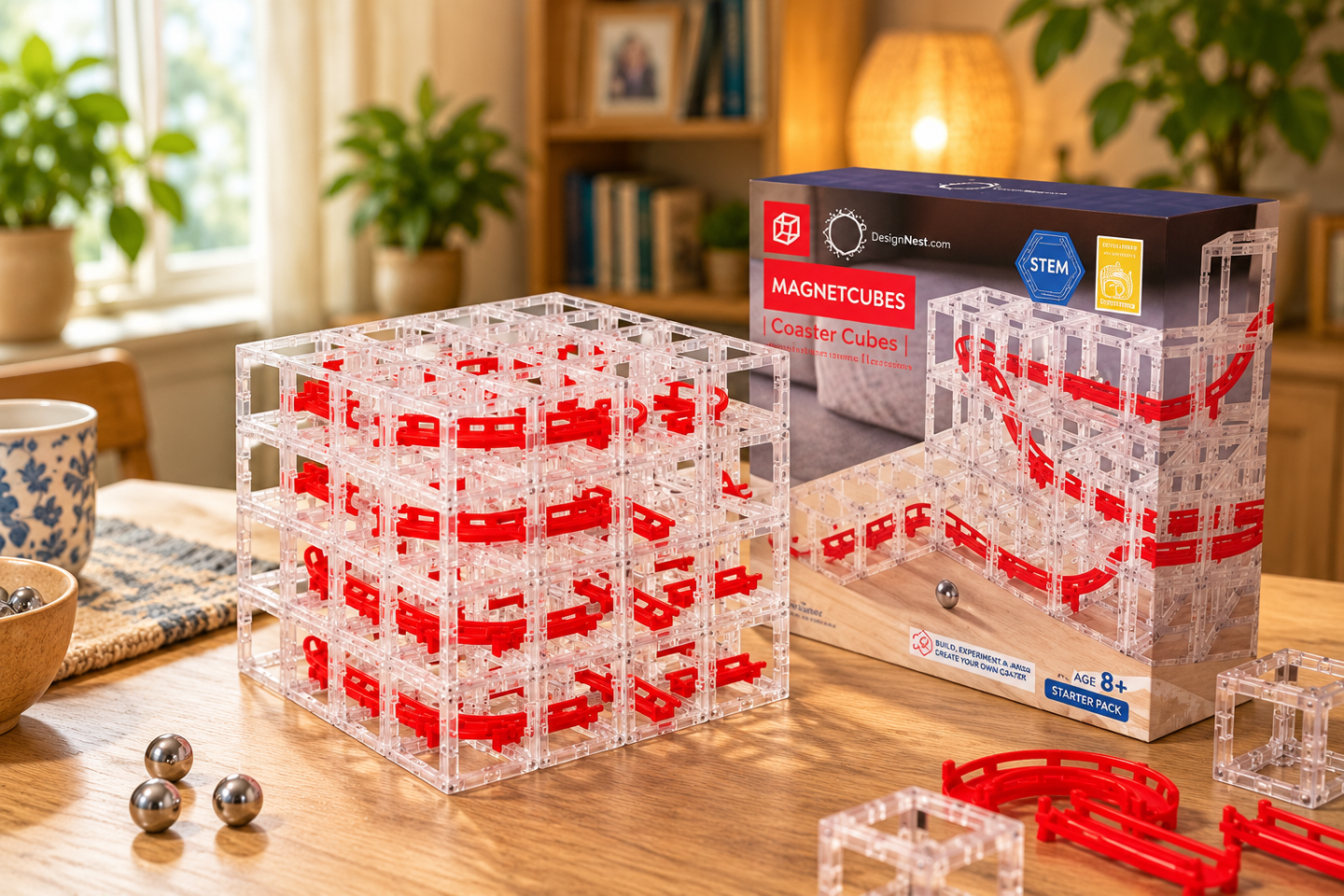
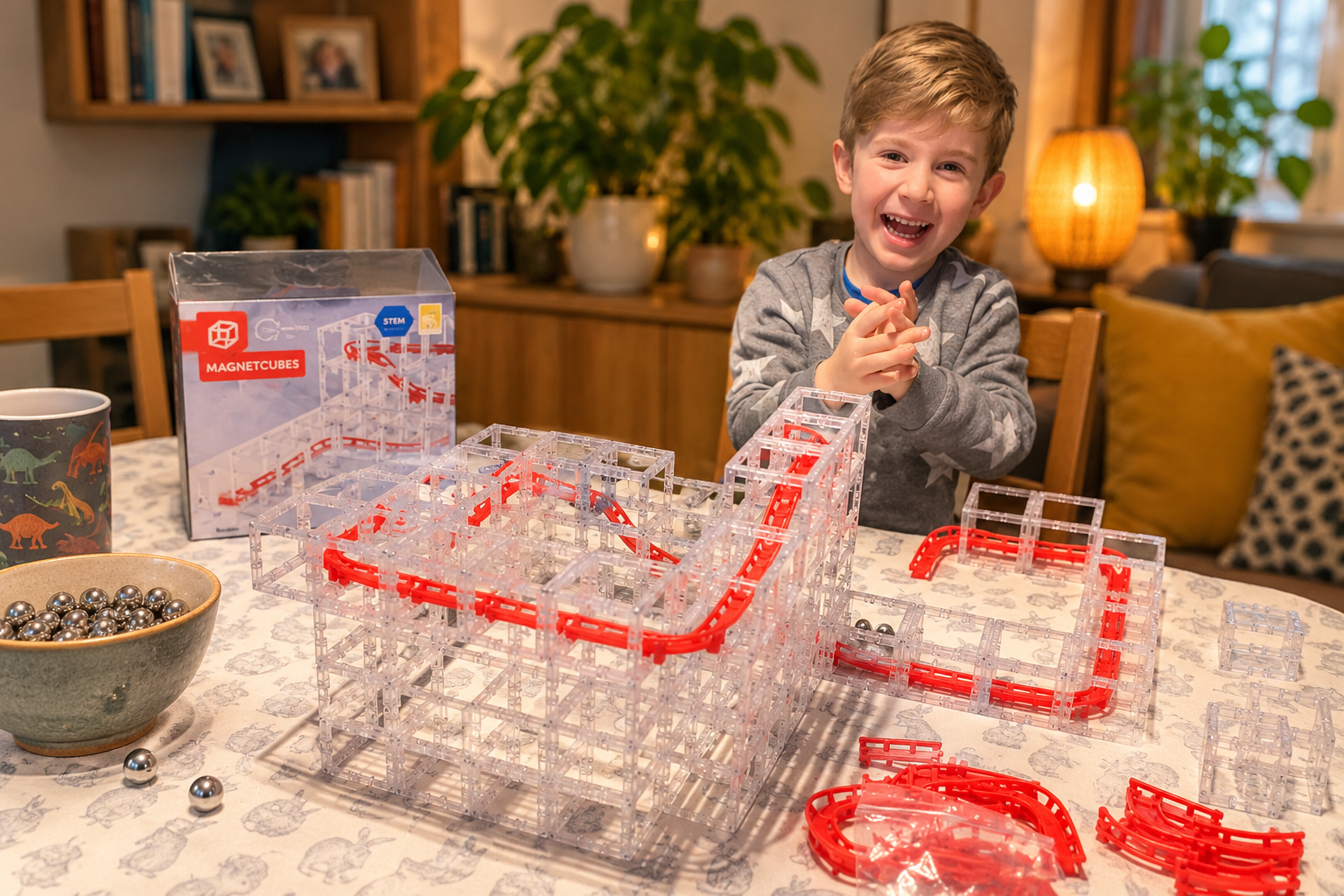
Disclaimer: We received the DesignNest MagnetCubes Rollercoaster Marble Run free of charge in return for an honest review. All opinions are our own. This review reflects our experience in 2021.
I have a soft spot for toys from my childhood, especially those that have survived long enough to be handed down to Cyrus. My old Kerplunk game is one of them, although Cyrus was more interested in the marbles than the game itself.
He’d started borrowing them to create his own marble runs, finding different ways to send them rolling around the house. I admired his imagination, but I was tired of retrieving marbles from underneath the furniture and clearly, he needed something designed for the job.
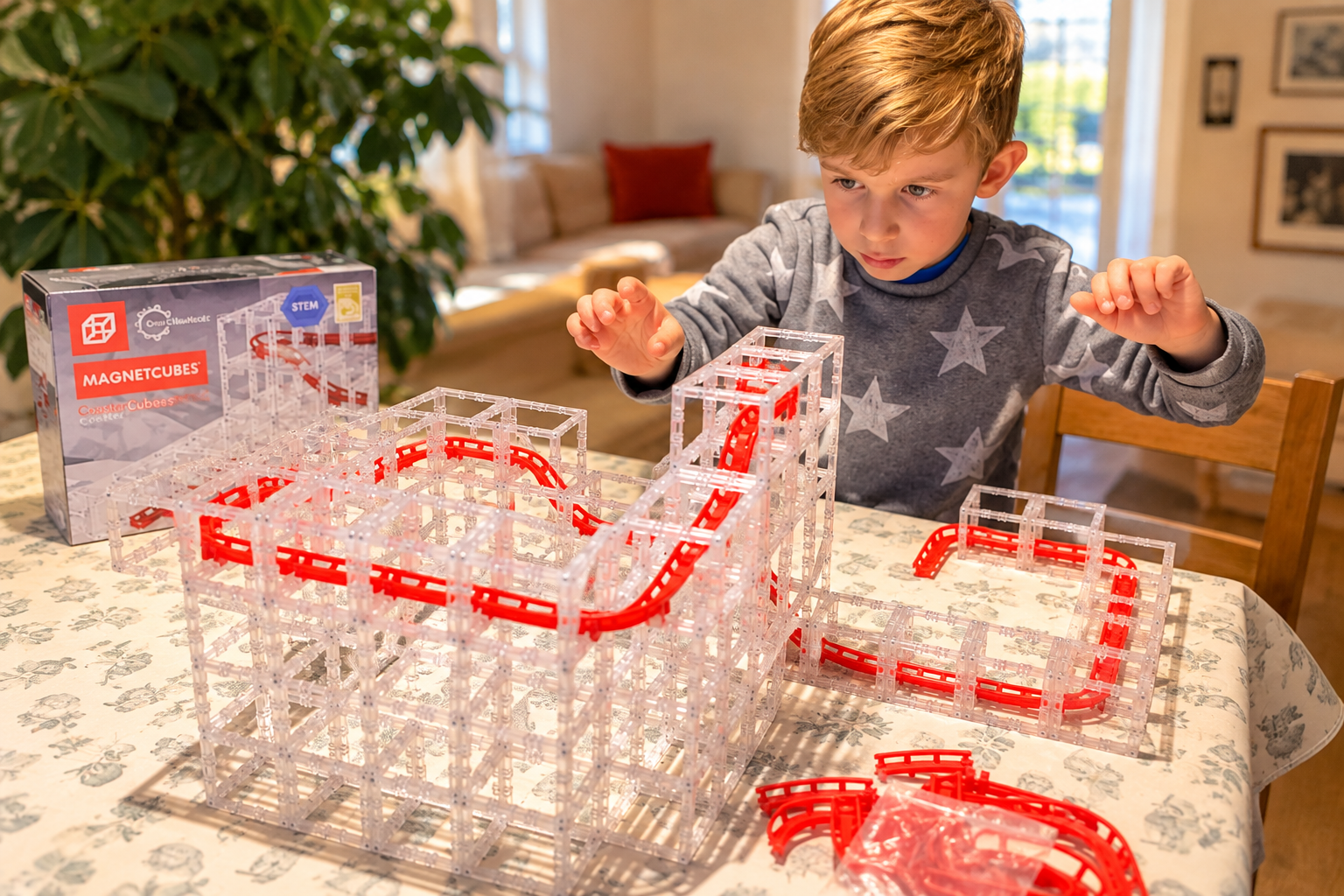
So when we were offered the DesignNest MagnetCubes Rollercoaster Marble Run to review during lockdown, I thought it might be just the thing. Cyrus could indulge his engineering ambitions, and I might get my Kerplunk marbles back.
We’d already discovered how much he enjoyed construction toys, particularly when he could experiment with different designs. Our experience with STEM learning and the Domino Robot Factory had shown us that building something was often just as entertaining as playing with the finished result.
There was only one way to find out. We cleared some floor space, opened the box and waited to see what our young engineer had planned.
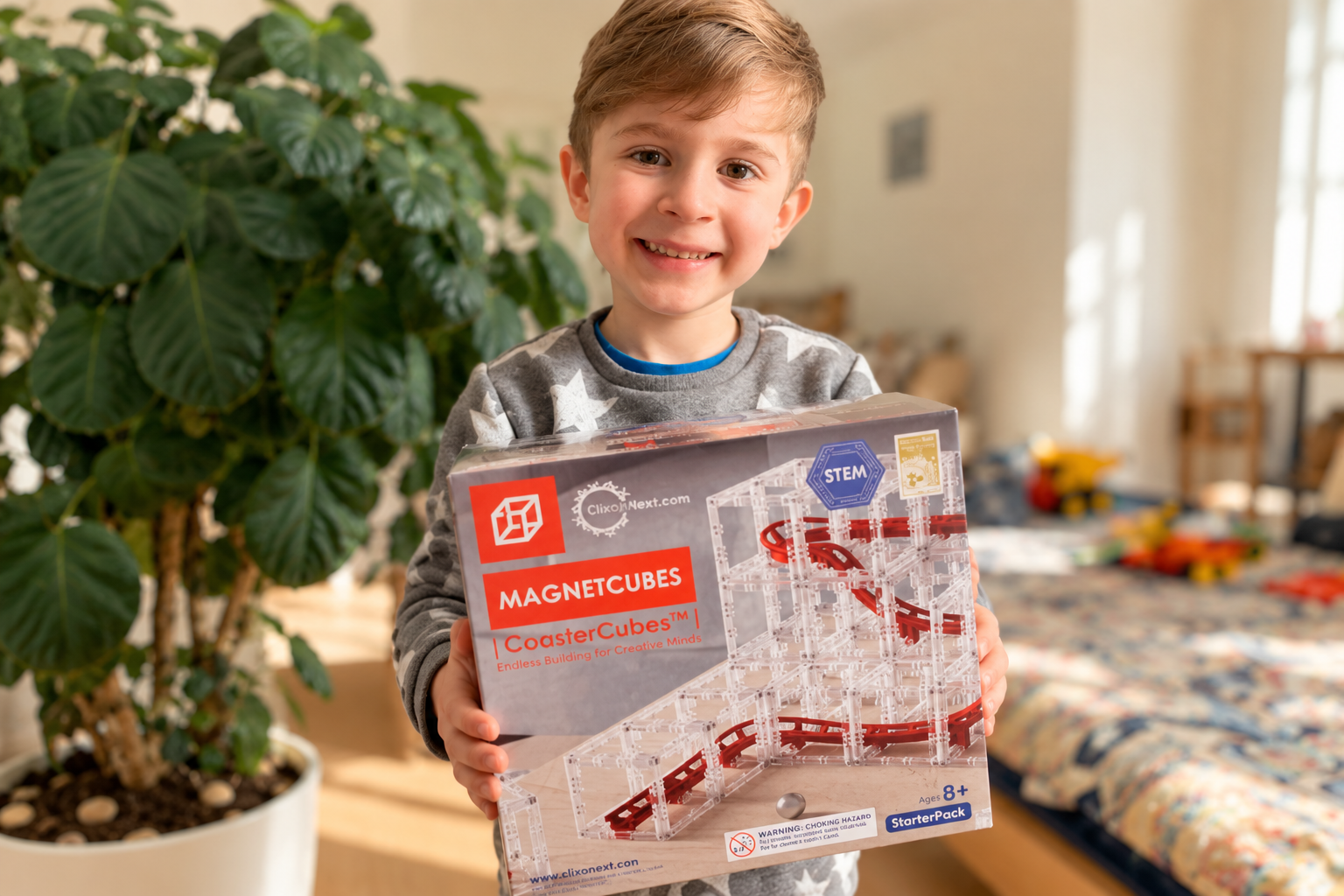
The box contained 64 magnetic cubes, 32 clips, four U-turns, ten straight track pieces, ten quarter-turns, four downward sections and three marbles. Spread across the living room floor, it looked like an ambitious afternoon’s work.
The cubes were easy enough to connect. They clicked together magnetically, and Cyrus quickly understood the idea. Getting the tracks into position was another matter. Some sections were fiddly, especially the bends, which needed careful alignment if the marble was going to travel through them properly.
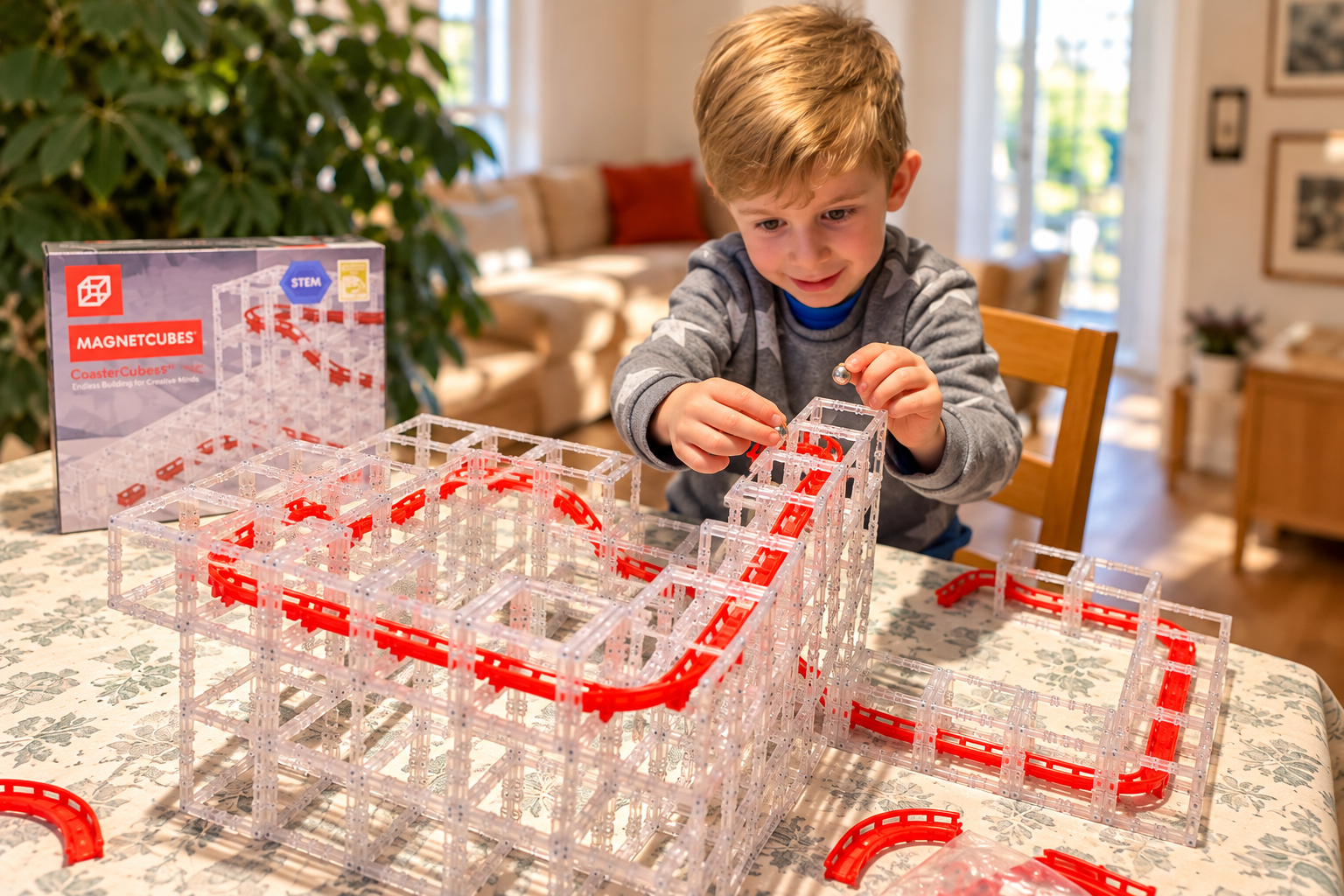
This was when Daddy was recruited. H sat on the floor with Cyrus, studying the illustrated instructions and working out where everything belonged. There was a fair amount of trial and error as they connected the tracks, adjusted the angles and tried not to disturb the sections they’d already assembled.
Cyrus had plenty of opinions about how things should look, while Daddy concentrated on making sure the whole thing worked. I left them to it for a while, although I could hear the odd row about which piece went where.
Eventually, they had something resembling a miniature rollercoaster. It was colourful, surprisingly tall and quite impressive once everything was connected.
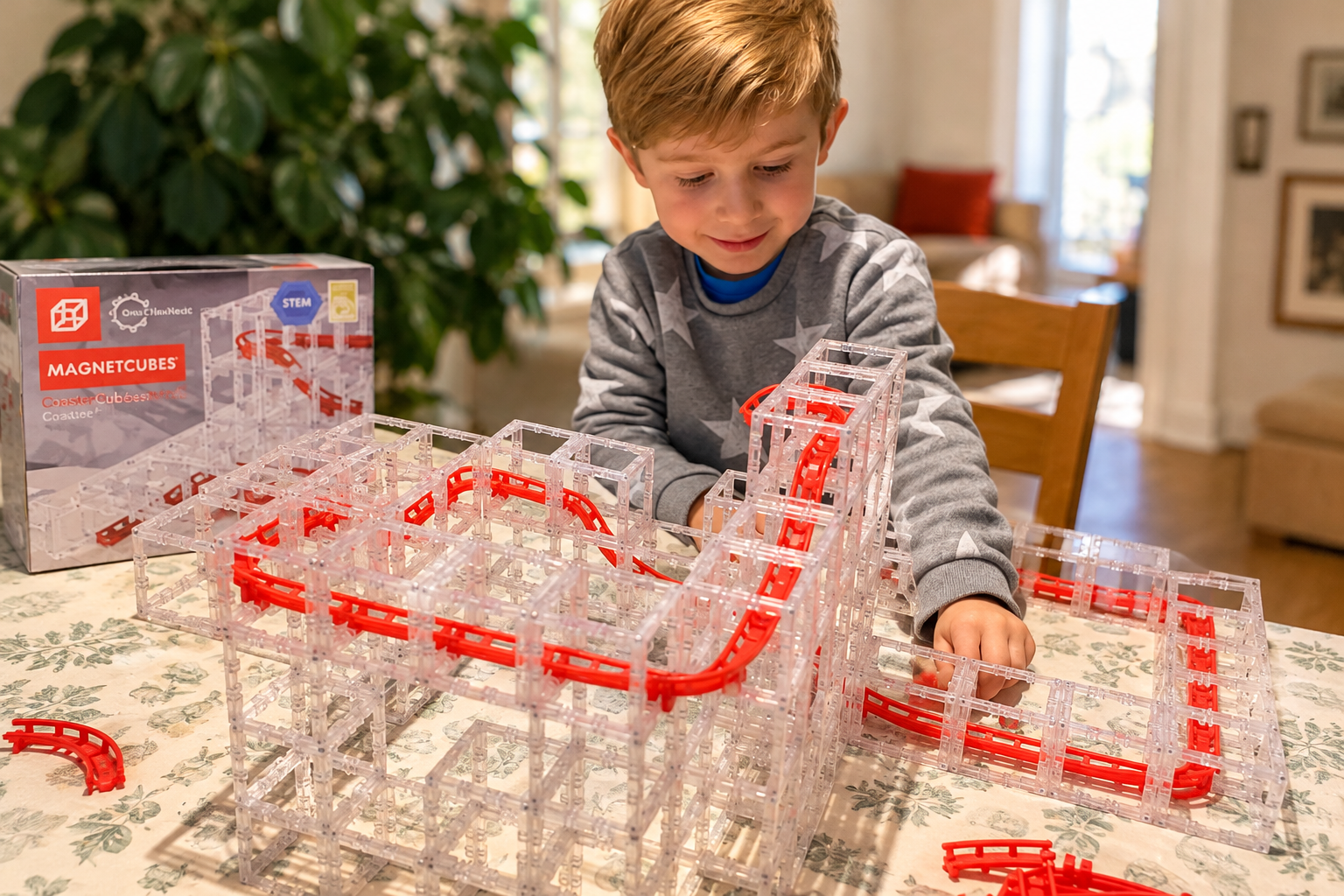
The first successful run was quite an event. Cyrus released a marble at the top, and we watched it travel along the tracks, round the bends and down through the structure. He was delighted and immediately wanted another go.
Over the following week, the rollercoaster underwent several redesigns. Cyrus really enjoyed building upwards, while H helped with the more complicated sections. Some arrangements worked beautifully, while others left the marble stranded halfway down. Cyrus soon discovered that his glass marbles from Kerplunk also worked on some of the tracks. He was learning that the angle of a track mattered and that moving one small section could change everything.
It reminded me of our visit to Newcastle’s Discovery Museum, where Cyrus loved exploring the interactive exhibits. He has always been interested in seeing how things work when he can get his hands on them.
There was, however, one painful drawback to having a miniature rollercoaster construction site in the living room. At some point, a piece had been left on the floor. I didn’t notice it until I knelt directly on top of it. The pain was unreal. For a moment, I genuinely thought I’d damaged my kneecap. Anyone who has stood on a LEGO brick will appreciate the sensation, although kneeling on a hard plastic marble-run component is an experience I wouldn’t recommend.
There I was, clutching my knee, while Cyrus remained much more interested in his rollercoaster than his mum’s predicament. This is when I started to become more particular about clearing up afterwards.
The magnetic connections made the cubes easy to assemble and dismantle, and the illustrated instructions provided useful ideas. Once Cyrus understood the basics, he could experiment with his own designs, although Daddy’s assistance was still needed for some of the trickier sections.
The set is recommended for children aged eight and over. Cyrus was younger when we tested it, so we supervised him closely because of the small components and marbles.
The biggest disappointment was durability. Cyrus managed to break a couple of pieces during play, which was frustrating. I also think a sturdy storage case would have been useful. With so many components, keeping everything together took quite a bit of effort.
At the time of our review, the DesignNest MagnetCubes Rollercoaster Marble Run cost £39.99 from 2Tech.co.uk. Considering how often Cyrus returned to it during that first week, I thought it offered reasonable value, although the broken pieces were disappointing.
What I enjoyed most was watching Cyrus and H working together. There were instructions from our young engineer, a few frustrating moments when the tracks wouldn’t cooperate and considerable satisfaction when the marbles finally reached the bottom.
I’d recommend it for children old enough to handle the small components safely, particularly those who enjoy building things. Just be prepared to help with assembly and check the floor before kneeling down.
As for my Kerplunk marbles, they’ve found themselves useful. I only hope I can locate them all when we next want to play the original game.
Or spent an afternoon assembling something that was supposed to keep them entertained? I’d love to hear your stories.
Occasional stories, experiments, discoveries and questions from Saffron & Cyrus.
Discover more from Saffron & Cyrus
Subscribe to get the latest posts sent to your email.


Saffron & Cyrus is an independent women’s editorial publication with a recognisable voice, real-life perspective, a defined midlife audience and a commercial model built around useful, relevant partnerships.
