
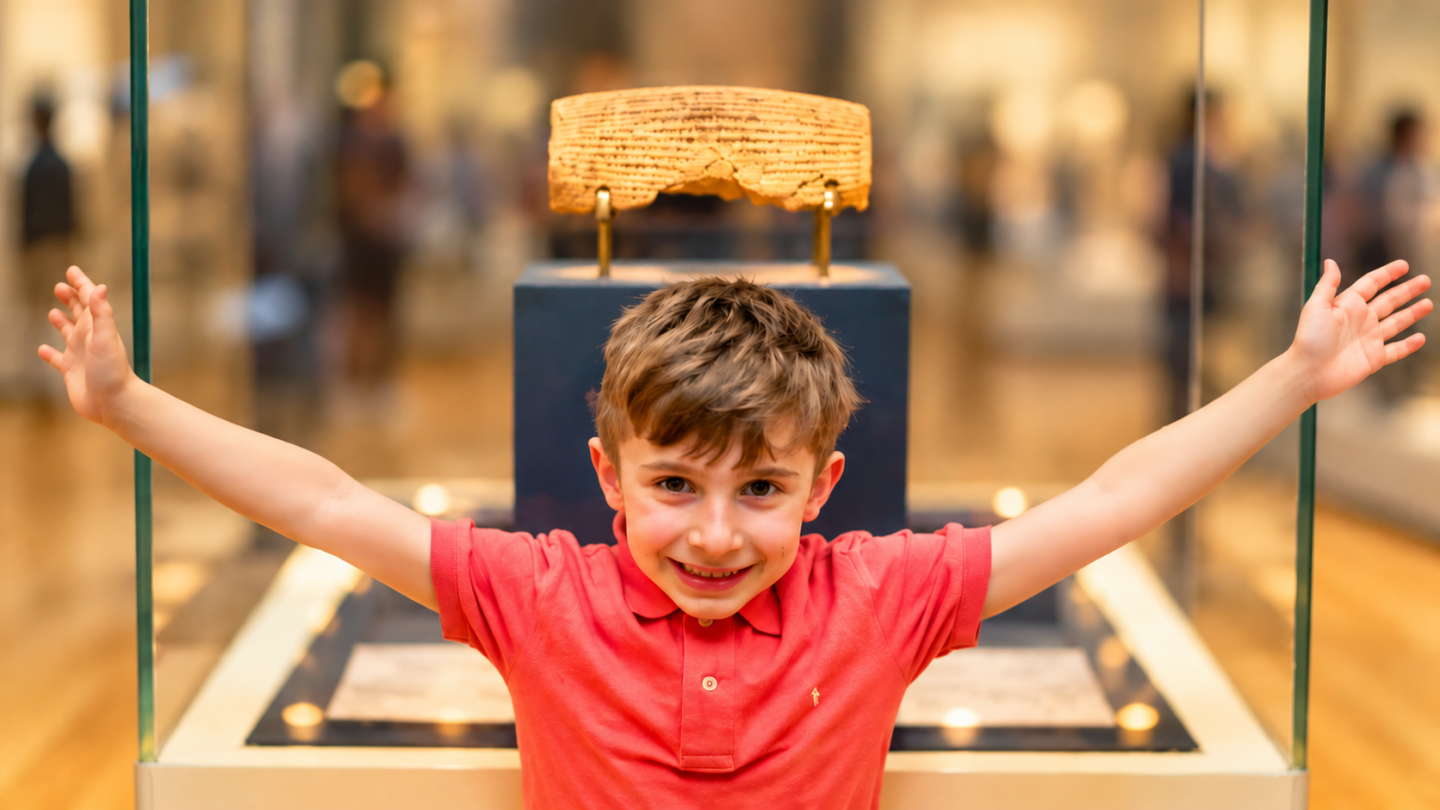
When my son was six, I took him to see the Cyrus Cylinder and the history behind his name. I hoped for a moment of Persian cultural discovery, while he wanted to know whether he could climb the statues.
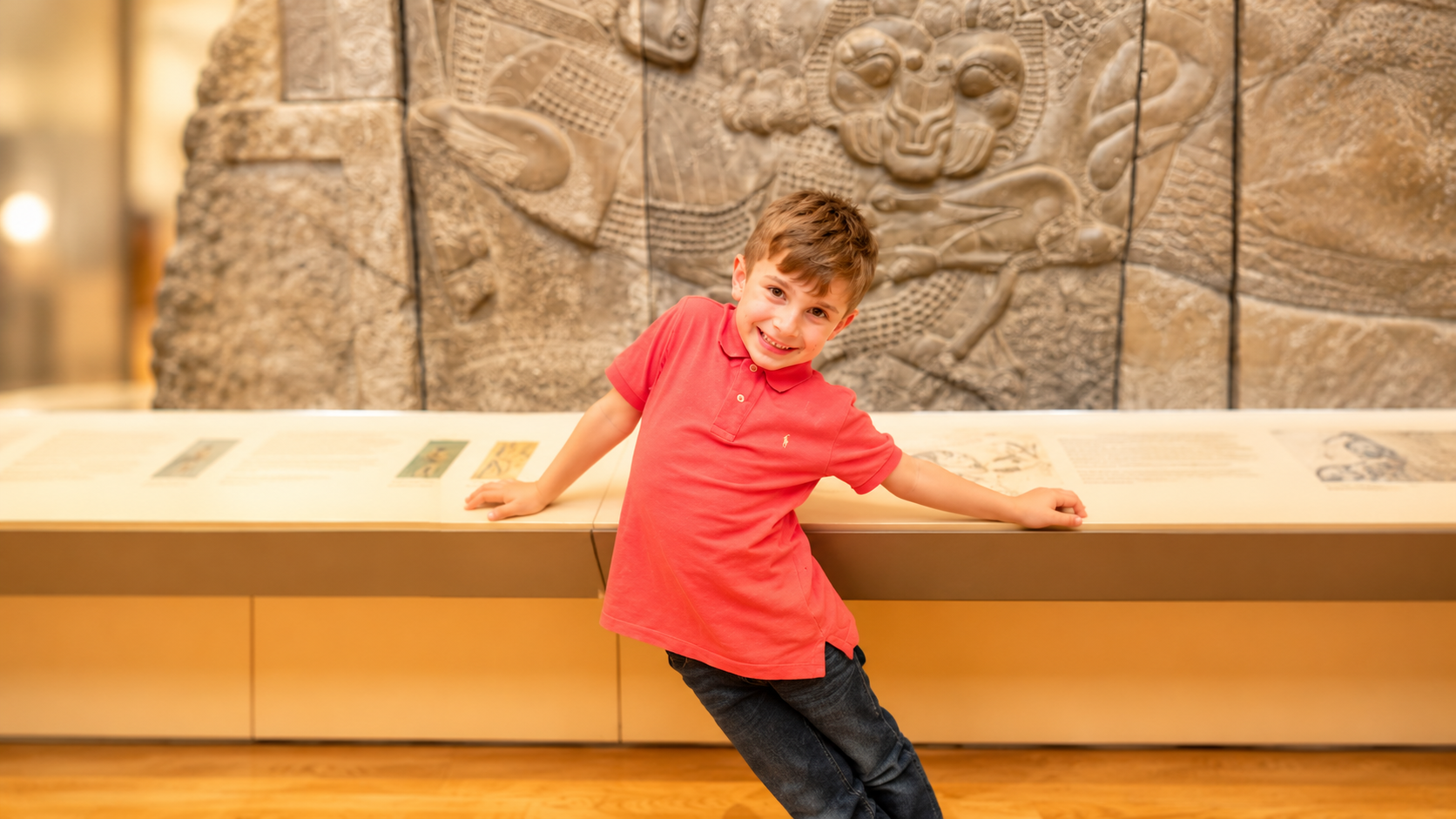
There aren’t many six-year-olds who can walk into the British Museum and find an object associated with the king whose name they share. Mine could, and when we visited London, I was determined to introduce him to it. Explaining more than 2,500 years of history to a child whose immediate concerns involved food, toys and whether something could be touched was another matter.
With a Persian father and a British mum, Cyrus is growing up between two cultures. At home, we celebrate Nowruz, enjoy Persian food and follow traditions such as khaneh tekani, the spring clean before Persian New Year. I wanted him to see that his name belonged to a story much older than our family.
Ancient Egypt and the problem with museum rules
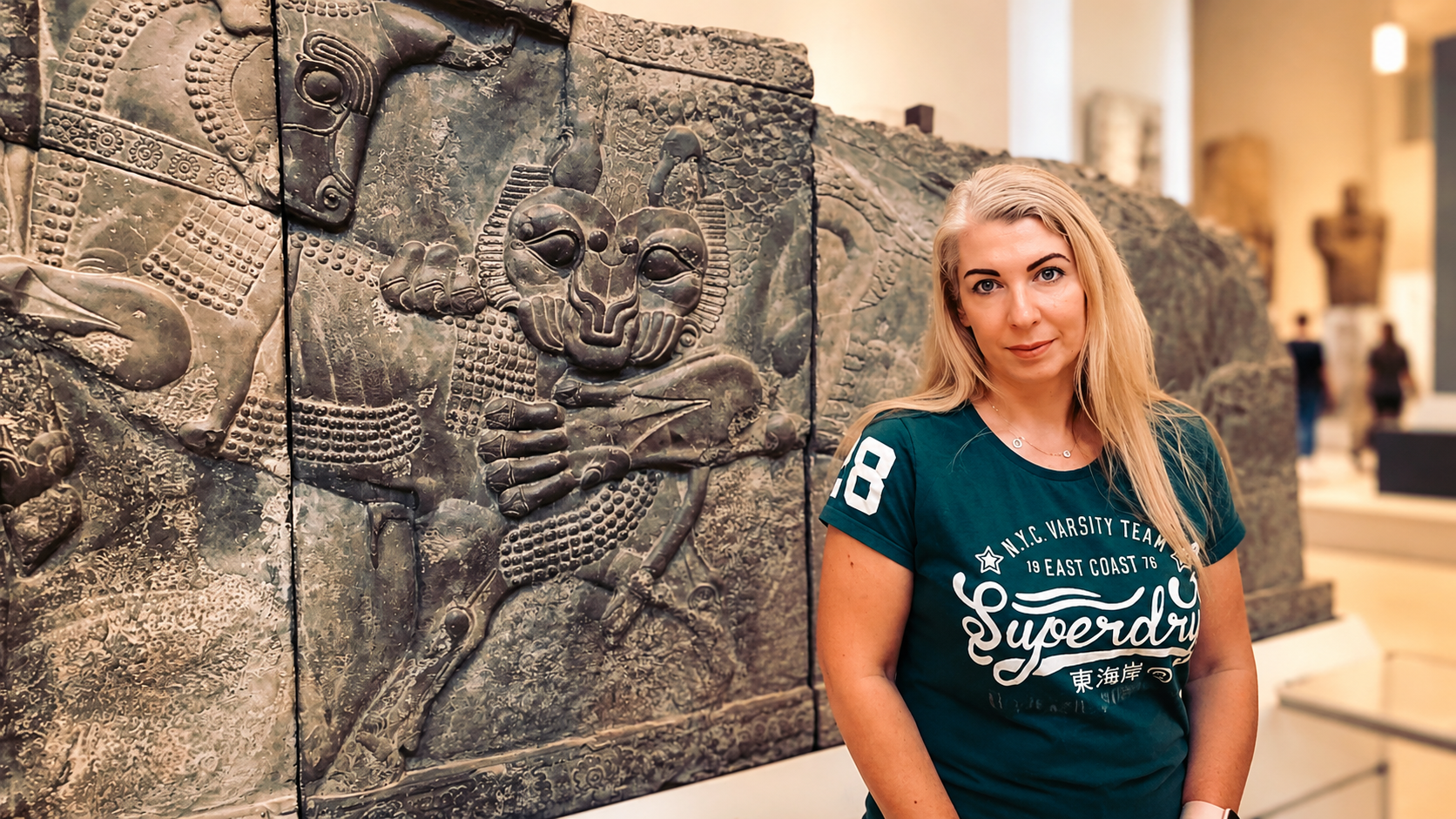
The galleries were huge and the opportunities for Cyrus to ask questions seemed endless. We explored the Egyptian collection, where the mummies immediately captured his imagination. The Rosetta Stone attracted his attention too, although the crowds around it made getting a decent look something of an expedition. I did my best to explain what we were seeing, sometimes relying on the information boards when my knowledge of ancient history deserted me.
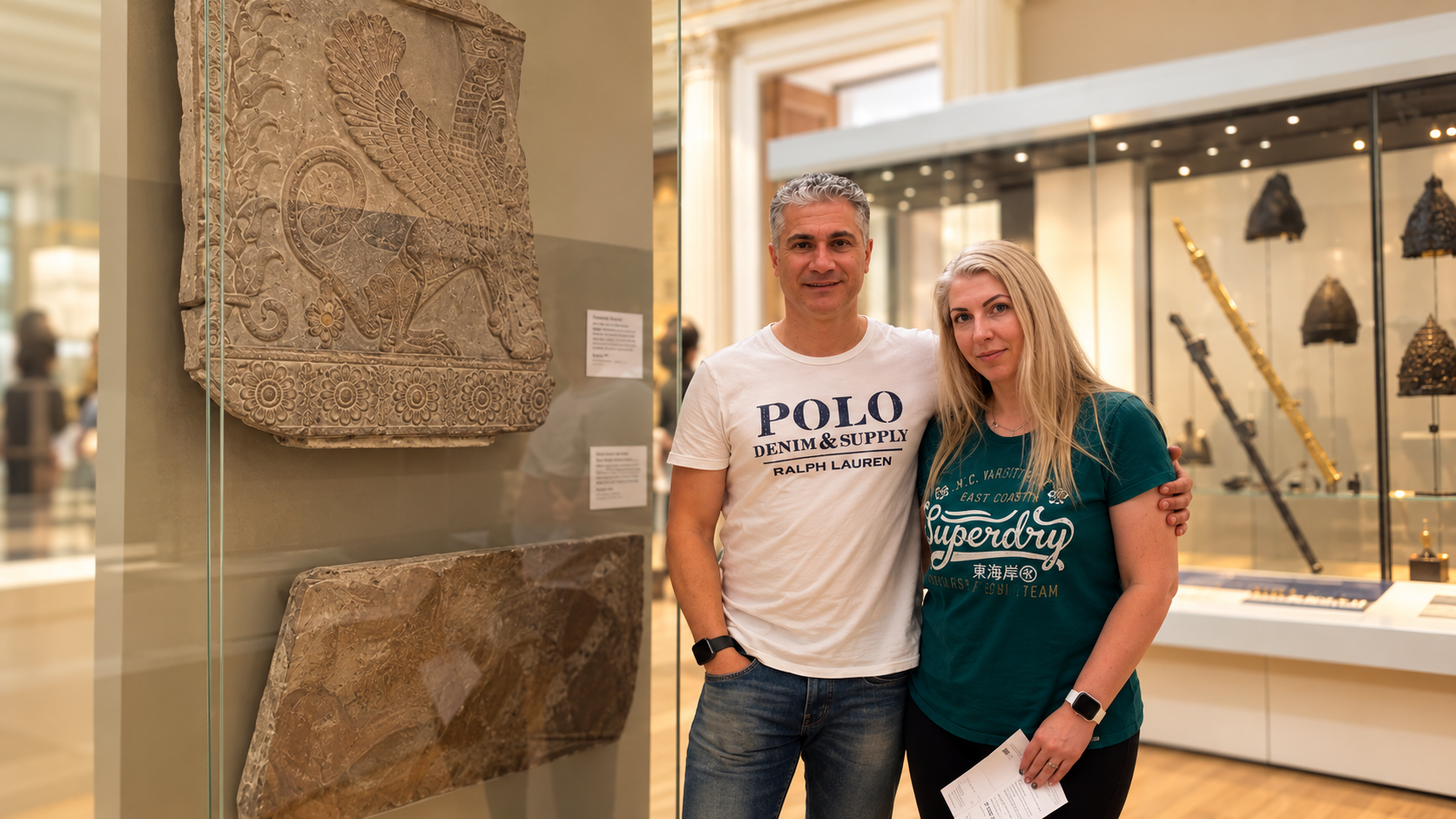
The difficulty with museums, of course, is that almost everything interesting comes with instructions not to touch it. Cyrus couldn’t quite understand why objects had been carefully preserved for thousands of years only to be placed somewhere children couldn’t investigate them properly. I could sympathise, although I wasn’t prepared to explain to museum security why my son had attempted to climb an ancient monument.
Standing before the Cyrus Cylinder
Eventually, we reached the object I’d been waiting to show him. Compared with the towering sculptures elsewhere in the museum, the Cyrus Cylinder is quite unassuming. About 22 centimetres long, it is a small, barrel-shaped piece of baked clay covered in cuneiform writing.
It was made after Cyrus the Great, founder of the Achaemenid Persian Empire, conquered Babylon in 539 BCE. Excavated there in 1879 by Hormuzd Rassam, it comes from what is now Iraq. The Metropolitan Museum’s account of the cylinder explains its place in the establishment of Persian rule.
The text is in Babylonian Akkadian, written in cuneiform, and presents Cyrus as a ruler supported by the Babylonian god Marduk. It describes restoring temples and returning displaced people and religious statues to their homes. Although often called the first charter of human rights, it follows an older Mesopotamian tradition of royal declarations of reform, as the British Museum’s description on Google Arts & Culture explains.
Try explaining all that to a six-year-old who has only just discovered that a Persian king shares his name. I settled for telling Cyrus that the strange markings were an ancient form of writing and that the object was more than 2,500 years old. He studied the inscriptions through the glass, trying to understand how something so little could be so old.
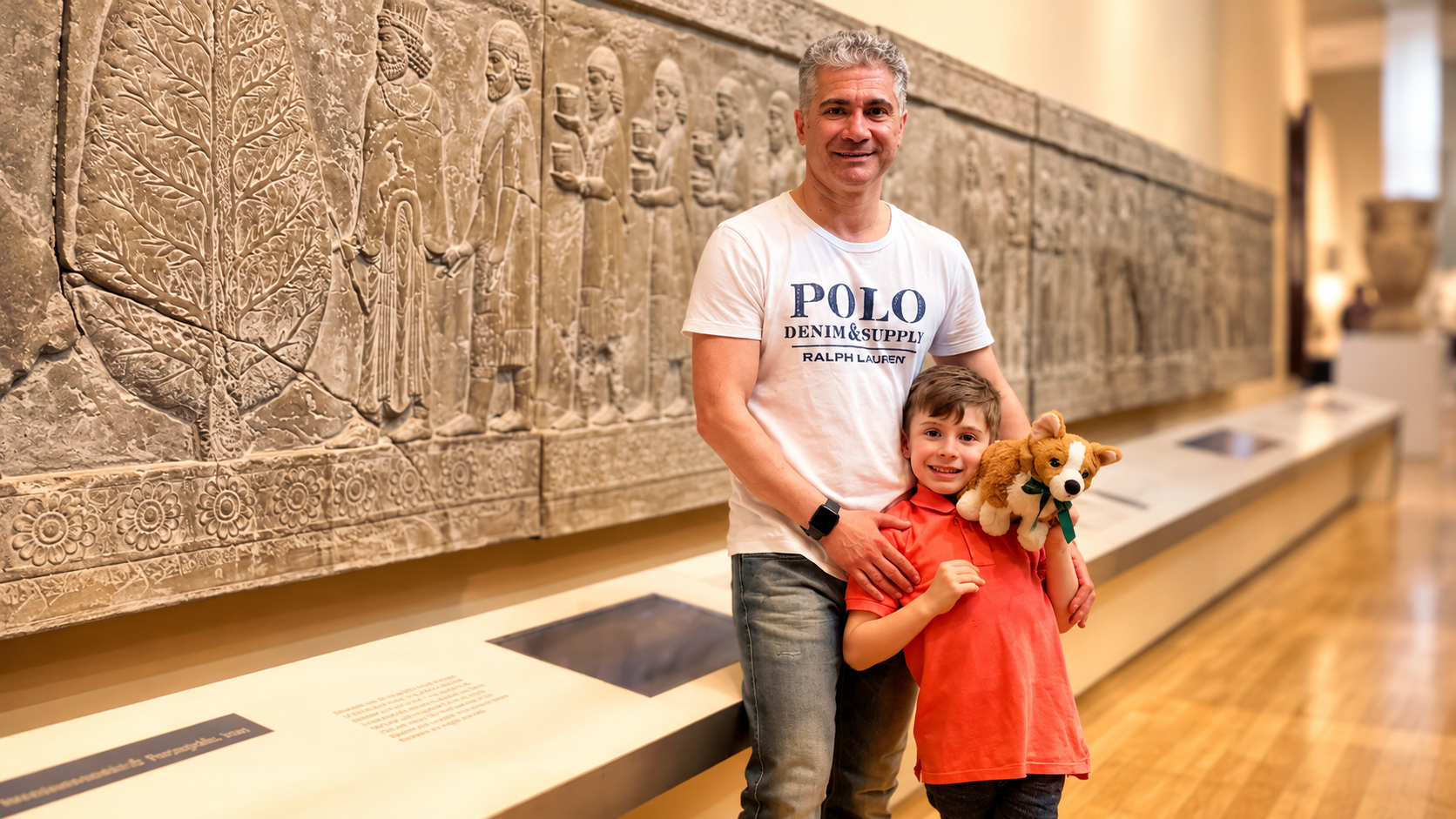
Here was my British-born son, standing in a London museum, looking at something connected to the history of his father’s homeland. I found that moving, even if Cyrus was already wondering what we might see next. I sometimes wonder how much of his Persian heritage he will carry into adulthood when so much of his daily life is shaped by growing up in Britain.
Seeing the cylinder also made me think about how much history sits behind museum glass, far from the places where it began. There are complicated questions about how ancient objects came to be displayed in British collections and who gets to tell their stories. At six, I just wanted Cyrus to recognise that Persia was more than somewhere his daddy came from.
Persian history, but not a fridge magnet in sight
After seeing the cylinder, I wanted to buy Cyrus something to remember the occasion. A children’s book about ancient Persia would have been lovely, or even a fridge magnet to join the school photographs and assorted artwork already competing for space at home.
During our visit, the only Cyrus Cylinder souvenir I could find was a replica costing hundreds of pounds. Beautiful, but hardly the sort of thing you buy for a six-year-old whose appreciation of ancient artefacts doesn’t yet extend to keeping them safely on a shelf. I searched for a children’s book, a postcard or a small magnet celebrating Persian history, but couldn’t find anything suitable.
We’d spent the afternoon introducing Cyrus to a part of his heritage that he doesn’t often encounter in everyday British life. I wanted something he could take home that might prompt another question about Persia, and I left disappointed.
A little history, followed by cake
By the time we’d finished exploring, my feet were aching and Cyrus still appeared to have enough energy for another circuit. We retreated to the café, where cake restored his enthusiasm and coffee restored my ability to answer questions. I wondered whether he’d remember the Egyptian mummies, the enormous statues or his mum spending an unreasonable amount of time looking at a piece of clay.
I hope that one day he’ll understand why I wanted him to see it. His name connects him to a history stretching across centuries and continents, and I want him to feel proud of that connection. For now, Cyrus had met Cyrus and I’d had my coffee. I still think a fridge magnet would have been nice.
Have you taken your child somewhere to help them understand your family’s heritage, and what did they remember afterwards?
More from Saffron & Cyrus
Come along for the ride.
Occasional stories, experiments, discoveries and questions from Saffron & Cyrus.
Discover more from Saffron & Cyrus
Subscribe to get the latest posts sent to your email.

Saffron & Cyrus is an independent women’s editorial publication with a recognisable voice, real-life perspective, a defined midlife audience and a commercial model built around useful, relevant partnerships.
