
Before pregnancy, my weight was largely a private argument between me and the bathroom scales. Then I became pregnant and suddenly people looked at my stomach, family members commented on my size, midwives weighed me and hospitals calculated my BMI. My body suddenly had an audience.
Because I’d married into a Persian family, some members of that audience were considerably less restrained than others. H’s auntie delivered one of the more memorable assessments when she described me as kheili chagh. The literal English translation is not particularly subtle: very fat.
I was horrified. There were tears, tantrums and conversations with H behind the scenes while he attempted to explain that his auntie wasn’t trying to insult his pregnant wife. This took some time, largely because I was pregnant, emotional and couldn’t see how putting the words “very” and “fat” together constituted anything resembling a compliment.
Eventually, I began to understand what H was trying to explain. While chagh means fat, a literal translation didn’t quite capture what his auntie intended in that particular family and cultural context. She was commenting on me looking fuller and well-fed. I was pregnant, nourished and apparently looking rather well on it.
I understood. I’m still not sure I liked it. However it matters because I don’t want to turn one Persian auntie’s comment into a sweeping claim about Iranian culture. What interested me was how differently her words landed on me. She thought she was making an affectionate observation about a pregnant woman looking well. I had heard an insult about my body.
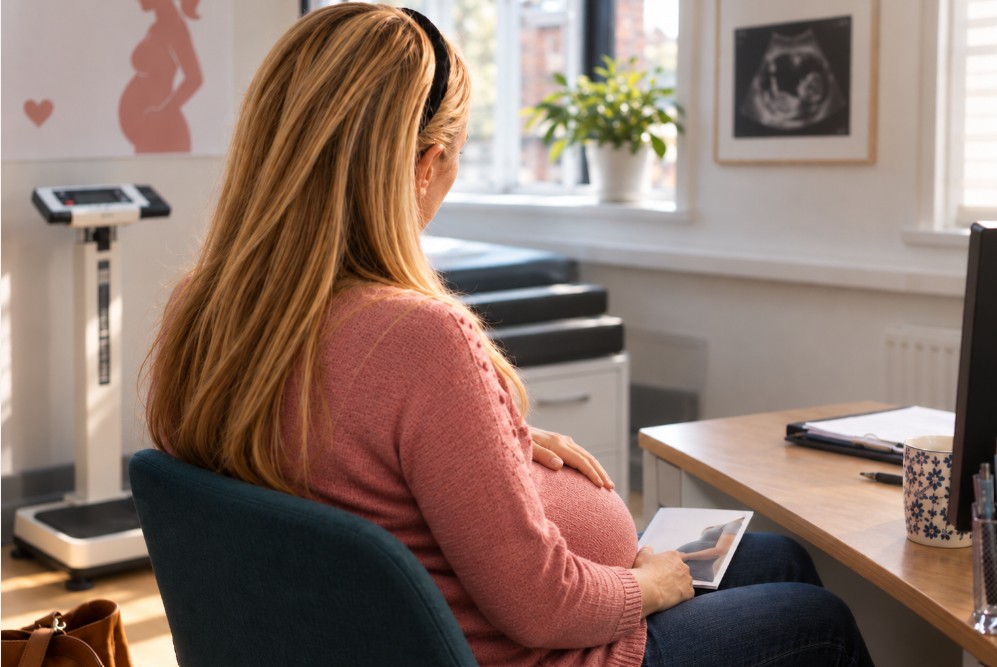
At 14 weeks, I didn’t really feel pregnant yet. I’d gained weight, but nothing to write home about. I certainly didn’t look in the mirror and see somebody whose body had undergone a dramatic transformation.
Before pregnancy, I’d exercised regularly. I loved the gym and particularly enjoyed combat-style classes. After all, loud music and throwing punches at thin air can improve almost any day. I wasn’t naturally slim, but I considered myself active and fit.
Then I had a miscarriage. Afterwards, my rational brain knew there wasn’t evidence that a gym class had caused it, but grief isn’t especially interested in behaving rationally. I began looking backwards for something I might have done wrong. Had I exercised too hard? Had combat been too much? I even wondered whether swimming in the pool at my old gym while the walls were being painted could somehow have affected my health.
I was trying to find an explanation for something so painful that didn’t come with a reason. So when I became pregnant again at 39, I found myself in an odd position. I wanted to exercise because exercise was part of who I was, but my brain kept telling me to be sensible. Don’t do combat or anything you might later blame if something goes wrong.
I almost developed a mental block about the gym. That was the woman who walked into the 14-week appointment.
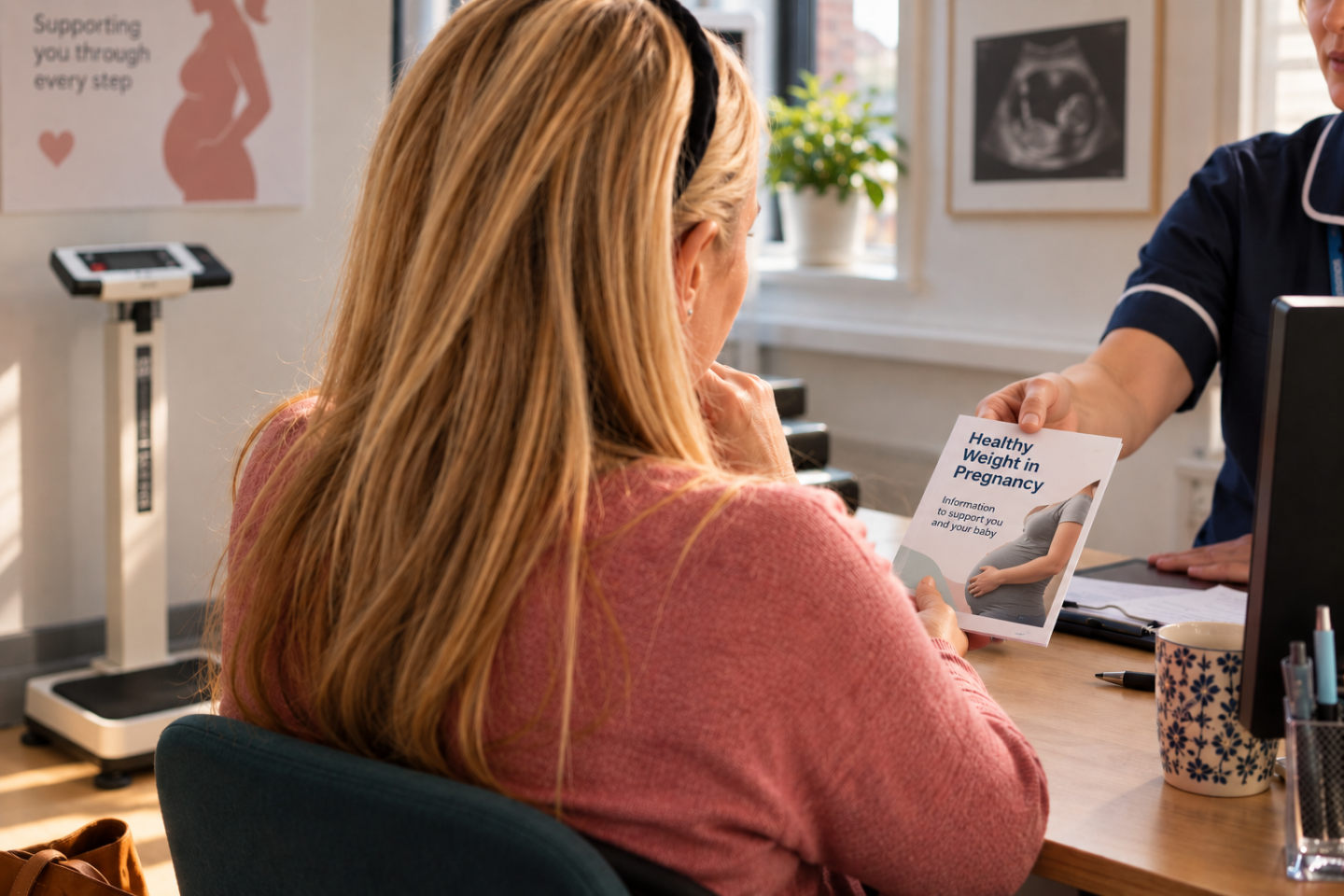
The midwife weighed me, calculated my BMI and told me I was obese. My BMI was 31.
She wasn’t cruel or rude and I think that’s why the encounter stayed with me. The word was delivered completely matter-of-factly and accompanied by a leaflet. It just felt procedural. She had identified the BMI, acknowledged the clinical category, given me the relevant information and ticked the box.
For her, it was one small part of an ordinary appointment. For me, it wasn’t. I cried. I had an outburst. Then I started worrying about food. What should I actually be eating? Was I eating too much? Should I exercise more? Was it safe to exercise when I’d spent the early weeks of this pregnancy frightened that exercise might somehow cause me to lose another baby?
What I needed wasn’t for the midwife to pretend my BMI didn’t exist. I wanted accurate information and what I could have used was a little context and compassion alongside the leaflet.
I remember sitting with a cup of tea afterwards. It is one of those ordinary details that has survived even though much of the medical language has faded.
By then, there seemed to be a growing list of things about me that needed a discussion. My age, my BMI and the risk of pre-eclampsia. Aspirin was recommended as part of my pregnancy care.
I went home and Googled it, because of course I did. I searched for information about aspirin in pregnancy and found myself caught between two fears. I didn’t feel as though anything was wrong, so why did I need medication? But I also didn’t want anything to go wrong. Then another thought arrived: what if taking it harmed the baby?
This was pregnancy after miscarriage. Almost every decision could be turned into two opposing anxieties. Exercise and worry, don’t exercise and worry, take the aspirin and worry and don’t take it and worry. All of this was happening when I barely felt pregnant.
The medical message around BMI was essentially that this was one factor associated with additional risk. What I absorbed emotionally was something very different: my body was becoming a problem.
Looking back, H’s auntie and the midwife were looking at roughly the same woman. One described me as kheili chagh. The other described me as obese. Neither sounded particularly appealing to my British ears, but the intention behind each was completely different.
H’s auntie was speaking from her own cultural and familial understanding of what it meant for a pregnant woman to look fuller and well-fed. The midwife was using a clinical classification intended to identify potential risk. One was making a personal observation and the other was applying a medical framework. I was standing between them.
It brought home to me how differently we interpret health. I had always associated being healthy with what my body could do. I exercised and could get through demanding classes. I had energy. Yet the hospital had a number that said something else about risk, while a Persian auntie could look at my expanding body and see evidence that I was doing rather well. None of those perspectives contained the whole person.
My relationship with health had never been one of indifference. If anything, I had a tendency to become slightly overenthusiastic.
At one point, I bought an entire packet of dried barberries and took them into the office. I ate them as though they were cranberries. This turned out not to be one of my better nutritional decisions, and my stomach made its objections clear later.
H still tells this story because he finds my suffering considerably funnier in retrospect than I did at the time.
There was wheatgrass juice too. I can’t remember what originally persuaded me that drinking something resembling liquefied grass was a sensible idea, except that it was supposed to be healthy. Then I noticed what I thought was a pattern: if I drank it before an exercise class, I seemed to have more energy.
That was enough evidence for me. Wheatgrass in, combat class = more energy. Clearly I’d cracked nutrition.
I hadn’t, obviously. But these experiments matter because they remind me how much effort I put into the idea of being healthy. I wasn’t somebody who had never exercised, never thought about food and suddenly discovered at a maternity appointment that weight might affect health. Yet a BMI calculation couldn’t possibly know any of that.
My BMI didn’t disappear after that appointment. It later formed part of conversations about my options for giving birth, including discussions around the birthing centre and water birth. Those conversations deserve their own story because they became complicated, involving emails, consultants and questions about the choices available to me.
I remained strong-willed. I didn’t believe a single number knew my body better than I did, and I wanted decisions to consider me as an individual rather than simply a BMI category.
Eventually, I was induced. There was Pitocin, an epidural and ultimately a forceps delivery. But when I look back at what actually happened during Cyrus’s birth, I don’t see my BMI as the explanation for how it unfolded. The circumstances of his delivery were more complicated than that.
I didn’t emerge from childbirth thinking, “They were right about my BMI after all.” If anything, the experience reinforced something I’d already begun to suspect. A number can tell clinicians something useful about risk, but it can’t tell my story.
Then another number became considerably more important to me.
Cyrus arrived weighing 8lb 4oz.
He was healthy, and suddenly BMI 31 became one of the least interesting numbers in the room. My sister-in-law called him fandogh koocholoo, little hazelnut. After months of Persian commentary about my expanding body, family attention had apparently moved on to comparing the baby with food.
I’m 50 now, and exercise remains a big part of my life. I go to the gym, lift weights, throw myself around classes and still don’t possess the sort of body we’re routinely shown when somebody wants to illustrate the word “fitness”. Pregnancy changed how I think about that.
BMI is information. It can be clinically useful, but it isn’t everything.
If I could return to that 14-week appointment, I wouldn’t ask the midwife to hide the number from me or replace “obese” with a prettier word. If something could affect my pregnancy, I would want somebody to tell me plainly.
I’d want them to remember who they were telling. The woman standing on those scales had previously miscarried and who was frightened of losing another baby. She normally loved exercise but had become scared to do it. She was questioning what she ate, hearing about the risks associated with being pregnant at 39 and trying very hard to trust a body she’d already blamed once for letting her down. A leaflet couldn’t know any of that, but a human who listened could.
And that is the connection between a Persian auntie calling me kheili chagh and a British midwife telling me I was obese. Both moments taught me that words about women’s bodies carry far more than their literal definitions.
I eventually understood that H’s auntie wasn’t trying to insult me. But I’m still not convinced I’d put kheili chagh in a Hallmark card. I understood the intention.
With the midwife, I understood the clinical intention too. What I wanted was the bit inbetween the terminology and the leaflet: a conversation about what that number did and didn’t mean for me.
Ten years later, that is what stays with me. We don’t just measure health. We interpret it through medicine, culture, food, fitness and our own experiences of living inside a body.
At 39, my Persian family looked at mine and saw abundance. The hospital looked at it and saw a potential risk factor. I looked at it and saw a body I desperately wanted to trust after losing a pregnancy. None of us had the complete picture.
Have you ever had somebody comment on your body, only to discover that culture, medicine or their idea of “healthy” meant they saw it completely differently from you?
Why I took low-dose aspirin during pregnancy at 40
Giving birth at 40: my induction and forceps birth story
Occasional stories, experiments, discoveries and questions from Saffron & Cyrus.
Discover more from Saffron & Cyrus
Subscribe to get the latest posts sent to your email.

Saffron & Cyrus is an independent women’s editorial publication with a recognisable voice, real-life perspective, a defined midlife audience and a commercial model built around useful, relevant partnerships.
