
I won a poetry prize at ten. Nearly 40 years later, Hafez brought me back to where it all began.
A childhood poetry competition in Newcastle, a Persian husband and a fortune-telling canary in Shiraz. I never imagined Bloodaxe Books would connect them all.
The poetry competition that gave me confidence
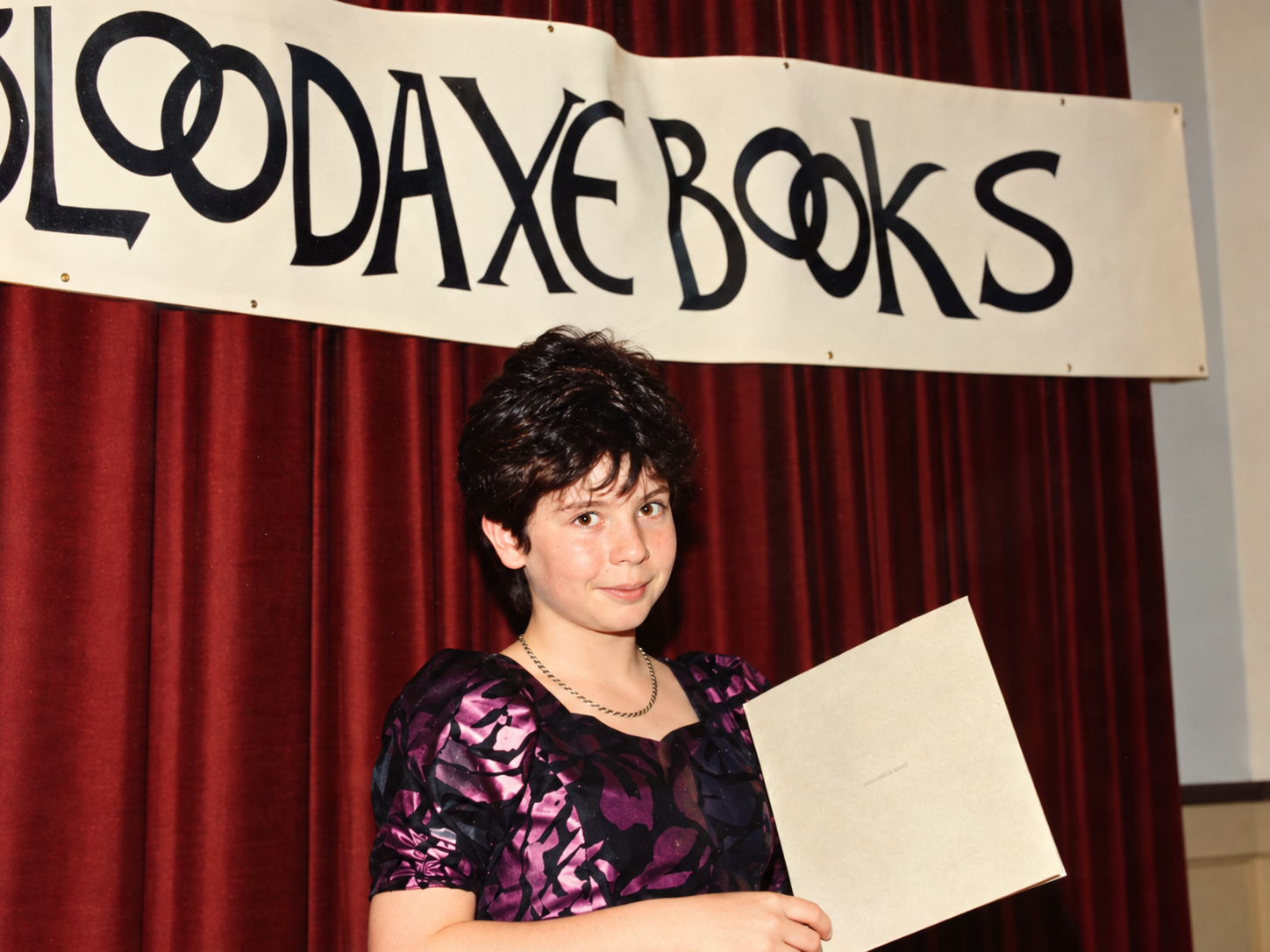
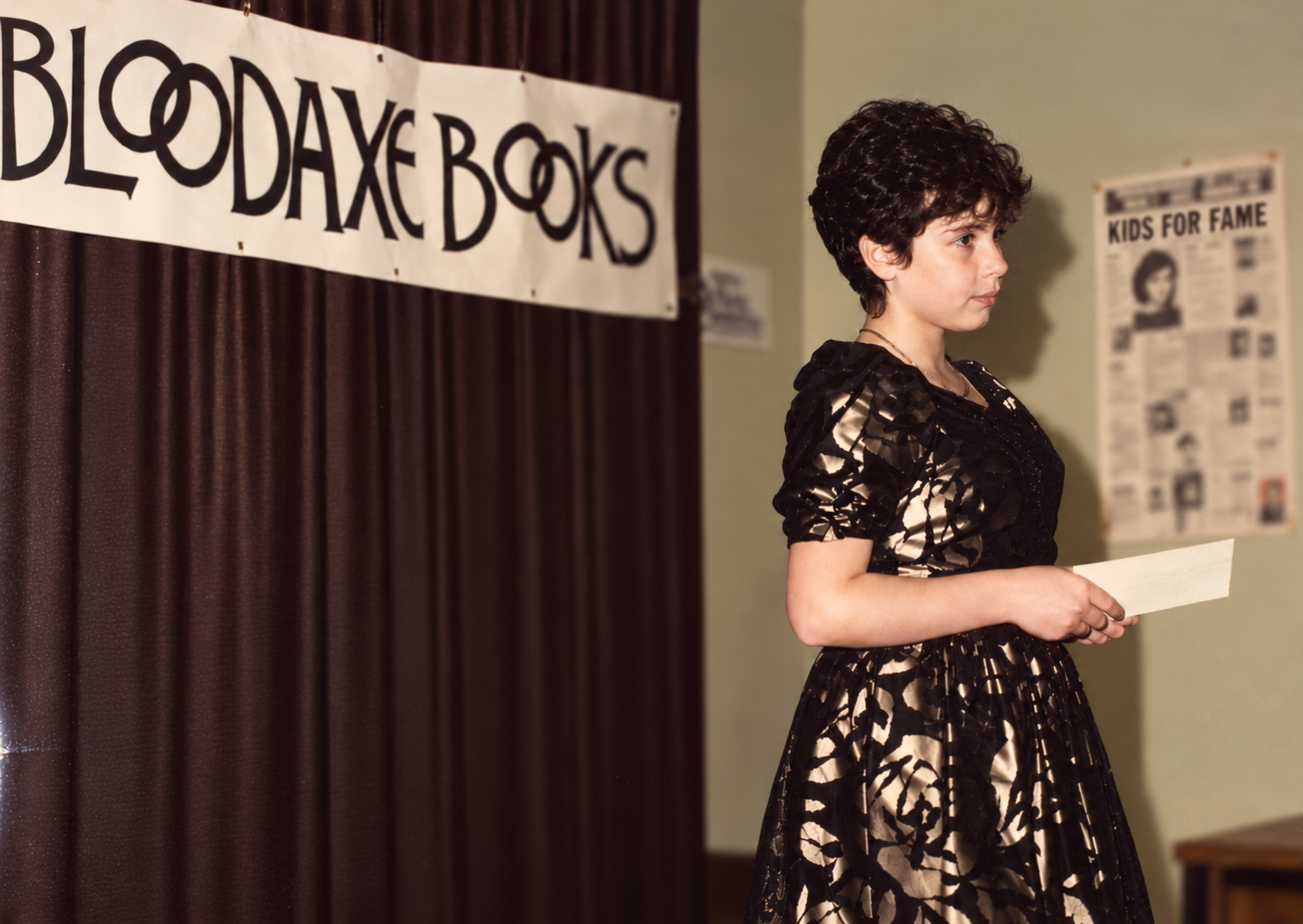
In 1986, I was a ten-year-old state-school girl with a fondness for writing poetry and a mother who encouraged every word of it. I entered the Evening Chronicle Poetry Competition, sponsored by Newcastle publisher Bloodaxe Books, and was astonished to discover I had been named among its 20 junior winners.
I remember feeling rather pleased with myself. Most of the other winners, as I recall, attended private schools, and I was acutely aware of the difference. Whether that mattered to anyone else is another question, but to me it felt like an achievement. I had entered something on my own merit and succeeded. At an age when I was beginning to understand that children could be judged by all sorts of things that had nothing to do with their abilities, it mattered enormously.
My love of poetry began with my mum. She read aloud with such enthusiasm that even now I can hear her voice when I think about those childhood afternoons. She gave every line the sort of dramatic treatment usually reserved for the theatre, and I was a willing audience. She made books interesting long before I understood that writing might become an important part of my life.
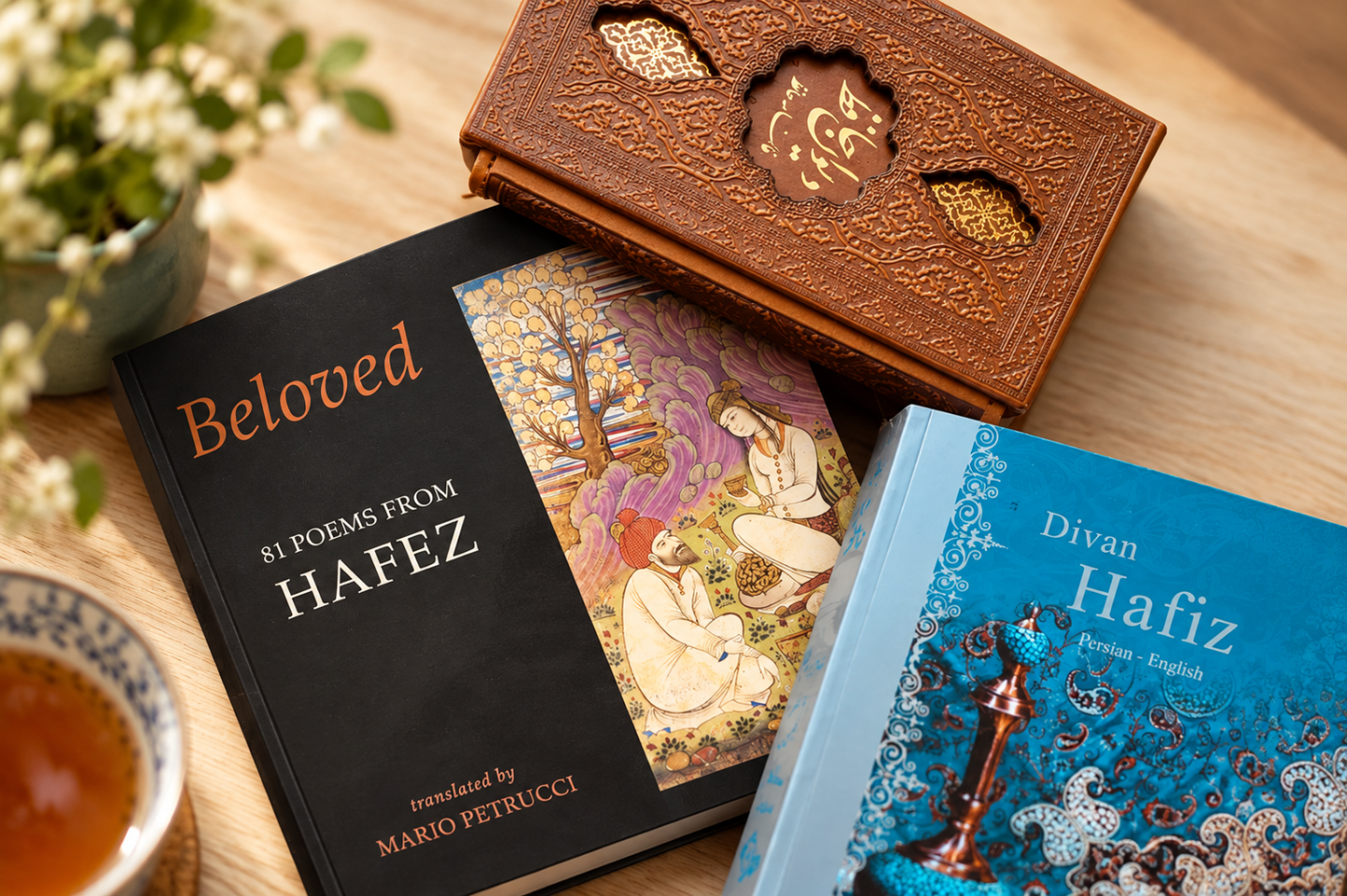
I continued writing, although poetry eventually gave way to journalism, public relations and, much later, this blog. Bloodaxe Books remained a familiar name from childhood, but I hadn’t expected it to reappear in quite such a personal way. Then a copy of Beloved, a collection of poems by the 14th-century Persian poet Hafez, arrived through my letterbox, and suddenly I was ten again.
More than I could ever have imagined at ten. It took a marriage, several visits to Iran and a rather memorable canary to bring the two together.
I married a Persian, and poetry came with the family
When I married H, I knew I was marrying into a different culture. What I hadn’t fully appreciated was how much poetry would feature in it. Persian food, family gatherings and the occasional difference of opinion over how things should be done were all part of the experience. Discovering that poetry could be discussed with the same enthusiasm as football was something else entirely.
H is an engineer. He likes numbers, facts and things that can be measured. I prefer words, conversation and occasionally taking three paragraphs to explain something that could probably be said in one. We approach most things rather differently, although after years of marriage we’ve become quite good at translating each other’s peculiarities.
Yet when it comes to poetry, H has an advantage over me. He grew up in Iran, where the words of Hafez, Saadi and Rumi are familiar to generations of families. Poetry is quoted in conversation, shared at gatherings and used to express feelings that people might otherwise struggle to put into words. You don’t necessarily need to be particularly literary to appreciate it. You simply grow up hearing it.
I find this fascinating because it differs from my experience growing up in Britain. We study poets at school, sometimes enthusiastically and sometimes because an examination requires it. But I can’t remember many family gatherings where someone casually recited a few lines of Wordsworth between the tea and biscuits. In Iran, poetry has a much more visible place in everyday life, and Hafez remains one of the country’s most celebrated literary figures.
In Britain, quoting a 14th-century poet over dinner might earn you a few raised eyebrows. In Iran, it can be as natural as putting the kettle on.
Why Hafez still matters more than 600 years later
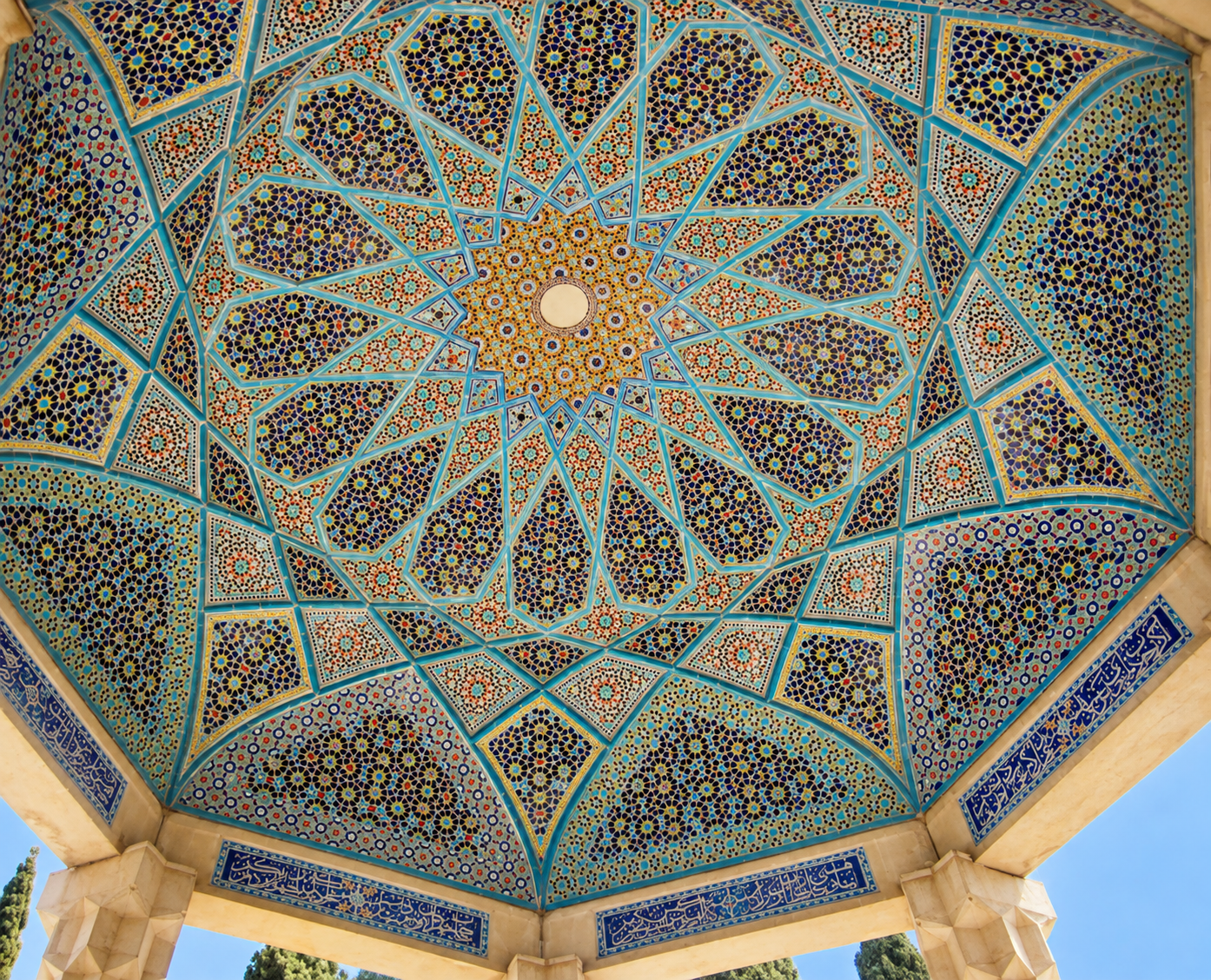
Hafez lived in Shiraz during the 14th century, but his poetry deals with subjects that remain familiar today. Love, longing, disappointment, faith, loss and the uncertainty of life all appear in his work. Human beings, it seems, have been making rather a mess of their emotions for centuries, although Hafez had a considerably more elegant way of describing it than most of us.
His writing is also open to interpretation. A poem about a beloved might describe romantic love, spiritual devotion or both. References to wine, gardens and beauty can carry meanings beyond their literal descriptions. Much depends on the reader, the context and the language itself, which makes translating his work into English particularly difficult.
H has helped me understand some of these differences, although our conversations don’t always produce a definitive answer. I might ask what a particular verse means, only to discover that several interpretations are possible. For someone who spends his working life dealing with precise calculations, he is surprisingly comfortable with that uncertainty.
I rather like it too. Not everything we read needs to have one correct interpretation, and perhaps that explains why Hafez continues to appeal to people whose lives bear little resemblance to those of his original readers.
A canary, a question and a visit to Hafez’s tomb
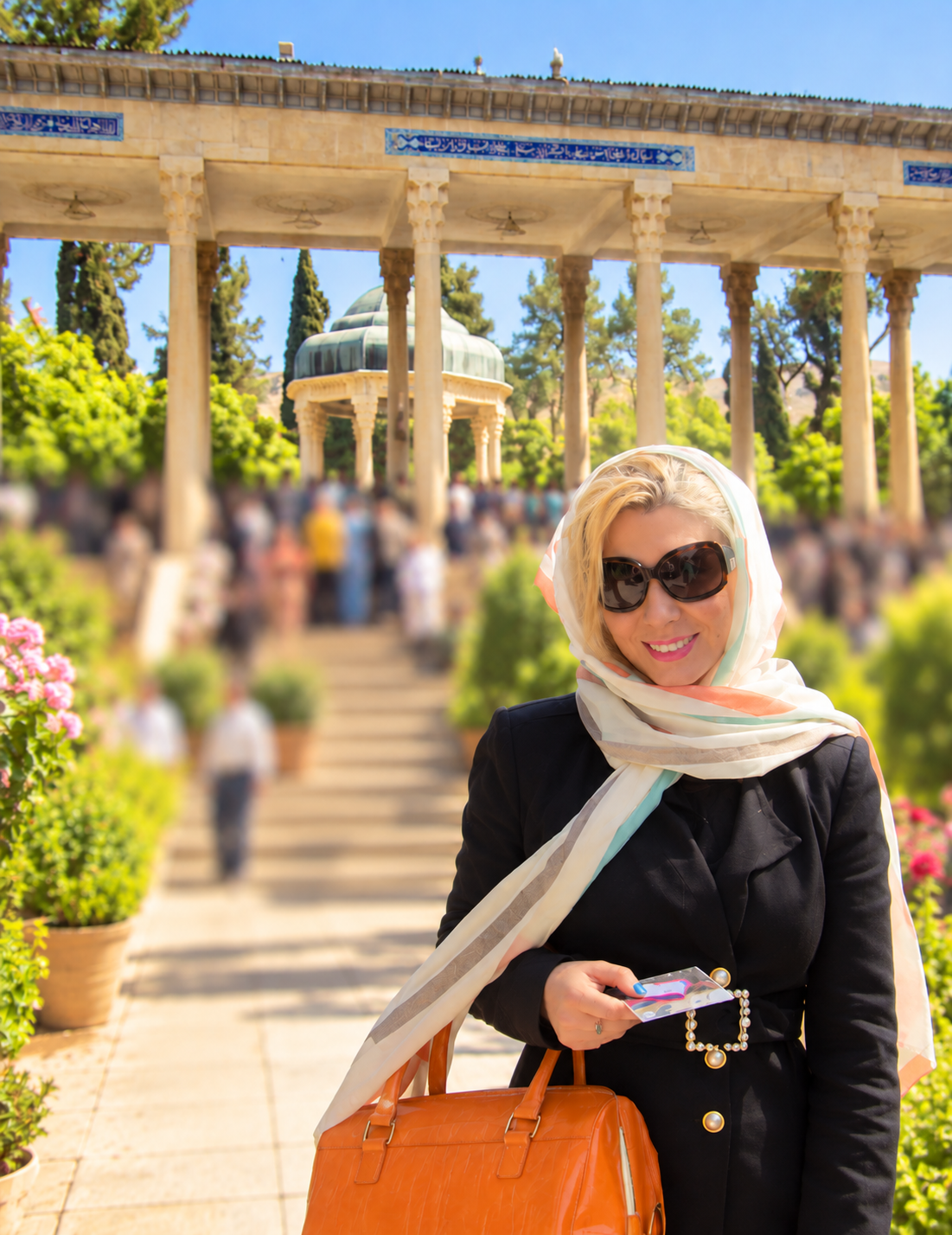
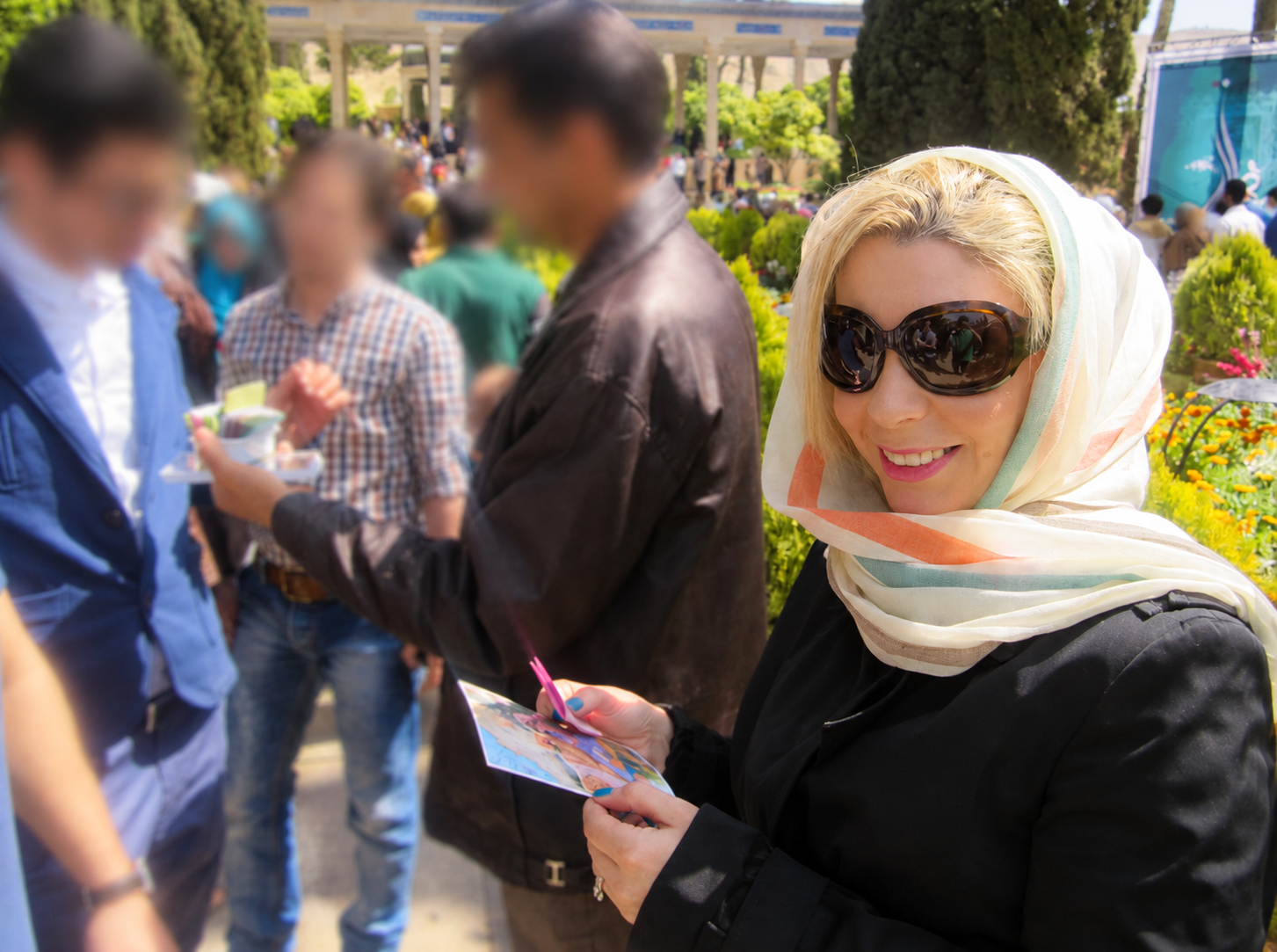
One of my most memorable encounters with Persian poetry took place in Shiraz, where Hafez is buried. I visited his mausoleum with H and spent time walking through the gardens, taking in the surroundings and watching the visitors who had come to pay their respects. There is something quite remarkable about seeing so many people drawn to the resting place of a poet who died more than six centuries ago.
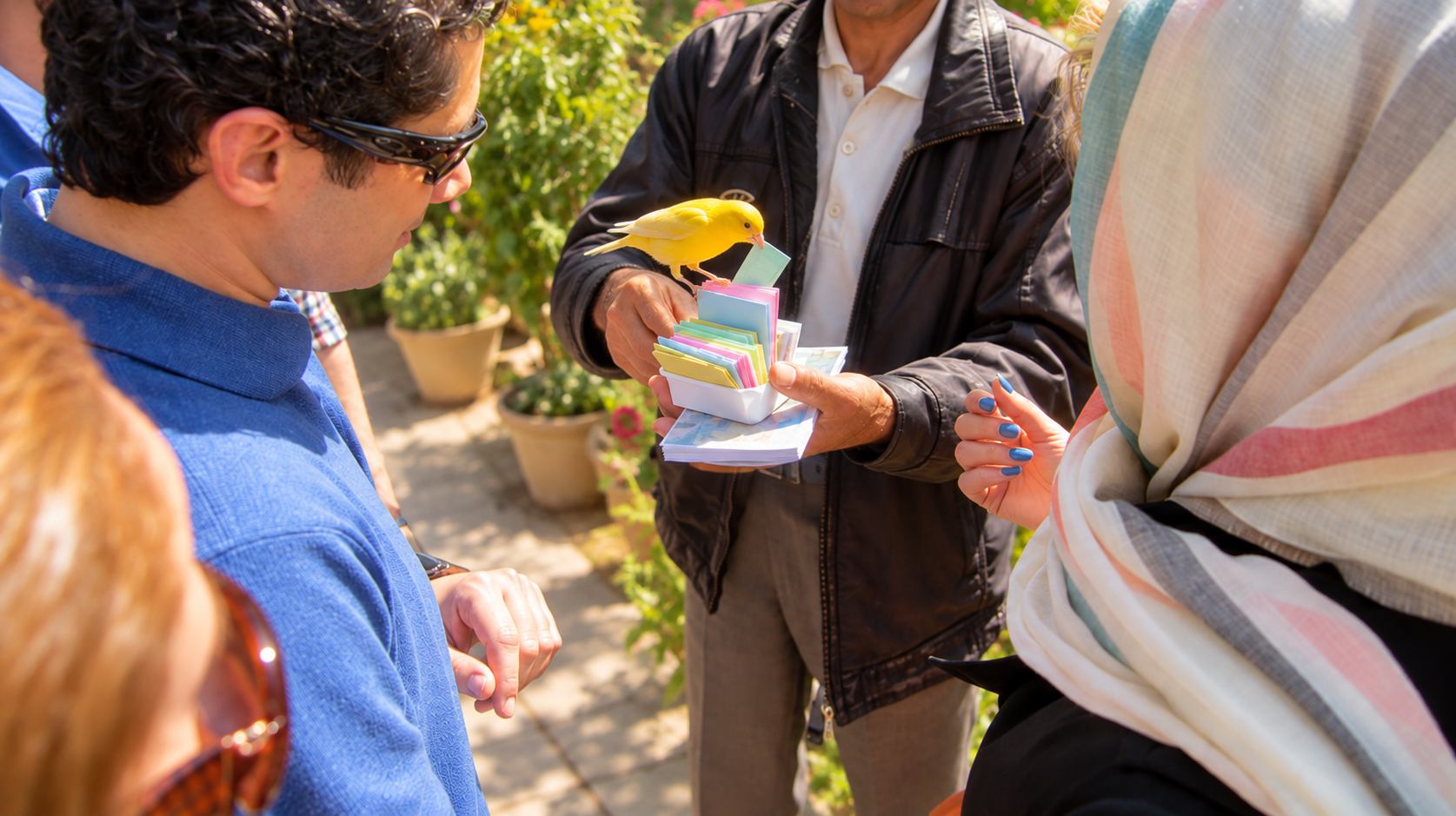
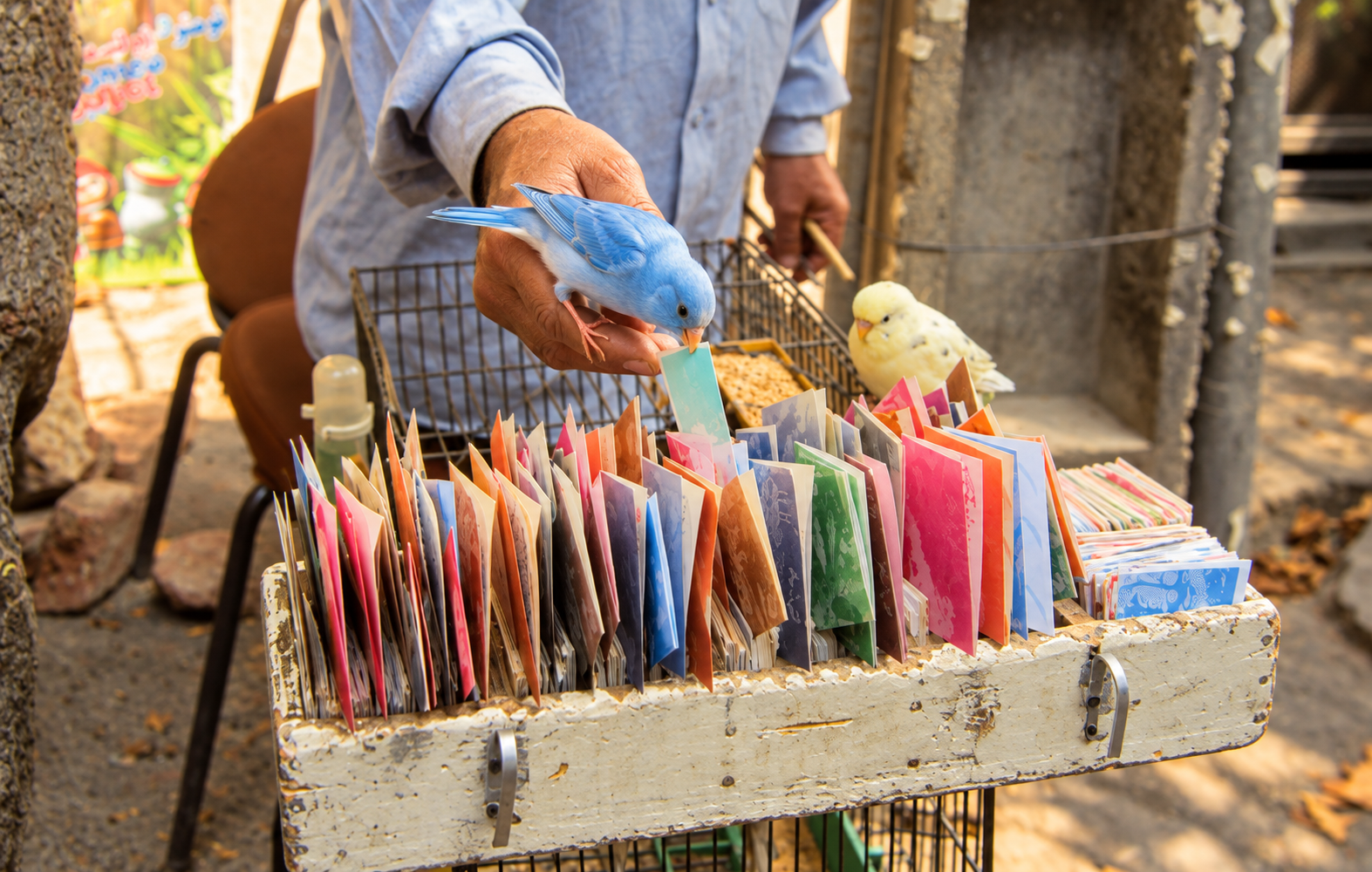
What particularly caught my attention, however, was a canary. Not the architecture, the gardens or even the poetry itself, but a small bird with a rather unusual job. I had encountered plenty of Persian traditions through H and his family, but this was something I hadn’t expected.
There is a tradition called fal-e Hafez, in which people turn to the poet’s collected works for guidance. They think about a question, open the book at random and interpret the poem they find. It is a familiar custom at family gatherings, particularly during celebrations such as Yalda Night, when poetry, food and conversation are all part of the evening.
At the mausoleum, I encountered a variation involving a trained canary that selects a printed fortune. Naturally, I had to have a go. So there I stood, an Englishwoman in Shiraz, waiting for a bird to choose a poem that might offer some insight into my life. H helped with the translation, although I suspect he was equally entertained by my fascination with the feathered fortune-teller.
I can’t remember whether the fortune proved particularly accurate. What stayed with me was the experience itself. Here was a centuries-old poet whose words were still being consulted by people looking for reassurance, direction or perhaps simply something to think about. It was an unusual introduction to literary criticism, but certainly more entertaining than some of my English lessons.
Bloodaxe Books brings Hafez back into my life
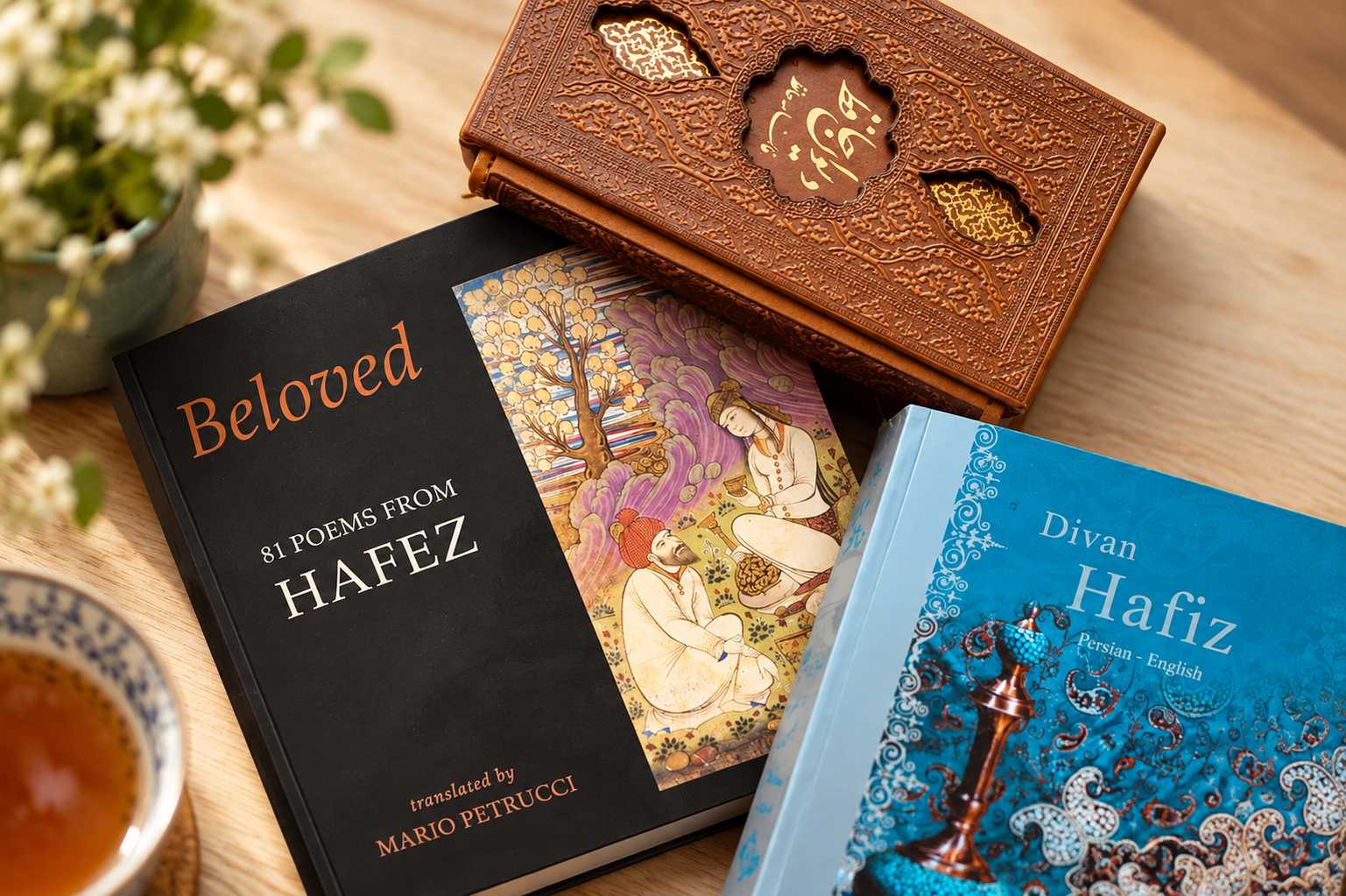
When I opened Beloved, published by Bloodaxe Books, I was immediately reminded of that visit to Shiraz and the place Hafez holds in Persian culture. The collection brings together 81 poems translated into English by Mario Petrucci, offering readers unfamiliar with Persian literature an opportunity to discover his work without needing to understand the original language.
Translation is never straightforward, particularly with poetry that relies so heavily on imagery, rhythm and layered meanings. An English version cannot capture every aspect of the Persian text, but it can introduce readers to the ideas and emotions that have made Hafez’s work endure. I enjoy being able to read a poem in English and then ask H about the Persian interpretation, even when his explanation reveals just how much I’ve missed.
For me, Beloved is interesting for another reason. It connects two parts of my life that I would never have thought belonged together. Bloodaxe Books helped encourage my interest in writing when I was a child growing up in Newcastle. Nearly four decades later, the same publisher has brought me a collection of poetry that reflects my husband’s heritage and a culture that has become part of our family.
I certainly didn’t foresee that connection when I entered the Evening Chronicle competition in 1986. Back then, I was simply pleased that somebody thought my poem was good enough to win a prize. Iran was somewhere on a map, Hafez was a name I had yet to discover, and the idea that I might one day marry a Persian engineer would have seemed rather unlikely.
Translated by Mario Petrucci and published by Bloodaxe Books.
Some books bring back more than memories
As I’ve grown older, I’ve become increasingly interested in the way childhood experiences resurface later in life. Sometimes it is a familiar song, a place you haven’t visited for years or a book that reminds you of someone you loved. The smallest things can bring back memories you hadn’t thought about for decades.
For me, poetry brings back my mum reading aloud, the excitement of winning that competition and the confidence it gave me as a young writer. Persian poetry has added another dimension, connecting those early experiences with H, his family and the traditions I’ve come to know through our marriage. I don’t think my ten-year-old self would have understood any of it, although she would probably have been delighted by the canary.
I don’t pretend to understand every verse of Hafez, and I doubt I ever will. Some poems make more sense after several readings, while others leave me asking H for an explanation. But that’s part of the enjoyment. At a time when so much of what we read is designed to be consumed quickly, there’s something appealing about a book that asks you to spend a little longer with its words.
And there is something rather satisfying about seeing Bloodaxe Books on my bookshelf again, nearly 40 years after that childhood competition. I think my mum would have liked that. She might even have insisted on reading a few verses aloud.
Discover more stories about Persian culture, family traditions and life between two cultures in the Saffron & Cyrus archive.
Occasional stories, experiments, discoveries and questions from Saffron & Cyrus.
Discover more from Saffron & Cyrus
Subscribe to get the latest posts sent to your email.

Saffron & Cyrus is an independent women’s editorial publication with a recognisable voice, real-life perspective, a defined midlife audience and a commercial model built around useful, relevant partnerships.
