

The birth I had not planned
When I imagined giving birth to Cyrus, there was a birthing pool involved. Reality had other ideas. On the day I went into labour, I was told there was no midwife available to cover the pool. What followed was a very different birth from the one I had pictured, involving interventions I had neither expected nor wanted. I’ve written separately about what it was like giving birth at 40 when the birth plan disappeared.
For a long time, I thought about that experience almost entirely from my side of the bed. I remembered how vulnerable I felt and how quickly the birth I had imagined seemed to disappear. Then a midwife read my blog and got in touch. She worked in the North East and wanted to remain anonymous, but she also wanted me to understand what can be happening on the other side of maternity care.
What she told me didn’t make my own experience matter less, nor did it mean women should simply accept difficult or poor maternity experiences because staff are under pressure. But it did make me look at what happened differently. There had been another human being on the other side of that bed, working inside a system I could not see.
Women remember how they were cared for during birth. But behind the uniform may be a midwife trying to provide that care while exhausted, hungry and working short-staffed.
Three alarms, three 13-hour shifts
Her description of a working day didn’t begin with a dramatic emergency. It began with an alarm clock. Three 5.30am alarms in a row. A third 13-hour shift after two days when there had barely been time for a break.
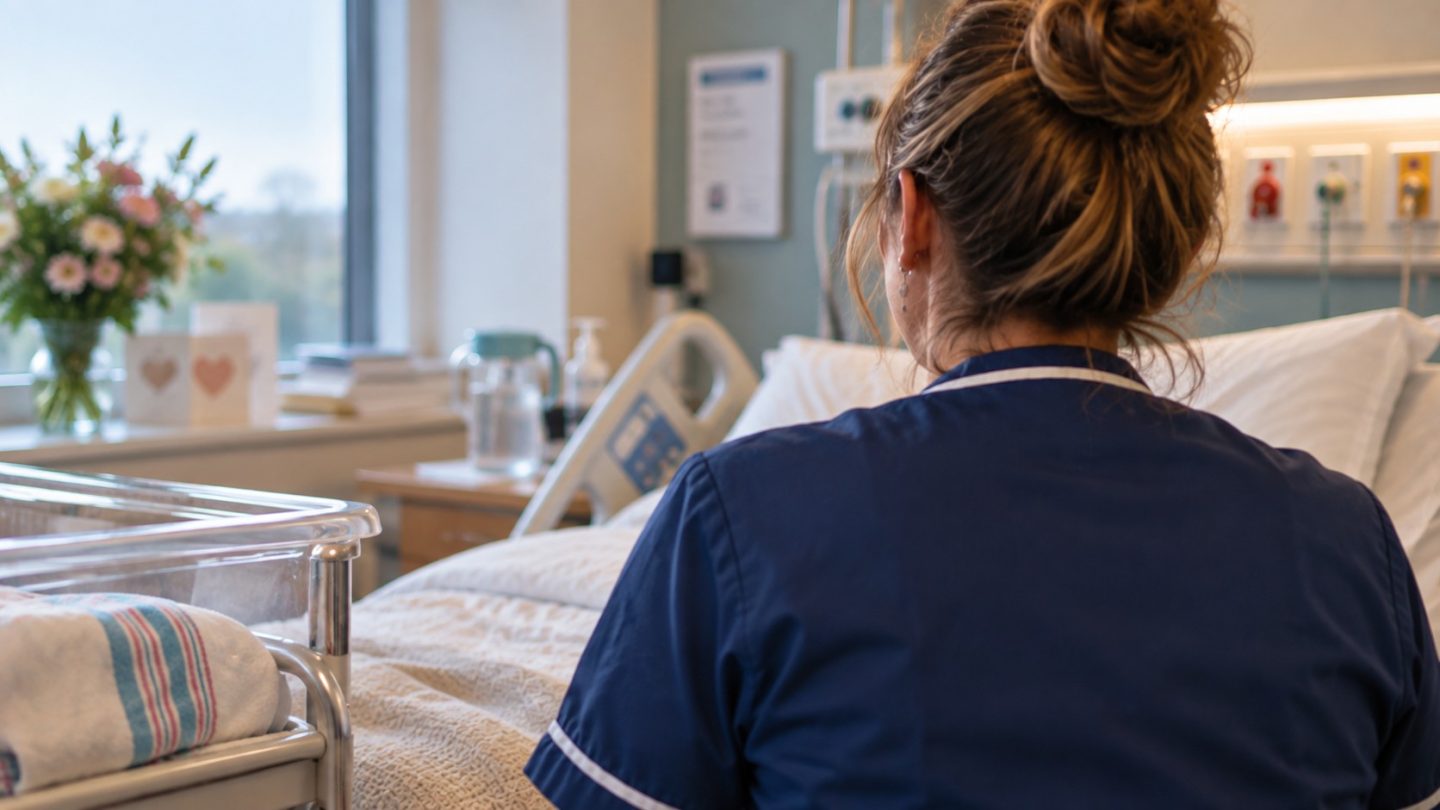
By then, she told me, she could be dehydrated and borderline starving. Her hair would be scraped into what she called a rebellious ponytail, her scrubs rumpled, the rings under her eyes more like bus tyres and, in her own words, there would be a distinct funk developing under the arms. This was not the polished image of the calm, capable midwife we like to imagine standing beside a woman in labour. It was the human being underneath the uniform.

The cactus line made me laugh, but it also stayed with me because of what sits underneath the joke. Here was somebody being trusted with women and newborn babies while so exhausted that she could look in the mirror and wonder whether she appeared capable of keeping a houseplant alive.
When keeping someone safe has to come first
There was another part of her account that struck me because it captured something those of us on the patient side don’t necessarily see.
It is uncomfortable to read because both things can be true at once. As a woman giving birth, psychological care matters. Being listened to matters. Understanding what is happening to your body matters. Feeling as though you have some control over what is happening matters. But her words exposed the brutal hierarchy that can emerge when maternity care is under pressure: first, make sure everybody survives the immediate danger. Everything else risks being pushed further down the list.
That can leave a woman feeling frightened, unheard or traumatised even when the clinicians around her believe they have successfully managed the immediate medical problem. The midwife may leave the same room knowing she kept somebody safe but also knowing she didn’t have the time she wanted to explain, reassure or simply sit beside her. Two people can therefore walk away from the same birth carrying very different versions of what happened.
I would discover later that the support after birth could feel just as complicated, particularly when I reached my six-week check.
Why midwife staffing pressures haven’t disappeared
The account this midwife shared with me is personal, but the pressure she described is not confined to one ward or one shift. In June 2026, the Royal College of Midwives published findings from a survey of 3,523 midwives, maternity support workers and midwifery students across the UK. Ninety-three per cent said staffing levels affected the quality of care they were able to provide to women and babies, while 77 per cent said they did not feel their team or unit was safely staffed during the week surveyed.
Those figures make the cactus comment considerably less funny. They also make this about much more than whether somebody manages to eat lunch during a 13-hour shift. When the people delivering maternity care are exhausted, overstretched or trying to cover gaps in the workforce, there is inevitably less room for the kind of care that requires time as well as clinical skill.
In September 2026, the Royal College of Midwives highlighted workforce capacity as a patient-safety issue following the latest MBRRACE-UK maternal deaths report. That matters because staffing isn’t an abstract NHS workforce problem when you’re the woman in labour. It can influence who is available, how much time they have and how much capacity there is to provide the reassurance and continuity women remember long after they have gone home.
What women lose when midwives are stretched
One of the things women repeatedly say they value in maternity care is continuity: not having to explain themselves from scratch every time somebody new walks through the door. The NHS England 2025 maternity patient experience report identified continuity of care as a strong theme across the maternity pathway, with women describing the benefits of seeing the same midwife or clinician consistently.
Yet only 25 per cent of respondents said they saw or spoke to the same midwife all the time at antenatal check-ups, falling to 17 per cent among those who saw or spoke to a midwife at postnatal check-ups. Those numbers matter because maternity care is not simply a sequence of observations, examinations and clinical procedures. There is a woman attached to all of them, with fears, expectations and questions that don’t disappear simply because the ward is busy.
There is also a human being standing beside her. She may be trying to remember when she last drank some water while simultaneously watching for the clinical signs that tell her something is wrong. The more I thought about what this midwife had told me, the harder it became to separate the experience of the woman receiving care from the working conditions of the person trying to provide it.
The view from the other side of the bed
I still wish my own birth had unfolded differently. Hearing from a midwife didn’t magically transform an experience that left me shaken into the birth I had wanted, and women should not be expected to excuse poor maternity experiences because the NHS is under pressure. We should be able to talk about what happened to women without immediately asking them to consider how difficult things were for the staff.
But I understand something now that I didn’t understand when I was the frightened woman in the bed. The person caring for you may be frightened too. She may have been awake since 5.30am, may not have eaten properly and may be covering more women than she expected because somebody is missing from the shift. While she is trying to reassure you, part of her brain may also be calculating what needs to happen next to keep everybody safe.
That doesn’t make the system good enough. It makes the case for fixing it stronger. Women deserve maternity care in which somebody has time to notice that they are frightened, explain what is happening and listen when the birth they had imagined starts slipping away. Midwives deserve working conditions that give them the time, energy and headspace to provide that care.
Recovery didn’t end when I left the maternity ward either. Six weeks later, I was still trying to understand a body that had been through pregnancy, forceps and birth, while the wider conversation seemed remarkably keen to move on to “getting back” to normal.
And perhaps that is what I missed when I first thought about my own birth entirely from my side of the bed. Better maternity care isn’t a choice between supporting women and supporting midwives. We are unlikely to get one without the other.
Occasional stories, experiments, discoveries and questions from Saffron & Cyrus.
Discover more from Saffron & Cyrus
Subscribe to get the latest posts sent to your email.


Saffron & Cyrus is an independent women’s editorial publication with a recognisable voice, real-life perspective, a defined midlife audience and a commercial model built around useful, relevant partnerships.
